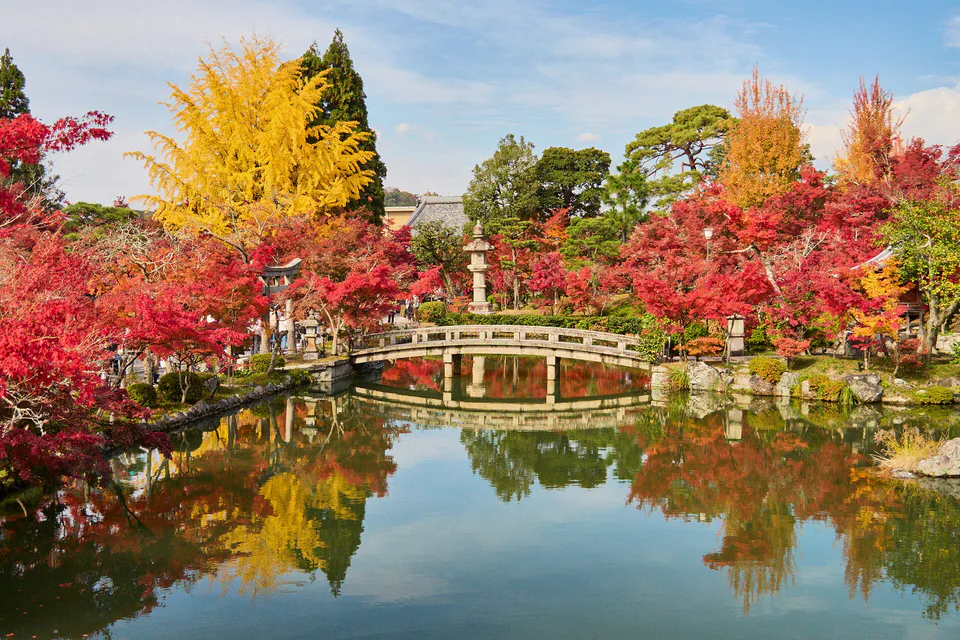
Kyoto autumn planning fails when you chase individual “best temples” across the city. The better system is to choose one foliage corridor per day, then use current color and crowd data to decide which temple inside that corridor gets the opening-time slot. Takao, Ohara and the northern mountains normally move first; Arashiyama and the foothills bridge the season; Higashiyama and Tofukuji become stronger later; Uji, Daigoji and lower city gardens can extend the tail.
As of August 27, 2026, Kyoto’s official live autumn-leaves calendar is not yet running for this season, so no honest guide can promise exact peak dates. Kyoto’s tourist-information service says color generally begins around late October, is strongest around mid-November, and fades toward the end of November, with Mt. Hiei, Ohara and Takao tending earlier. Use those ranges to choose a district months ahead; use the official foliage calendar, congestion forecast and weather to choose the exact stop days ahead.
Two 2026 night-viewing anchors are already confirmed: Kiyomizudera will stay open until 21:30 from November 21–30, with last entry at 21:00 and no reservation required; Toji lists its autumn illumination from October 31–December 13 at ¥1,000 (about US$6.30) for adults. A night-event window is not a foliage forecast. Do not assume every date inside an illumination period is peak.
ValueNavi route decision: which part of Kyoto should get your first check?
↔ Scroll table left or right
Travel window | First corridor to test | Why | Best fallback direction |
Late Oct–Nov 10 | Takao / Ohara / Kibune-Kurama / Mt. Hiei | Higher and northern areas tend to color earlier. | Arashiyama or Nishiyama if live mountain reports are weak. |
Nov 11–20 | Arashiyama / Nishiyama / northern Higashiyama | Foothills and city-edge districts often create the widest usable overlap. | Keep one northern option if the year is late; move south/east if it is early. |
Nov 21–30 | Higashiyama / Tofukuji / lower Arashiyama | The decision problem becomes crowd and route efficiency more than lack of foliage options. | Uji or Daigoji if central Kyoto becomes too congested or color has moved lower. |
Early Dec | Uji / Daigoji / low-elevation gardens | Late lowland color can remain after mountain areas have finished. | Build the day around architecture, tea or an indoor anchor so foliage is not carrying all the value. |
This is a planning map, not a prediction engine. The rule that saves the most time is simple: hold two candidates in the same direction, not two candidates on opposite sides of Kyoto.
The Kyoto route-conflict matrix: combinations that look close on a map but waste the day
↔ Scroll table left or right
Combination | Route fit | Why | Better structure |
Arashiyama + deep Higashiyama | Poor | Both reward the first quiet hours and both become slower as crowds build. | Give each district its own half/full day; pair the evening with the same side of Kyoto. |
Takao + Kiyomizudera night viewing | Possible but fragile | Bus-dependent mountain timing plus a fixed evening target leaves little recovery margin. | Only combine if you return early; otherwise use a western/central dinner and keep Kiyomizu for another day. |
Tofukuji + Fushimi Inari | Strong | They share the JR Nara / Keihan south-eastern corridor. | Put Tofukuji first for foliage, then make Fushimi Inari as short or long as energy allows. |
Tofukuji + Uji | Strong | Both sit naturally on the southbound rail direction. | Use Uji as the lower-friction afternoon rather than crossing back through central Kyoto. |
Nanzenji / Eikando + Kiyomizudera night | Good with a break | Both are east-side, but a full daytime Higashiyama walk plus night viewing can become physically excessive. | Finish daytime sightseeing early, eat/rest, then return for the confirmed night slot. |
Kibune + Ohara | Weak despite both being “north” | The transport spines are different and final buses create friction. | Choose one valley system and go deeper instead. |
This is the information most generic foliage lists miss: two famous leaves spots can both be “worth visiting” and still be a bad pair on the same day.
Late October to November 10: mountain Kyoto is a decision about stairs and buses, not just earlier color
Takao, Ohara, Kibune/Kurama and Mt. Hiei deserve the first check. Kyoto’s official travel guidance specifically identifies Takao as a major autumn area, while its FAQ notes that Mt. Hiei, Ohara and Takao tend to turn earlier than central Kyoto.
Takao fits travelers willing to devote a day to mountain temples and accept a bus-dependent final segment. Jingoji’s long approach and stairs are a real cost. A traveler with limited knees may get more value from a shorter Kozanji/Saimyoji structure than from forcing the “famous” temple simply because its photos are stronger.
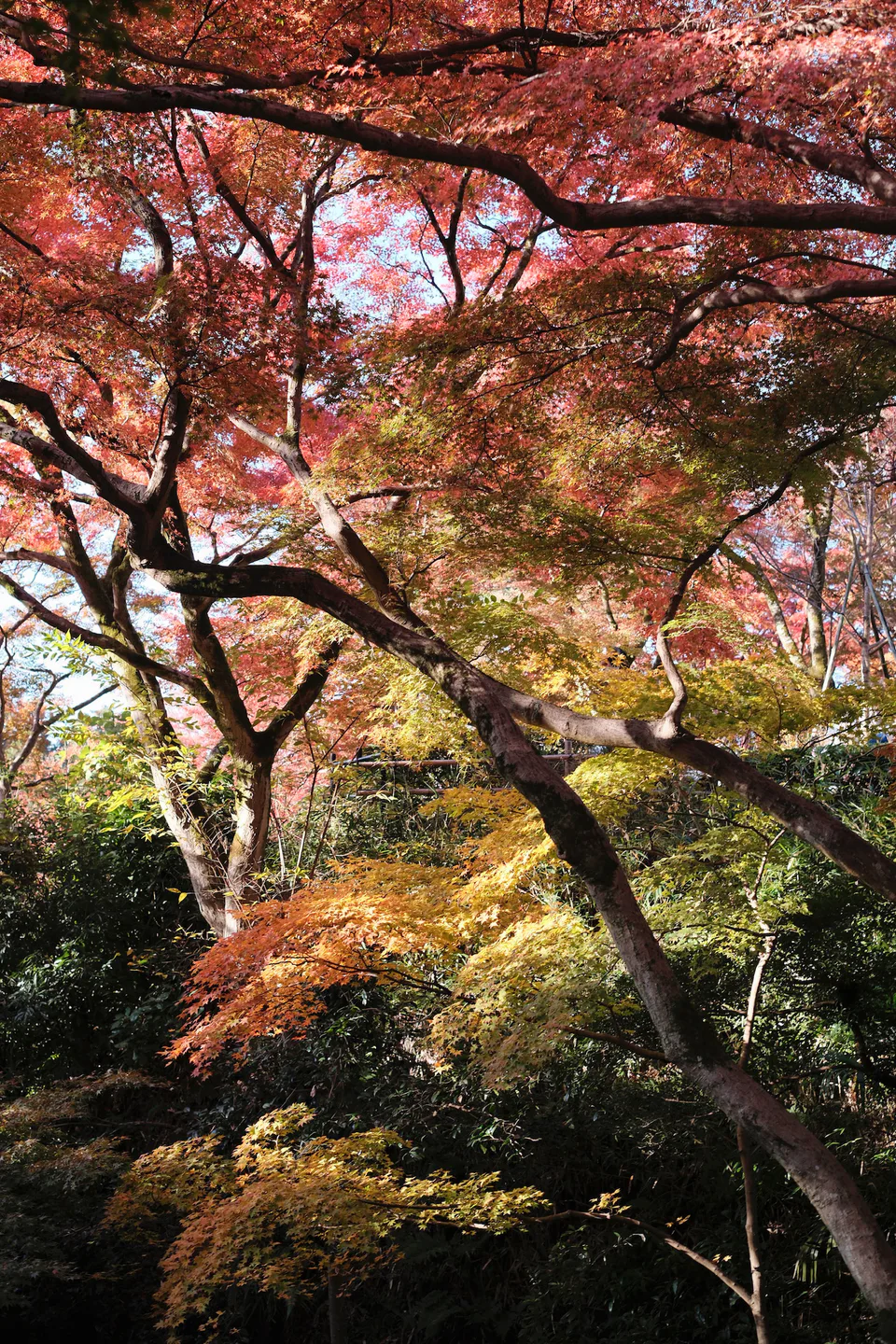
Ohara is easier to turn into a stable day because Sanzenin and nearby temples still offer moss, architecture and garden value when foliage is imperfect. Kibune and Kurama are more sensitive to weather and physical ability. The Kurama–Kibune traverse is a hike, not a sightseeing shortcut; rain, early darkness, closures or poor footing should remove it from the plan.
November 11–20: choose Arashiyama or northern Higashiyama before choosing individual temples
This is the period where cross-city greed becomes expensive. Arashiyama and northern Higashiyama can both be attractive, but both are strongest when they get an early start. Trying to “do Arashiyama in the morning, Eikando in the afternoon” often means you give one district its worst hours.
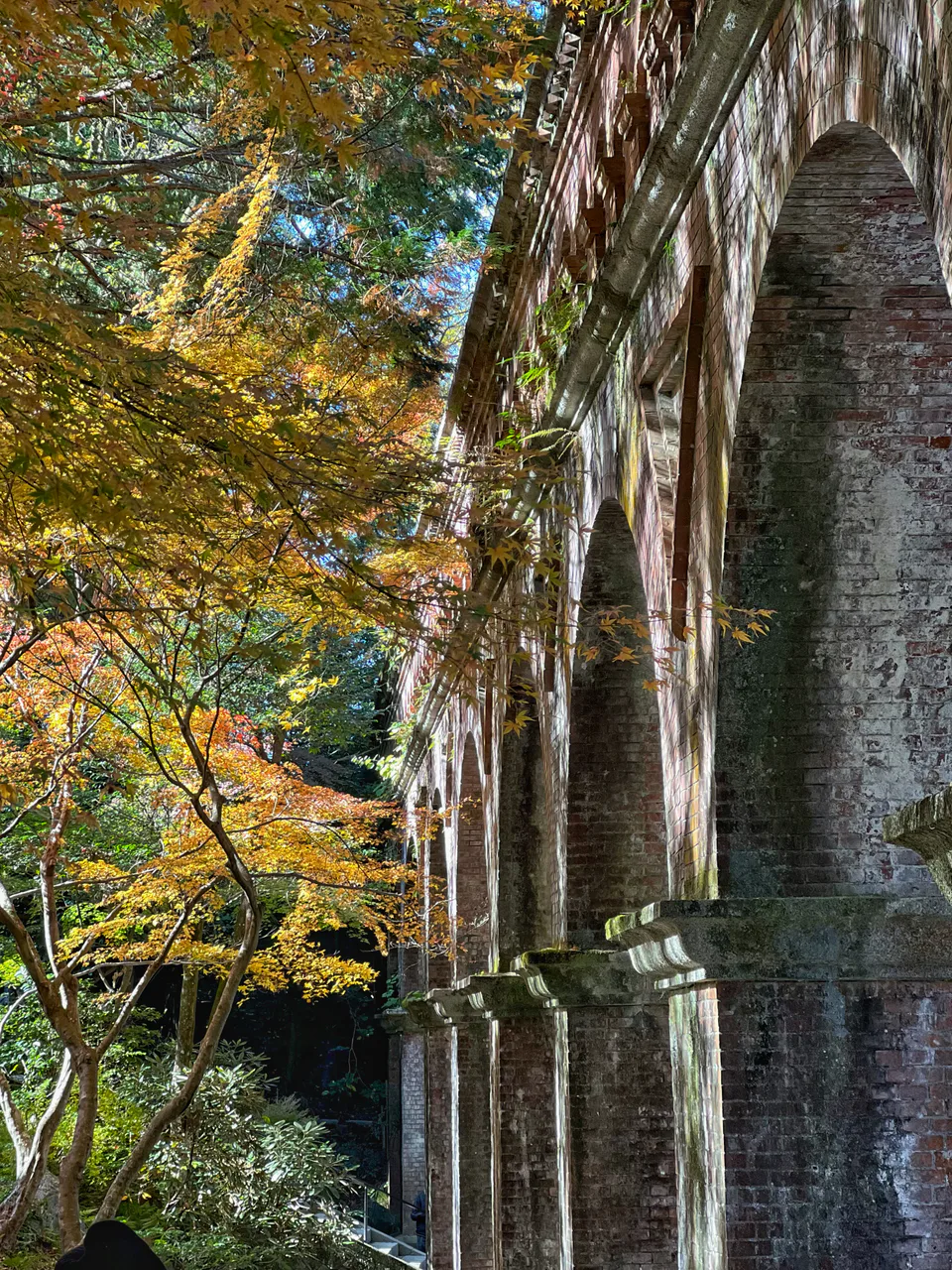
Arashiyama itself contains several foliage clocks: mountain slopes around Togetsukyo, Tenryuji’s managed garden and quieter Okusaga do not necessarily peak together. Decide whether your priority is landscape, temple garden or a calmer walking route. A single photograph of red hills behind Togetsukyo does not prove every temple inside the district is equally ready.
Northern Higashiyama is easier to shorten in bad weather because Keage, Nanzenji, Eikando and the Philosopher’s Path sit near rail/subway access. It is also easier to turn into a same-side evening if a 2026 illumination you want is confirmed later. Read the Higashiyama autumn route as a corridor, not as a checklist.
November 21–30: early entry is worth more than adding a fourth temple
Late November usually gives you more viable central-Kyoto choices, but it also gives you more competition for the same buses, gates and photo angles. Tofukuji, Higashiyama, lower Arashiyama and Uji can all make sense. The optimization target shifts from “find color” to “protect the first two hours.”
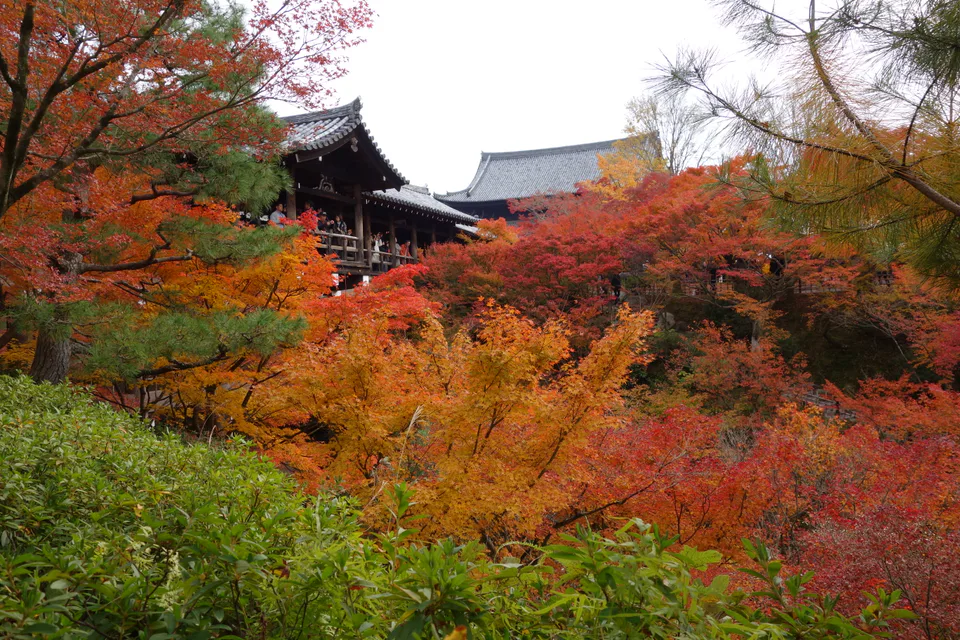
If Tofukuji is your headline foliage stop, go there first and continue south to Fushimi Inari or Uji instead of crossing to Arashiyama. In southern Higashiyama, give Kiyomizudera and the stone-street area the morning rather than arriving at the same time as every day-trip group.
Uji and Daigoji are useful late-season alternatives because the day still works when foliage is not perfect: tea, river scenery and architecture reduce the all-or-nothing risk. A backup with independent value is stronger than a backup that exists only because its map icon is red.
Night viewing creates a second ticket—and a second energy budget
Kiyomizudera’s 2026 autumn night opening is confirmed for November 21–30. The temple stays open until 21:30, with last entry at 21:00, and no reservation is required. That removes booking anxiety but not crowd or fatigue risk.
The mistake is treating a night illumination as a free extension of the daytime itinerary. If you have already walked Arashiyama or the full Philosopher’s Path for six hours, the real cost of a 20:00 temple entry is not the admission fee—it is the energy needed to climb, queue and get home afterward.
Toji’s 2026 autumn illumination is confirmed for October 31–December 13 at ¥1,000 (about US$6.30) per adult. That long event range proves why an illumination period cannot be used as a peak-color forecast. If your trip is near the edge of the period, check current foliage before making Toji the photographic reason for the evening.
Another confirmed 2026 example is Murin-an’s limited autumn twilight garden event on selected November dates, priced at ¥4,500 (about US$28) with café service and a garden mini-guide, capped at 30 people per session. That is a different product from a walk-up light-up: the premium buys capacity control and interpretation. If avoiding crowds matters more than collecting famous temples, paying more for a limited-capacity night can be rational.
ValueNavi night-viewing decision table
↔ Scroll table left or right
Your priority | Better strategy | Trade-off |
Best chance of quieter temple photos | Opening-time daytime visit | You sacrifice the lighting atmosphere. |
Atmosphere and illuminated architecture | Same-district night viewing | Expect a longer day and a second crowd peak. |
Low crowd tolerance | Limited-capacity event or less famous temple | May cost more or deliver a less iconic image. |
Short 2–3 day first Kyoto trip | Pick one night event, not one every night | You give up some “coverage” but protect energy and spontaneity. |
Rail first, bus last: autumn turns a ¥230 bus ride into a time-risk decision
Kyoto City Bus’s central flat fare remains ¥230 (about US$1.40), while the Subway & Bus 1-Day Pass is ¥1,100 (about US$6.90). Price is not the main autumn problem. Kyoto’s own tourist guidance warns that on some cherry-blossom and autumn-leaves routes you may be unable to board a crowded bus, and recommends using subway or railway closer to the destination before transferring or walking.
Use rail as the spine wherever possible: JR/Hankyu/Randen for Arashiyama, subway and Keihan for Higashiyama, JR Nara Line or Keihan for Tofukuji and Uji, Eizan Railway for Kibune/Kurama. Takao and Ohara remain bus-dependent at the final segment. Kyoto City also explicitly asks visitors to avoid rental cars in the crowded autumn season because road congestion is expected.
The ¥1,100 Subway & Bus Pass is not automatically the best foliage pass. Takao, Ohara, Kibune and Kurama include routes or sections outside the simple central flat-fare logic, and Arashiyama/Uji may be better served by private rail. In 2026 there are also corridor-specific products such as the ¥1,400 Kyoto/Arashiyama one-day electronic pass during the autumn sales period and a ¥2,100 Eizan/Keihan product. Buy a pass after you choose the corridor, not before.
Hidden cost table: what actually makes a “free-looking” foliage day expensive?
↔ Scroll table left or right
Hidden cost | What it does to the day | Decision rule |
Bus queue / full bus | Turns a short map distance into an unpredictable transfer. | Prefer rail-first access; board bus near route origin when the final bus is unavoidable. |
Temple stairs | Consumes the physical capacity you planned for the second or third stop. | For older travelers, choose one demanding temple, not three. |
Night illumination | Adds another 2–3 hours after a full walking day. | Pair it with the same district and schedule a rest/meal before entry. |
Cross-city transfer | Uses the best daylight while crowds are building at the next destination. | Delete the far-side temple rather than “making the pass worth it.” |
Prepaid event | Reduces your ability to chase better current foliage elsewhere. | Only prebook nights that are independently worth attending even if leaves are early/late. |
Your hotel base is a foliage tool only when it helps several days
Kyoto Station is strongest for Tofukuji, Uji, Arashiyama via JR, intercity rail and luggage. Kawaramachi/Gion favors Higashiyama, Keihan/Hankyu access, dining and walking home after east-side evenings. Karasuma Oike offers the best multi-direction flexibility because both subway lines meet there. Demachiyanagi shortens Kibune/Kurama access but has fewer hotel and late-dining choices.
Do not pay a hotel premium because one temple is nearby. Pay it when the base removes friction from several mornings or several nights. If your 2026 dates are still far enough away that you do not know whether foliage will be early or late, central rail flexibility is often more valuable than sleeping beside one famous maple spot.
If Kyoto is sold out, Otsu, Uji, Nara or Osaka can act as backup bases, but night illuminations then need a protected return train. A cheaper room becomes poor value if every evening ends with a stressful final connection.
Compare Kyoto foliage hotel bases on Booking.com
Compare Kyoto foliage bases on Expedia
Plan B should stay in the same direction
If northern mountains are still green, move down toward Arashiyama/Nishiyama rather than crossing to Uji. If mountain leaves are already stripped, move into Higashiyama or lowland gardens. If heavy rain removes the Kurama trail, Jingoji stairs or a long Philosopher’s Path walk, use a rail-accessible temple plus museum, café or indoor meal in the same part of Kyoto.
If a famous night event sells out, the replacement does not have to be another ticketed illumination. Dinner, Gion at night, Kyoto Station architecture or an early bedtime before an opening-time temple may produce a better next day. Avoid the sunk-cost version of autumn travel where every lost booking must immediately be replaced by another booking.
Final verdict: one corridor per day beats four “best foliage spots”
For a first autumn trip, the highest-value rule is not to maximize temple count. Choose one district with a strong opening-time target, one nearby backup and one optional evening. If the season is early, test the northern mountains. In mid-November, choose between Arashiyama/Nishiyama and northern Higashiyama. In late November, let Higashiyama, Tofukuji and lower areas win unless current reports tell you otherwise.
The strongest counterargument is obvious: Kyoto is compact enough that trains can move you across town, so why not collect several famous places? Because autumn’s scarce resource is not distance—it is good hours. Every cross-city transfer pushes the next temple deeper into its crowd peak. A mathematically possible four-district day is often worse than a two-district day that gets the first destination at its best.
Use historical timing to choose the corridor, official live foliage reports to choose the exact spot, and Kyoto’s congestion forecast to choose the hour. That separates what you can decide months ahead from what you should leave flexible until the final week.
Frequently asked questions
What month is usually best for Kyoto autumn leaves?
Mid-November is the broad planning core, but northern/high areas can move earlier and lower city/Uji areas can extend later. The official Kyoto foliage calendar should replace generic timing once it starts updating for 2026.
Can Arashiyama and Higashiyama fit in one day?
They can fit geographically, but not well as two deep autumn visits. Both benefit from early hours, and moving between them consumes daylight while crowds increase.
Does an illumination date mean peak foliage?
No. Kiyomizudera’s confirmed 2026 autumn night period is November 21–30 and Toji’s runs October 31–December 13, but those event windows are much broader than any single foliage peak.
Should I buy the ¥1,100 Subway & Bus Pass?
Only after choosing the route. It can work for a bus/subway-heavy city day, but Arashiyama, Uji and northern routes may rely heavily on JR, Hankyu, Keihan, Randen or Eizan instead.
Next planning steps
Where to Stay
Kyoto Autumn Illumination 2026: Temples, Tickets, Transport and Hotels
Avoid Kyoto Autumn Crowds in 2026: Rail Corridors, Early Starts and Hotel Bases
Kyoto Hotels Sold Out in Autumn? Backup Bases in Otsu, Uji, Nara and Osaka
Official sources and last verification
Facts checked August 27, 2026. Kyoto City Official Travel Guide currently advises rail + bus combinations to avoid road congestion, provides a live congestion forecast, and says its official autumn foliage calendar is updated seasonally. Kiyomizudera confirms November 21–30 night viewing until 21:30; Toji confirms October 31–December 13 autumn illumination at ¥1,000 adult admission. Current Kyoto City Bus flat-zone fare is ¥230 and the Subway & Bus 1-Day Pass is ¥1,100. USD figures are approximate conversions at the August 27 exchange rate.