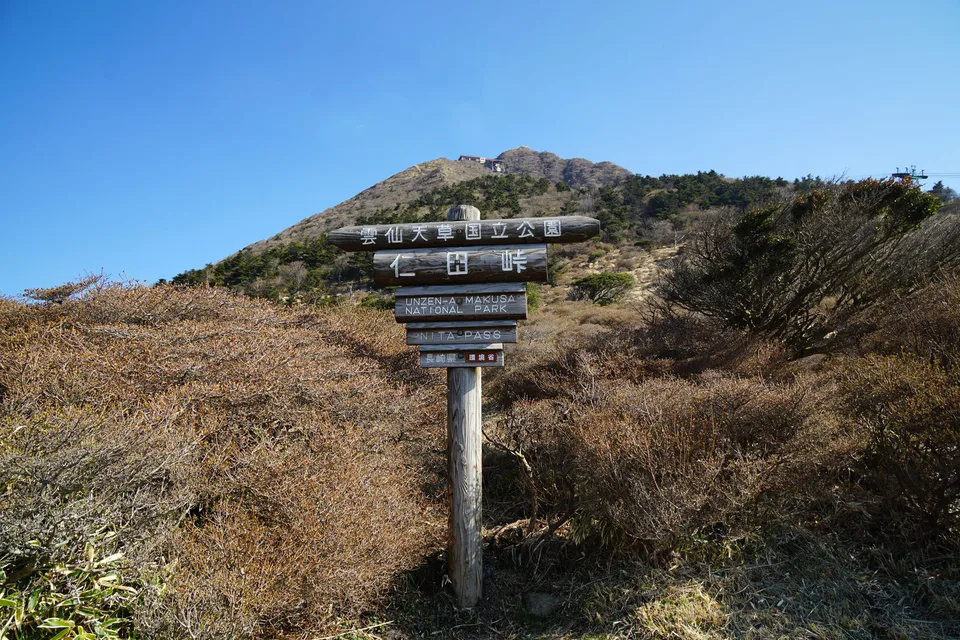
Kyushu autumn leaves are easiest to plan when you stop thinking of Kyushu as one foliage destination. The island has several separate “color clocks”: high Kuju and upper Unzen can move first, Yufuin and Yabakei follow at lower elevation, Takachiho and northern Kyushu often become useful later, and Takeo/Fukuoka lowlands can carry the tail of the season. The practical decision is therefore which transport corridor gives your dates two viable elevations without forcing you to cross Kyushu every time the leaves are early or late.
ValueNavi’s default: with five days, choose one corridor and make foliage only one layer of the trip. With seven days, connect no more than two neighboring corridors. A seven-day “Fukuoka → Yufuin → Takachiho → Unzen → Fukuoka” loop may fit on a map, but it spends too many of the best daylight hours on intercity transfers.
As of August 27, 2026, detailed live autumn-color reports for the coming season are not yet available. Use historical elevation patterns to choose refundable hotel bases now, then use current local reports and weather in the final week to decide which mountain or gorge gets the day.
ValueNavi timing map: choose a corridor, not a single “peak date”
↔ Scroll table left or right
Travel window | First corridor to test | Lower / safer backup | Biggest planning trap |
Late October | Kuju / Makinoto / upper Unzen | Yufuin, Beppu or Unzen Onsen | Booking a lowland foliage trip too early. |
Early November | Yufuin / Yabakei / lower Aso | Hita, Beppu, Kumamoto city | Trying to “catch up” by driving farther after a warm spell. |
Mid-November | Takachiho / Akizuki / Raizan / lower Unzen | Fukuoka, Kumamoto or Nagasaki lowlands | Assuming one date means every Kyushu gorge is ready. |
Late Nov–early Dec | Takeo / Mifuneyama / lower Fukuoka | Nagasaki, Dazaifu, city gardens | Chasing mountain color that has already moved on. |
These are planning windows, not 2026 peak predictions. Elevation, wind and cold snaps can shift a destination sharply. The purpose is to choose a base with a same-region fallback, not to tell you which tree will be red on November 17.
ValueNavi corridor score: which route is easiest to rescue when autumn does not cooperate?
These are editorial planning scores. A higher score means the corridor is easier to use well even if foliage, weather or transport changes.
Corridor | No-car fit | Elevation backup | Rain-day fallback | Hotel flexibility |
|---|---|---|---|---|
Fukuoka / Dazaifu / Akizuki | 10/10 | |||
Hita / Yabakei / Nakatsu | 7/10 | |||
Yufuin / Beppu / Kuju | 10/10 | |||
Kumamoto / Aso / Takachiho | 8/10 | |||
Nagasaki / Unzen / Takeo | 9/10 |
The Yufuin/Beppu/Kuju corridor is the strongest “weather-insurance” choice because mountains, onsen towns and rail cities can substitute for each other without crossing the island. Fukuoka wins for simplicity. Takachiho can be spectacular, but the transport commitment is large enough that it should be a deliberate overnight decision rather than a last-minute foliage chase.
Five days: one corridor is not “too little Kyushu”
A five-day autumn trip should normally use one large base plus one smaller overnight, not four hotel changes. The best itinerary is the one that can react to color without rewriting the entire reservation chain.
↔ Scroll table left or right
Five-day style | Suggested base logic | What you give up |
Easy no-car | Fukuoka 3 nights + Yufuin/Beppu 2 | Takachiho and western Kyushu. |
Mountain + onsen | Beppu/Yufuin 3–4 + Hita 1 | Nagasaki and Takachiho. |
Aso + gorge | Kumamoto 2–3 + Takachiho 1–2 | Fukuoka-side foliage depth. |
Western Kyushu | Nagasaki 2 + Takeo/Ureshino 2 + transit night | Kuju/Yabakei. |
The trade-off is coverage. You will see fewer prefectures. In exchange, you get mornings at the place you actually came to see, less luggage handling and enough slack to change the mountain day when the forecast changes.
Seven days: connect two neighboring corridors, not three headline regions
Seven days can support Fukuoka + Yufuin/Beppu, Yufuin/Beppu + Kumamoto/Aso, or Fukuoka + Takeo/Nagasaki. It can also support Kumamoto + Takachiho if the gorge is a core goal. What it does poorly is connect Fukuoka, central Oita, Takachiho and western Nagasaki while pretending every transfer is sightseeing.
Use the two-hour deletion rule: if adding a foliage stop creates more than roughly two extra hours of door-to-door travel on that day, ask whether the stop is genuinely better than a same-corridor alternative. A more famous maple photographed after four hours of transport is not automatically higher value.
Fukuoka corridor: best for no-car travelers, weakest for mountain depth
Fukuoka is a strong airport and luggage base. Dazaifu is straightforward; Akizuki and Raizan require more attention to buses, taxis or local transfers. The mistake is trying to combine all three because they sit under the same prefecture label.
Stay near Hakata when JR and the airport matter; Tenjin is better for Nishitetsu and city evenings. If Yufuin, Beppu or Yabakei is the actual autumn headline, use Fukuoka as the first/last base instead of commuting from it every day.
Compare Fukuoka autumn day trips before buying transport. One well-timed Akizuki or Dazaifu day is usually stronger than three rural directions in 48 hours.
Hita + Yabakei: rent locally if the valley is the reason for the trip
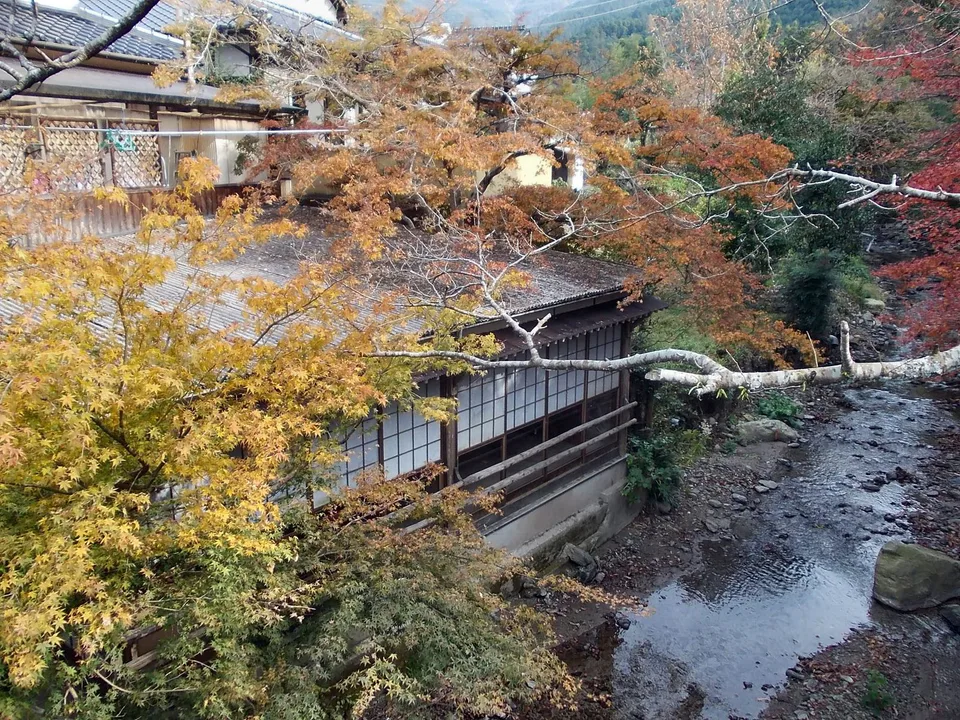
Yabakei is dispersed. Hitome Hakkei, Ao-no-Domon and Rakanji are not one walkable complex, and current 2026 access at Ao-no-Domon remains asymmetric: pedestrians can pass via the signed diversion while the affected road section remains closed to vehicles.
That makes Hita or Nakatsu a better staging point than a same-day Fukuoka round trip when Yabakei is a priority. A local rental also lets you keep the car only for the day where it adds value, instead of paying for city parking across the whole trip.
Use the Yabakei autumn decision guide for the current road closure, Rakanji entry rules and “Hitome Hakkei + one lower stop” structure.
Yufuin + Beppu + Kuju: the best corridor for elevation hedging
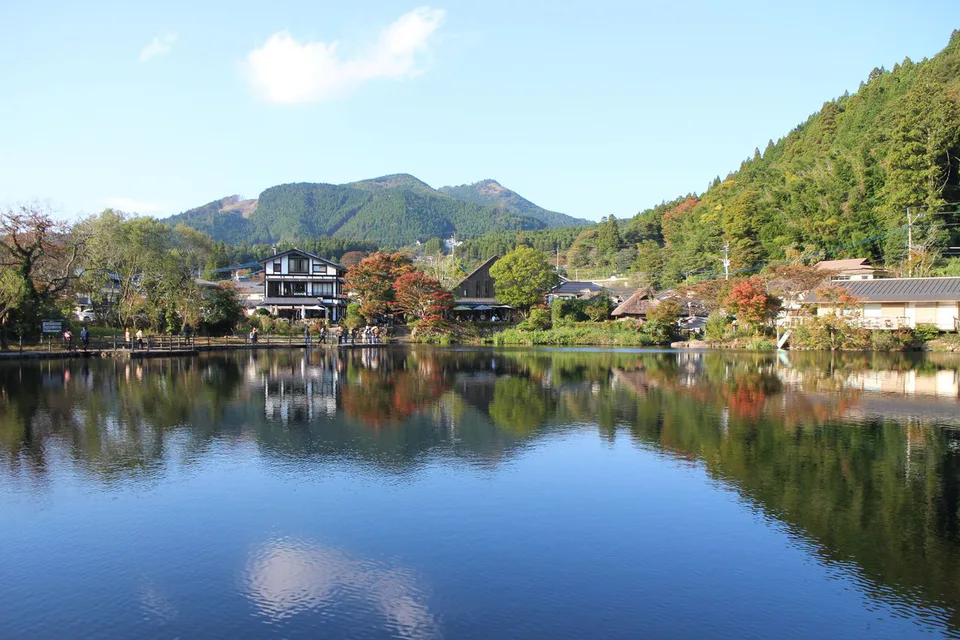
This corridor gives you three different trip types without changing region: Kuju/Makinoto for early high-elevation color, Yufuin for basin scenery and ryokan mornings, and Beppu for onsen and weather-proofing. If the mountain day fails, the hotel booking does not become useless.
Yufuin no Mori remains reserved-seating only, and popular departures can sell out. A rail pass does not create a seat. Reserve the train you actually need instead of assuming pass ownership solves inventory.
Stay in Yufuin when dawn at Lake Kinrin, a ryokan dinner or an early mountain departure matters. Choose Beppu when hotel choice, onward JR travel and rain-day onsen matter more. Kuju still needs its own last-mile bus or road plan; a Yufuin hotel is not equivalent to staying at the trailhead.
Takachiho: the boat reservation is a separate risk from the foliage date
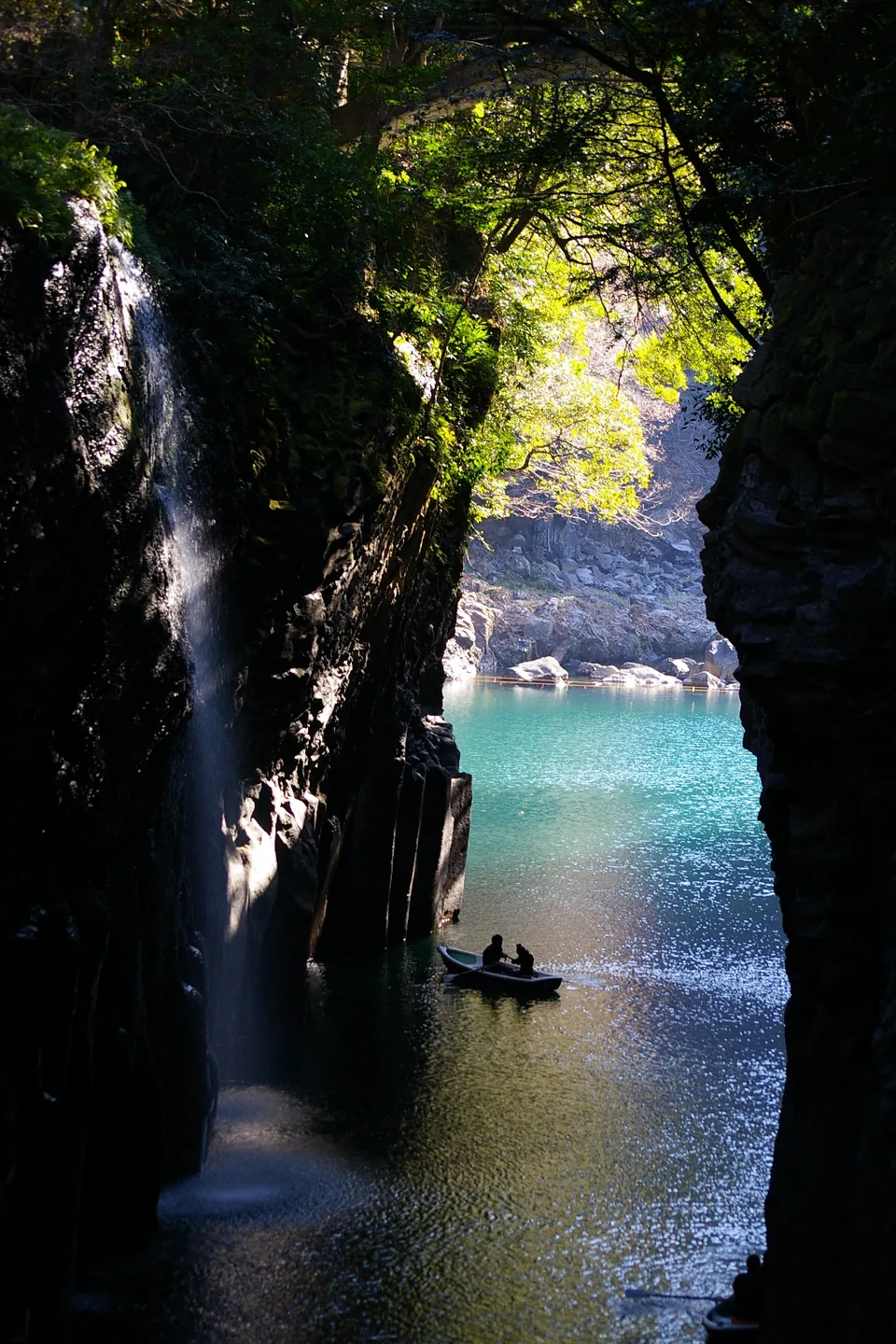
Takachiho is the clearest example of why “autumn leaves” and “activity availability” need separate plans. The official tourism association currently opens online gorge-boat reservations from 09:00 two weeks before the ride until 09:00 two days before, with advance credit-card payment. Same-day tickets depend on remaining inventory and some busy dates can have none.
On August 27, 2026, the official status page showed near-term dates sold out in advance with no same-day tickets. That does not predict November demand, but it proves the failure mode is real: arriving at the gorge does not guarantee a boat.
Boat operation also depends on conditions and is updated around 08:00 each morning. A Takachiho overnight therefore buys more than a hotel room: it separates intercity transport, gorge timing, kagura and weather risk. The traveler most likely to regret a Fukuoka day trip is the one who treats a limited reserved bus and a weather-sensitive boat as if both were ordinary walk-up attractions.
Use the Takachiho Gorge autumn guide before committing to the overnight and bus.
Unzen + Takeo: western Kyushu solves a different date window
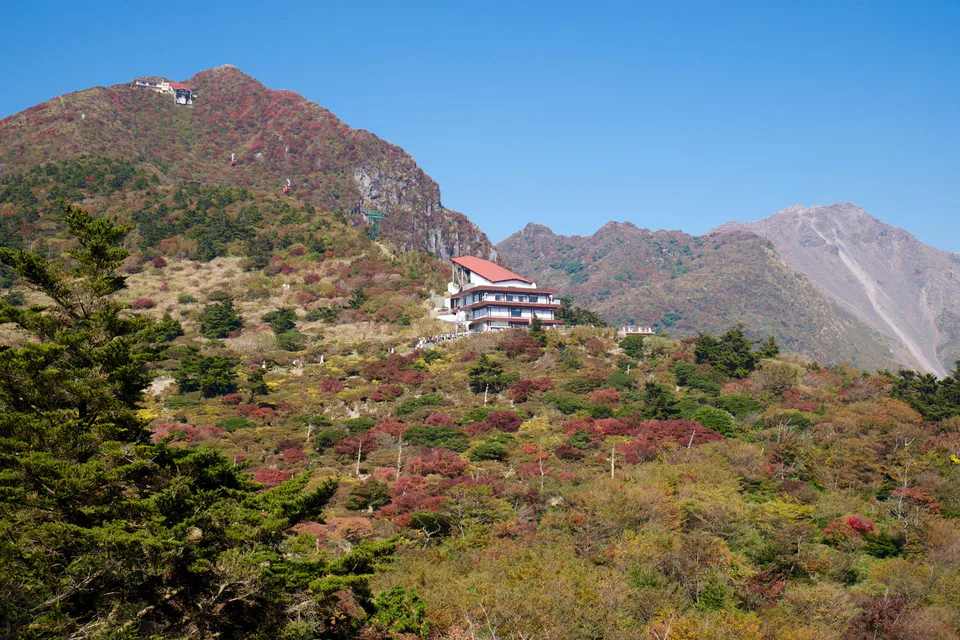
Unzen’s higher elevations usually move before Takeo and lowland western Kyushu. That makes the Nagasaki/Unzen/Takeo corridor useful when your dates fall between mountain and lowland seasons: you can move vertically rather than crossing prefectures chasing reports.
Stay in Unzen Onsen when early ropeway/mountain access is the priority; stay in Takeo/Ureshino when rail access, onsen and lower foliage are more useful; use Nagasaki as the weather-proof city anchor. Avoid booking a previous year’s illumination schedule as if it were a confirmed 2026 event. Seasonal lighting and ticket rules should be added only after official publication.
JR Kyushu Rail Pass: the online price is lower, but the rural final mile still decides value
Current public prices are ¥15,000 (about US$94) / ¥17,000 (about US$107) for Northern Kyushu 3-/5-day passes and ¥22,000 / ¥24,000 / ¥26,000 (about US$138 / US$151 / US$163) for All Kyushu 3-/5-/7-day passes. JR Kyushu’s own online booking currently lists each of those products ¥1,000 cheaper: Northern ¥14,000 / ¥16,000 and All Kyushu ¥21,000 / ¥23,000 / ¥25,000.
That ¥1,000 difference matters less than coverage. The passes do not cover subways, buses or railways operated by other companies, and they do not cover the Sanyo Shinkansen between Kokura and Hakata. In foliage season, the last mile to Yabakei, Kuju, Takachiho or upper Unzen can be the most fragile part of the day—and it is often exactly the part a JR pass does not solve.
ValueNavi test: add the JR rides you would take anyway, compare them with the exact online or counter price you can actually buy, then separately price rural buses, taxis and rental days. Do not call the pass “worth it” because it makes one long Shinkansen ride feel free.
Public transport vs partial rental: use the car where it changes the trip
↔ Scroll table left or right
Area | Public transport | Partial rental | ValueNavi verdict |
Fukuoka / Dazaifu | Excellent | Unnecessary | Stay car-free. |
Yufuin / Beppu | Excellent core access | Useful only for mountain extensions | Rail first. |
Yabakei | Possible but restrictive | Very useful | Rent locally if multiple zones matter. |
Kuju / outer Aso | Schedule-dependent | High flexibility | Car can materially improve route choice. |
Takachiho | Reserved intercity buses possible | Useful if connecting Aso | Overnight matters more than mode. |
Nagasaki / Takeo | Strong | Only for mountain final mile | Stay rail-first. |
A full-trip rental is easiest to justify for three or four travelers building several mountain days. For a city-heavy trip, the smarter version is often two rental days inside a seven-day journey.
Hidden costs: “car vs rail” is not just fuel vs ticket price
↔ Scroll table left or right
Cost people miss | Rail / bus | Rental car |
Inventory | Reserved seats / limited rural buses can sell out. | Peak-weekend rental classes can sell out. |
Last mile | Taxi or sparse local bus. | Parking / mountain-road detours. |
Weather | Service changes / walking exposure. | Fog, frost, driver stress. |
Luggage | Station transfers and bus storage. | Easy during rental, awkward when changing hotels nightly. |
Human cost | Waiting and rigid timetables. | Driver fatigue and no one can relax on mountain sections. |
Hotel bases: book for fallback value, not just proximity to one maple spot
Fukuoka is the strongest airport/rail base. Hita or Nakatsu improves Yabakei. Yufuin buys dawn and ryokan atmosphere; Beppu buys hotel supply and onsen fallback. Kumamoto works for Aso and onward Takachiho. Takeo/Ureshino helps western Kyushu; Nagasaki is the stronger bad-weather city base.
Forward large luggage between major cities when a one-night mountain or ryokan stay sits in between. Carry an overnight bag and verify dinner/check-in deadlines. A late train that is technically possible may still be incompatible with a ryokan’s meal service.
Compare Kyushu autumn hotel bases on Booking.com
Compare Kyushu autumn bases on Expedia
Failure-mode matrix: what to do when the season moves
↔ Scroll table left or right
Problem | Bad reaction | Better move |
High mountains still green | Drive farther across Kyushu. | Keep the hotel base and use onsen/city day; retest mountain later. |
Mountain leaves already stripped | Go anyway because the hotel was chosen for it. | Descend to Yufuin, Takeo, Fukuoka or another lower option in the corridor. |
Takachiho boat sold out | Cancel the whole overnight. | Keep gorge walking, shrines and kagura if those independently justify the stay. |
Heavy rain / fog / wind | Force ropeways, gorges or unfamiliar mountain roads. | Use Beppu, Fukuoka, Kumamoto or Nagasaki indoor/onsen fallback. |
JR pass does not cover rural leg | Add more JR travel to “make the pass worth it.” | Price the uncovered bus/taxi/rental and keep the route geographically coherent. |
Final verdict: Kyushu autumn is an elevation problem before it is a sightseeing problem
If you remember one rule, make it this: book a corridor with two elevations and one strong bad-weather fallback. That lets a five- or seven-day trip adapt without moving the entire itinerary every time the foliage forecast changes.
The strongest counterargument is that a rental car makes all of Kyushu feel reachable. It does—but reachability is not the same as a good autumn day. Long mountain drives consume daylight and driver attention, and the best viewing periods can be short. A car should reduce last-mile friction inside a corridor, not become permission to cross the island every morning.
Use historical timing to decide the region, current reports to decide the elevation, and the final 48-hour forecast to decide whether the mountain day happens at all. That is more robust than choosing hotels around one “peak week” months in advance.
Frequently asked questions
What is the best month for Kyushu autumn leaves?
Mid-November gives the broadest island-wide choice, but high mountains can start in late October and lower areas can remain useful into late November or early December.
Do I need a car?
No. Fukuoka, Dazaifu, Yufuin, Beppu, Takeo, Nagasaki and Kumamoto are strong by rail/bus. Partial rental is most useful for Yabakei, Kuju, outer Aso and some Unzen approaches.
Is Takachiho worth an overnight?
Usually yes when the gorge, boat or kagura is a core goal. The overnight separates limited transport, weather and boat-inventory risks.
Is the JR Kyushu Rail Pass always worth it?
No. Current online prices can be ¥1,000 below counter/agency prices, but buses, subways, other companies’ railways and rural last-mile costs are outside the pass. Compare actual JR fares first.
Official sources and last verification
Facts checked August 27, 2026. JR Kyushu currently lists Northern Kyushu passes at ¥15,000/¥17,000 through standard sales channels and ¥14,000/¥16,000 through JR Kyushu online booking; All Kyushu is ¥22,000/¥24,000/¥26,000 or ¥21,000/¥23,000/¥25,000 online. The pass excludes the Sanyo Shinkansen between Kokura and Hakata, subways, buses and other operators. Takachiho Tourism Association currently opens boat reservations from two weeks before until two days before at 09:00, with same-day inventory dependent on remaining availability. USD figures are approximate at the August 27 exchange rate.
Kamikochi Autumn Leaves: Timing, Buses, Five Walks and Where to Stay
Japan Autumn Leaves Without Changing Hotels: Tokyo, Sendai, Osaka and Fukuoka Bases
Japan Autumn Leaves in Mid-November: Kyoto, Tokyo, Fuji, Miyajima and Kyushu
Nikko Autumn Leaves Guide: Foliage Timing from Okunikko to Toshogu
Japan Autumn Leaves Photography Guide: Timing, Weather, Lenses and Crowd Strategy