
For most first-time Tokyo Game Show visitors, I would start with the ¥3,000 One-Day Ticket. Upgrade to the ¥6,000 Fast Ticket only when you can name the first booth you want, know whether it sits on the Halls 1–8 or Halls 9–11 side, and can reach the priority lane early enough to use it. Fast Ticket is not a day-long queue skip. Its value is concentrated at opening.
For overseas visitors there is another trade-off that is easy to miss. The current official TGS ticket page lists ordinary overseas 1-Day Tickets as digital QR tickets through Trip.com, while Fast and Premium tickets are sold only through Lawson Ticket and require the purchaser’s real name and on-site photo-ID verification. That purchase friction does not make Fast a bad ticket, but it raises the burden of proof: the priority-entry benefit should solve a specific first-booth problem before you accept the extra cost and administration.
Tokyo Game Show 2026 Fast Ticket: the 30-second decision
↔ Scroll table left or right
Your situation | Start with | Why |
First TGS, no must-play opening target | ¥3,000 One-Day Ticket | You still get the full public-day show; Fast does not create shorter queues all day |
One specific booth/demo would make or break the day | ¥6,000 Fast Ticket | Priority entry improves your starting position for the first bottleneck |
You genuinely want all three Public Days | Compare ¥30,000 Premium | It bundles three days of Fast benefits plus the Energy Spot lounge and premium pass |
Overseas visitor who values the simplest ticket handling | 1-Day Ticket gets stronger | The official overseas channel currently includes a Trip.com digital QR option; Fast/Premium are Lawson Ticket products |
Family with elementary-age children | Calculate the whole-party Fast cost first | Children are free on normal admission, but every child who wants Fast privileges needs their own Fast Ticket |
If you still need event basics—dates, Makuhari access, hotels and the hall layout—use the broader Tokyo Game Show 2026 guide. This page answers the narrower question: when does the Fast Ticket actually change the day enough to justify paying more?
Public visitors are choosing September 19, 20 or 21—not all five TGS days
Tokyo Game Show 2026 runs September 17–21 at Makuhari Messe, but September 17–18 are Business Days. The Public Days are September 19 and 20 from 09:30–17:00, and September 21 from 09:30–16:00. The organizer also warns that Public Days may open up to 30 minutes earlier depending on conditions.
That matters more to Fast Ticket buyers than to ordinary visitors because the benefit is front-loaded. A published 09:30 opening does not mean arriving at 09:25 is a rational Fast strategy. The priority line begins much earlier, identity checks take time, and the opening itself may move.
Do not rely on an old fixed “9:00 cutoff” screenshot
The current official English ticket page does not publish a fixed 09:00 Fast Ticket cutoff. It says the priority queue starts from the time of the first train at JR Kaihin-Makuhari Station and that the designated priority lane is removed after a specified time on each day. Once that lane is gone, Fast Ticket holders join the general admission line. The organizer also states that missing the priority benefit does not create a refund.
That changes the planning advice. Treat the exact lane-closing time as live operating information, not a permanent fact you can save months in advance. Recheck the official ticket page close to the event, then work backwards from the latest time you are willing to risk. The value principle is stable even if the operational time changes: Fast is only worth more while the priority-entry advantage still exists.
Fast Ticket is not a Fast Pass once you are inside
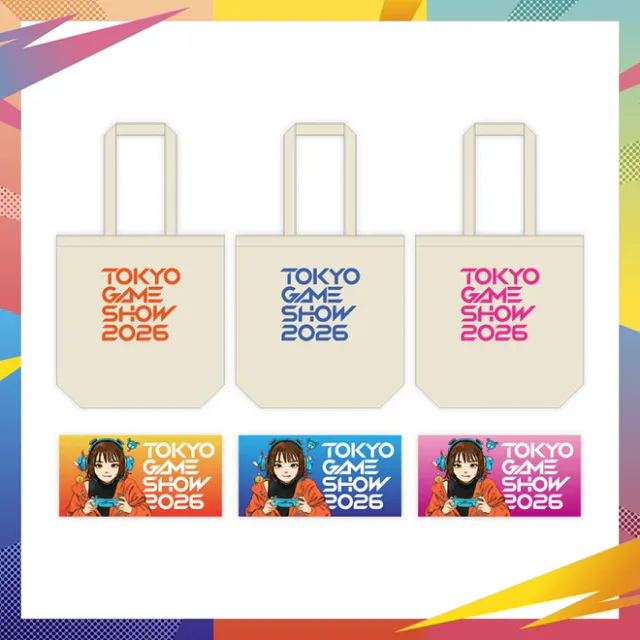
The extra ¥3,000 buys priority entry at opening and the Fast Ticket merchandise. It does not become a universal express lane for game demos, stage events, photo opportunities or merchandise queues after entry. Individual exhibitors can use their own queue, reservation or numbered-ticket systems.
So the real comparison is not “¥3,000 versus ¥6,000 for less waiting.” It is “normal starting position versus a better starting position for one or two high-value targets.” If you mainly want to wander, discover indie games, watch whatever stage is available and absorb the show floor, the ordinary ticket already buys the core TGS experience.

Your first booth must determine your entrance side
Fast Ticket holders can enter through either the Halls 1–8 side or the Halls 9–11 side. That sounds flexible until the 2026 movement restriction is added: after opening, visitors entering through Halls 9–11 cannot move into Halls 1–8 until 10:00. Visitors who start in Halls 1–8 and move into 9–11 during that restricted period also cannot immediately return to Halls 1–8.
This means the first target is not merely “Capcom,” “Square Enix” or another publisher. It is publisher + confirmed hall side. Paying ¥6,000 and joining the wrong priority entrance can waste the very advantage you bought.
Once the final venue map and booth assignments are published, build a three-level opening plan:
Target 1: the booth/demo you would be genuinely disappointed to miss.
Targets 2–3: worthwhile alternatives on the same hall side.
Everything else: afternoon exploration rather than opening-hour obligations.
If you cannot build that list, Fast Ticket is probably premature.
The biggest hidden cost for families is that free child admission does not mean free Fast priority
Normal Public Day admission is ¥3,000 for junior-high-school age and above, while elementary-school children and younger enter free. But the Fast Ticket rules are different: every child who wants Fast Ticket privileges, including priority admission and merchandise, must hold their own Fast Ticket regardless of age.
That changes the family maths dramatically.
↔ Scroll table left or right
Party | Normal admission | Fast for everyone | Extra cost for Fast strategy |
1 adult + 1 elementary child | ¥3,000 | ¥12,000 | ¥9,000 |
2 adults + 2 elementary children | ¥6,000 | ¥24,000 | ¥18,000 |
These are ValueNavi calculations from the official 2026 ticket prices and child-priority rule. They show why “Fast is only ¥3,000 more” is an adult-solo way of looking at the decision.
For a family, ask who actually needs the main-hall priority start. Family Game Park is a separate area for children aged 15 and under with accompanying guardians, and its purpose is different from an adult opening sprint toward a blockbuster demo. If the child’s priority is Family Game Park rather than a main-hall booth, buying Fast for the whole family can be a very expensive way to optimize the wrong part of the day.
For overseas visitors, ticket logistics are part of the Fast premium
The current official overseas ticket section lists Fast and Premium as Lawson Ticket-only products. The ticket page says purchaser names are printed on the tickets, photo ID such as a passport is checked on site, participant changes are not allowed for personal reasons, and purchased tickets are not refundable or exchangeable for personal reasons.
The current Lawson listing also instructs purchasers to pick up the ticket at Lawson or Ministop. By contrast, the overseas 1-Day Ticket section lists Trip.com as a digital ticket channel where the QR code is presented on a smartphone at entry.
This is not a reason to avoid Fast if the opening benefit matters. It is a reason to compare the whole product:
1-Day: cheaper, no priority, easier digital handling for an overseas visitor.
Fast: more expensive, Lawson purchase/pickup workflow, named-ticket ID checks, but a materially better opening position.
Premium: the same identity/administrative commitment multiplied across all three Public Days.
If your first target is vague, the simpler ordinary ticket becomes even harder to beat.
September 21 has one less event hour
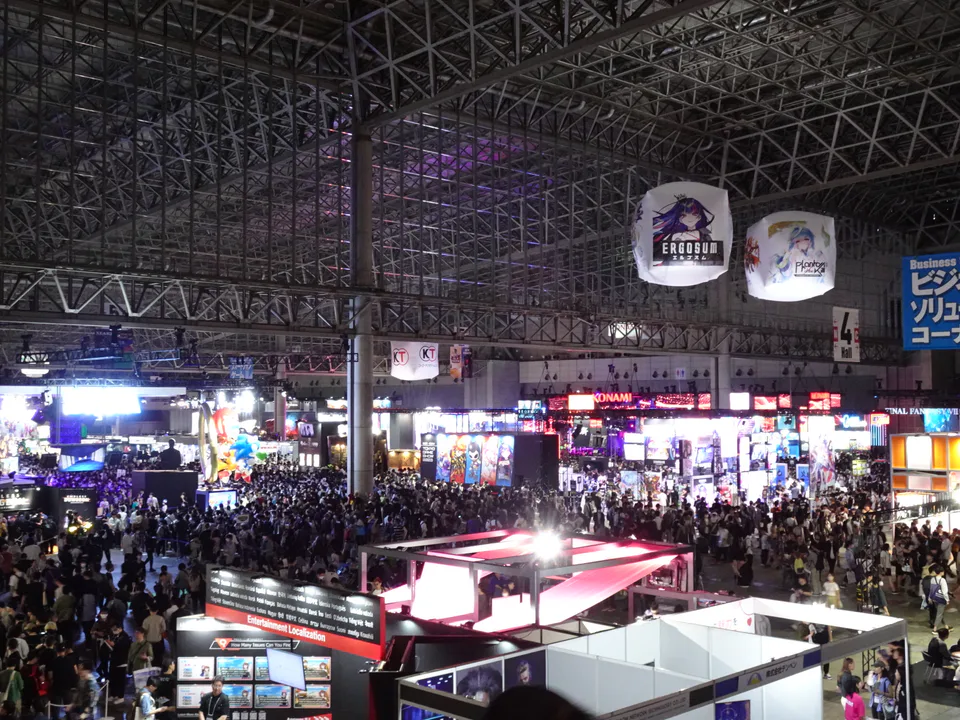
September 19 and 20 finish at 17:00; September 21 finishes at 16:00. That missing hour does not automatically make Monday a bad day, but it reduces the total room for demos, stages, merchandise and exploration.
Do not choose the final Public Day only because you assume it will be quieter. Crowd levels are not guaranteed. Choose the day by confirmed exhibitor/stage priorities, total event hours and what the rest of the Tokyo itinerary loses.
Premium is a three-day itinerary decision, not a luxury version of Fast
The ¥30,000 Premium Ticket includes all three Public Days, Fast Ticket benefits on all three days, Fast merchandise, an exclusive pass and access to the Energy Spot lounge behind the event-stage area on the Hall 1 side. The lounge offers rest space, device charging and catering.
The correct test is not “Is the lounge nice?” Ask: if the lounge and merchandise disappeared, would you still choose to attend TGS on September 19, 20 and 21? If yes, Premium can make sense because three mornings of priority plus a recovery base are solving a real multi-day event problem. If one or two days would feel like obligations, the ticket is turning optional Tokyo time into sunk-cost attendance.
For most international tourists, the scarce resource is not the extra ¥24,000 above one Fast day. It is three complete Tokyo-area days.
Identity rules make the expensive tickets less flexible
Fast and Premium tickets are named tickets. The purchaser must attend in person and bring accepted photo identification. Participant changes for personal reasons are not permitted. Purchased tickets are date-specific and personal-reason refunds or exchanges are not available.
This matters if flights, travel companions or hotel dates are still moving. A normal museum ticket may be easy to rearrange around a disrupted itinerary; a named, date-specific TGS priority product is not. Resolve the trip structure before upgrading.
No same-day ticket sales means the ordinary ticket still needs advance planning
The organizer says no same-day Public Day tickets will be sold at Makuhari Messe. Ticket allocations can also end once the planned number is sold. So “buy the ¥3,000 ticket” does not mean “decide at the station that morning.”
The sequence should be:
lock the Public Day that fits the wider Japan itinerary;
decide whether one first booth is important enough to justify Fast;
check the current ticket inventory and purchase channel;
then optimize the hotel and morning route.
Do not move hotels to Makuhari for one event day unless the morning advantage pays back the move
Makuhari Messe is reached from JR Kaihin-Makuhari Station, while Tokyo Station is currently shown by the organizer as roughly 40 minutes away from Kaihin-Makuhari by train. Shinjuku and Shibuya are roughly 70 minutes in the organizer’s overseas access guide. Those are station-to-station references rather than hotel-door times.
For one TGS day, I would usually keep the Tokyo base that works for the rest of the trip. A Makuhari hotel becomes more defensible when you attend two or three days, or when the Fast opening advantage is important enough that removing the early cross-city commute has repeated value.
Use Where to Stay for Tokyo Events: Dome, Ariake or Makuhari if the event is starting to dictate the hotel base.
Who should actually buy Fast?
I would buy Fast when all of these are true:
one specific demo, booth or opening allocation is a major reason for attending;
the final venue map confirms which hall side you need;
you are willing to build the morning around the live priority-lane instructions;
the whole-party cost still makes sense, including children who need Fast privileges;
the Lawson purchase / pickup / ID workflow is acceptable.
I would stay with the ¥3,000 One-Day Ticket when you mainly want discovery, your first target is uncertain, you cannot arrive early, or Fast would force several family members to buy priority tickets they do not actually need.
Final verdict
For a first Tokyo Game Show, the ¥3,000 One-Day Ticket remains the default. Fast becomes rational when you are buying a specific opening advantage, not a vague promise of fewer queues. The strongest Fast case is one or two people with a must-play first booth, a confirmed entrance side and an early-arrival plan. The weakest case is a family or casual group paying for priority before anyone can name the opening target.
The two 2026 details that most change the English-speaking visitor’s decision are easy to miss. First, the current official ticket page no longer supports relying on a permanent fixed “09:00 cutoff”; it tells visitors to follow the designated daily priority-lane time and provides no refund for missing it. Second, overseas ordinary tickets have a straightforward digital QR channel through Trip.com, while Fast and Premium are Lawson Ticket products with named-ticket ID rules. Those differences belong in the value calculation, not in the fine print after purchase.
Saitama Railway Museum 2026: The Advance Ticket Saves Only ¥100 — The Experiences Matter More
Chiikawa × Tokyo Skytree 2026: Cute Event, Surprisingly Un-Cute Ticket Rules
Okutama Rafting 2026: Tokyo Full-Day Tour vs Local Half-Day — You're Paying for Transport
Shima Spain Village Tickets 2026: Park Pass, Kintetsu Bundle or Hotel Guest Ticket?
National Museum of Nature and Science 2026: The ¥630 Ticket Is Cheap — Your 3–5 Hours Aren’t
Sources
Tokyo Game Show 2026 official overview · official Public Day ticket rules and overseas purchase channels · official overseas visitor access guide · official Family Game Park information. Checked August 25, 2026. Ticket inventory, booth assignments, venue maps and the designated daily closing time for the Fast priority lane can change; recheck the official TGS site before travel.