
For a 5–7 night Tokyo stay, choose the hotel feature you will use most often — not the one that sounds most useful on the booking page. A station route you repeat twice a day can matter more than a washer you use once. A 24–25m² room can matter more than in-room laundry if two large suitcases stay open all week. But an in-room washer-dryer becomes genuinely high-value when it changes how you pack from day one: fewer clothes, less luggage pressure and more room for shopping.
My default for six nights is therefore one stable Tokyo base, not a split stay, unless the second hotel has a different job — for example, several west-Tokyo or Hakone departures followed by an east-Tokyo/Narita-heavy finish. Before booking, count how often you will use the station, room space and laundry. Long stays reward repeat-use value.
ValueNavi six-night frequency test: which feature actually repeats?
↔ Scroll table left or right
Hotel feature or friction | Typical frequency on a six-night stay | How much weight I give it | Why |
Walk/transfer between hotel and the line you really use | Daily, often twice | Very high | A small route mismatch compounds every morning and evening |
Room circulation with two large suitcases | Every evening | High | Shopping makes the room harder to use as the stay progresses |
In-room washer-dryer | Usually 1–3 planned loads | Medium to very high | High only when it lets you pack materially less or removes repeated laundry-floor trips |
Shared laundry | Usually 1–2 sessions | Medium | The cash cost is small; availability checks and separate drying consume attention |
One hotel change | Once | High disruption | Checkout, luggage storage or transfer and another check-in create a one-off but concentrated cost |
ValueNavi rule: a low-frequency amenity should not beat a high-frequency location advantage unless that amenity changes the whole trip. Laundry qualifies when it changes the packing strategy before you even leave home.
Which of these four Tokyo hotels fits which long-stay problem?
↔ Scroll table left or right
Your repeated problem | Start with | What it solves | What you give up |
You want to pack fewer clothes and wash inside the room | Tokyu Stay Shinjuku Eastside | Every room has a washer-dryer and microwave; kitchen-equipped rooms are also available | Its strongest station access is Higashi-Shinjuku / Shinjuku-sanchome, not JR Shinjuku South Exit |
Two large suitcases remain open and JR Shinjuku is repeatedly useful | JR Kyushu Hotel Blossom Shinjuku, Superior Twin | 25m², large table and sofa, plus roughly a 3-minute walk from JR Shinjuku South Exit | Laundry is shared, not inside the room |
Narita plus Ueno/Asakusa/east-Tokyo days dominate | NOHGA HOTEL UENO TOKYO, Twin | 24–26m² Twin and 24-hour shared laundry in an east-Tokyo base | You need to leave the room and manage machine/dryer availability |
Laundry is occasional and Suidobashi/Jimbocho/Ochanomizu fits the itinerary | Hotel Niwa Tokyo, Superior Twin | 24m² room and a roughly 4-minute walk from JR Suidobashi East Exit | Do not choose it if your six-day route repeatedly requires another cross-city leg first |
Tokyu Stay wins only when the washer changes your packing strategy
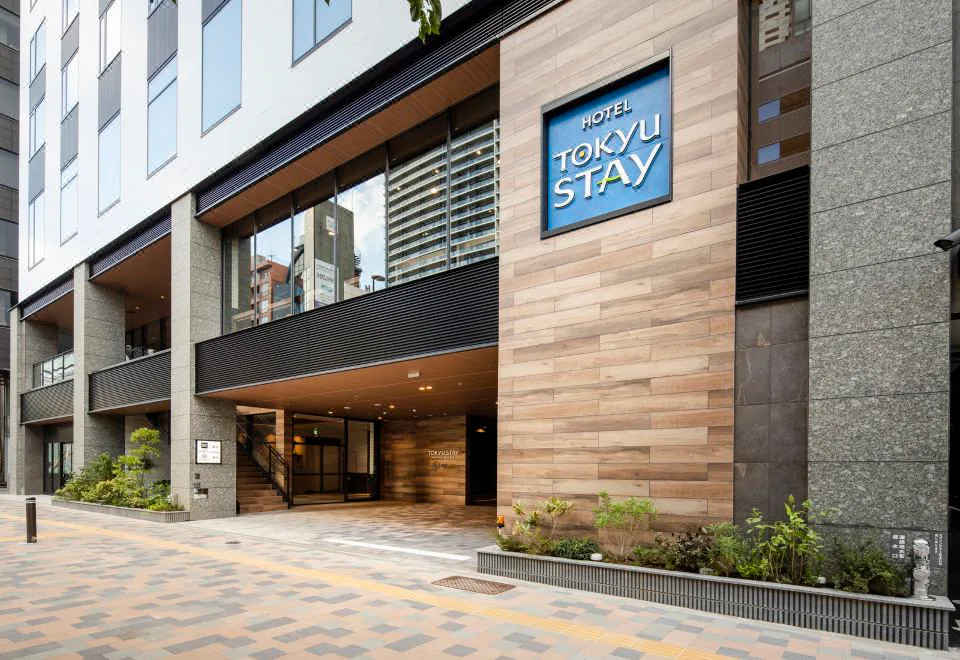
Tokyu Stay Shinjuku Eastside is the clearest in-room-laundry option in this comparison. The hotel currently states that every room has a washer-dryer and microwave; kitchen-equipped rooms are available for travelers who also want simple self-catering. Official access is about three minutes from Higashi-Shinjuku Station and five minutes from Shinjuku-sanchome Station.
That is genuinely useful if you plan, before departure, to wash on nights three and five and therefore pack fewer tops, underwear or lightweight summer clothes. The washer is then working for you for all six nights because it changed the suitcase from day one. It can also be useful for families, runners or summer travelers who create laundry faster than a couple sightseeing in cool weather.
The trade-off is the word “Shinjuku.” It does not put you three minutes from the JR South Exit. If three mornings start with JR services, highway buses or routes that make JR Shinjuku the natural departure point, count the additional local leg or walk. Saving laundry attention twice is not automatically a win if you create station friction twelve times.
Use the Tokyu Stay Shinjuku Eastside long-stay guide if the washer is already affecting how much you plan to pack.
Blossom Shinjuku: 25m² can beat private laundry when space repeats every night
JR Kyushu Hotel Blossom Shinjuku’s current Superior Twin is 25m² with two 120cm beds, a large table and a sofa. The hotel is about three minutes on foot from JR Shinjuku Station’s South Exit and the Shinjuku Expressway Bus Terminal. It also has coin-operated laundry available 24 hours a day on several floors.
For two long-haul travelers with large hard-shell suitcases, the extra floor area is not just a comfort upgrade. On night one, the bags contain clothes. By night five, the same room may also contain shopping bags, packaging, souvenirs and items being reorganized for the next city. Laundry makes clothes smaller as a packing problem; it does not make the suitcases or purchases disappear.
I would therefore take Blossom over an in-room-laundry hotel when JR Shinjuku is repeatedly useful and both travelers actually need the 25m² room to function. The answer reverses if the room is mostly empty from morning to midnight and you are intentionally packing light around repeated washing.
The Blossom Shinjuku 25m² room guide is the better next step if floor space, rather than laundry, is becoming the deciding factor.
NOHGA Ueno: shared laundry is cheap; the attention cost is the real comparison
NOHGA HOTEL UENO TOKYO currently lists Twin rooms at 24–26m² and a laundry area available 24 hours a day. The current official charge is ¥400 per wash (about US$2.50) and ¥100 per 30 minutes of tumble drying (about US$0.60). Those USD figures are only rough conversions; exchange rates move.
The money is rarely the deciding factor. The hidden cost is that shared laundry creates a small sequence: carry the clothes out, check whether a machine is free, return later, and possibly make another trip for drying. One session is trivial. Two busy evenings can make an in-room unit feel much more valuable.
But location can still dominate. If Narita is one end of the trip and your sightseeing repeatedly sits around Ueno, Asakusa, Yanaka or eastern Tokyo, moving the entire six-night stay to Shinjuku for a private washer is solving the wrong problem. Settle Ueno vs Shinjuku first; only then compare laundry formats.
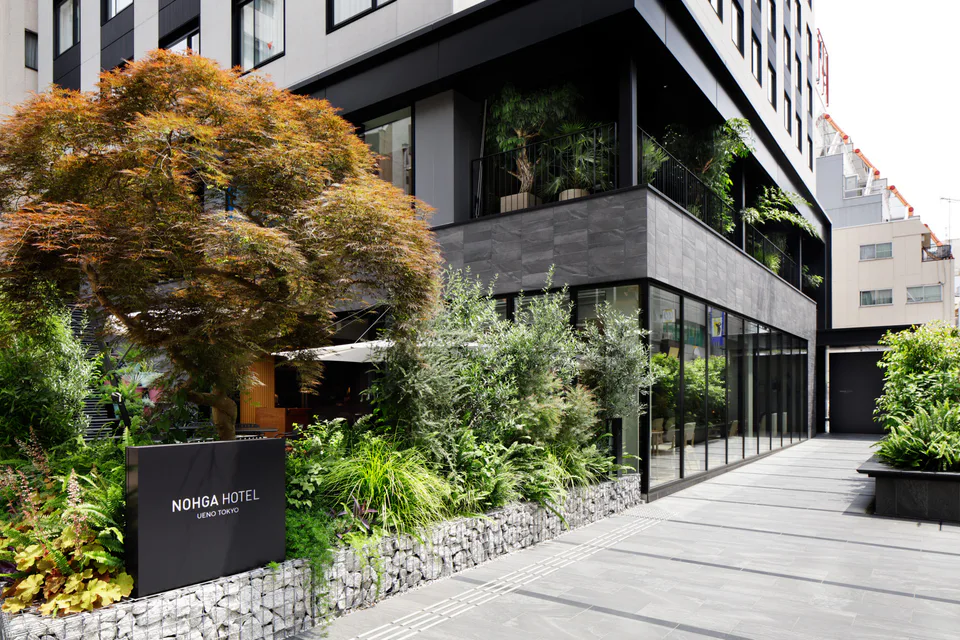
If Ueno already wins the base decision, use the NOHGA HOTEL UENO TOKYO luggage-route guide rather than letting one hotel amenity pull you west across the city.
Hotel Niwa: the counterexample to choosing a six-night hotel around one chore
Hotel Niwa Tokyo currently lists an 18m² Standard Twin and a 24m² Superior Twin. JR Suidobashi Station’s East Exit is about four minutes away. I use it in this comparison as the counterexample: if laundry is a once-only task and Suidobashi/Jimbocho/Ochanomizu already fits the route, a calmer 24m² room in the right part of the city can be more useful than an in-room washer somewhere else.
Long stays magnify the difference between daily and occasional benefits. You sleep in the room six times. You walk the hotel-station route repeatedly. You may wash clothes once or twice. A concert or Tokyo Dome event can make Suidobashi particularly useful for one night, but one event alone is not enough reason to move hotels if the other five days point elsewhere.
If this area already fits, compare the room tiers in the Hotel Niwa Tokyo room-size guide.
The shopping-accumulation test: room pressure usually gets worse, not better
Room-size comparisons are often made as if luggage volume stays constant. For a long-haul visitor, it often does not. The suitcase may start neatly packed, then gradually share the room with drugstore bags, clothes bought in Shibuya, electronics packaging or souvenirs for the flight home.
ValueNavi room-pressure rule: judge the room you expect to have on night six, not only the room you walk into on night one. If two suitcases will stay closed under a rack, 18–20m² may be perfectly workable. If both cases stay open and shopping accumulates around them, 24–25m² can solve a problem you encounter every evening.
This is also why an in-room washer and a larger room are not direct substitutes. Laundry can reduce how many clothes you bring. It cannot reduce the physical footprint of two large hard-shell cases. If luggage itself is the constraint, buy floor area or a better storage layout first.
Should you split a six-night Tokyo stay between two hotels?
Usually no. Changing hotels creates one concentrated block of friction: repacking, checkout, moving or storing luggage, waiting until the next room is usable, then learning a new station and hotel route. For six nights in one city, I would rather use one base unless the second hotel has a clearly different job.
↔ Scroll table left or right
Split-stay idea | ValueNavi verdict | Why |
3 nights Shinjuku + 3 nights Ueno only to try two neighborhoods | Usually skip | You pay a hotel-move cost without solving a major itinerary problem |
West-Tokyo / Hakone-heavy first half + east-Tokyo / Narita-heavy finish | Can make sense | The second hotel changes the repeated transport pattern, not just the scenery |
Move only because the second hotel has in-room laundry | Usually skip | One shared-laundry session is normally cheaper than relocating the whole trip |
Last night moves for a very early airport departure | Separate decision | The hotel now has a new job: reducing departure risk |
For an open-jaw Japan itinerary, the same logic applies at a larger scale. If Tokyo is followed by Hakone, Kyoto or Osaka, do not optimize the Tokyo hotel in isolation. A base that makes the next intercity departure simpler can be worth more than a convenience feature you use once.
Price gaps need a six-night multiplier
A small nightly premium becomes a different decision over nearly a week. As an illustrative calculation, a ¥3,000 nightly difference becomes ¥18,000 (about US$113) over six nights. This is not a quoted hotel rate; it is a decision threshold example based on the current approximate exchange rate.
Ask what that total premium actually buys. If it buys a station route used every day, enough space for two suitcases, or an in-room washer that genuinely lets you pack lighter, the premium may be defensible. If it buys one feature you use once, it is much harder to justify.
The same test can reject a room upgrade. A 25m² Twin is not automatically worth more merely because it is larger. If you leave at 08:00, return at 23:00 and keep luggage closed, the extra floor area may deliver little. Long-stay value is usage frequency multiplied by nights, not amenity count.
Four failure modes on a 5–7 night Tokyo stay
1. Choosing the washer before the neighborhood. You save two laundry-floor trips and create twelve inconvenient station legs.
2. Packing seven complete outfits anyway. If the washer does not reduce luggage or rescue sweaty/wet clothes, much of its long-stay value disappears.
3. Comparing room size only on night one. Shopping accumulation can make a workable room feel progressively tighter.
4. Splitting the stay without giving the second hotel a job. “I want to experience two areas” is a weak reason if the move does not improve the actual route.
Final verdict: choose the feature with the highest repeat-use value
For most 5–7 night Tokyo stays, I would choose the best daily base first, then enough room for the luggage pattern, and only then compare laundry format. Tokyu Stay Shinjuku Eastside jumps to the front when in-room washing materially changes the packing plan. Blossom Shinjuku is stronger when JR Shinjuku and 25m² of usable space repeat as daily benefits. NOHGA Ueno makes more sense when east Tokyo and Narita define the route and shared laundry is acceptable. Hotel Niwa is the reminder that a low-frequency chore should not hijack a high-frequency location decision.
The red-team condition is important: if you are a genuinely light packer who washes every second or third night, the washer is not a low-frequency amenity anymore — it is part of the whole luggage system. In that case, paying more for in-room laundry can be rational even if another hotel has a slightly better station position. The recommendation changes when the feature changes the trip before the first night begins.
Related planning
Ueno vs Shinjuku · Tokyu Stay Shinjuku Eastside long stay · JR Kyushu Hotel Blossom Shinjuku 25m² Twin
Sources
Tokyu Stay Shinjuku Eastside official hotel and access information
JR Kyushu Hotel Blossom Shinjuku official room information
JR Kyushu Hotel Blossom Shinjuku official facilities
NOHGA HOTEL UENO TOKYO official rooms and facilities
Hotel Niwa Tokyo official room information
Hotel Niwa Tokyo official access information
Room inventory, prices and hotel facilities can change. USD figures are rough conversions for an English-speaking reader; JPY remains the primary price and should be checked at booking.