
If your last two nights in Okinawa are shopping-heavy, do not start by asking whether Chatan or Naha has more stores. Ask what happens after your first round of shopping. If you already have two large bags at 5:30 p.m., would you genuinely return to the hotel, unload them, then head back out for dinner, a walk or a second round? If American Village is your evening destination on both nights, Chatan usually works better. If Kokusai-dori, drugstores, souvenirs, repacking and departure logistics all need to happen at the end of the trip, Naha usually works harder. If shopping is only one stop, do not move hotels just for it.
If you have not chosen the wider base yet, start with where to stay in Okinawa. If you already know you will drive, also settle whether you actually need a rental car for the whole trip. The shopping decision begins one level later: after you park or arrive for the evening, how much extra movement is required before you can put your bags down?
30-second decision: the best Okinawa shopping hotels are not simply beside the most stores
↔ Scroll table left or right
Your shopping rhythm | Best base | What the location must actually do |
Both evenings revolve around American Village | Chatan first | Let you drop bags after round one, then walk back out for dinner and another lap |
Final two nights are for Kokusai-dori, drugstores, souvenirs and packing | Naha first | Keep shopping and final-night repacking in the same base before departure |
Only one shopping stop; the rest is a road-trip itinerary | Do not move hotels for shopping | Put the stop into the route you already have instead of creating another check-in |
No car, and you want to go back out at night | Chatan or central Kokusai-dori | The hotel must be genuinely walkable from dinner and the shops you will revisit |
Early flight; shopping is already done | Do not force a shopping base | Airport, car return and sleep matter more than squeezing in one last browse |
The “return-to-room loop” in this article is not an official hotel metric. It is a practical test. If unloading your first haul means driving again, searching for parking, taking the monorail or walking far enough that you would rather keep carrying everything until bedtime, the room is not functioning as part of your evening. A useful shopping base turns the room into a temporary reset point, not somewhere you see only when the night is over.
What are you really buying with an Okinawa shopping hotel? A second, lighter evening
Hotel guides often treat “shops nearby” as an automatic advantage. For people who actually shop, the bigger difference is whether they can become light again. Two or three bags of clothes, cosmetics, snacks, bottles and souvenirs change dinner, photo stops, strolling and bar time. A short hotel reset can be valuable precisely because it gives you a second part of the evening without carrying the first part around.
The opposite case matters just as much. If shopping is a daytime stop on a self-drive route, you put the bags in the car and have no plan to browse again at night, moving hotels is usually pointless. Keep the purchase stop inside your existing five-day Okinawa self-drive route instead of creating another checkout and check-in.
When does Chatan earn its place? When American Village is already the evening itinerary
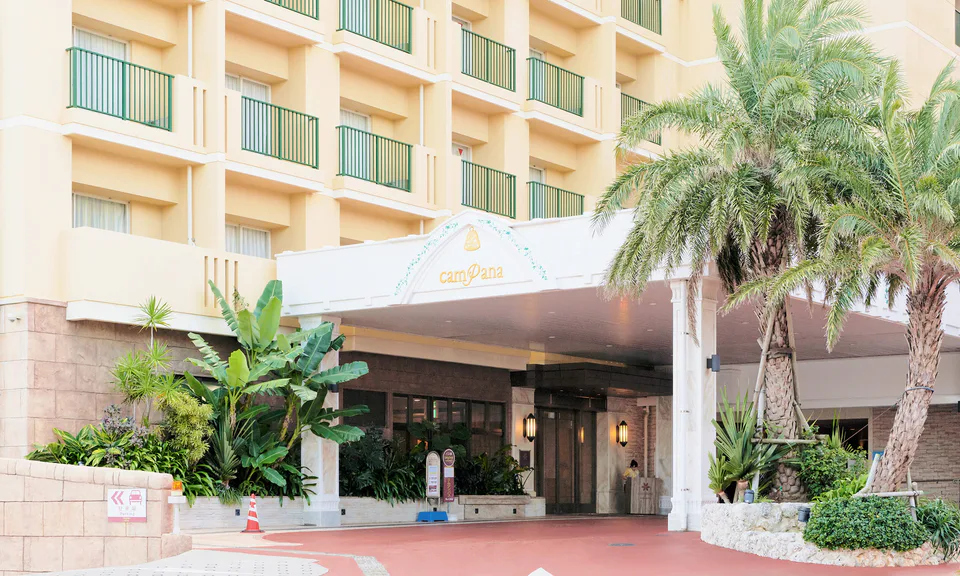
Chatan is not automatically the answer for “people who like shopping.” It makes sense when Mihama American Village is where you already expect to eat, walk and browse on both evenings. Hilton Okinawa Chatan Resort currently describes itself as being in central Chatan next to Mihama American Village, while other Chatan properties sit within the same broader American Village area. That makes the location useful not because every shop is open late, but because you can shop once, return to the room, rest or drop bags, then walk back out without tying the rest of the night to the car.

Once Chatan itself is the answer, narrow the hotel layer separately. Start with the Hilton vs Vessel Campana vs LeQu Chatan comparison. Families deciding on bedding can go deeper into Vessel Hotel Campana Okinawa; travelers who may actually use resort facilities can check Hilton Okinawa Chatan Resort; and those prioritising late-night spa facilities can compare LeQu Okinawa Chatan Spa & Resort. Those pages are there to choose the hotel after Chatan wins, not to force Chatan into an itinerary that does not need it.
If American Village is the evening base, shortlist three Chatan hotels
The Chatan trap: American Village is not one mall with one closing time
Do not turn “stay in Chatan” into “you can shop late every night.” Depot Island and the wider American Village area list businesses individually, and opening hours differ by shop and restaurant. Some stores currently list 21:00 closing, but that cannot be generalized to the whole district. Build a list of the three to five shops and restaurants you actually care about, check their hours for your dates, then decide whether a nearby room creates a useful second round. If your priority stores close before dinner, hotel proximity will not magically create more shopping time.
When is Naha more useful? When shopping, repacking and departure belong on the same line
Naha does not win because it is “better for shopping” in the abstract. It wins when the final two nights need to combine repeated Kokusai-dori access with packing and departure preparation. JR Kyushu Hotel Blossom Naha currently lists Kokusai Street at about a one-minute walk and Miebashi Station at about five minutes. HOTEL COLLECTIVE sits directly on Kokusai-dori and lists Kencho-mae Station at roughly seven minutes on foot. For travelers who will walk the street more than once on both nights, those distances make “shop, unload, go out again” realistic rather than theoretical.
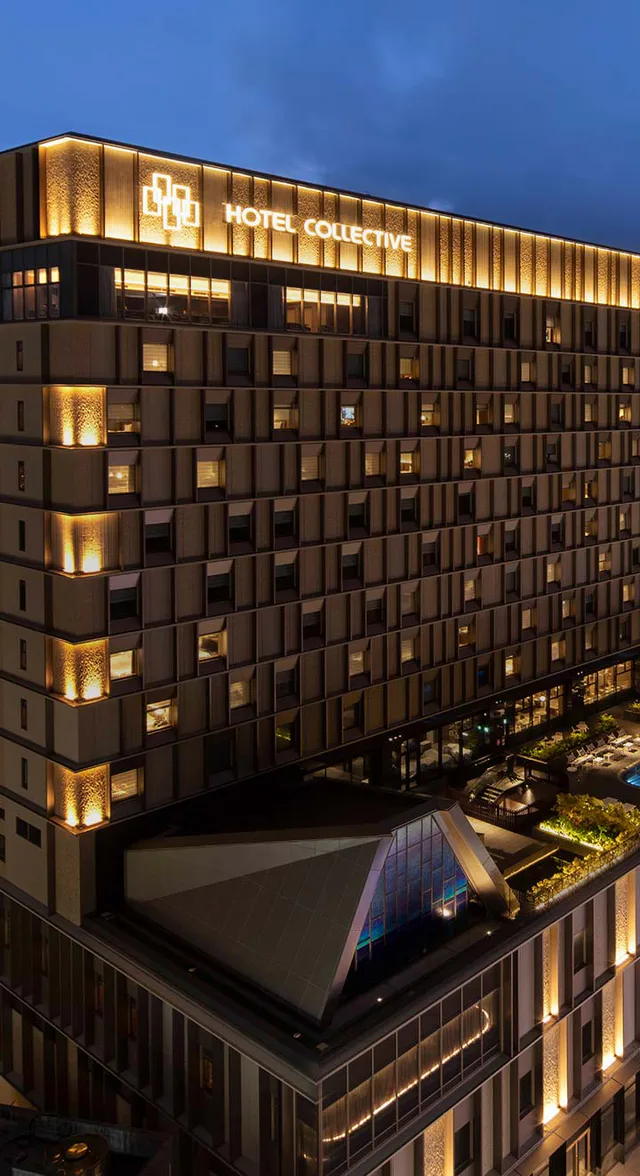
For a Kokusai-dori-focused stay, compare the practical trade-offs in the JR Kyushu Hotel Blossom Naha review and the HOTEL COLLECTIVE Naha review. If station connection and airport-side logistics matter more than being directly on Kokusai-dori, use the RIHGA Royal Gran vs JR Kyushu Hotel Blossom Naha comparison as the next filter.
Tokyu Stay is a third shopping answer: not central Kokusai-dori, but a strong final-packing base
Tokyu Stay Okinawa Naha should not be described as a Kokusai-dori-core hotel. Its current official site places Tsubogawa Station about three minutes away and Kokusai Street about a 15-minute walk away. The reason it still belongs in this decision is different: the Don Quijote Naha Tsubogawa branch occupies the first and second floors of the same building, and the hotel emphasizes in-room washer-dryers and kitchenettes. That combination is useful when the last evening is about topping up snacks, toiletries, cosmetics or baby supplies, washing clothes and reorganising luggage—not when you want to step in and out of Kokusai-dori all night.
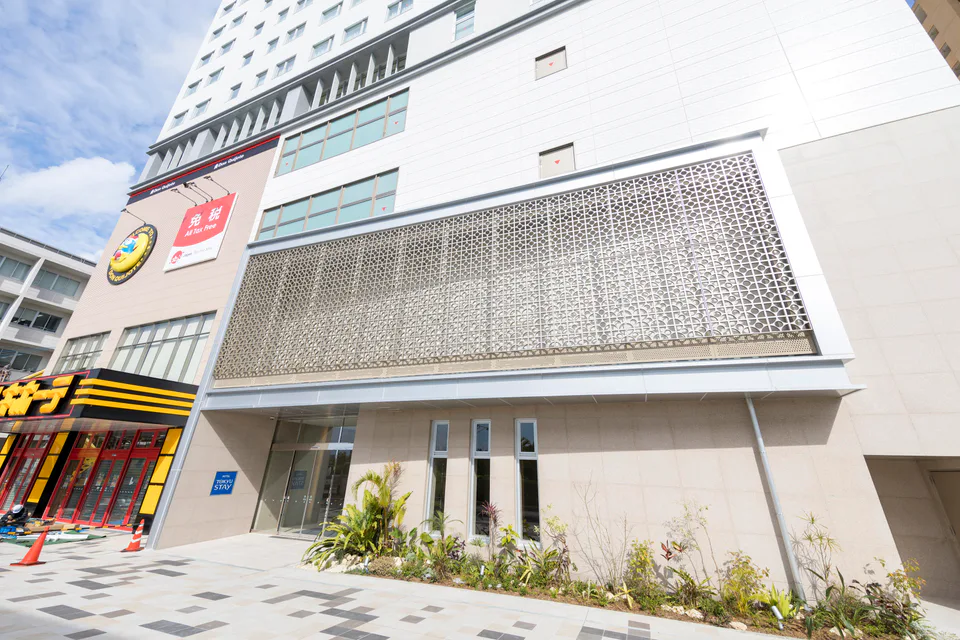
If this sounds like your last night, read the Tokyu Stay Okinawa Naha final-night guide. If flight time and rental-car return are the bigger risks, step back to Onna vs Naha for your last night instead of letting shopping override departure logistics.
If the final night is for shopping, laundry and repacking, check Tokyu Stay
The most useful test: after round one, would you really go back to the room?
Put a concrete time on it. Imagine it is 17:30, you already have two bulky bags, and dinner is at 19:00. Would you return to the hotel in between? If the room is within the American Village area or directly beside the part of Kokusai-dori you are using, maybe yes. If returning means another parking cycle, a train ride or enough walking that the group would rather keep carrying the bags, probably no. That answer is usually more useful than arguing over whether a hotel is 1.2 km or 1.8 km from “the shopping area.”
Self-drive travelers: do not treat the rental car as a free luggage locker
A car can hold shopping bags, but it is not the same as returning to the room. Valuables, heat-sensitive purchases, food, liquids and items needed by children may not be things you want sitting in a parked car for hours. More importantly, if the driver still has to get everyone back to the hotel after dinner, the whole evening remains anchored to the car. A shopping base should reduce the group’s physical and transport burden, not merely provide somewhere to hide bags.
If the real problem is that you are taking the car out of the hotel two or three times every day, the issue is wider than shopping. Revisit whether the Okinawa base itself suits a self-drive trip rather than trying to solve parking friction inside a shopping article.
No-car travelers should put the evening destination even closer to the room
Without a car, every shopping bag immediately becomes walking and transfer cost. It can make sense to separate the daytime sightseeing question from the evening-base question: use buses or a tour to travel farther during the day, then return to Chatan or Naha and finish dinner and shopping on foot. If most of your spending and eating after 18:00 happens in one district, shaving friction from those repeated evening movements can matter more than making one daytime attraction slightly closer.
Families, older parents and four adults: bag weight is rarely distributed evenly
Four people shopping together does not mean four people each carry one neat bag. Someone may be pushing a stroller, someone may be holding a camera, someone may be helping a child or parent, and the strongest person often ends up with the overflow. For these groups, the ability to return to the room mid-evening deserves more weight. But do not let one enthusiastic shopper move the entire group to a shopping district if everyone else would lose a better hotel location.
Why the final two nights are where a shopping base most often pays back
Shopping heavily at the start of the trip creates another cost: everything you buy then travels through the rest of Okinawa with you. Concentrating purchases near the final two nights means fewer hotel moves with extra bags and earlier separation of checked luggage, carry-on items and fragile purchases. That still does not mean “always move to Naha.” If the final two evenings are genuinely American Village evenings, your flight is late and the rental-car plan is clean, Chatan can still produce the better awake-time experience.
How should you compare prices? Count repeated friction, but do not invent a cash value for convenience
Compare Chatan and Naha on the same dates, same number of guests, equivalent bedding and cancellation terms. Then ask what the more expensive base actually removes. Does it save a taxi on both nights? Avoid another parking cycle twice? Give you two realistic mid-evening room resets? If the premium only saves a few minutes once, it is hard to justify. If the location is used repeatedly across both nights, paying more for it starts to have a job. Do not turn convenience into a made-up yen value just to force the conclusion.
NO-GO: four times I would not change hotels just for shopping
First, you have one planned mall stop and can place it naturally inside the self-drive route. Second, the final night is only for “one more quick browse,” but the next morning has an early flight or very early rental-car return. Third, you split one night in Chatan and one in Naha, so neither location becomes a real evening base. Fourth, you break an otherwise sensible family or older-parent stay just to be closer to Don Quijote or Kokusai-dori. In all four cases, “shopping convenience” is easy to overvalue.
The counterargument: choosing only for airport access can make the final two nights end too early
The reverse mistake is also real. If your flight is late, rental-car return is not time-critical and you still spend both evenings shopping, eating and walking after 18:00, moving somewhere you do not actually want to be at night just because it is closer to the airport can waste more of the trip. Hotel location should serve the hours you are awake, not only the final transfer before departure.
Before you pay: eight questions that decide Chatan vs Naha
1) On the final two nights, are you actually shopping in American Village or around Kokusai-dori and central Naha? 2) After the first shopping round, would you want to return to the room? 3) Would you go back out again for dinner, a walk or more shopping? 4) Is anyone traveling with children, older parents, a stroller or limited ability to carry bags for hours? 5) Will you keep a rental car, and does anyone want to drink or split up at night? 6) Does the final night require laundry, repacking and reorganising a large haul? 7) Do flight and car-return times leave room for last-night shopping? 8) If you do not change hotels, are you adding one short trip—or repeating the same bag-carrying friction on both nights?
Question eight is usually the tie-breaker. One extra short trip is not enough reason to move. If both evenings become meaningfully worse because the hotel is too far away to use as a reset point, moving the base starts to make sense. Store hours, parking rules, hotel facilities and transport conditions can change, so check the exact businesses and hotel rules again for your dates before booking.
Put Chatan and Naha back into the full Okinawa accommodation decision
Final verdict: a shopping base buys the ability to split the evening into two parts
Choose Chatan when American Village is already the destination on both evenings. Choose Naha when the final two nights are built around Kokusai-dori, city shopping, sorting purchases and preparing to leave. Treat Tokyu Stay at Tsubogawa as a third answer: not the best hotel for repeated Kokusai-dori laps, but a practical final-night base when Don Quijote, laundry and repacking need to happen together.
The simplest floor is this: an “Okinawa shopping hotel” should give you at least one room return you will genuinely use across the final two nights, or combine shopping and final packing into one efficient base. If it does neither, do not pay more or move hotels merely because a listing says there are many shops nearby.
If you still have not settled on your base, go back to the Okinawa hotel decision guide and re-run the choice by your last stop, driving frequency and travel party.
Sources and what to recheck before booking
Hilton Okinawa Chatan Resort — official site for current location, American Village relationship and parking details.
Depot Island / American Village store directory for business-by-business store listings; individual opening hours should be checked for your dates.
JR Kyushu Hotel Blossom Naha — official access page for current Kokusai-dori and Miebashi access plus Sunday transit-mall notes.
HOTEL COLLECTIVE — official access page for Kokusai-dori location, Kencho-mae access and Sunday traffic arrangements.
Tokyu Stay Okinawa Naha — official site for Tsubogawa Station access, same-building Don Quijote, washer-dryers and luggage-storage information.
Store opening hours, parking fees, traffic restrictions, room facilities and hotel policies can change. Reconfirm the specific shops and hotel conditions for your travel dates before paying.
Osaka Long-Stay Hotels for 5–7 Nights: Laundry, Kitchens and When Not to Change Areas
Okinawa Girls’ Trip Hotels: Bathrooms, Luggage and Late Nights Matter More Than the Pool
Fukuoka Shopping Hotels: Dropping Bags Midday Matters More Than Saving Two Minutes to the Subway
Okinawa Trip Cost: 5-Day Budget for Hotels, Car and Activities
Where to Stay in Kamakura or Fujisawa: The Best Base for Two Nights, With Enoshima as the Wild Card