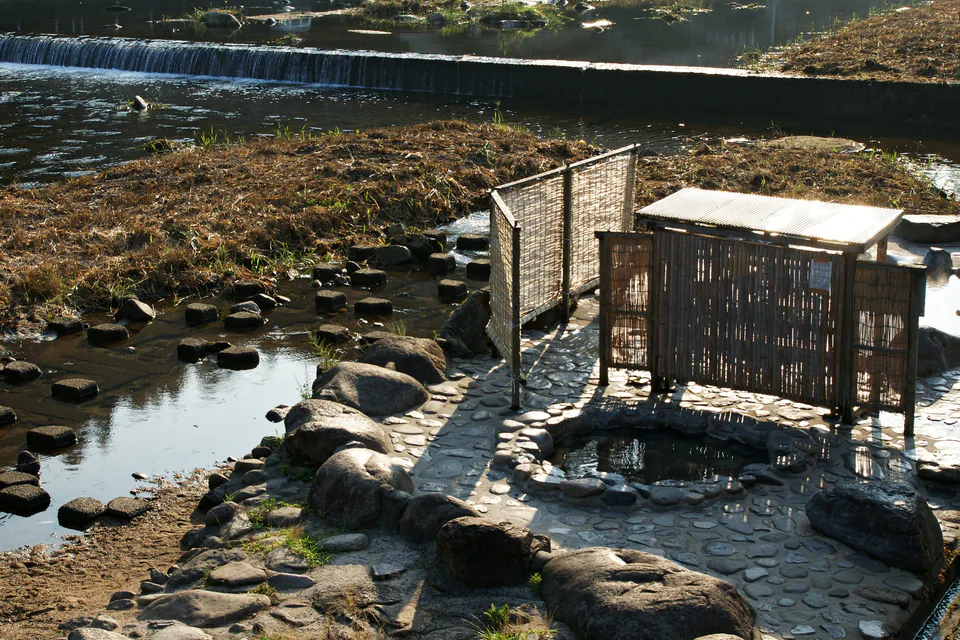
Choose Misasa Onsen when the evening is the reason you are staying: ryokan dinner, bathing, a riverside walk and a slow morning. Choose Kurayoshi when the room is mainly protecting a train, large luggage or a late arrival. Without a car, the two bases are close enough that distance alone should not decide it. Misasa Onsen’s official access information puts the local bus from JR Kurayoshi Station at about 20 minutes, while the current Hinomaru timetable still gives multiple buses through the day.
The more useful distinction is timing. On the current timetable, the final direct bus from Kurayoshi Station toward Misasa leaves at 19:25. But a representative half-board ryokan, Misasakan, currently says its final dinner start is around 19:00 and warns that a later arrival may mean dinner cannot be served or refunded. For a half-board stay, the dinner clock can become binding before the last-bus clock does. That is the failure mode that should decide a late-arrival booking.
↔ Scroll table left or right
Your real constraint | Start with | Why | What can reverse it |
Arrive by mid-afternoon and want a ryokan evening | Misasa Onsen | The bus transfer buys dinner, baths and a different evening rather than only a different postcode | Your exact ryokan has an earlier pickup or meal deadline than your train can meet |
Reach Kurayoshi in the early evening with half board booked | Kurayoshi unless the ryokan confirms the plan | Public buses run later than some dinner start times, so “a bus still exists” does not prove the ryokan night still works | Room-only booking or written confirmation of a late meal/check-in |
Early JR departure next morning | Kurayoshi Station area | You remove the morning bus, weather and luggage hand-off before the train | The departure is late enough that breakfast and a final Misasa bath still fit comfortably |
Two nights focused on baths and Mt Mitoku | Misasa Onsen | The hotel becomes a real base rather than a one-evening detour | Most of the middle day actually depends on JR Kurayoshi |
Two nights with Kurayoshi old town plus several regional bus trips | Kurayoshi | One hotel can serve the railway, the storehouse district and a Misasa day/evening visit | You specifically want the after-dinner onsen-town hours |
Two large suitcases, children or older travellers | Bias toward the base with fewer timed hand-offs | A nominal 20-minute bus becomes more costly when every transfer involves bags or mobility constraints | Confirmed ryokan pickup or luggage forwarding removes the last-mile problem |
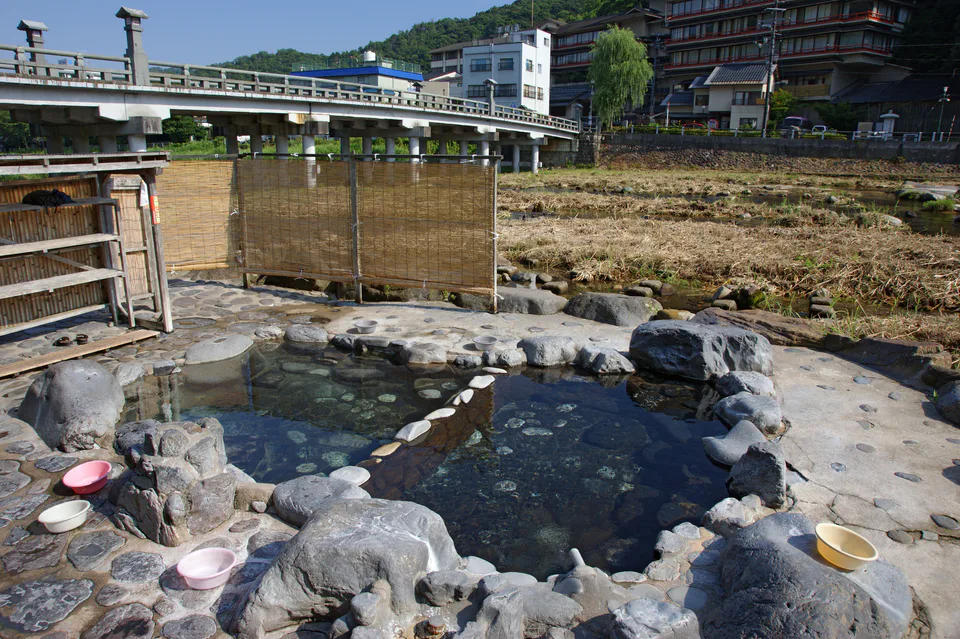
The hidden cutoff is dinner, not the final bus
Misasa Onsen’s official access page describes JR Kurayoshi Station → Misasa Onsen as roughly 20 minutes by local bus. Hinomaru Bus currently lists 17 weekday departures from Kurayoshi Station on the 70/71 route, starting at 07:45 and ending at 19:25. The Saturday/Sunday/holiday timetable has 16 departures and the same 19:25 final departure. The last scheduled services reach the Misasa Onsen Kanko Shoko Center stop at roughly 19:50.
Those numbers make Misasa look fairly forgiving. They are only half the decision. A half-board ryokan may have a much earlier operational deadline than the bus network. Misasakan’s current FAQ, for example, gives dinner service from 18:00–21:00 but says the final dinner start is around 19:00; arrivals after that may not be able to receive dinner, and the missed dinner is not refunded under the stated rule.
This does not mean every Misasa ryokan uses a 19:00 cutoff. It means the correct sequence is:
Find the train that gets you to Kurayoshi.
Check the bus or confirmed ryokan pickup.
Then check the exact meal and latest check-in rule for your rate.
From a planning perspective, I would treat a Kurayoshi arrival after roughly 18:00 as a warning point for a traditional half-board stay, not as an official cutoff. At that point a small train delay can consume the bus margin, pre-dinner bath and meal start together. A room-only Misasa booking can tolerate that arrival much better than an expensive dinner-inclusive package.
Misasa wins when the bus unlocks hours you cannot reproduce from Kurayoshi
The strongest reason to sleep in Misasa is not access to hot water; day visitors can use a number of participating ryokan baths. The overnight premium buys the sequence around the baths: check in, change pace, eat, walk the compact onsen district, bathe again and wake up without first travelling from Kurayoshi.
That sequence is especially valuable for a first ryokan stay. If the property itself is the major purchase, use the Japan ryokan and onsen selection guide before choosing the room plan, and read the practical onsen etiquette guide if public bathing is unfamiliar.
Misasa becomes weaker when you remove those hotel hours. Arrive after dinner, sleep, eat breakfast and immediately return to Kurayoshi and you have paid for the last mile while using little of what the last mile unlocked. The right question is therefore not “Is Misasa prettier?” but how many useful ryokan/onsen hours remain after transport?
Kurayoshi wins when the next rail movement matters more than the previous evening
Kurayoshi is the rail node. Kurayoshi tourism currently describes the Super Hakuto journey from the Kansai direction as roughly three hours and lists Kurayoshi Station as the bus terminal for Misasa, Mt Mitoku and other central-Tottori destinations. For a traveller moving through the San’in region, sleeping near the station turns the hotel into infrastructure.
That matters most on an early departure. A Misasa morning can involve breakfast timing, checkout, a walk or hotel shuttle, then a local bus before you even reach the limited express. A Kurayoshi Station hotel removes that entire first chain. One fewer connection is disproportionately valuable when missing the train would damage the rest of the day.
Kurayoshi is also better than it first appears for sightseeing without carrying the full suitcase. The JR Kurayoshi Station tourist information centre currently operates 09:00–17:00 and the tourism office notes coin lockers on the station’s second floor. The White Wall Storehouses are reached from the station by local bus in roughly 12–17 minutes depending on stop/route, with frequent service during much of the day. That makes “station hotel + day bag” a credible alternative to moving luggage into every sightseeing area.
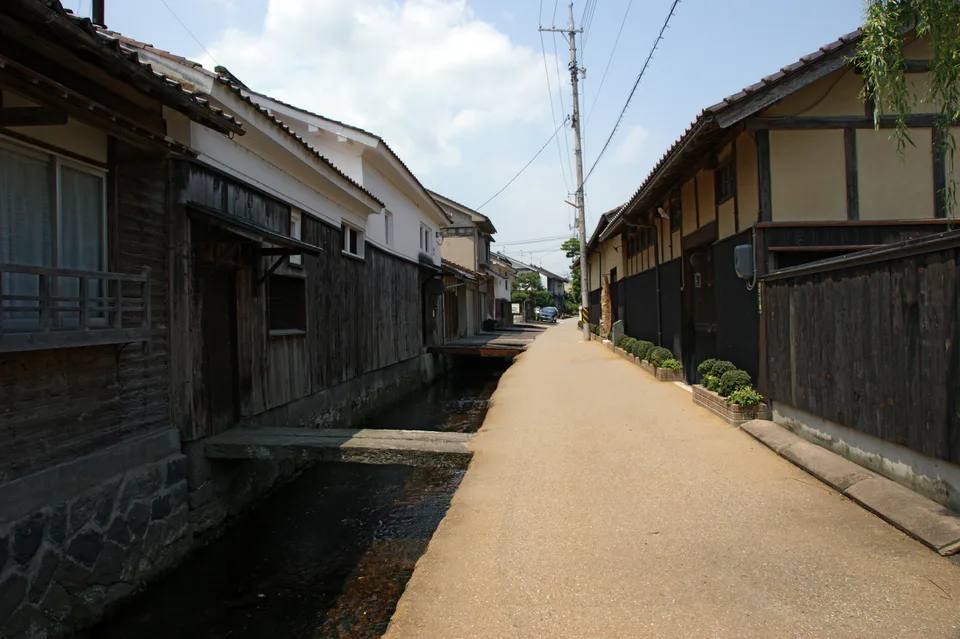
Do not treat “Kurayoshi” as one hotel location
A station-area stay and a Shirakabe Dozo-gun stay solve different problems. Kurayoshi Station is the transport answer. The white-walled storehouse district is the atmosphere-and-walking answer, but it adds a local bus or taxi before an early train.
That distinction is important because otherwise the comparison becomes misleading: “Kurayoshi is better for JR” is only fully true when the hotel is actually positioned for JR. If you book in the old-town area because the streets look more appealing, recalculate the morning exactly as you would for Misasa.
The same principle applies inside Misasa. A ryokan with a confirmed station pickup can eliminate much of the public-bus friction; a property that requires you to manage the final walk with luggage cannot. Compare the complete arrival chain rather than town names.
One night: choose the night whose fragile edge you want to protect
For one night, I would use a simple rule.
Choose Misasa when you can arrive early enough for an unhurried check-in and the paid value is concentrated in dinner, bathing and the following morning. The extra 20-minute bus leg earns its keep because it changes the entire night.
Choose Kurayoshi when the night sits between two transport-heavy days, you reach the area late, or the following morning starts with an important train. In that case Misasa may add two local-bus legs while contributing only a short sleep window.
The answer can reverse for a room-only traveller. Without a fixed ryokan dinner, Misasa tolerates a later arrival better. It can also reverse for someone who has no interest in public baths: the onsen-town premium is much harder to justify if the main amenity is not part of the trip.
Two nights: the default is one base, not one night in each
The fact that Kurayoshi and Misasa are close is actually an argument against an automatic split. Two hotels create checkout, luggage handling, another check-in and another set of arrival rules to save a short bus journey.
Two nights in Misasa work when the middle day has an onsen/Mt Mitoku purpose and you want the ryokan stay to function as a deliberate slow stop.
Two nights in Kurayoshi work when JR movement, the storehouse district and several central-Tottori bus trips matter more than a second ryokan evening. You can visit Misasa with a day bag and return without moving the suitcase.
A split becomes rational when the two nights perform different jobs. Two examples:
Kurayoshi → Misasa: arrive late from Kansai, sleep by the station, sightsee the next morning, then enter Misasa in time to use a full ryokan afternoon/evening.
Misasa → Kurayoshi: protect the onsen night first, then move to the station side when the next morning has a time-sensitive rail departure.
If the second hotel does not remove a real deadline or unlock a different block of useful time, keep one room.
The ¥1,300 two-day bus pass changes the no-car calculation
Kurayoshi tourism currently sells the Yu-Yu 2-Day Pass for JPY 1,300. Its covered local-bus area includes Kurayoshi Station, the White Wall Storehouses, Misasa Onsen, Mt Mitoku, Hawai Onsen and Togo Onsen. A three-day prefecture-wide bus pass is also listed at JPY 1,800.
The pass does not make Kurayoshi automatically better, but it changes the economics when several bus branches are already in the itinerary. A traveller doing Kurayoshi old town + Misasa + Mt Mitoku over two days is buying a regional bus network, not simply one return ride to an onsen.
This is another reason not to optimise the hotel around one transfer. If the whole two-day route repeatedly returns to the Kurayoshi transport node, the station base grows stronger. If the bus usage is only arrival and departure around one ryokan stay, the pass and hub logic matter less.
Large luggage: remove the bag from the choice before downgrading the experience
A 20-minute local bus is trivial with a backpack and more annoying with two 29-inch cases, a stroller or an older parent. But luggage should not automatically force you to abandon Misasa if Misasa is the experience you actually want.
First ask whether the ryokan provides a pickup that matches your train. Then ask whether luggage can be forwarded to the following hotel so you carry only an overnight bag. The Japan luggage-forwarding guide covers the broader workflow.
If neither option works, Kurayoshi Station becomes more attractive because it turns the big suitcase into a stationary object. That is a different argument from saying Kurayoshi is “better.” It is better under a specific luggage constraint.
Families and older travellers should count hand-offs, not kilometres
For a fit couple with one small case, Kurayoshi → Misasa is a modest extra step. For a family with a sleeping child or an older traveller, the same 20-minute bus sits inside a longer sequence: train platform → station concourse → bus bay → luggage loading → onsen stop → final walk → check-in.
That does not make Misasa unsuitable. It raises the burden of proof. A confirmed ryokan shuttle, an early arrival and a room/dinner plan that keeps everyone on site can make the transfer worthwhile. A late arrival followed by an early rail departure usually cannot.
Weather raises the cost further. Kurayoshi’s tourism office specifically warns that taxis may not be immediately available in bad weather. Do not build a wet-weather backup that assumes an instant taxi will rescue a missed bus.
Mt Mitoku can make Misasa the stronger two-night base — but only if the trip is built around it
Kurayoshi’s current local-transport information links Misasa directly with the Mt Mitoku route, and the two-day bus pass covers both. That can give a second Misasa night a clear job: the middle day is no longer “another day bathing”; it is an excursion that returns to the same ryokan/onsen base.
But do not use Mt Mitoku as a decorative justification for a second night. The hiking/temple visit has its own access, weather and physical-demand conditions. If the traveller will not actually do it, the second Misasa night needs another reason.
Final verdict: decide which clock matters more
For one night without a car, I would choose Misasa when the ryokan evening is a core travel experience and I can reach Kurayoshi with comfortable time before the property’s meal deadline. I would choose Kurayoshi when the arrival is late, the next train is important, or large luggage makes another timed transfer disproportionately costly.
For two nights, keep one base unless the hotel move changes the purpose of the trip. Kurayoshi → Misasa is strong when a late first night can be converted into a full ryokan second night. Misasa → Kurayoshi is strong when an onsen night is followed by an early rail day. Otherwise, a 20-minute bus connection is too short to justify changing keys simply because both places are on the itinerary.
The practical test is simple: what would you lose if you slept in the other base? If Kurayoshi costs you the ryokan dinner-and-bath evening you came for, stay in Misasa. If Misasa costs you sleep, train margin and an awkward luggage transfer for only a few usable hotel hours, stay in Kurayoshi.
Compare Misasa Onsen and Kurayoshi stays for your dates
Hakone Ryokan with Private Onsen: Dinner, Tattoos and Car-Free Access
MiraCosta vs Fantasy Springs Hotel: Which DisneySea Hotel Is Better?
Kagoshima or Ibusuki: Where to Stay for One Night Without a Car
Okinawa Car Rental: OTS vs Toyota vs ORIX — Which Should You Book?
References
Misasa Onsen official tourism — access from JR Kurayoshi Station · Hinomaru Bus — current Kurayoshi Station/Misasa route timetable · Kurayoshi Tourism — local buses and Yu-Yu 2-Day Pass · Kurayoshi Tourism — station tourist information and lockers · Misasakan official FAQ — current dinner timing example. Checked August 25, 2026. Bus timetables, ryokan pickup arrangements, meal deadlines and operating rules can change; verify the exact travel date and booked property.