
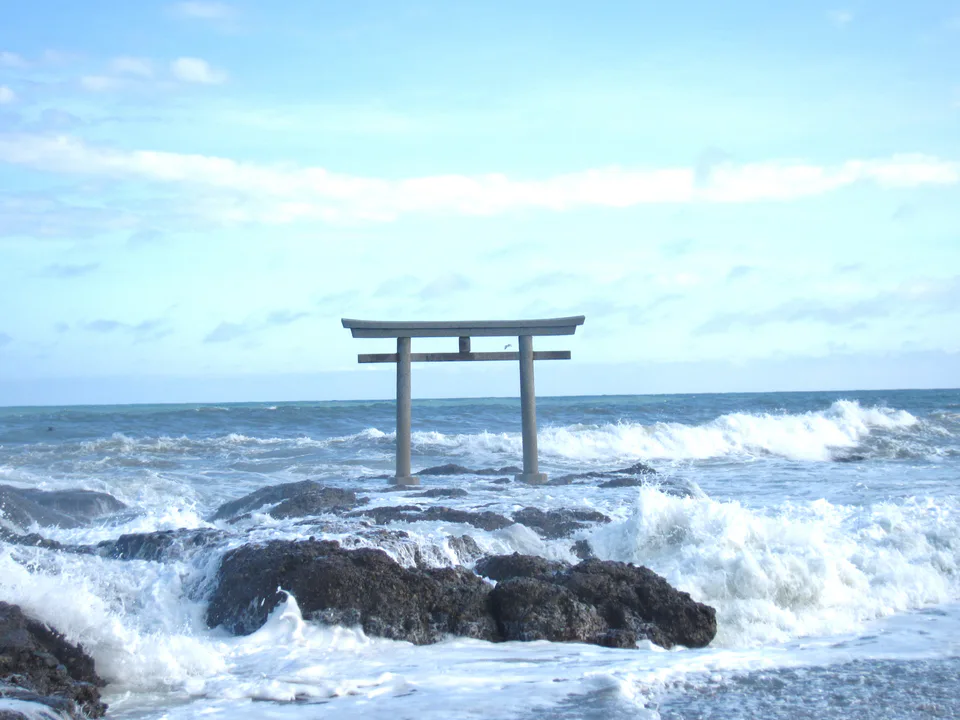
Without a car, Mito is the better default overnight base; Oarai is worth the hotel move only when sleeping on the coast buys hours that a Mito day trip cannot reproduce. The rail leg itself is not the problem: Kashima Rinkai Railway currently puts Mito–Oarai at roughly 15 minutes. The real difference begins after Oarai Station. Aqua World is about 4.5 km away, the ferry terminal is in another direction, and the shrine, fish-market area and coast each create their own bus, taxi or walking decision.
That leads to a cleaner rule than “Mito for transport, Oarai for scenery.” Stay in Mito when Oarai is mainly a daylight excursion and the next trip leg returns to JR. Stay in Oarai when you can name at least two coast-side time windows the overnight unlocks—for example an evening by the shore plus Kamiiso sunrise, or sunrise plus an early aquarium/coastal morning. A ferry departure by itself does not automatically justify an Oarai hotel because current MOL Sunflower access schedules still provide direct Mito–ferry-terminal buses.
↔ Scroll table left or right
Your trip shape | Better base | Why | What can reverse it |
One night, Kairakuen + one Oarai daylight block | Mito | One hotel, easy JR onward travel, and Oarai is only about 15 minutes away by rail | The coast before breakfast is a primary goal |
Sunset/evening coast + Kamiiso sunrise | Oarai | The hotel buys two non-day-trip time windows | Bad coastal weather removes most of that value |
Aqua World + market + shrine in daylight only | Usually Mito | Those stops can be done as an excursion; changing hotels does not remove Oarai's local last-mile transport | You also want an Oarai evening/morning, not only daytime attractions |
Two nights, one full coast day | Two nights in Mito | A split stay may replace one short rail ride with checkout, luggage and another check-in | Day 2 naturally ends on the coast and Day 3 starts there |
Boarding the 19:45 Sunflower evening ferry | Mito can still work | MOL currently publishes direct Mito Station–Oarai Ferry Terminal buses, including a 17:10 → 17:45 connection | Your earlier itinerary makes same-day transfer fragile or you want a relaxed pre-ferry Oarai stay |
Large suitcase, family or older traveller | Bias toward Mito | Keeping the main bag at one regional hub removes repeated local transfers | The Oarai hotel itself is the purpose and can solve the last mile |
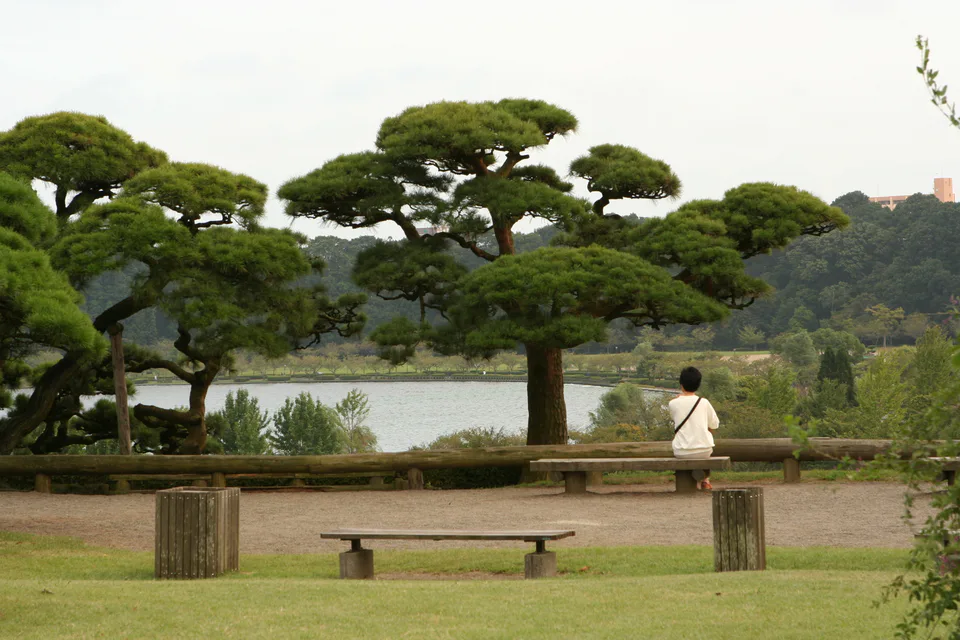
Kairakuen in Mito. Photo: Lukas / Wikimedia Commons, CC BY 2.0.
The 15-minute train is not the important number
Kashima Rinkai Railway's current station information gives Oarai–Mito at about 15 minutes, and the 2026 timetable shows many examples in the 14–18 minute range. That is short enough that the railway itself rarely justifies moving hotels.
The hidden cost appears after you step off at Oarai. The railway's own Oarai Station guide places Aqua World Oarai Aquarium about 4.5 km from the station and about 10 minutes away on the Kaiyu-Go loop bus. Oarai Tourism Association says the ferry terminal is about 15 minutes from Oarai Station by Kaiyu-Go or about 20 minutes on foot. The coastal shrine, fish-market area and other stops create additional local movements.
So the useful comparison is not:
Mito hotel → 15-minute train → Oarai hotelIt is:
Mito hotel → Oarai Station → local bus/taxi/walk → attraction
versus
Oarai hotel → local bus/taxi/walk → attraction
If the Oarai hotel is not actually near the coast zone you want, the overnight may save less local transport than the town name suggests.
Oarai's loop bus is cheap, but it does not make the town one compact walkable zone
Oarai's current Kaiyu-Go loop bus costs JPY 100 per ride, with a JPY 200 one-day pass. That is excellent value, but price and frequency are different questions. The tourism association explicitly notes that some services run only on weekdays or only on weekends/holidays, with separate holiday patterns.
This matters for car-free planning because a cheap bus that departs after you need it is not useful. Build the day around the live timetable first, then use taxis to repair a small gap if the hotel or sunrise makes the overnight worthwhile. Do not choose Oarai because “there is a loop bus” and assume aquarium, shrine, port and market become interchangeable stops.
For a family, the one-day bus fare is almost irrelevant compared with the cost of three or four separate waits, a sleeping child and several bags. Count hand-offs, not only yen.
What does an Oarai hotel actually buy?
The best case for Oarai is access to hours that disappear when you commute from Mito. Oarai Tourism Association's own one-night model itinerary is revealing: it suggests a coastal block around 20:00, Kamiiso-no-Torii sunrise around 06:00 and Aqua World from around 09:30. The exact timing is only a model plan, but the structure shows what an overnight is for.
ValueNavi's test: an Oarai hotel should ideally buy at least two of these:
an evening coastal walk or dinner that you would not stay late enough to use on a Mito day trip;
Kamiiso sunrise without a pre-dawn transfer from Mito;
a relaxed coastal breakfast / early-morning shrine block;
an early start near Aqua World or another coast-side anchor;
a ferry/port sequence that is materially safer from the hotel than from Mito.
If the answer is only “I want to visit the aquarium in the afternoon,” keep the Mito room. You are paying for a second hotel without buying a different part of Oarai.
Kamiiso torii at Oarai Isosaki Shrine. Public-domain photograph by Saigen Jiro.
A ferry ticket does not automatically make Oarai the better hotel base
MOL Sunflower currently operates two daily Oarai–Tomakomai patterns in the July–September 2026 timetable: the evening ferry leaves Oarai at 19:45, while the night ferry leaves at 01:45. Oarai therefore matters as a port, but the port schedule does not by itself force a hotel move from Mito.
MOL's current Oarai access page lists direct buses from Mito Station North Exit to the ferry terminal. For the evening sailing, a published 17:10 departure reaches the terminal at 17:45; later 18:04/18:05 services are also listed on applicable days. For the night ferry, a 21:20 bus reaches the terminal at 21:43. Boarding requirements still govern how much margin you need, so do not simply choose the latest bus because it exists.
The result is counterintuitive: if the only reason you were about to book Oarai was “I have a Sunflower ferry tomorrow,” price Mito again. A Mito station hotel can protect the JR side of the journey and still connect to the port by bus. Oarai becomes stronger when you also want the coast or when the travel chain into Mito itself is too fragile for same-day ferry positioning.
The opposite direction is different. An evening or night arrival from Hokkaido can leave you with fewer onward choices, and disembarkation time can vary. In that case an Oarai or Mito hotel should be chosen from the actual arrival and onward transport, not from the outbound timetable.
One night: Mito wins unless the night and morning are the attraction
For most one-night car-free trips, I would sleep in Mito. A single hotel lets you leave the main suitcase, use Kairakuen or another Mito block, travel to Oarai with a day bag and return to the regional rail hub for dinner and the next journey.
The recommendation flips when the only reason for going is coastal time. If Kamiiso sunrise is a priority, sleeping in Mito and creating a pre-dawn transfer defeats the purpose of the overnight. Likewise, if you want the coast after dinner and again before breakfast, Oarai is not a more scenic version of the same hotel night—it is buying two different usable windows.
Do not use arbitrary arrival-hour rules such as “after 17:00 always sleep in Oarai.” What matters is what the next 12 hours contain. Arriving at 18:00 with no sunrise plan can still favour Mito. Arriving at 15:00 with sunset, dinner and sunrise planned can justify Oarai immediately.
Two nights: demand more than one saved train ride before splitting hotels
Mito and Oarai are too close for a hotel split to justify itself by rail time. Moving from one to the other replaces a roughly 15-minute line-haul with packing, checkout, luggage movement, early/late storage and another check-in.
I would use a two-window rule: split the stay only when the Oarai night creates at least two valuable coast-side windows that the Mito base cannot provide cleanly. Examples include evening coast + sunrise, or sunset + ferry positioning + early coastal morning. If you only gain one sunrise but lose half the preceding afternoon to hotel logistics, the trade is weaker than it looks.
Two nights in Mito is the better practical choice when you want Kairakuen plus a full Oarai sightseeing day and value one stable luggage base. One Mito night + one Oarai night becomes strong when Day 1/2 naturally moves toward the coast and the following morning also begins there.
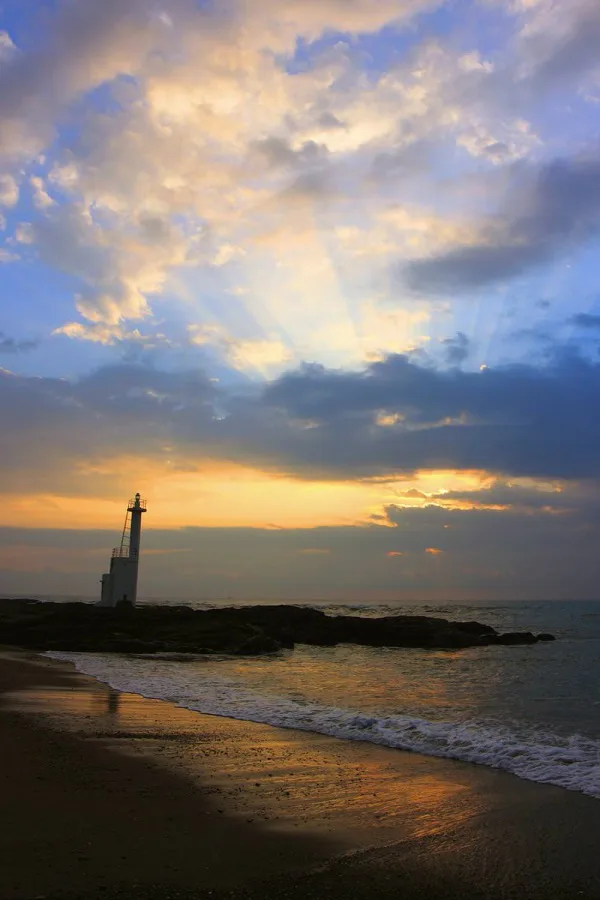
Oarai Coast. Source: Ibaraki Tourism Photo Library.
Bad weather removes Oarai's overnight premium faster than Mito's
An Oarai hotel premium is concentrated in coastal time. Strong wind, heavy rain or a poor sunrise forecast can erase the very hours you paid to unlock. Mito's value is more structural: JR access, restaurants, the regional hub and the ability to postpone or shorten Oarai.
That means flexible cancellation has more value when Oarai is being booked specifically for sunrise or an evening coast. If the forecast turns poor before the cancellation deadline, ask whether the Oarai night still does two jobs. If not, consolidate the stay in Mito rather than preserving a second hotel out of inertia.
Families, older travellers and large luggage should count local transfers
The Mito–Oarai rail leg is short enough that comfort often matters more than minutes. A family that keeps one hotel in Mito can leave the main bags behind and use Oarai with a day pack. A split stay means moving those bags onto the local train and then solving the Oarai hotel last mile as well.
Older travellers should also look at the exact Oarai hotel location rather than the town label. A hotel by the shore can be excellent for sunrise but poor for the aquarium or station. If a taxi is needed anyway, compare the total number of vehicle entries and waits under both plans.
If luggage is the only thing preventing an otherwise strong split, the Japan luggage-forwarding guide can reduce the burden—but forwarding should support a good itinerary, not manufacture a reason to change hotels.
Final verdict: Mito buys resilience; Oarai buys off-hour coastal access
Choose Mito for the default one- or two-night car-free trip. The train to Oarai is short, JR onward travel is easier, and one hotel lets you keep luggage out of the local-bus problem.
Choose Oarai when the overnight itself changes the hours you can use. Sunset or an evening coast plus Kamiiso sunrise is a strong reason. A daylight aquarium/shrine/market list is not.
Do not book Oarai solely because you have a Sunflower ferry. Current Mito–ferry-terminal buses mean Mito can still be a viable positioning base; verify the sailing-specific boarding margin and live bus timetable before travel.
The simplest test is: if you remove the Oarai hotel, which two experiences disappear? If you cannot name two, keep the Mito room and use the 15-minute railway.
Related planning
Izu Oshima Day Trip or Overnight? · Japan Luggage Forwarding · Japan Rainy-Day Backup Guide
Sources and verification date
Kashima Rinkai Railway — 2026 timetable · Kashima Rinkai Railway — Oarai Station access · Oarai Tourism Association — local access and Kaiyu-Go · Oarai Tourism Association — overnight model itinerary · MOL Sunflower — current ferry timetable · MOL Sunflower — Oarai Port access. Checked August 25, 2026. Train, local-bus and ferry schedules can change; verify the exact date before travel.