
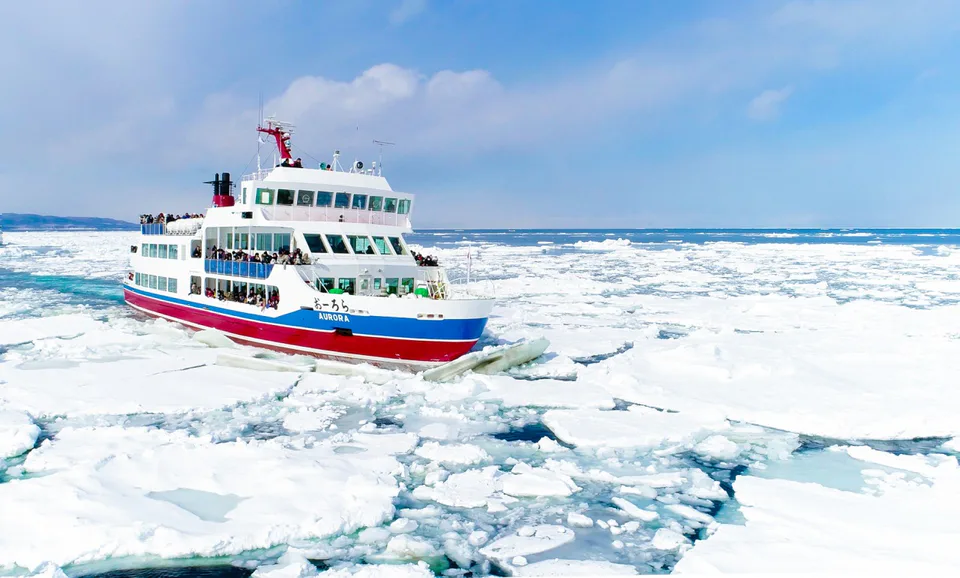
If your Hokkaido trip is already going through Abashiri, buy Aurora separately and make the eastern-Hokkaido route do the expensive work. The boat itself is not the part that usually blows the budget: the current large Aurora fare is JPY 7,000 for about an hour. The costly mistake is forcing a Sapporo round trip, adding a private charter for two people, or choosing a different drift-ice port because its boat ticket is cheaper while ignoring the extra gateway transfer.
There is now one comparison this guide should make before any Sapporo package: Abashiri Aurora vs Monbetsu Garinko III IMERU. Garinko’s 2026 drift-ice ticket was JPY 5,000 for about one hour, JPY 2,000 below the large Aurora. But the Garinko operator currently states that there is no direct bus from Memanbetsu Airport to its facility. If Abashiri, Shiretoko or Memanbetsu already sits in your route, that JPY 2,000 saving can disappear inside a much larger transport detour.
↔ Scroll table left or right
Your trip shape | Start with | Why |
Already travelling through Abashiri / Shiretoko / Memanbetsu | Aurora standalone ticket | Lowest route friction; the cruise becomes one stop in an existing eastern-Hokkaido trip |
Monbetsu is already a destination or fits a north-Okhotsk route | Garinko III IMERU | Lower 2026 ticket baseline and no need to detour to Abashiri |
Sapporo-based and unwilling to manage winter transfers | 2-day package / guided transport | You are paying for cross-region logistics, not a better patch of drift ice |
4–8 people connecting Akan / Shiretoko / multiple eastern stops | Price a private vehicle | Vehicle cost can be split while luggage and transfer friction fall |
Only five days in Hokkaido with Sapporo, Otaru and skiing already fixed | Skip eastern Hokkaido | The drift-ice cruise is not worth deleting every winter-transport buffer |
First decide the port: Aurora vs Garinko is a route decision, not a boat-price decision
For 2026, Abashiri’s large Aurora operated January 20–March 31 at JPY 7,000 for adults and about one hour per sailing. Monbetsu’s Garinko III IMERU operated January 16–March 31, with its official booking site listing JPY 5,000 for adults and about one hour.
If all else were equal, Garinko would save JPY 2,000 per adult. All else is not equal.
Abashiri is a useful eastern-Hokkaido transport node for travellers combining Memanbetsu Airport, Shiretoko, Kitahama, museums and JR travel. Garinko’s own FAQ currently says there is no direct bus from Memanbetsu Airport to the Garinko facility. That makes Monbetsu an excellent choice when Monbetsu is already on the route, but a weak “cheaper cruise” detour when the rest of the itinerary is centred on Abashiri and Shiretoko.
↔ Scroll table left or right
Comparison | Abashiri Aurora | Monbetsu Garinko III IMERU |
2026 adult baseline | JPY 7,000 | JPY 5,000 |
Typical cruise duration | About 1 hour | About 1 hour |
2026 winter window | Jan 20–Mar 31 | Jan 16–Mar 31 |
Best gateway logic | Abashiri / Memanbetsu / Shiretoko route | Monbetsu / north-Okhotsk route |
Main trap | Paying more for a cruise you force into a Sapporo-only trip | Saving on the ticket but adding a larger ground-transfer problem |
My one-cruise rule: choose the port that naturally belongs in the route. Do not cross eastern Hokkaido to save JPY 2,000 on the boat.
2027 is not fully confirmed yet
As of August 25, 2026, Aurora’s official operating-status page says the 2026 winter season ended March 31 and the next status update is scheduled for January 19, 2027 at 17:00. The current fare table is therefore useful for budgeting but should not be presented as a final 2027 timetable or price commitment.
Garinko’s public pages currently show the completed 2026 winter season. Treat those 2026 operating dates and fares as a reference until the next season is formally released.
This matters for long-haul travellers booking flights months ahead. Build a route that still works if the exact sailing time changes; do not buy a non-refundable hotel or internal flight solely around an old winter timetable.
Large Aurora vs Aurora III: smaller is not automatically better
Abashiri currently publishes two products. The large Aurora is about one hour and offers more schedule flexibility. Aurora III is about two hours, costs JPY 9,800 for adults, has fewer sailings and operates only when drift ice is present.
The large ship is therefore the better baseline when Abashiri is one stop in a larger trip and schedule flexibility matters. Aurora III is a more deliberate product for travellers already sleeping in Abashiri who are willing to spend more time at sea and accept the narrower operating condition.
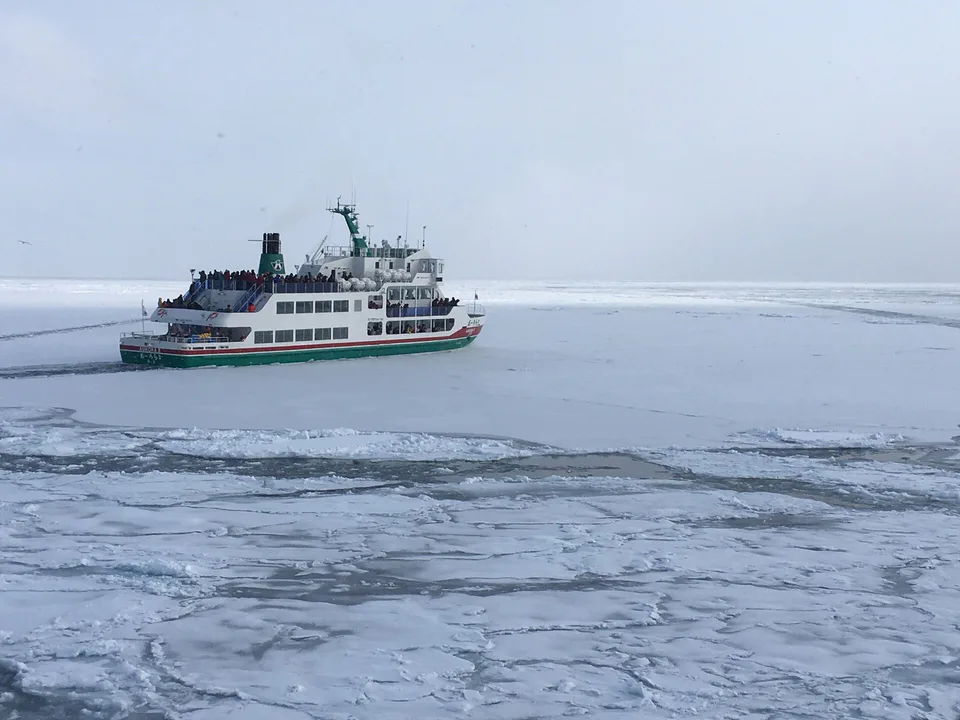
Do not pay JPY 2,800 more because “small ship” sounds more authentic. Pay only if the longer, more condition-dependent cruise is actually what you want.
You are buying a sailing, not guaranteed thick drift ice
Both operators make the same core point: drift ice is a natural phenomenon and can move with weather, wind and currents. Garinko’s official booking page says passengers may not see drift ice on a given day. Aurora’s operating information also changes according to ice and sea conditions.
The useful buffer is therefore time in the region, not duplicate reservations. One night in Abashiri creates a later sailing or next-morning possibility and gives the trip other things to do if conditions disappoint.
For Garinko, the operator’s FAQ says the typical viewing peak is around mid-February to early March, while also warning that the observation window varies. Treat that as a seasonal tendency, not a guarantee.
Do not book two Aurora sailings as your weather hedge
Aurora’s current official notice explicitly asks passengers not to reserve multiple sailings as insurance against bad weather or a day with little drift ice. Duplicate reservations reduce capacity for other travellers and can create last-minute cancellations. The more resilient hedge is to protect time in Abashiri, not to hold two seats you do not intend to use.
This matters because the operating decision is deliberately close to departure. Aurora’s official FAQ says the company normally decides whether a sailing will operate about one hour before departure, and conditions can still force cancellation closer to sailing time. The company also says it does not individually telephone every reserved passenger when a sailing is cancelled; you need to check the official operating-status page yourself.
Use the overnight as the backup mechanism: book your first-choice sailing, keep a later local block or next-morning window available, and pair Abashiri with attractions that still work when the ice is offshore. If the operator cancels the sailing, its current cancellation guidance says passengers do not need to cancel the official booking themselves; eligible prepaid partner/credit-card bookings are processed for refund according to the booking channel and card cycle. No visible drift ice is different from an operator cancellation: the large Aurora can still run a Cape Notoro sea excursion when drift ice is absent, so do not assume “no ice” automatically means a refund.
Motion sickness can change which Aurora product is rational
The large Aurora is marketed as a relatively stable vessel, but the operator’s FAQ still warns that the ship can roll depending on sea conditions. It also states that seasickness medicine is not sold on board, so travellers who normally use it should prepare before reaching the pier.
For someone who is highly motion-sensitive, I would start by comparing the roughly one-hour large Aurora with the roughly two-hour Aurora III rather than assuming the smaller ship is the premium choice. That is a duration-and-exposure judgement, not medical advice and not a claim that one vessel guarantees a smoother ride. If motion sickness would ruin the rest of the day, treat that as a real boundary before paying for the longer product.
Staying one night in Abashiri is still the cleanest Aurora baseline
If Aurora is the chosen cruise, I would normally arrive in Abashiri the previous afternoon, sleep there, use a morning sailing and keep later local time flexible. The cruise terminal is at Roadside Station Ryuhyo Kaido Abashiri, and the route can pair naturally with Abashiri Prison Museum, the Okhotsk Ryuhyo Museum or Kitahama Station.
This turns the cruise into part of an eastern-Hokkaido stop rather than a dedicated expedition from Sapporo. It also gives you a recovery path if the preferred sailing changes.
If the itinerary continues to Shiretoko, compare Shiretoko Drift Ice Walk next. The icebreaker and a guided ice walk solve different experience goals and are not automatically redundant.
A Sapporo 2-day package is a logistics purchase
If you remain based in Sapporo, a 2-day small-group tour or self-guided package can still make sense. The product is not buying “better drift ice.” It is bundling the long cross-Hokkaido transfer, accommodation and local movement into something executable in winter.
Before paying, compare the package against the cost of:
round-trip or open-jaw transport;
one Abashiri hotel night;
the standalone cruise ticket;
local bus/taxi transfers;
and the two Sapporo days you are giving up.
If you only planned three nights in Sapporo, a two-day Abashiri excursion is not a side trip; it has become the majority of the Sapporo stay. Use How Many Nights in Sapporo? before buying.
Private charter: group size and route shape decide the break-even
A private vehicle deserves serious comparison when 4–8 people are moving together with winter luggage, children or older travellers and the route also includes places such as Lake Akan or Shiretoko. The same vehicle cost can be split across the group while multiple transfers disappear.
For two people, the convenience premium is much harder to justify unless the charter replaces several separate transport problems. Always check vehicle hours, distance limits, driver language, overtime and winter-route changes.
If you were already considering a rental car, use Hokkaido Winter Rental Car: Full vs Partial. Outsourcing the eastern section can be more rational than self-driving the whole winter route.
Six NO-GO checks
NO-GO: you are treating the current 2026 Aurora/Garinko timetable as a confirmed 2027 schedule.
NO-GO: you have five days in Hokkaido and still want Sapporo, Otaru, skiing, Abashiri and Shiretoko.
NO-GO: you choose Monbetsu only because the boat is JPY 2,000 cheaper while your flights/hotels are already built around Memanbetsu and Abashiri.
NO-GO: you believe any ticket guarantees dense drift ice or wildlife sightings.
NO-GO: you reserve two Aurora departures simply to hold a private weather backup even though the operator asks passengers to book only their first-choice sailing.
NO-GO: a motion-sensitive traveller assumes an icebreaker is always calm and plans to buy seasickness medicine on board.
Final verdict
Choose Aurora when Abashiri is already the correct eastern-Hokkaido node. Choose Garinko when Monbetsu already belongs in the trip. The 2026 adult ticket difference was JPY 2,000, but the transport network around the port can be worth far more than that.
If the trip is still Sapporo-only, do not begin with a boat brand. First decide whether eastern Hokkaido deserves two or more days. If yes, build the regional route and then pick the port. If no, skip the cruise rather than turning one hour at sea into the most expensive detour of the holiday.
For Aurora specifically, use regional time as the insurance policy: reserve one first-choice sailing, check the operator’s status page close to departure, and keep an Abashiri fallback rather than occupying multiple sailings. That is more resilient for you and follows the operator’s own reservation request.
References
Abashiri Aurora — official fares, FAQ, seasickness and sailing-decision guidance · Aurora — official duplicate-reservation notice · Aurora current timetable and fare table · Aurora operating-status page · Garinko — official winter operation page · Garinko III IMERU — 2026 drift-ice ticket · Garinko FAQ — drift-ice and access guidance. Checked August 25, 2026. Recheck both operators once 2027 winter schedules are formally released.