
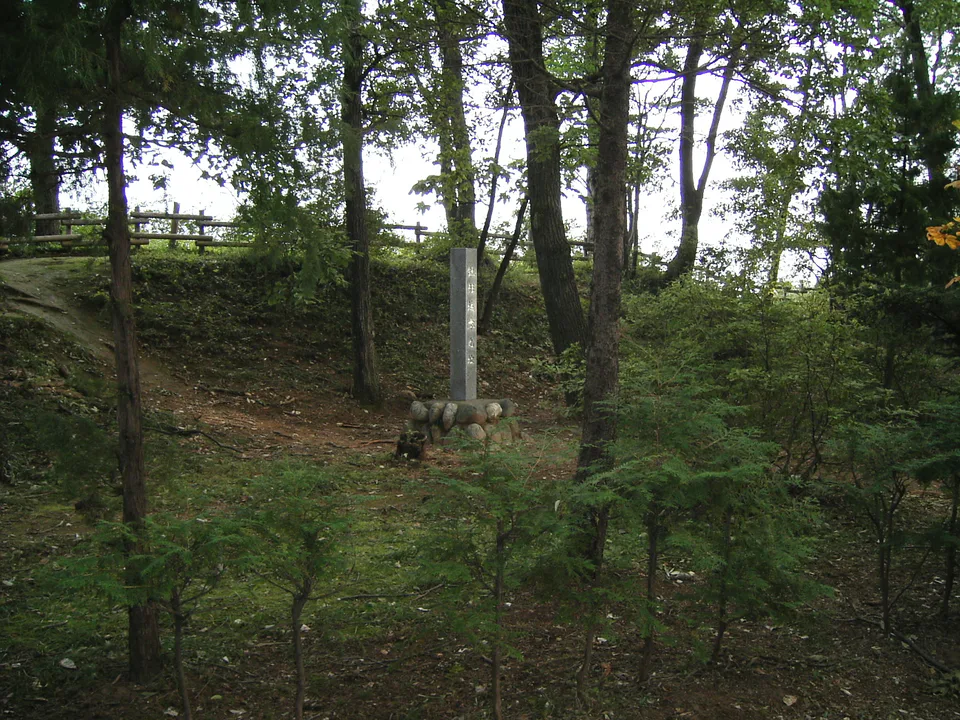
Hachigata Castle is not difficult because of admission or booking. The park is free, the history museum costs only ¥200 (about US$1.26 at the 27 August 2026 reference exchange rate), and even a museum closure does not necessarily stop you collecting the Japan 100 Famous Castles stamp. The real cost is time: Yorii Station is about a 25-minute walk from the museum area, then the official castle map gives you another 60, 90 or 120 minutes of walking inside the ruins.
ValueNavi verdict: for a first visit, the best use of the trip is the museum first if it is open, followed by the 90-minute field route. Stamp collectors can compress the stop to the 60-minute core route, while Later Hojo and earthwork specialists should give the site at least 120 minutes. If you are coming from central Tokyo with no particular interest in Sengoku fortifications, the free admission does not make this a low-cost day trip — the opportunity cost is the journey and the long on-foot approach.
The first decision is not “museum open or closed?” — it is how much castle you actually want
↔ Scroll table left or right
Your goal | Best plan | Why | Main failure mode |
Stamp only | Reception on opening days; official mailbox arrangement when the museum is closed | A closure does not automatically make the stamp impossible | Travelling all the way to Yorii and leaving before seeing why the site is No.18 |
First-time visitor | Museum + official 90-minute route | The model and archaeology make the river cliffs, baileys and umadashi much easier to read | Treating open grass and earth banks as “nothing left” |
Later Hojo / castle specialist | Museum + 120-minute route or longer | You gain time for the Arakawa edge, Fukazawa valley, San-no-kuruwa and defensive entrances | Covering more pins without slowing down to read the terrain |
Walking from Yorii Station | Add about 50 minutes of approach/return walking to the castle-course time | The official 60/90/120 figures are on-site routes, not whole-trip durations | Calling the 60-minute route a “one-hour visit” |
Northern Saitama / Chichibu itinerary | Use Hachigata as a route-fit stop | The detour is much easier to justify when you are already travelling this direction | Doing a dedicated Tokyo return trip when the same stop could fit a transfer day |
ValueNavi Score: cheap and resilient, but the approach penalises time efficiency
The scores below use ValueNavi’s seven attraction-decision dimensions. Higher is better; “booking/access resilience” and “weather resilience” score robustness, not risk. This is an editorial planning model built from verified public information, not an official castle rating.
↔ Scroll table left or right
Dimension | Score | Decision reason |
Money value | 9.6/10 | The park is free and the optional museum is only ¥200 (about US$1.26 at the reference rate) |
Time efficiency | 5.5/10 | The 25-minute station walk each way sits on top of a 60–120 minute field route |
Booking / access resilience | 9.0/10 | No castle ticket is required and the stamp has an official closed-day mailbox arrangement |
Weather resilience | 5.2/10 | The defining experience is outdoors across a large earthwork site; heat and rain materially change comfort |
Crowd resilience | 9.0/10 | The broad site distributes visitors better than a compact keep interior |
Route fit | 5.5/10 from central Tokyo; 8.0/10 on a northern Saitama/Chichibu day | The same castle becomes much more rational when it sits in the direction you are already travelling |
Uniqueness | 8.6/10 | The Arakawa/Fukazawa terrain and Later Hojo-style defensive works give the ruins a clear specialist identity |
Overall planning score: 7.5/10. The important part is the split score for route fit. Hachigata can feel inefficient as a stand-alone Tokyo excursion and highly efficient on the right northern-Saitama day without anything at the castle itself changing.
The stamp survives a museum closure — the interpretation does not
Yorii Town currently uses two stamp arrangements. On museum opening days, the Japan 100 Famous Castles stamp is available at museum reception from 09:30 to 16:00. When the museum is closed, the stamp is placed in a mailbox to the right of the main parking-lot entrance. This means a Monday or another published closure does not automatically destroy a collector’s plan.
But do not turn that useful fact into the wrong conclusion. The mailbox gives you a stamp, not the museum’s model, archaeological context or orientation. For a first visit, the museum is unusually high-value precisely because Hachigata is a terrain castle: the most important “objects” are relationships between cliffs, valleys, baileys, moats and defensive entrances.
Is the ¥200 museum worth it? The answer is almost always yes for a first visit
The Hachigata Castle History Museum charges ¥200 for adults and ¥100 for high-school and university students — about US$1.26 and US$0.63 respectively at the 27 August 2026 reference rate. Exchange rates move, so the US-dollar figures are only orientation. Current opening hours are 09:30–16:30 with last admission at 16:00; the published closure pattern includes Mondays, the day after national holidays and the year-end/New Year period, with additional temporary closures possible.
The money decision is trivial compared with the information gain. If you walk directly into the park without first understanding the site plan, the hon-kuruwa can look like a large lawn and restored areas can appear disconnected. The museum helps you see one system: Arakawa cliff on one side, Fukazawa valley on another, multiple baileys between them, and artificial defences reinforcing the natural barriers.
Boundary condition: if you already know the site well, are returning for photography, or are making a pure stamp run, the museum becomes optional. For a first-time visitor who wants to understand rather than simply collect, ¥200 is one of the easiest premiums to justify.
The hidden time cost: an official “60-minute route” can become nearly two hours before trains
Yorii Town lists the museum at about a 25-minute walk from Yorii Station. Eagle Bus services toward Washi-no-Sato can reduce the approach, with Hachigata Castle History Museum-mae followed by about five minutes on foot. Drivers can approach from Hanazono IC in roughly 6 km / about 15 minutes under the town’s published benchmark.
The most useful calculation is the one many attraction summaries omit. If you walk from the station, an official 60-minute castle route plus 25 minutes in and 25 minutes back is already about 110 minutes before museum time, train waiting or lunch. The 90-minute version becomes roughly 140 minutes on the same basis; the 120-minute version becomes about 170 minutes. These are planning sums, not promises about your walking speed.
↔ Scroll table left or right
Castle route | Walking from Yorii added | Minimum planning block before museum/train waits | Best fit |
60 minutes | ~50 minutes return approach | ~110 minutes | Collectors or repeat visitors |
90 minutes | ~50 minutes | ~140 minutes | Best-balanced first visit |
120 minutes | ~50 minutes | ~170 minutes | Castle specialists / slower photography |
This is why I would not market Hachigata as an easy one-hour side trip simply because an official 60-minute field course exists. If you are choosing among scarce Tokyo day trips, compare the full door-to-door block in our Tokyo day trips comparison, not just the time printed on the castle map.
What makes Hachigata worth the walking is the terrain, not the reconstructed gate
The castle occupies steep ground between the Arakawa and Fukazawa rivers. The Arakawa side drops dramatically, while the Fukazawa valley protects another side; moats, earthworks and baileys then reinforce the natural barriers. If you stand only in a flat enclosure and judge the castle by what buildings survive, you miss the strongest piece of evidence.
For a 90-minute first visit, prioritise three ideas rather than every marker: the river-edge topography, San-no-kuruwa, and the umadashi between major enclosures. That trio shows natural defence, reconstructed archaeological interpretation, and controlled gate movement — a much denser explanation of Hachigata than a checklist of named baileys.
At San-no-kuruwa, “stone-faced earthwork” is more accurate than “stone wall”
Excavation at San-no-kuruwa identified stone-faced earthworks, garden remains and gate traces. The current restored area uses those archaeological findings, but Yorii Town distinguishes the structure from conventional western-Japan-style castle masonry: river stones were stepped along the face of an earthen rampart without the same backing-stone construction. In other words, this is not a surviving grand ishigaki wall that happens to look new.
That distinction is valuable because it changes what you should photograph and ask. Instead of “is this original?”, look at how the reconstructed gate, pond, stones and earthwork rebuild the defensive space from excavated evidence. Hachigata is strongest when reconstruction becomes a tool for reading the site rather than a substitute for lost architecture.
The umadashi is the fastest feature for understanding the Later Hojo logic
An umadashi is a defensive enclosure outside a gate, helping protect entry and movement through the koguchi. Hachigata’s rectangular kaku-umadashi is particularly useful because this form is associated with Later Hojo castle design. Yorii Town estimates multiple umadashi across the site.
If your schedule collapses and you need to cut stops, keep one strong example of the umadashi rather than spending the same time walking to another generic monument. The point of a short visit is not geographic coverage; it is to leave able to explain how the castle worked.
Summer 2026: the volunteer guide is suspended through September 15
Yorii Town’s July 2026 notice suspends volunteer-guide service from July 1 through September 15. During that window, plan a self-guided visit rather than relying on older articles that tell you to submit an application. Outside the suspension, the town normally asks for applications at least two weeks ahead and describes tours of roughly one to two hours on museum opening days.
The practical consequence is bigger than “no guide.” In summer heat, the 120-minute route becomes a different physical decision. If temperature and sun exposure are high, I would rather shorten the field route and keep the river terrain + San-no-kuruwa + umadashi than force a full circuit simply because the map offers one.
Spring improves the photography, not the core decision
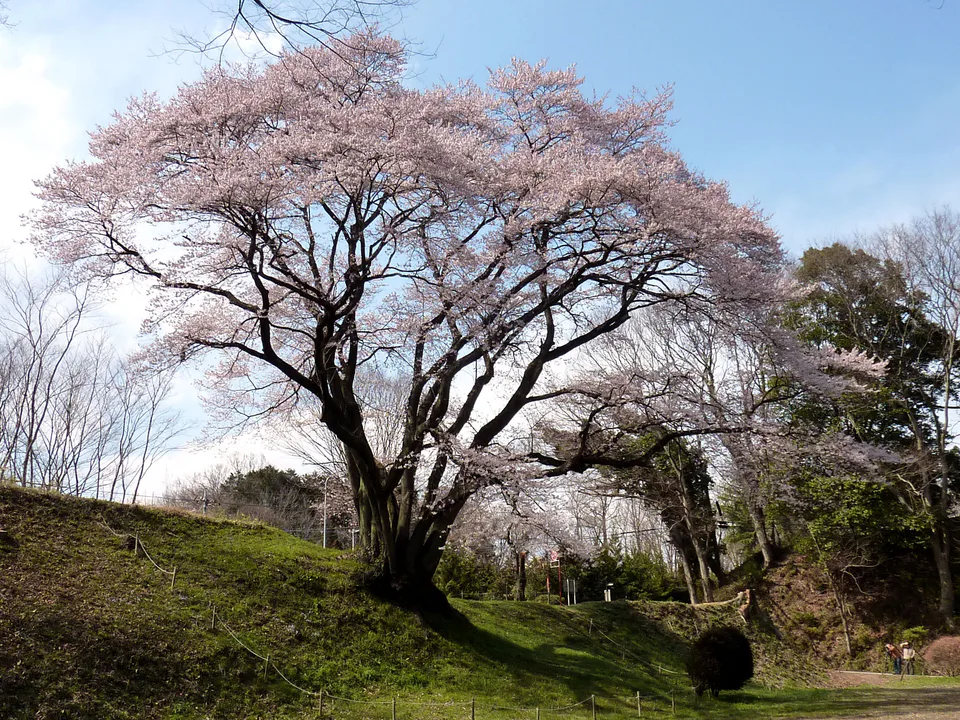
Ujikuni-zakura, an Edohigan cherry, gives Hachigata a strong spring visual anchor, while the park also has katakuri and wooded scenery. That can make the detour easier to justify for a non-castle companion. It should not be the only reason a traveller who dislikes ruins chooses Hachigata over an easier blossom destination.
Final verdict: the 90-minute route is the sweet spot — if the trip direction makes sense
For a first-time Hachigata visit, my default is museum first, then the official 90-minute route. The museum’s ¥200 fee is negligible relative to the interpretation it adds, while 90 minutes is long enough to connect the rivers, San-no-kuruwa and an umadashi without turning the day into a forced endurance walk.
The red-team case is a traveller based in central Tokyo with one precious day trip, no castle-stamp goal and little interest in earthworks. In that situation Hachigata’s free park and cheap museum are misleading: transport and walking time are the real price, so I would skip it. For a Later Hojo fan, collector, or traveller already heading toward northern Saitama/Chichibu, the answer reverses and Hachigata becomes a high-information stop with very low cash cost.
Official facts to recheck before travel
Current stamp arrangements: Yorii Town — Japan 100 Famous Castles stamp. Museum hours, fees and closures: Hachigata Castle History Museum. Access: Yorii Town access guide. Summer guide suspension and application rules: Yorii Town volunteer-guide information. Recheck temporary closures and current transport shortly before travel.