
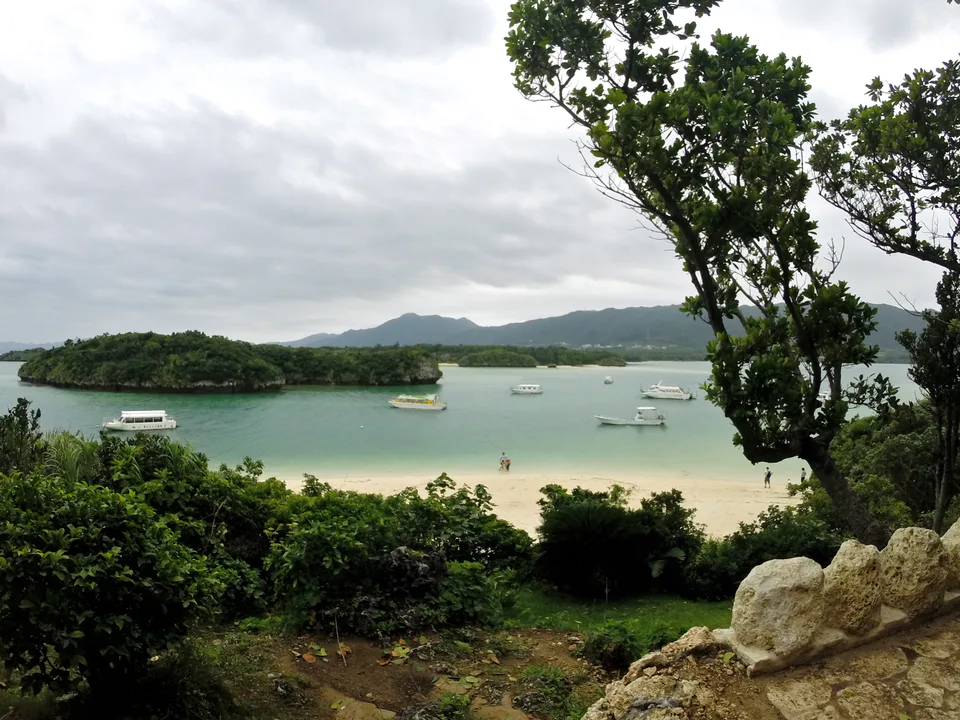
An Ishigaki private car charter is strongest when it removes a coordination problem—not when it simply replaces a rental car. The best cases are a family or multi-generation group, 5–9 travellers who would otherwise split vehicles, a cruise call with one sightseeing window, or a hotel-change day where luggage can stay in the same vehicle while you visit Kabira Bay and the north.
The weakest case is usually one or two confident drivers with light luggage who only want two classic stops. In that scenario, a rental car or standard day tour can solve the same transport problem for less fixed private-driver cost.
The main customizable charter currently sold for Ishigaki is a 5–8 hour product. Its rules are not “pick any duration and add any attraction”: the current listing requires at least 6 hours for Tamatorizaki Observatory and 7 hours for Hirakubosaki. The useful question is therefore not “How many sights fit?” but “Which geographic zone is expensive enough in driving and coordination to justify reserving a driver?”
If you are still deciding how many days belong on the main island versus Taketomi and Iriomote, settle that first with the 4-day Ishigaki–Taketomi–Iriomote itinerary. A charter should compress one Ishigaki day, not fill a day that was better spent on another island.
ValueNavi decision table: who actually benefits from a private charter?
↔ Scroll table left or right
Traveller setup | Charter fit | Why |
1–2 people, light luggage, confident driver | Low–medium | Private-driver premium buys little coordination value |
2–4 people, no one wants to drive | Medium–high | Removes navigation, parking and driver fatigue while keeping a custom route |
Family / older parents / mobility-sensitive group | High | Same vehicle, flexible stops and fewer transport transitions can matter more than raw price |
5–9 people | Very high | One Hiace can replace split cars/taxis and repeated regrouping |
Cruise passengers with one port day | High if route is conservative | Pickup and custom routing are valuable, but ship return deadline must dominate the final hour |
Hotel-change day with large luggage | Very high | The vehicle solves transfer + storage + sightseeing in one paid block |
ValueNavi Charter Fit Score
These are editorial planning scores, not operator ratings. Ten means the private charter solves more problems that would otherwise require separate transport decisions.
Use case | Route compression | Coordination saved | Cost efficiency | Overall fit |
|---|---|---|---|---|
Couple + Kabira only | ||||
4 adults, west-coast day, no driver | ||||
Family + older parents | ||||
5–9 travellers | ||||
Hotel change + luggage + sightseeing |
The important point is that charter value rises with problems removed. It does not rise simply because more people can physically sit in the car.
Paid-hour survival table: every extra zone consumes more than driving time
Current product rules are useful because they reveal where route compression stops working.
↔ Scroll table left or right
Paid time | Realistic role | Do not expect |
5 hours | Kabira + west coast + one or two nearby stops | Far north, east coast and a relaxed lunch in the same plan |
6 hours | East-coast/Tamatorizaki route becomes viable | Hirakubosaki as a casual final add-on |
7 hours | Hirakubosaki becomes a legitimate anchor | Every west/east/north sight with long stops |
8 hours | Buy slower stops, lunch, luggage handling or extra route resilience | An obligation to add another attraction every 30 minutes |
The current main listing is 5–8 hours. Other charter products can use different minimums or sample routes, so never import a “six hours is enough” rule from another operator. Send the exact stops before payment.
Five hours is the west-coast sweet spot, not the cheap version
The current sample Route A uses Osaki Beach, Cape Oganzaki, Kabira Bay, Yonehara Beach and Ishigaki Public Market in five hours. That is already a meaningful first-timer route because the stops live broadly in the same western/northwestern direction.
If Kabira Bay is the only must-see, private charter may be excessive for a couple. If Kabira, Oganzaki, Yonehara and hotel/port pickup all matter, the driver starts buying back real coordination time.
Six hours is where the east coast becomes a different day
The current listing requires six hours for Tamatorizaki Observatory. Its sample east-coast route combines Tamatorizaki with Shiraho Coast, Ohama Coast and other eastern/southern stops. This is a different geographic skeleton from the five-hour west-coast day.
Do not try to “merge Route A and Route C” because both lists look short on screen. Every merge adds cross-island driving, parking, toilet breaks and the time it takes a group to get back into the vehicle.
Seven hours: Hirakubosaki should become the anchor, not the bonus
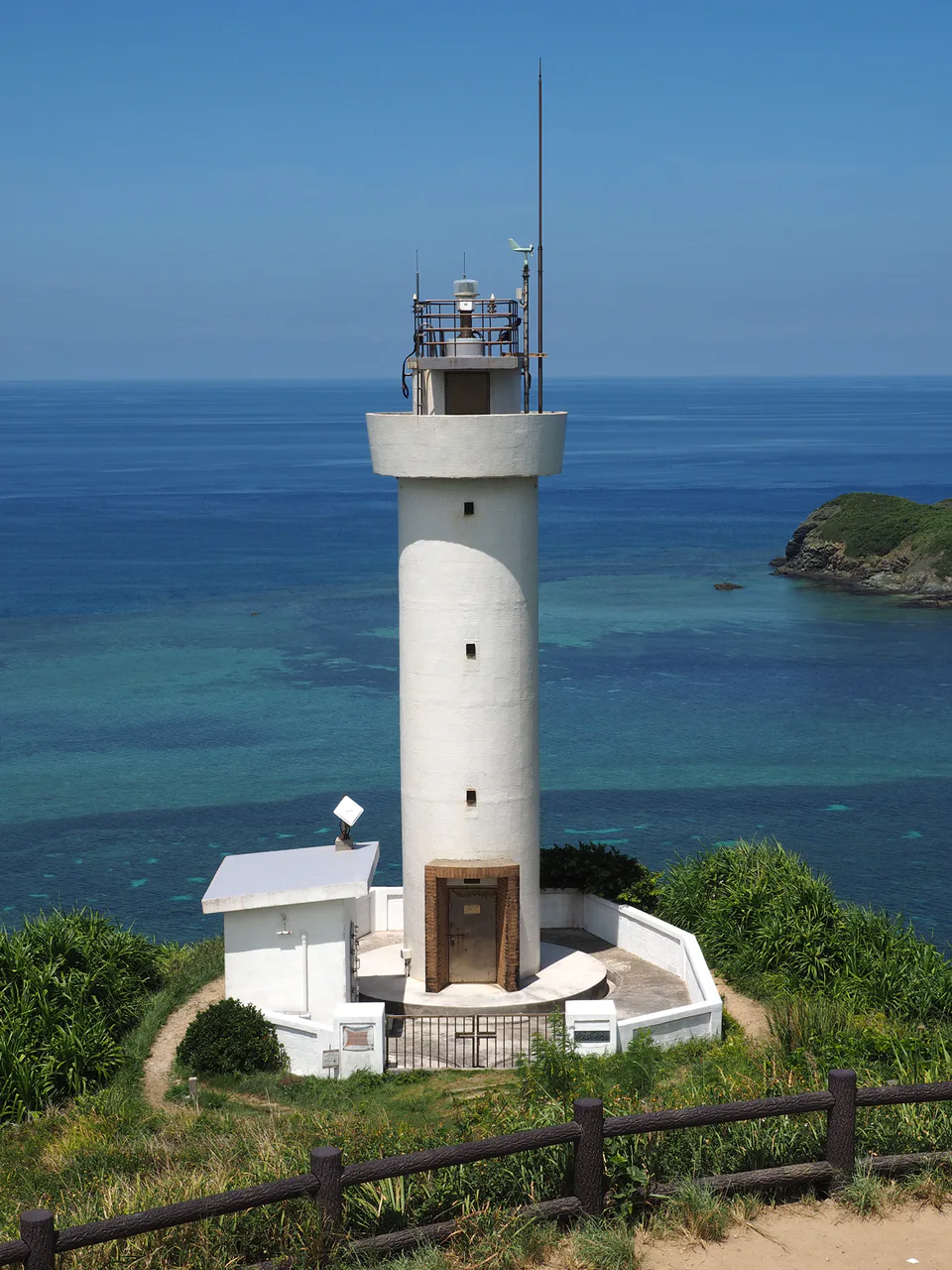
Hirakubosaki sits near Ishigaki’s far northern tip, and the current main listing requires a minimum seven-hour booking when it is included. Once the north is non-negotiable, build the rest of the day around it rather than adding it after Kabira, Tamatorizaki and a long lunch.
The most fragile version is a cruise passenger putting Hirakubosaki last because it is “only one more lighthouse.” The final stop should move closer to the port, not farther away from it.
Eight hours should buy flexibility, not attraction-count guilt
An eight-hour charter is strongest when the extra time has a job: a slower family pace, proper lunch, wheelchair/stroller handling, a hotel change, airport drop-off or the ability to spend longer at Kabira Bay when the weather is good.
If the extra three hours above a five-hour route only exist because “we have the car anyway,” you are at risk of turning the most private option into the most exhausting sightseeing bus.
Seats are the wrong first calculation: count 28-inch suitcases
The current product makes the luggage trap explicit. The five-seater takes up to four passengers but lists space for only two 28-inch suitcases. The 10-seater Hiace takes up to nine passengers and lists space for nine 28-inch suitcases. Oversized luggage can count as two pieces.
↔ Scroll table left or right
Group | Likely vehicle logic |
2 adults + 2 large suitcases | 5-seater can be a natural fit |
4 adults + day bags only | 5-seater may fit by passenger count |
4 adults + 4 × 28-inch suitcases | Do not book 5-seater by headcount alone; ask for larger vehicle |
5–9 travellers | 10-seater is the structural choice |
Hotel-change day with mixed oversized bags | Send exact bag count and dimensions before payment |
This is one of the clearest places where paying more can be genuine value rather than luxury. A larger vehicle that keeps bags out of the passenger cabin may be the only workable product.
Overtime is a preventable hidden cost
The current published overtime fees are ¥5,000 per hour for the 5-seater (about US$31) and ¥8,000 per hour for the 10-seater (about US$50). The listing says these are paid to the driver. JPY is the real fee; USD is an approximate orientation using ¥1,000 ≈ US$6.27 on August 27, 2026.
Do not treat overtime as a cheap way to underbook the route. If Hirakubosaki clearly needs the seven-hour tier, booking shorter and hoping to pay one extra hour creates uncertainty around driver schedule, billing and the rest of the day. Choose the realistic duration first.
Japanese-speaking driver is not the same product as a private guide
The current main listing specifies a Japanese-speaking driver plus online Chinese customer support. That can be excellent for route coordination, restaurant reservations and changes, but it is not a promise of live English/Chinese historical commentary throughout the day.
For an English-speaking traveller, decide whether you need transport or interpretation. If you want a licensed-guide-style experience, verify the guide language separately. If you mainly want efficient movement and are comfortable using translation tools for small exchanges, the driver model can still work well.
Child seats are a hard pre-booking check
The current customizable listing says child safety seats are not available. Families should resolve that before comparing five-seater versus Hiace or deciding how many hours to buy. A private vehicle is not automatically a family-ready vehicle.
Use the same checklist as the Okinawa family road-trip guide: child restraint, stroller, luggage, nap timing and how often the group can realistically enter and exit the car.
Cruise passengers: the charter is valuable only if the return plan is boring
Private pickup at the pier can remove taxi queues and split-group coordination, making a five- or seven-hour charter attractive for a cruise call. But the last section of the route should become less ambitious as the boarding deadline approaches.
The correct goal is not “use every paid minute.” It is “return with enough margin that one parking delay or road incident cannot threaten the ship.” Keep the final stop in town or on the port side of the island instead of using the last hour for a northern lighthouse.
Airport pickup + sightseeing: ask when the paid clock begins
The current product supports flexible pickup/drop-off including airport, hotel and pier. That can turn an arrival or departure day into a useful transfer-plus-sightseeing block. It can also waste paid time if the flight is late or baggage takes longer than expected.
Before using an airport pickup as Day 1 sightseeing, ask how flight delay affects the start time and whether the vehicle waits. “Airport pickup included” and “unlimited free waiting” are not the same promise.
Charter vs rental car vs standard tour: compare coordination tax
↔ Scroll table left or right
Option | Strongest advantage | Hidden cost |
Private charter | One vehicle, custom route, no designated driver, luggage can stay with group | Fixed private cost; driver language; paid hours keep running |
Rental car | Lowest coordination cost for 2–4 confident self-drivers over multiple days | Insurance, parking, navigation, one person drives and cannot fully sightsee |
Standard group tour | Efficient classic sights for 1–2 people | Fixed route, meeting points and pace |
If you will rent a car for several days anyway, use the Okinawa car-rental decision framework before paying a private driver for a route you can comfortably self-drive. If no one wants to drive, that comparison ends quickly: the charter is buying participation for the person who would otherwise spend the day behind the wheel.
Four NO-GO checks
NO-GO 1: two people only want Kabira Bay and the market but are buying eight hours because “private sounds better.”
NO-GO 2: four people with four large suitcases are choosing the 5-seater by passenger count only.
NO-GO 3: Hirakubosaki is essential but the booked duration does not meet the current product minimum.
NO-GO 4: a cruise or flight deadline sits at the exact end of the paid charter with no return-risk margin.
Final verdict: pay for problems removed
Choose a private charter when one vehicle solves several things at once: scattered sightseeing, no willing driver, older family members, 5–9 travellers, a hotel change with luggage, or a cruise/airport transfer. Choose a rental car when 2–4 people will use it across several days and driving itself is not a burden. Choose a standard tour when one or two people mainly want the classic route.
For duration, treat five hours as a coherent west-coast day, six as the point where Tamatorizaki/east-coast routing becomes reasonable, seven as the minimum planning tier for Hirakubosaki on the current main product, and eight as a way to buy slower pacing and route resilience—not an obligation to add more stops.
The best Ishigaki private charter is the one that makes the day simpler. If the private car only encourages the group to collect more attractions, you have paid to recreate the exact timetable pressure the charter was supposed to remove.
Next decision: decide which Ishigaki day actually needs private transport
Sources and current checks
Current product conditions rechecked August 27, 2026. Base charter prices vary by vehicle, duration, date and storefront; confirm the live checkout. Published JPY overtime fees are retained above.