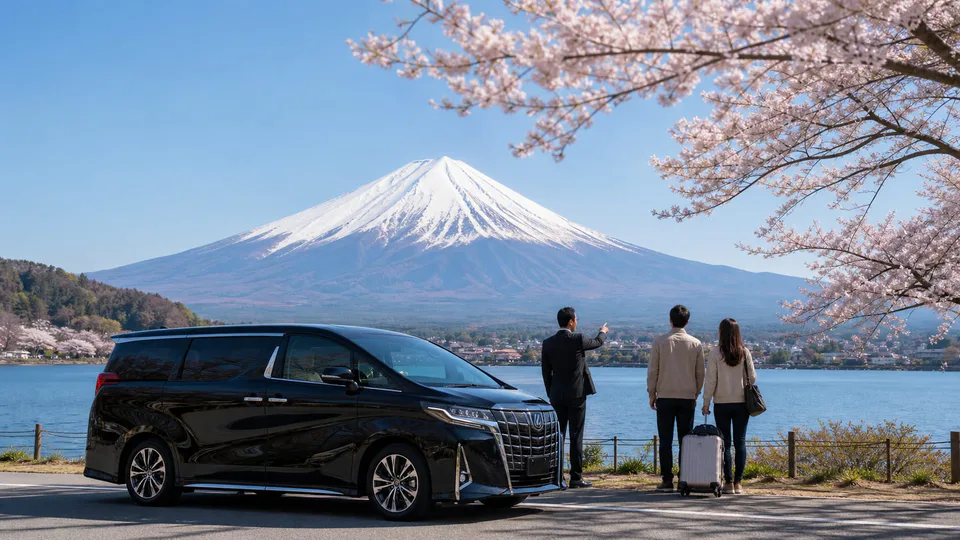
The biggest mistake with a Mt Fuji private car charter is not choosing an Alphard instead of a Hiace. It is reading “10 hours” as 10 hours of sightseeing freedom. Hotel pickup in Tokyo, the drive to the Fuji area, traffic, parking, movement between attractions and the return to Tokyo all run on the same clock. To make it harder, different products handle one-way drop-offs, mileage, expressway tolls, parking, overtime and driver language in completely different ways. Two charters can both say “Mt Fuji private tour” while delivering very different amounts of usable sightseeing time.
So if you are considering a charter for a Tokyo trip, do not start with “Which vehicle is more luxurious?” Start with three questions: are you only visiting Mt Fuji and Lake Kawaguchi, or are you trying to force Hakone into the same day? How many people can split the fixed vehicle cost? And exactly what does your chosen product count inside those 10 hours versus charge separately?
30-second verdict: two travellers should compare tours first; four to six is where a private charter starts to make financial sense
If two adults only want Lake Kawaguchi, Oshino Hakkai and Chureito Pagoda, a private charter is usually a large fixed premium for door-to-door convenience and control over the pace. Compare a standard day tour or the Fuji Excursion train before upgrading simply because the word “private” sounds better. If you have not yet worked out the independent option, start with how to book the Fuji Excursion and decide whether the problem you actually want to remove is train transfers, luggage handling or having to work around a timetable all day.
For four to six travellers, especially with older relatives, young children or several bags, the fixed cost of the whole vehicle becomes easier to spread. Current Mt Fuji charter listings are priced per vehicle and vary by date, vehicle size, pickup area and add-ons, so do not treat one headline price as permanent. The decision is about cost structure: split one vehicle across six people and it feels very different from splitting the same vehicle across two.
10 hours is not 10 hours at attractions: subtract the Tokyo round trip first
The real value of a charter is combining three awkward pieces into one route: Tokyo to the Fuji area, multiple local stops, and the drive back to Tokyo. The catch is that all three consume the same service window. Leaving Tokyo at 08:00 does not mean sightseeing starts at 08:00, and returning to Tokyo at 18:00 means you must leave your final stop well before then. Congestion on the Chuo Expressway and queues around Lake Kawaguchi can shrink the sightseeing portion further.
That is why charters work best for travellers who want several dispersed stops without spending a long time at each one. Oishi Park, Oshino Hakkai, Chureito Pagoda and the Lake Kawaguchi shoreline all look close on a map, but local buses still add waiting and transfer friction. If Oishi Park is the one place you care about most, check how to get from Kawaguchiko to Oishi Park first. You may discover that you do not need a private vehicle for the entire day.
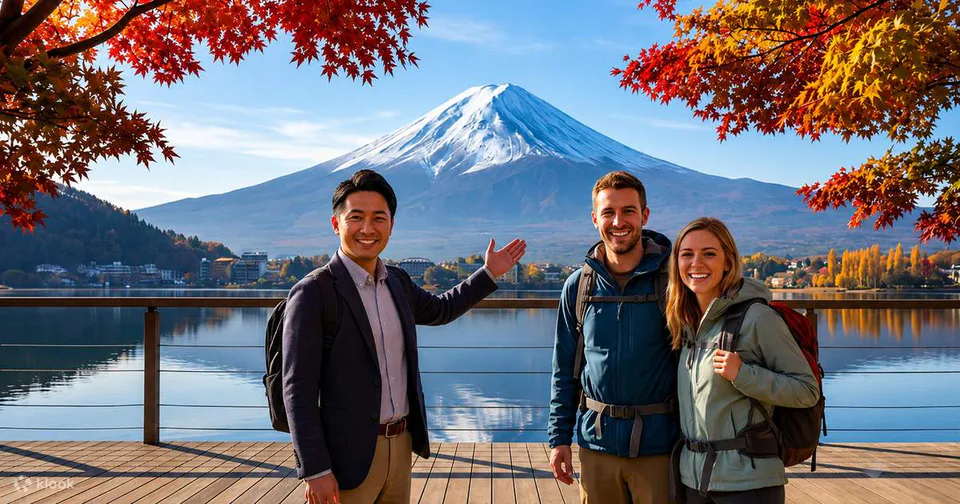
Mt Fuji only vs Mt Fuji + Hakone: crossing regions is not a free “while we’re there” add-on
A 10-hour charter is much easier to keep coherent if you stay around Mt Fuji and Lake Kawaguchi. Once Hakone is added, the product changes. Current charters may charge a cross-region service fee, while others list both areas but make the route work by reducing stops, shortening stays or charging overtime. “Customizable” does not mean you can deeply cover Lake Kawaguchi, Mt Fuji 5th Station, Lake Yamanaka, Owakudani, Lake Ashi, Hakone Shrine, the Open-Air Museum and Gotemba in one day. If you are searching for a Mt Fuji and Hakone private charter, think of it as a tool for compressing two regions, not as two full destinations merged into one day.
If you are genuinely interested in Hakone for an overnight stay, onsen and museums, read Mt Fuji day trip or overnight and then Hakone vs Kawaguchiko. If your answer is that Hakone deserves a night of its own, do not reduce it to a two-hour photo stop just because a charter can physically cross the region.
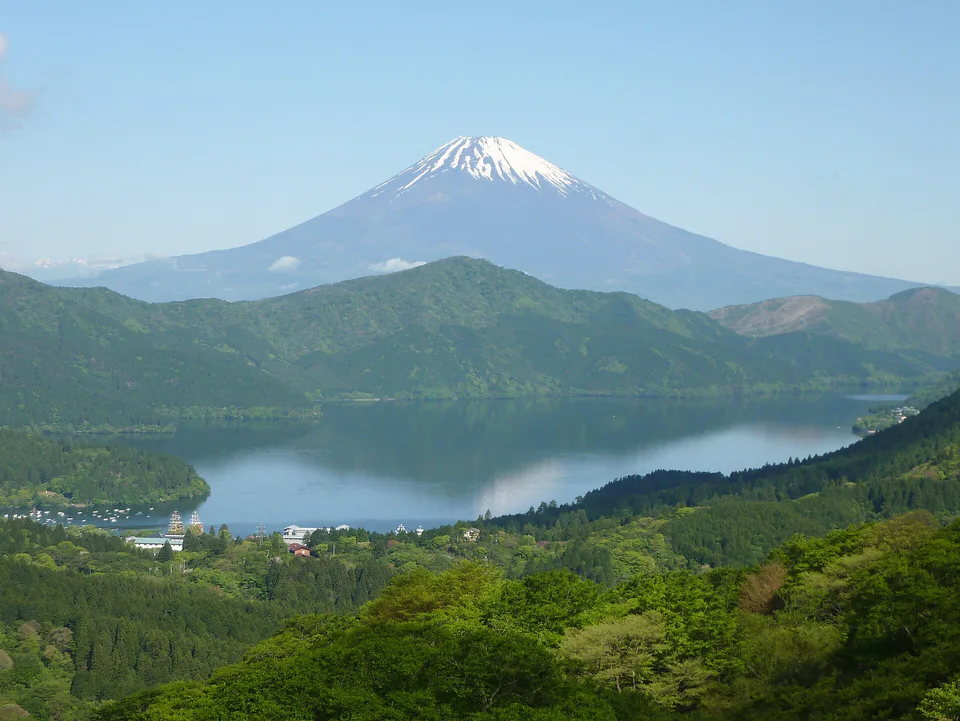
Two products can both say 10 hours, yet a one-way drop-off can reduce the service window to 8
This is one of the easiest terms to miss. Some current private-charter listings define 10 hours for pickup and drop-off in Tokyo. If you leave Tokyo but finish at a hotel in Lake Kawaguchi or Hakone, the service window can be adjusted to 8 hours because the empty return journey still costs the operator time and money. Other products permit Fuji or Hakone pickup and drop-off with different start times, end times or surcharges.
If you already plan to stay overnight at Lake Kawaguchi, a one-way drop-off can still be worthwhile because it may save a pointless return to Tokyo. Just treat it as a hybrid product — a sightseeing charter plus a hotel transfer — rather than comparing the same “10 hours” headline. If you have not decided the stay length yet, see how many nights to spend at Lake Kawaguchi.
Expressway tolls, parking and tickets: some products include them, others do not
Do not compare two 10-hour products by headline price alone. Current listings already show very different inclusion models: one can include expressway tolls, intercity charges, bridge and tunnel fees and the first child seat, while a VIP-style charter may exclude ETC tolls and parking and ask you to reimburse the driver on the day. Attraction tickets are commonly separate as well. A cheaper headline price can simply move several thousand yen of cost into a different line item.
Mt Fuji 5th Station also cannot be treated as an ordinary free stop. A current private-tour listing still warns that during the official July–August climbing season, private vehicles cannot access the 5th Station and travellers must use government-operated shuttle buses. Even outside that period, access depends on roads, weather and operating conditions. If the 5th Station is your priority, include the shuttle or access fee and the time loss in your 10-hour calculation rather than just checking whether “5th Station” appears in the itinerary.
Driver-cum-guide does not automatically mean licensed tour guide: check what language service you actually need
“Driver-cum-guide” is common wording on Mt Fuji charters, but the real service level varies. Some drivers give simple reminders and attraction information from the vehicle but do not provide in-depth guided visits. Some products explicitly provide an English-speaking driver. Others focus on Chinese or Japanese communication, use translation software for English, or charge extra to request an English-speaking driver.
Do not fill in the gaps yourself when a listing says “private guide.” Ask what you actually need: can the driver understand route changes, restaurant requests, toilet stops, a slower walking pace for older travellers and last-minute parking needs? If you want historical and cultural interpretation, confirm whether true guide service is included. If you mainly need smooth communication in the car, language compatibility matters more than the job title.
Overtime rules vary sharply: 15 minutes can trigger a full extra hour
At least two different overtime structures are currently visible. One 10-hour Mt Fuji charter charges ¥5,000 per extra hour for vehicles with 10 seats or fewer and ¥10,000 for vehicles with 14 seats or more, with anything over 15 minutes counted as a full hour. A separate VIP charter charges ¥8,000 per hour for 5–7 seaters and ¥10,000 for a 9-seater, with any fraction of an hour rounded up. The point is not to memorize one figure. It is to check the rounding rule on the exact product you are buying.
More importantly, traffic, waiting and unscheduled stops are not always free buffer. One current listing explicitly says traffic-jam delays and waiting time count toward overtime. That means packing the final stop too tightly before the Tokyo return can cost more than a late hotel arrival — it can start burning cash under the product’s overtime rule.
Do not choose a vehicle by seat count alone: child seats and luggage consume real capacity
A six-passenger vehicle is not automatically suitable for six adults plus six large suitcases. Current operators warn that exceeding passenger or luggage capacity can result in boarding being refused. Child-seat rules also vary: one listing includes the first child seat, while another notes that extra child seats cost more. The nominal passenger number is therefore not the same as usable capacity for your actual group.
For families, three-generation groups or travellers changing hotels that day, choose the vehicle using people + actual large luggage + child seats, not just the maximum passenger number. The expensive mistake is not paying for one size larger. It is discovering on the day that everyone fits but the luggage does not.
Two, four or six people: divide the fixed cost once before comparing
Use a hypothetical whole-vehicle cost of about ¥60,000 purely to understand the math: two people would be around ¥30,000 each, four around ¥15,000, and six around ¥10,000 before tickets, meals and add-ons. This is not a live quote. It is the simplest “fixed cost ÷ real group size” test. Private charters do not become economical because 10 hours suddenly gets cheaper; they become easier to justify as the vehicle gets closer to sensible occupancy.
So two travellers should ask: “Am I willing to pay a substantial premium to avoid transfers, get hotel-door pickup and control every stop?” Four to six travellers should ask the opposite question: “Once I add up the per-person cost of a regular tour, how much extra is the whole private vehicle actually costing us?” That is the fair comparison.
A private charter gives photographers flexibility — it still cannot buy clear Mt Fuji weather
A private vehicle can let you stay 30 minutes longer at Lake Kawaguchi or switch viewpoints when the clouds begin to clear. That flexibility is stronger than a fixed bus tour. It still cannot guarantee that Mt Fuji will appear. If your real priority is morning light, a reflection shot, sunset or a second weather window, an overnight stay has a structural advantage over any fixed-date day charter. Compare the best Kawaguchiko hotels for Mt Fuji views before deciding whether your budget is better spent on a whole vehicle or an extra night of weather flexibility.
If you are travelling in autumn and deciding between Lake Kawaguchi and Lake Yamanaka, Lake Kawaguchi vs Lake Yamanaka for autumn leaves is more useful than forcing both lakes into the same charter checklist.
If you insist on Mt Fuji + Hakone, delete the idea of a “deep Hakone day” first
A realistic two-region day means choosing only a few high-priority stops — perhaps two or three around Mt Fuji and one or two in Hakone — rather than trying to complete the full Hakone Loop. If the Open-Air Museum matters to you, read Hakone Open-Air Museum 2026. If that makes you realize you actually want time for the loop, Hakone Loop before check-in or after checkout is much closer to the trip you are trying to build.
And if you are willing to give Hakone a night, compare one night vs two nights in Hakone. A charter is a compression tool. Its ability to cross regions is not a reason to turn somewhere worth staying into a rushed checklist.
Four NO-GOs: if any applies, do not check out yet
NO-GO 1 | Two people only want two or three Lake Kawaguchi stops but have not compared a regular day tour or the Fuji Excursion. You may be paying a very large convenience premium simply to avoid planning transport.
NO-GO 2 | You see “customizable” and list ten Mt Fuji + Hakone attractions. Customizable means you can redistribute time. It does not make the day longer.
NO-GO 3 | You only compare the vehicle price and ignore tolls, parking, tickets, cross-region fees, one-way pickup/drop-off rules, overtime, night service and language-request fees.
NO-GO 4 | You book a non-refundable dinner, performance or airport transfer for the evening after the charter. Traffic and overtime can burn both money and the next reservation.
Nine things to check before paying
1 | What exact moment starts the 10-hour clock? 2 | What is the Tokyo pickup area, and do Haneda, Disney or locations outside the 23 wards cost extra? 3 | Does a one-way drop-off reduce 10 hours to 8? 4 | Is Mt Fuji + Hakone charged as a cross-region route? 5 | Who pays expressway tolls, parking, attraction tickets and 5th Station-related costs? 6 | Is there a total mileage cap such as 300 km? 7 | Does overtime round from 15 minutes or by full hours? 8 | What language and guiding level does “driver-cum-guide” actually provide? 9 | Does the chosen vehicle genuinely fit your passengers, luggage and child seats?
Final verdict: a private charter does not buy more attractions — it buys less transport friction
Two people who only want the Lake Kawaguchi area should compare a bus tour or independent travel first. Four to six travellers, families with older relatives or small children, groups wanting hotel-door pickup, and travellers linking several dispersed stops are where a Tokyo-to-Mt-Fuji private charter starts showing clear value. Mt Fuji + Hakone can work, but only if you actively cut stops, keep a return buffer and accept that cross-region and overtime terms can change the final cost.
If you reach the end and realize what you really want is “one more chance for good weather,” do not use a charter to solve an accommodation problem. Go back to Mt Fuji day trip or overnight and choose the trip structure again. The best reason to pay for a private charter has never been “luxury.” It is removing the transport friction you personally hate.
Next decision
If you still have not decided whether Mt Fuji deserves only a day or an overnight stay, settle that before choosing a vehicle.
Next decision | Mt Fuji day trip or overnight?
If Lake Kawaguchi is already an overnight stop, decide whether one night is enough.
Next decision | How many nights at Lake Kawaguchi?
Okinawa Fishing 2026: Shared Boat, Private Charter or Big-Game Trolling?
Hakone Ryokan with Private Onsen: Dinner, Tattoos and Car-Free Access
Niseko Private Ski Lessons 2026–27: 3 Hours vs 6 Hours, and Who Should Share?
Okinawa Private Boat Charter 2026: Naha, Chatan or Onna? Start With the Group Cost