
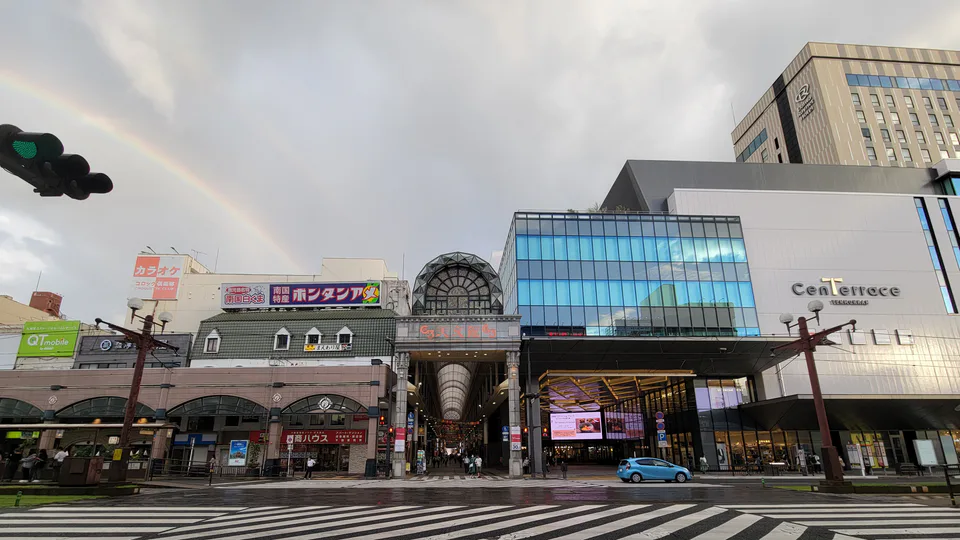
For most first-time visitors, the choice is not “which district is more central?” but “where do you want to pay your daily transfer cost?” Stay around Kagoshima-Chuo when Shinkansen, JR day trips, large luggage or an early departure are the hard constraints. Stay in Tenmonkan when the trip’s repeatable value is dinner, bars, shopping arcades and being able to finish the evening on foot. The two areas are only about 10 minutes apart by tram, so the better base is the one that removes the transfers you would otherwise repeat.
Fact-checked August 26, 2026. Kagoshima City raised the adult tram fare to ¥200 per ride on August 1, 2026. Approximate US-dollar conversions below use a mid-market reference of about US$1 = ¥159 on August 26; exchange rates and card rates move. Airport-bus schedules and accessibility arrangements can also change, so verify the operating day before relying on a specific service.
ValueNavi decision table: which base removes your most expensive friction?
↔ Scroll table left or right
Your trip pattern | Better base | Why | What you give up |
Arrive by Shinkansen with large luggage and leave by JR | Kagoshima-Chuo | Removes the extra city transfer on both the arrival and departure edges | You may tram or taxi downtown for late dinners |
Two or three nights with dinner, bars or shopping downtown most evenings | Tenmonkan | The convenience repeats every night instead of being used once | JR-heavy mornings begin with a city transfer back to Chuo |
One night between two long-distance rail legs | Kagoshima-Chuo | The hotel functions as a transport buffer | Less immediate access to Tenmonkan nightlife |
One Sakurajima day, otherwise mixed sightseeing | Either | The ferry is not enough by itself to justify choosing the hotel district | Choose by your other days instead |
Wheelchair user relying on the designated elevator-equipped airport shuttle | Kagoshima-Chuo | The airport’s current designated elevator-equipped service stops at Chuo only and requires advance reservation | Verify the exact service before travel because arrangements can change |
Rainy trip where evenings are intentionally downtown-focused | Tenmonkan | Its shopping arcades preserve more of the evening on foot under cover | Rail-transfer mornings still favor Chuo |
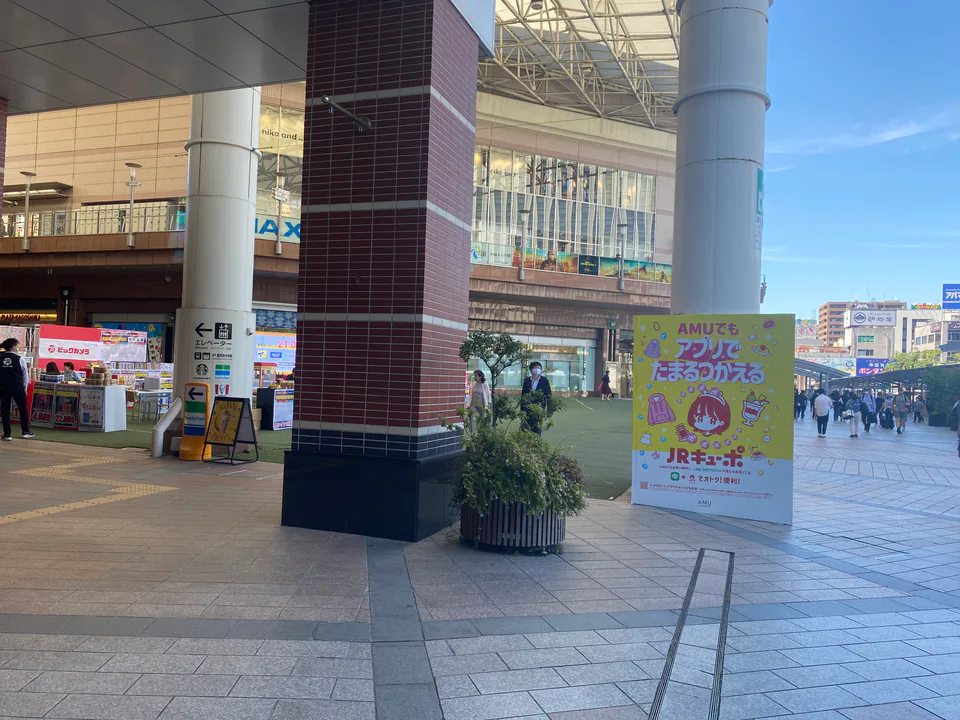
The hidden cost is not distance: it is how many times you cross the same 10-minute gap
Kagoshima City’s official tourism site gives about 10 minutes by tram from JR Kagoshima-Chuo Station to Tenmonkan-dori. Since August 1, 2026, the city tram costs ¥200 (about US$1.25) per adult ride. One transfer is trivial. Repeating it is the useful planning unit.
Consider two simplified three-night patterns. If you sleep in Tenmonkan but make two rail-focused return trips through Kagoshima-Chuo, that creates four Chuo–Tenmonkan tram legs: ¥800 (about US$5) per adult and roughly 40 minutes of in-vehicle time, before waiting, walking to stops or handling luggage. If you sleep at Chuo but deliberately spend all three evenings in Tenmonkan, six tram legs become ¥1,200 (about US$7.50) per adult and roughly 60 minutes on board.
This is the ValueNavi transfer-friction model: count the “dead” district crossings your hotel choice creates, not the sightseeing rides you would take anyway. The money is usually modest. The larger cost is that each crossing happens at an inconvenient edge of the day—while carrying luggage, trying to make a train, or deciding whether a late dinner is still worth another ride.
For two adults, six avoidable tram legs cost ¥2,400 (about US$15) in total. That still means a hotel that is ¥3,000 (about US$19) more expensive is not automatically “worth it” on transport savings alone. Pay the room premium only when the saved time, luggage handling or evening flexibility matters to your actual itinerary.
Choose Kagoshima-Chuo when the hotel is part of the transport plan
Kagoshima-Chuo is the Kyushu Shinkansen terminal and a major local transport hub. Its advantage is strongest when both the arrival and the next departure touch the station. You get off the Shinkansen, leave luggage near the hotel and return to the same transport node instead of adding a city transfer at the beginning and end of the stay.
This matters more than it sounds on a one-night stop. A “short” tram ride with two 28-inch suitcases is not just 10 minutes: it includes reaching the stop, boarding with the bags, getting off, crossing streets and finding the hotel. The same friction comes back on departure. When the next morning is Ibusuki, Kirishima or another JR leg, Chuo converts that whole chain into a walk from hotel to station.
The official Kagoshima City access guide also puts the airport limousine bus from Kagoshima-Chuo at about 40 minutes, roughly every 20 minutes, with an adult fare of ¥1,500 (about US$9.40), reservation not normally required. If a flight is immediately before or after a rail leg, Chuo is therefore more than a “station neighborhood”: it is the cleaner handoff point between airport and rail.
If Kagoshima is one stop inside a longer Kyushu trip, use the Kyushu 5- or 7-day itinerary to check whether this night should optimize onward movement rather than nightlife.
Choose Tenmonkan when the benefit repeats after 8 p.m.
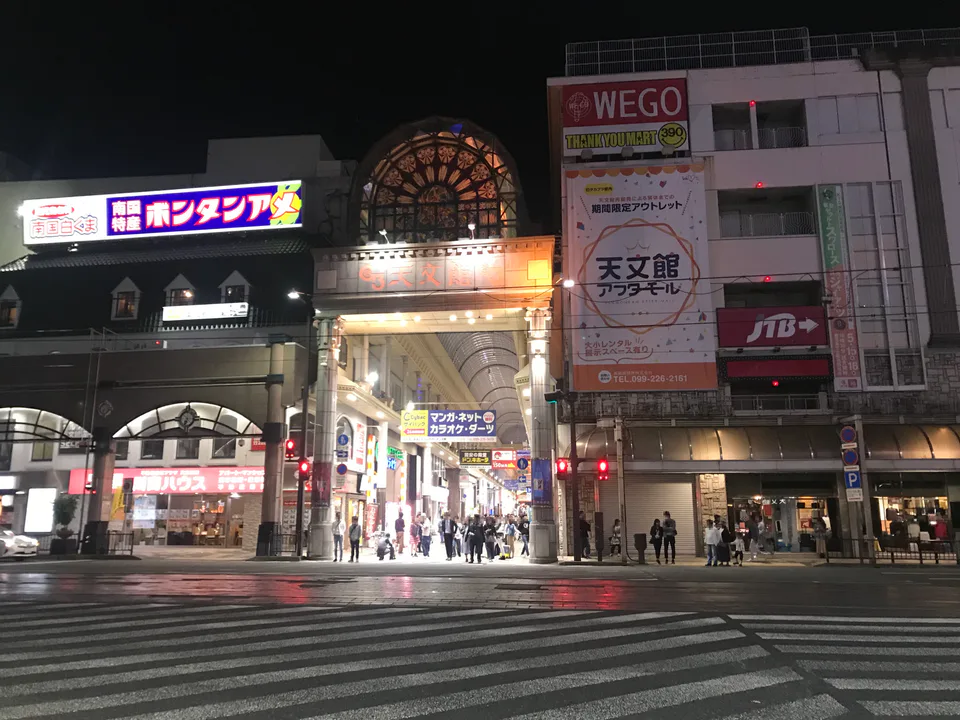
Tenmonkan’s value is not that Kagoshima-Chuo lacks restaurants. Chuo has Amu Plaza, station dining and shops. The difference is the shape of the evening. Tenmonkan is Kagoshima’s main dining, shopping and entertainment district, with restaurants, cafés, izakaya, bars and covered shopping arcades concentrated around the tram stop. If you expect to use that environment on two or three nights, the hotel-location benefit repeats.
That repetition is what can justify a Tenmonkan room even if you arrive at Kagoshima-Chuo. Dinner can become a walk rather than a decision about whether to board another tram. A drink or dessert does not create a “last transfer” task. In rain, the arcades protect more of the useful downtown evening.
The boundary condition is simple: if you normally eat near the station, return early or have a fixed JR departure most mornings, Tenmonkan loses much of its advantage. Do not pay a downtown premium for nightlife you will not use.
Airport access is not a universal tie — accessibility can flip the answer
Regular Kagoshima Airport city-bound buses serve the central-city corridor, and the airport lists Kagoshima-Chuo, Tenmonkan and the high-speed ferry terminal among the city stops. For most travelers, this means “does the airport bus stop in my district?” is too crude a question. The useful comparison is the exact stop-to-hotel walk, luggage load, weather exposure and what happens after check-in.
There is, however, one important exception that generic hotel-area comparisons can miss. Kagoshima Airport currently says the designated elevator-equipped wheelchair-accessible airport shuttle operates on a specific service, requires reservation by 3 p.m. the previous day for boarding while remaining in the wheelchair, and the airport-to-city run stops at Kagoshima-Chuo only, not Tenmonkan. If that service is part of your accessibility plan, Chuo is not merely more convenient—it changes the viable transfer.
Because this is a specific operating arrangement rather than a permanent property of the district, re-check it for your travel date. Accessibility is exactly the kind of condition where an old “both areas have airport buses” summary can become misleading.
Sakurajima is not a strong enough reason to choose Tenmonkan by itself
Tenmonkan is closer to the waterfront side of the city, but one Sakurajima day should not outweigh the hotel behavior of the other days. Kagoshima City’s official route from Kagoshima-Chuo to the ferry area is about 23 minutes to Suizokukan-guchi plus the walk, with trams around every seven minutes on the cited route. In other words, Chuo is not cut off from Sakurajima; it simply starts farther inland.
Choose Tenmonkan for Sakurajima only when it is part of a wider waterfront-and-downtown pattern. If you will come back from the island, eat downtown and repeat that evening behavior, the district makes sense. If the ferry day ends with collecting luggage and boarding a JR train, Chuo may still be the cleaner base.
With luggage, a stroller or older travelers, audit the final 500 meters
District labels hide the part of the journey that hurts most. A Tenmonkan hotel can be “central” yet still sit several crossings from the airport-bus or tram stop. A Chuo hotel can be near the station on a map but require an awkward route to the correct entrance. Before booking, check the exact station exit, lifts, crossings and stop-to-lobby path.
For a traveler carrying only a backpack, one extra tram leg is low friction. For a family with a stroller, two large suitcases and a child, the same leg contains boarding space, curb transitions, wet-weather exposure and more opportunities to lose time. This is why ValueNavi would accept a modest room premium for the better side of the city only when it removes a high-friction transfer, not because one district is universally “more convenient.”
Late arrival and early departure are different hotel problems
A late arrival with no fixed morning deadline can favor Tenmonkan: check in, eat and still use the downtown evening. A late arrival followed by an early Shinkansen flips the answer toward Chuo because the hotel is functioning as an overnight transport buffer. An early departure is even clearer—the value of the station base rises as the departure gets less flexible.
This is also why arrival time alone should not choose the district. Pair the arrival with the next hard commitment. A 9 p.m. arrival before a lazy city day and a 9 p.m. arrival before a 7 a.m. train are completely different accommodation decisions.
Rain changes which convenience matters, not which district is “best”
Tenmonkan’s covered arcades make a rainy evening more usable. Chuo, meanwhile, is more resilient when the non-negotiable task is getting onto a morning train with minimal outdoor movement. The correct question is not “which area is better in rain?” but which part of the day cannot be replaced? If missing the train damages the itinerary, protect the morning. If the evening food-and-shopping experience is a major reason for staying in Kagoshima, protect the evening.
Breakfast and room packages can quietly reverse the value equation
Do not pay for a breakfast-inclusive Chuo hotel if the restaurant opens after your early departure. Do not pay a Tenmonkan location premium if your nights end before the district becomes useful. Hotel packages often make the room look like the decision unit, but the real unit is the full sequence from waking up to the first fixed transport and from the final activity to bed.
The same logic applies to a ¥2,000–¥3,000 room-price difference. Tram fares alone are too small to prove that the more expensive hotel “pays for itself.” The premium needs to buy something you actually value: fewer luggage transfers, a safer early-departure buffer, or multiple evenings that end on foot.
For two or three nights, changing hotels between the two areas is usually the worst solution
Kagoshima-Chuo and Tenmonkan are close enough that splitting a short stay normally creates more work than it removes. Checkout, luggage storage, transport, collection and a second check-in are a much larger intervention than a 10-minute tram ride.
Split only when the itinerary changes sharply—for example, a late first night beside Kagoshima-Chuo followed by several city-focused nights with no more rail use. Even then, compare the move against simply taking the tram. For most two- or three-night stays, pick the base that wins the majority of your high-friction moments and stay put.
If the next decision is whether to keep a city base at all or sleep farther south for an onsen-focused night, compare Kagoshima or Ibusuki for one night. That is a different trade-off: transport efficiency versus destination experience.
Compare Kagoshima Chuo and Tenmonkan stays
Final verdict: put the hotel on the side of the city you would otherwise cross most often
Choose Kagoshima-Chuo if the trip is rail-shaped: Shinkansen arrival, JR day trips, large luggage, an early departure, or an airport-to-rail handoff. Choose Tenmonkan if the trip is evening-shaped: two or three nights where restaurants, bars, shopping and walking back to the room are part of the experience. One Sakurajima day is not enough to decide the base, and a short stay is rarely worth splitting between both areas.
The red-team exception is an itinerary that mixes heavy rail use with genuinely important downtown nights. In that case there is no friction-free answer. Count the crossings: if you would cross Chuo–Tenmonkan more often for trains, sleep at Chuo; if you would cross it more often for evenings, sleep in Tenmonkan. That is more reliable than declaring either district universally “best.”
References
Kagoshima City official tourism — Tenmonkan access from Kagoshima-Chuo and shopping district
Kagoshima City Transport Bureau — tram fare change from August 1, 2026
Kagoshima City official tourism — Kagoshima-Chuo airport limousine bus
Kagoshima Airport — elevator-equipped airport shuttle accessibility arrangement
Kagoshima City official tourism — Kagoshima-Chuo to Sakurajima ferry-area route