
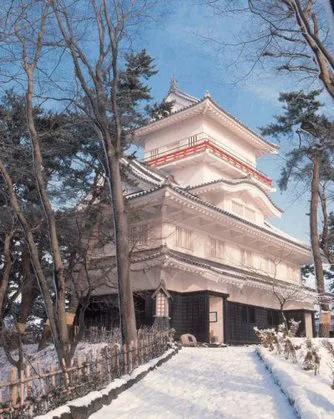
Kubota Castle is a good example of why “castle admission” is the wrong question. Senshu Park and the outdoor ruins are free. The reconstructed Osumiyagura costs ¥150 (about US$0.94 at the 27 August 2026 reference exchange rate). The Satake Historical Material Museum normally costs ¥500, but its current major exhibition is ¥1,200 (about US$7.53) through September 23. Those three prices buy three different experiences.
ValueNavi verdict: for most first-time castle visitors, do the free ruins and pay the ¥150 for Osumiyagura. Add the ¥1,200 museum only if Satake-clan artifacts are a genuine interest, not because it sits inside the same park. As of August 27, 2026, the museum’s exhibition galleries are closed today for changeover; the second half of the special exhibition starts August 28. The turret’s summer 19:00 extension also ended on August 24, so the current default is back to 09:00–16:30.
Pick the paid layer that matches the question you are trying to answer
↔ Scroll table left or right
Your goal | Best choice | Cash cost | Why |
Collect No.9 and read the castle layout | Free ruins + stamp | ¥0 | The park, gate, earthworks and surviving guard station do not require a museum ticket |
Best-value first visit | Add Osumiyagura | ¥150 / about US$0.94 | You gain an elevated overview and compact Satake interpretation for almost no cash premium |
Satake-clan artifact focus | Add the Satake Historical Material Museum | ¥1,200 / about US$7.53 during the Aug 1–Sep 23 special exhibition | The extra money buys objects and exhibition depth, not access to the castle itself |
Quick Akita Station walk | Free park + Front Gate + surviving guard station | ¥0 | Kubota is central enough to work without turning the stop into a museum day |
Exchange rates move, so the US-dollar amounts are only orientation. Keep the yen figure as the price to plan around.
ValueNavi Score: one of the easiest low-cash-cost castle stops in Tohoku
The score uses ValueNavi’s seven attraction-decision dimensions. Higher is better; resilience means less likely to be derailed. This is editorial analysis, not an official attraction rating.
↔ Scroll table left or right
Dimension | Score | Decision reason |
Money value | 9.8/10 | The castle park is free and the most useful small paid upgrade is only ¥150 |
Time efficiency | 8.8/10 | The main castle zone is about a 15-minute walk from Akita Station and can be scaled to a 60- or 90-minute visit |
Booking / access resilience | 8.0/10 Apr–Nov; lower in winter | Two official stamp locations help, but Osumiyagura closes Dec 1–Mar 31 and the museum has exhibition-changeover closures |
Weather resilience | 6.8/10 | The park is outdoor-heavy, but the turret and museum provide indoor alternatives when open |
Crowd resilience | 8.5/10 | The park spreads visitors out; festival and special-exhibition periods are the main exceptions |
Route fit from Akita Station | 9.5/10 | No extra regional transfer or hotel change is required |
Uniqueness | 7.8/10 | The earthwork castle, surviving guard station and Satake context are distinctive, though there is no dramatic surviving keep |
Overall planning score: 8.5/10 for an Akita city day. This is primarily an efficiency score. Kubota Castle is easy to fit well; it does not need to be inflated into a half-day attraction for every visitor.
Today’s 2026 trap: the museum galleries are closed August 26–27, but the castle is not
Akita City’s current special-exhibition schedule divides “Treasures of the Satake Clan: Remembering a Grand History — War and Elegance” into an August 1–25 first half and an August 28–September 23 second half. August 26 and 27 are gallery changeover days. The museum page notes that the observation terrace and shop remain available, but you should not assume the normal exhibition visit is operating.
That does not close Senshu Park. It also does not close Osumiyagura, which follows its own calendar. If you are visiting on a museum changeover day, treat the turret as the safer paid target and confirm the day’s stamp access rather than deleting No.9 from the itinerary.
The 19:00 summer turret extension is over — current planning is back to 16:30
Osumiyagura normally opens 09:00–16:30 and costs ¥150 for adults, with high-school-age visitors and younger free. Akita City extended it to 19:00 during the 2026 school summer-holiday window from July 18 through August 24. That extension ended three days ago.
This is exactly the sort of date-specific detail that becomes misleading quickly. If you are planning after August 24, do not use a screenshot saying “open until 19:00.” Unless Akita City publishes another extension, 16:30 is the working closing time.
The No.9 stamp has two official locations — but winter changes the backup plan
Akita City lists two official Japan 100 Famous Castles stamp locations: the Satake Historical Material Museum reception and Kubota Castle Osumiyagura. Redundancy is useful during most of the year because a museum display change does not necessarily remove the turret option.
Winter flips the logic. Osumiyagura closes from December 1 through March 31. A winter collector therefore cannot rely on the turret as a second location and should verify the museum calendar before arriving. “Two stamp locations” is not the same as “two year-round stamp locations.”
The ¥150 turret is the best paid upgrade for most first visits
Osumiyagura is reconstructed rather than an original Edo-period tower, but it performs a useful planning job: it gives you an elevated view of the castle footprint and compact historical interpretation after you have walked the gate, earthworks and Honmaru. At ¥150, the value question is mostly about time, not money.
If you have 60–90 minutes, the turret fits. If you have only 20 minutes before a train, paying even ¥150 can be the wrong choice because entering, climbing and reading displays consumes the very time you do not have.
The ¥1,200 museum ticket is not a Kubota Castle admission fee
The Satake Historical Material Museum reopened in 2025 after rebuilding. Its normal adult permanent-exhibition admission is ¥500 (about US$3.14 at the reference exchange rate), but the current August 1–September 23, 2026 special exhibition is ¥1,200 for adults.
The extra ¥1,050 over Osumiyagura is not buying a “better castle ticket.” It is buying a substantial Satake-clan exhibition with weapons, letters, art objects and historical material. If those objects are one of the reasons you stopped in Akita, the museum can be the main event. If you mainly want No.9 and the castle’s spatial logic, the turret is the cleaner upgrade.
Decision rule: buy the ¥1,200 museum because you want the exhibition, not because you fear a free castle visit is incomplete.
The most important original building is easy to walk past
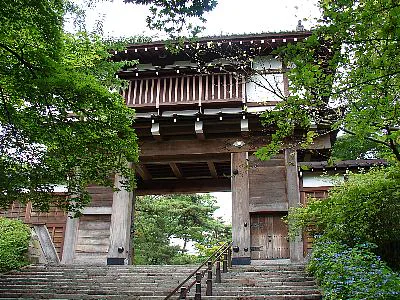
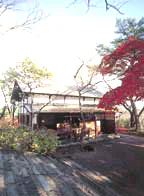
The Front Gate and Osumiyagura help visitors read the site, but both are reconstructions. The Onmonogashira Gobansho is the surviving domain-period administrative building that directly connects today’s park with Kubota Castle’s Edo-period operation. Akita City describes it as the only surviving domain-period building inside the castle.
That makes it a high-information stop even though it is visually quieter than the turret. If you have limited time, keep the guard station in the route before adding another scenic loop around the park.
“15 minutes from Akita Station” is a route-fit advantage, not a visit duration
Akita City lists roughly 15 minutes on foot from JR Akita Station West Exit to the Senshu Park museum/turret area. That makes Kubota one of the easier castle stops to place on a rail itinerary. It does not mean you can walk from the station, stamp, understand the site and return in 15 minutes.
A useful minimum for a real castle stop is around 60 minutes on site, plus the approach. If Akita is already a regional base or transfer point, the opportunity cost stays low. If you are adding Akita solely for No.9, the hotel/rail decision matters more than the ¥150 admission.
60, 90 or 150 minutes: scale the visit instead of buying everything
↔ Scroll table left or right
Time | Best route | Best for |
~60 min | Front Gate → Onmonogashira Gobansho → Honmaru → Osumiyagura/stamp | Collectors and rail-transfer days |
~90 min | Add moats, earthworks and a slower park loop | Best first castle-focused visit |
150 min+ | Add the Satake Historical Material Museum | Visitors genuinely interested in Satake and Akita-domain history |
If the wider Tohoku route is still undecided, use the Tohoku autumn itinerary to decide whether Akita belongs in the trip before turning a ¥150 castle stop into a hotel change.
Mobility: accessible turret features do not make the entire park approach flat
Akita City lists wheelchair-accessible entrances and elevators at Osumiyagura. That is useful once you reach the building. Senshu Park itself still involves outdoor gradients and route choices, so travellers with hard limits on distance or slopes should plan the park entrance and drop-off separately.
The same logic applies to bad weather: the museum and turret can improve weather resilience when open, but the earthworks and route between them are still outdoor. Do not infer “indoor facilities exist” means “this is an indoor castle visit.”
Final verdict: spend ¥150 first; spend ¥1,200 only for a museum reason
Kubota Castle’s strongest advantage is not spectacle but efficiency. It is close to Akita Station, the outdoor ruins are free, the surviving guard station gives you an authentic domain-period anchor, and the ¥150 turret is a low-cost way to add context and an overview.
The red-team case is a traveller who expects a surviving keep or huge stone walls. Kubota may feel modest compared with those castles, and the high route-fit score should not be confused with architectural grandeur. For a collector already stopping in Akita, however, that modest scale is a strength: No.9 can be completed without distorting the day.
Official facts to recheck before travel
Current stamp locations and museum notices: Akita City — Satake Historical Material Museum. Osumiyagura ¥150 admission, 09:00–16:30 regular hours and Dec–Mar closure: Akita City — Kubota Castle Osumiyagura. Current ¥1,200 exhibition and Aug 26–27 changeover: Akita City — 2026 Satake special exhibition. Recheck seasonal hours and display-change closures before travel.