
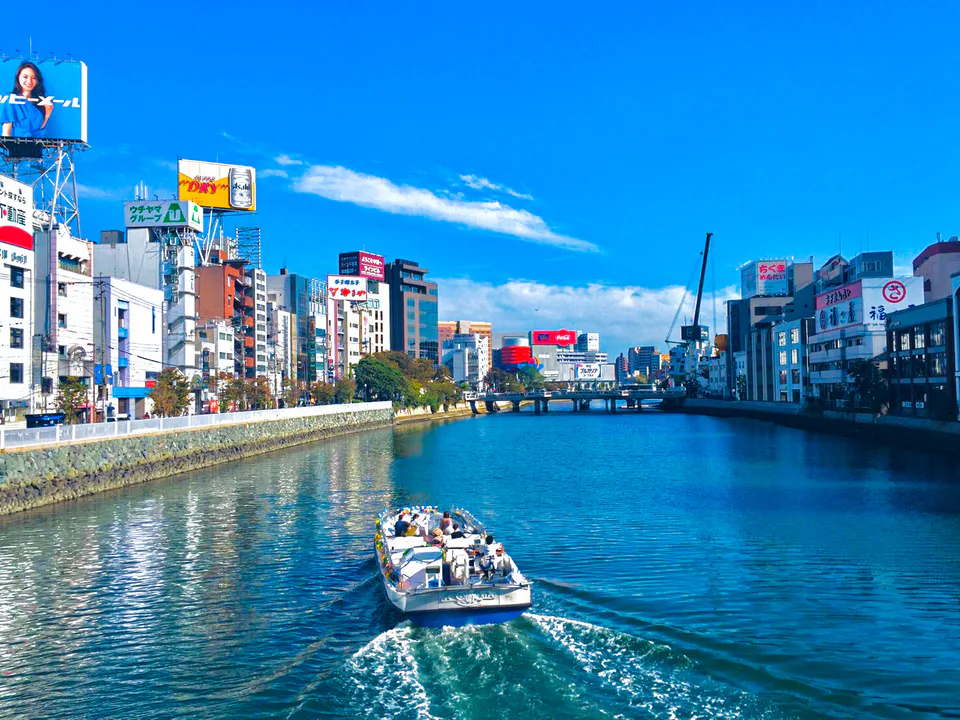
The 30-minute Nakasu River Cruise is worth doing when you are already spending the evening around Tenjin, Nakasu or Kawabata and can use the boat as a transition into dinner or yatai. I would not cross Fukuoka just for it, and I would not give it the best two hours of a one-day itinerary. If the real goal is sunset, open water and a broader skyline, compare the operator’s 45-minute Hakata Bay cruise instead. The longer cruise costs more, but it is a different product rather than a simple “15 minutes extra” upgrade.
The most useful planning rule is to count the time around the cruise, not only the 30 minutes on board. The operator currently asks passengers to arrive 15 minutes before departure, uses free seating, and can change or suspend the route because of weather, tide or waves. A 30-minute ride can therefore be an efficient evening add-on when you are already nearby, but a poor anchor for a tightly booked dinner or a trip across the city.
Fact-checked August 27, 2026. Current official adult fares are JPY 1,500 (about US$9.41) for the 30-minute course and JPY 2,000 (about US$12.55) for the 45-minute course. Approximate conversions use JPY 1,000 ≈ US$6.27; JPY remains the primary price reference and exchange rates move.
↔ Scroll table left or right
Your evening | Better fit | Why | Main catch |
Tenjin / Nakasu afternoon + dinner nearby | 30-minute Nakasu Cruise | The boarding point is already inside the evening route | Do not turn a small add-on into a fixed two-hour block |
Neon, bridges and yatai atmosphere | 30-minute night departure | The riverfront itself is the subject | Free seating means a specific photo position is not guaranteed |
Sunset + Fukuoka Tower / dome / wider waterfront | 45-minute Hakata Bay Cruise | The route is designed around the broader bay skyline | It takes a larger part of the evening and uses fewer scheduled departures |
One day in Fukuoka and major sights still unfinished | Skip | The opportunity cost is larger than the boat time suggests | You can see Nakasu from the riverbanks for free |
Hard restaurant reservation immediately afterward | Only with generous buffer | Weather, tide and operating changes can affect the schedule | A 30-minute cruise is not a guaranteed 30-minute calendar block |
ValueNavi Score: high route fit, low commitment, medium weather resilience
Editorial score, where 10 = traveller-friendly. These scores describe the 30-minute Nakasu course as an itinerary product, not the quality of any individual sailing.
Dimension | Score | Why |
|---|---|---|
Money Cost | JPY 1,500 (about US$9.41) is a relatively low cash commitment for a paid city activity | |
Time Cost | 30 minutes on board, but the 15-minute pre-departure arrival and walking still need to be counted | |
Booking Risk | Multiple regular departures make the course easier to fit than a single-slot attraction | |
Weather Risk | Weather, tide and waves can alter or suspend operation | |
Crowd Risk | Free seating can reduce photo-position control and attractive evening departures can fill | |
Route Fit | The boarding point fits naturally between Tenjin, Nakasu, Kawabata, dinner and yatai | |
Uniqueness | The river perspective is distinctive, but the Nakasu nightscape itself has free land-based alternatives |
The score explains why the cruise works best as a low-friction add-on rather than a must-do anchor. Its strongest assets are route fit, low money cost and short duration. The main reason not to over-plan around it is that weather resilience and uniqueness are only moderate.
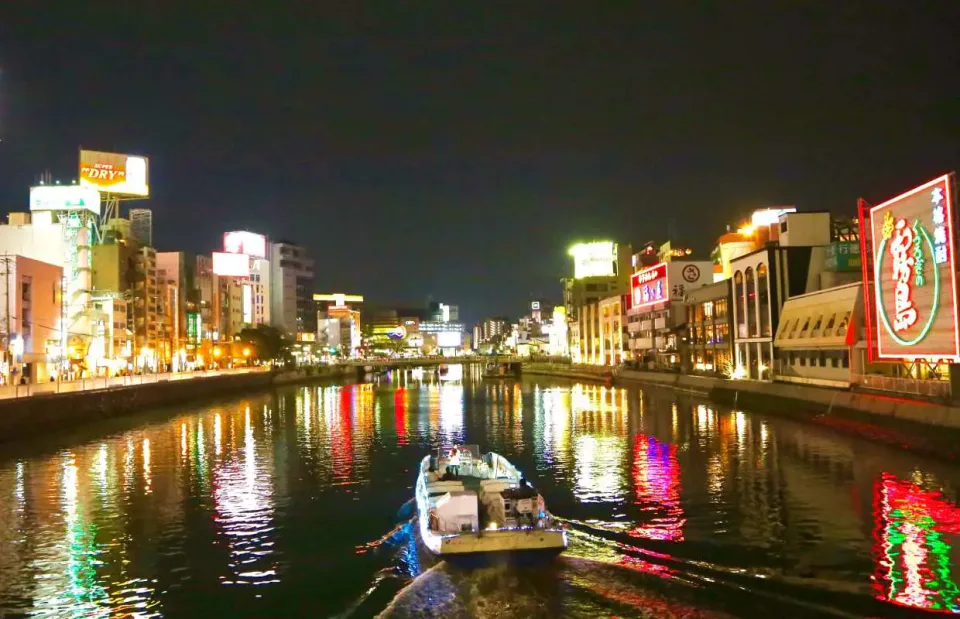
The 30-minute cruise is an itinerary connector, not a headline attraction
The current Nakasu route leaves from Fukuhaku Deai Bridge in Nishinakasu, runs along the Naka River through the central city scenery around Nakasu and Canal City, and reaches toward the Hakata Port side before returning. That geography explains its strongest use: you board in an area where Tenjin, Nakasu, Kawabata and dinner plans already overlap, then disembark in the same useful evening zone.
For a first-time visitor staying elsewhere, the deletion test is simple. If you remove the cruise, does the evening still work as Tenjin → Nakasu → dinner/yatai? If yes, the cruise is a bonus. If adding it requires an extra cross-city transfer, early departure from another attraction and a rushed meal afterward, the boat is controlling too much of the trip for what it delivers.
This is why the cruise can be good without being a “must-do.” It has low marginal transport cost when the surrounding itinerary already fits. Its value falls sharply when it becomes the reason you travel to Nakasu rather than something you do once you are there.
Dusk is useful, but protecting one exact sunset minute is usually the wrong optimisation
The standing operator timetable currently lists Nakasu departures at 11:00, 12:00, 13:00, 14:00, 15:00, 16:00, 18:00, 20:00 and 21:00. Live operating pages can add or change services, so the date-specific schedule should govern.
For photos, daylight is better for buildings and the city layout; dusk or blue hour keeps some colour in the sky while the lights appear; full night maximises neon and reflections. The cruise is too short and too weather-dependent to justify moving a more important dinner or attraction solely to chase an exact sunset minute. If dusk naturally fits, use it. Otherwise choose the light you prefer and keep the rest of the evening resilient.
Free seating changes how early you should arrive
The operator currently asks passengers to arrive at least 15 minutes before departure and states that all seating is unreserved. If a particular side of the boat or an unobstructed camera position matters, arriving at the minimum check-in time may not give you first choice. On a weekend or attractive night slot, build a little more waiting into the plan.
This also changes the “30-minute attraction” label. A traveller who walks 15 minutes from Tenjin, arrives 15 minutes early, rides 30 minutes and then walks to dinner has used closer to an hour than half an hour. That is still efficient by sightseeing standards, but it is the correct unit for itinerary planning.
Nakasu 30 minutes vs Hakata Bay 45 minutes: do not buy the longer ride by default
The operator’s current standing price table lists the 30-minute course at JPY 1,500 for adults (about US$9.41) and JPY 800 for children (about US$5.02), and the 45-minute Hakata Bay course at JPY 2,000 for adults (about US$12.55) and JPY 1,000 for children (about US$6.27). The same page lists regular Hakata Bay departures at 14:00, 17:00 and 19:00. Live-day pricing or special operating notices can vary, so verify the booking page for the actual date.
The JPY 500 (about US$3.14) adult difference is small, but “longer for only JPY 500 more” is the wrong reason to upgrade. Choose the Nakasu Cruise when the riverfront itself is the experience: bridges, neon, nearby yatai and the feeling of staying inside the city centre. Choose the Hakata Bay Cruise when the wider waterfront is the goal. The operator describes the bay route around views such as Bayside Place, Fukuoka Tower and the dome area. Neither is automatically better value; the shorter product wins when compactness is the feature.
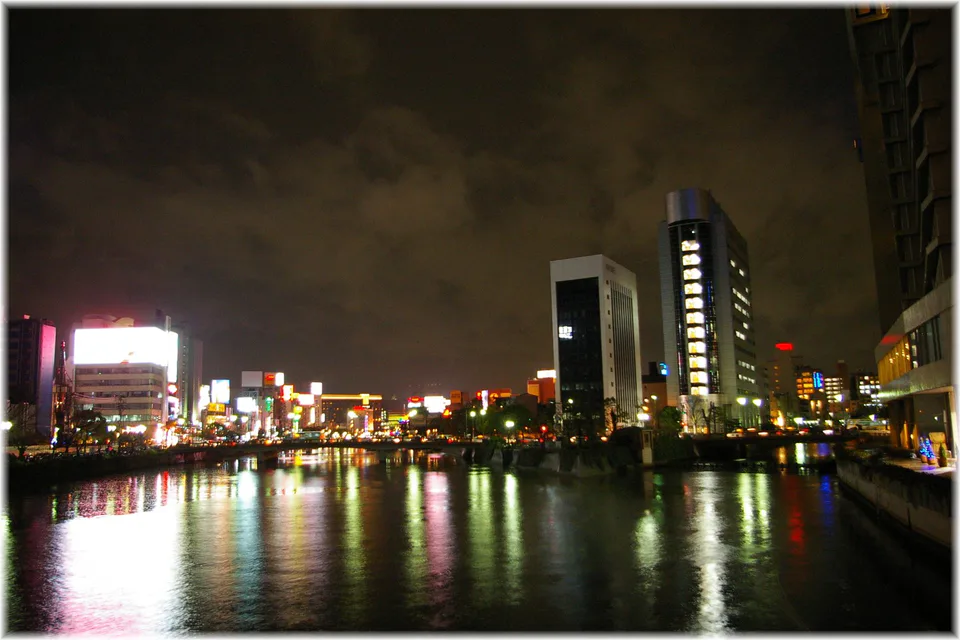
Weather and tide make the cruise a replaceable plan, not a rain backup
The operator explicitly states that weather, tidal conditions and waves can change the route or suspend service. Fukuoka’s official tourism information also highlights that high tide can reduce clearance under some bridges. This is not a dependable “it is raining, so we will take a boat instead” attraction.
If the evening forecast is unstable, keep the cruise movable and put a genuinely indoor activity in reserve. The Fukuoka rainy-day guide is a better weather fallback than turning one short boat ride into the day’s non-negotiable anchor.
A timed dinner is the main reason to add a larger buffer
A yatai plan is flexible enough that a small cruise delay may not matter. A reservation at a restaurant with a fixed seating time is different. Work backwards from the dinner reservation: include the 15-minute pre-departure arrival, the cruise itself, disembarkation and the walk to the restaurant, then add enough margin that a minor operating change does not turn the last ten minutes into a run through Nakasu.
If the restaurant is the scarce part of the night and the cruise is replaceable, protect the restaurant. That is the right priority order.
The cleanest sequence is afternoon nearby → cruise → dinner
The boarding point near Fukuhaku Deai Bridge is useful because it sits between Tenjin and Nakasu-Kawabata rather than in an isolated waterfront district. A strong first-trip sequence is Tenjin / Kawabata / Canal City in the afternoon → Nakasu Cruise → dinner or yatai → hotel. You are not backtracking to the boat, and you do not need a second major transport leg after disembarking.
If yatai is the plan, use the Fukuoka yatai guide before assuming Nakasu is automatically the best stall area. If the hotel base is still undecided, the Tenjin vs Nakasu hotel comparison matters more to the trip than shaving a few minutes off the cruise walk.
When I would skip the cruise
Only one Fukuoka day and major sights remain: the real time block is larger than 30 minutes once check-in and walking are counted.
You only want one neon photograph: Fukuhaku Deai Bridge and the riverbanks already give you free views.
You want detailed English historical interpretation: the core product is the city view, not a guaranteed English-language guided lecture.
The weather is poor and the boat is the only reason you are travelling to Nakasu: move the activity rather than force the evening.
The hotel is far away and the surrounding Nakasu evening has no other job: the transport overhead can exceed the value of the ride.
Should you reserve?
The operator accepts reservations, but the value of reserving depends on how specific the plan is. If any departure will do, keep flexibility and follow the live operating page. If a particular night slot is the bridge between sightseeing and a timed dinner, reserving protects the sequence even though weather can still affect operation.
Klook | Check Nakasu River Cruise departures and terms
KKday | Compare the same date and route
Final verdict
Take the 30-minute Nakasu Cruise when it fits an evening you were already going to spend around Tenjin or Nakasu. Dusk or night usually gives the short route a clearer identity, but do not sacrifice a more important reservation to chase one exact light window. Upgrade to the 45-minute Hakata Bay cruise only when sunset and the wider waterfront are the actual reasons you want a boat.
The strongest reason to skip is not price. It is opportunity cost. A short urban cruise is good when it closes a gap in the evening; it is weak when the rest of the itinerary has to bend around it.
References
River Cruise — current Nakasu route, timetable and boarding rules · River Cruise — current standing price table · River Cruise — live operating information · Visit Fukuoka — official prefectural cruise overview. Checked August 27, 2026. Live departures, extra services, fares and routes can change by date and conditions.