
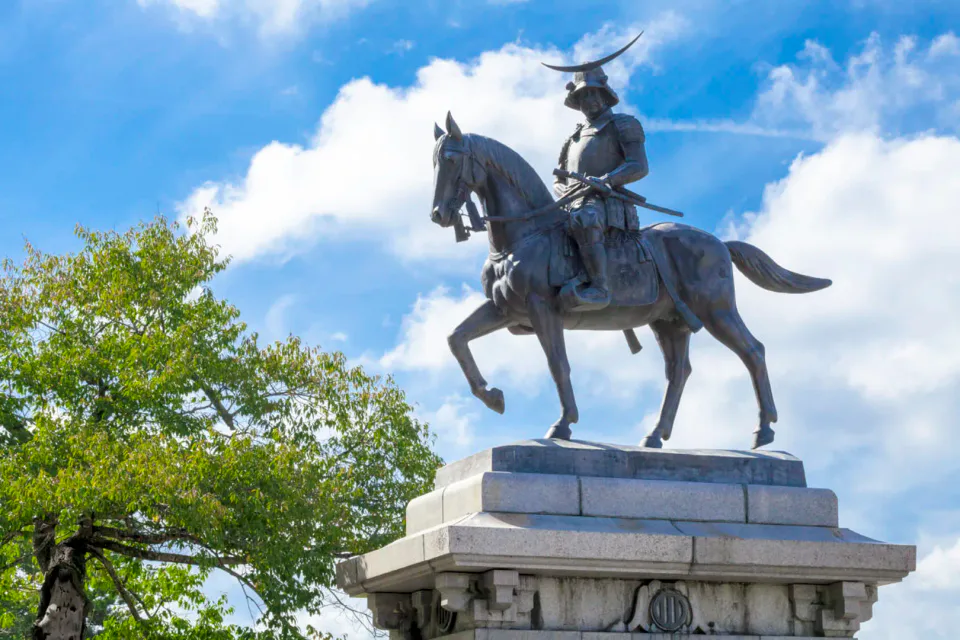
Sendai Castle is easy to visit and equally easy to reduce to the wrong thing. If you take the Loople bus straight to the Honmaru, collect the No.8 stamp and photograph Date Masamune’s equestrian statue, you can be done quickly — but you have mostly visited a viewpoint. If you walk up from International Center Station, the former Otemon approach, stone walls and rising Aobayama terrain make the castle much easier to understand.
ValueNavi verdict: use the Loople for a 60-minute collector stop; use International Center Station for a 90–120 minute first visit. The ruins themselves can be visited 24 hours, but the Japan 100 Famous Castles stamp is inside the Sendai Castle Guidance Center and is available only 09:00–17:00. For collectors, 17:00 is the hard deadline. For everyone else, the real decision is whether speed or historical context matters more.
One castle, two completely different visits
↔ Scroll table left or right
Your goal | Best approach | Why | What you sacrifice |
No.8 stamp + Masamune statue + skyline | Loople Sendai directly to Sendai Castle Ruins | Official access time is about 23 minutes from Sendai Station and the bus leaves you close to the Honmaru | You skip much of the physical approach that explains the castle |
First visit focused on castle history | Subway to International Center Station, then walk uphill | The official walk is about 20 minutes and lets the lower compounds, Otemon side and stonework build toward the Honmaru | More walking and elevation |
Date clan / Sendai-domain history | Add Sendai City Museum before the uphill route | The former Sannomaru and museum context make the castle-town story much denser | Your castle stop becomes a 2–3 hour history block |
Night view only | Visit after dark | The outdoor ruins are accessible 24 hours | You cannot rely on collecting the stamp after 17:00 |
Limited mobility | Use road access and confirm the final accessible route | A direct bus reduces distance | “Bus to the castle” does not mean every Honmaru segment is step-free |
ValueNavi Score: high route fit, but the best version depends on how you approach
The scores use ValueNavi’s seven attraction-decision dimensions. Higher is better; resilience means the visit is harder to derail. They are editorial planning scores, not official ratings.
↔ Scroll table left or right
Dimension | Score | Why |
Money value | 9.8/10 | The castle ruins and Guidance Center are free; transport is the main cash cost |
Time efficiency | 8.8/10 by Loople; 7.4/10 on foot | The direct bus is fast, while the walking route deliberately spends time to reveal more of the castle |
Booking / access resilience | 8.0/10 | No ticket is needed, but stamp access ends at 17:00 |
Weather resilience | 6.5/10 | The strongest castle-reading route is outdoors and uphill; the Guidance Center offers only a compact indoor fallback |
Crowd resilience | 7.5/10 | The site is broad, but sightseeing buses, festivals and holiday road traffic can concentrate pressure at the Honmaru |
Route fit from Sendai Station | 9.5/10 | No hotel move is needed and both bus and subway approaches fit a normal Sendai city day |
Uniqueness | 8.5/10 | The Aobayama terrain, surviving stonework, Date Masamune story and city view combine into a distinctive urban castle ruin |
Overall planning score: 8.4/10 from a Sendai base. The score is high because the castle is easy to add, not because every visitor needs two hours there. A collector can rationally choose the fast version; a castle fan gets more value by intentionally accepting the slower approach.
The ruins are open 24 hours; the stamp is not
Sendai City’s current FAQ states that the outdoor castle ruins can be visited 24 hours a day. The Japan 100 Famous Castles stamp is at the Sendai Castle Guidance Center immediately west of the equestrian statue, and the center is open 09:00–17:00 year-round with free admission.
This creates a useful failure plan. If you miss 17:00, switch the objective to the city view and outdoor ruins rather than pretending the stamp problem has disappeared. If No.8 matters, return during the Guidance Center window. Night access is schedule flexibility, not an after-hours stamp service.
The Guidance Center is the best 15 minutes to spend before looking at an “empty” Honmaru
The Guidance Center is small, but it solves the biggest interpretation problem at Sendai Castle: the Honmaru palace is gone. Its reconstruction model and excavation displays let you connect the present-day open footprint with the former Great Hall and the castle’s political centre.
On a one-hour visit, stamp first, spend a short block with the model, then walk the Great Hall footprint and the north stone wall. That sequence produces more information than spending the same time only at the statue and souvenir area.
Loople or subway? The 3-minute headline difference is not the real choice
Sendai City currently lists about 23 minutes from Sendai Station West Exit bus stop 16 to the “Sendai Castle Ruins” stop on the Loople sightseeing loop. It lists about 20 minutes on foot from International Center Station to the Honmaru. Those figures are not directly comparable: one starts at Sendai Station and rides almost to the top; the other starts after you have already taken the subway.
So do not choose the walk because “20 is less than 23.” Choose it because you want the approach route. The Loople minimises decision friction and is better for a stamp run or a wider sightseeing-loop day. International Center gives you a better castle narrative, especially if you add the museum, former Otemon area and lower stonework.
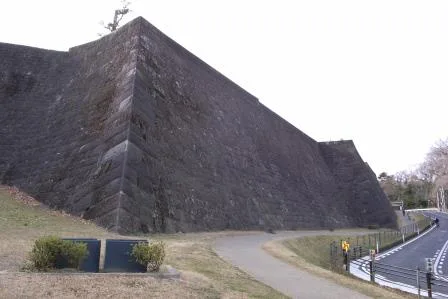
The north stone wall is the feature most likely to be missed by an efficiency-first visit
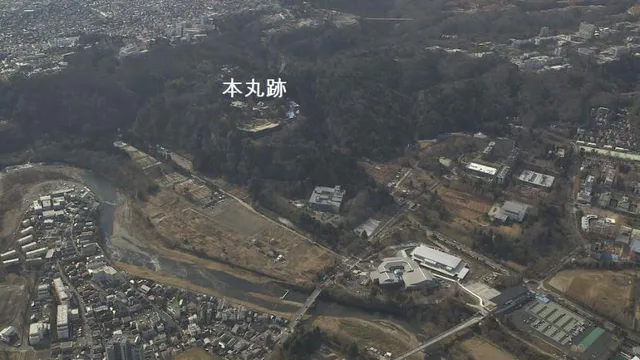
Sendai Castle used Aobayama and the surrounding river/valley terrain as part of its defence, rather than depending on a surviving keep. The Honmaru’s substantial stonework is therefore one of the most useful surviving features for understanding the site.
If you ride directly up, budget an extra 20–30 minutes to move beyond the statue and viewpoint. Otherwise the castle’s best-known photo becomes the whole visit, even though the stone walls and terrain are the stronger evidence of how the site functioned.
The Great Hall footprint is more useful than imagining a missing keep
The Honmaru Great Hall was the political and ceremonial centre of the castle. The building is gone, but its footprint can be read together with the Guidance Center model. That pairing is a good example of why Sendai Castle rewards interpretation rather than “original building count.”
Two 2026 corrections: the earthquake road closure is old news; Otemon reconstruction is not finished
Older travel pages can fail in opposite directions. Some still repeat the road restrictions caused by the 2021 and 2022 earthquakes, but Sendai City reports that the damaged stone-wall restoration was completed and the Sendai Castle Ruins road reopened on August 1, 2025.
At the same time, headlines about the Otemon reconstruction can make the future sound present. Sendai City finalised the basic reconstruction concept in March 2026 and is aiming for completion in 2036, the 400th anniversary of Date Masamune’s death. In 2026 you are seeing the Otemon site and existing reconstructed Wakiyagura, not a newly completed main gate.
This distinction matters for expectations: do not cancel because of an old closure, and do not travel expecting a gate that is still a decade-long project.
Should you add Sendai City Museum? Only when the Date story is part of the goal
The Sendai City Museum sits in the former Sannomaru zone and can turn the castle from a one-hour viewpoint/stamp stop into a fuller Date-domain history route. It is not required for No.8 and should not be forced into a tight schedule simply because it is nearby.
If you have two to three hours, museum → former Otemon approach → uphill stonework → Honmaru is the strongest sequence. If you have one hour, keep the museum for another day and protect the Guidance Center, stamp and core ruins first.
60, 120 or 180 minutes: three useful versions
↔ Scroll table left or right
Time | Route | Best for |
~60 min on site | Loople → stamp/Guidance Center → Masamune statue → Great Hall footprint → north stone wall | Collectors and time-limited city itineraries |
90–120 min | International Center → former Otemon side → stonework → Honmaru → stamp | Best first visit if castle understanding matters |
2–3 hours | Add Sendai City Museum or pair with Zuihoden | Date Masamune / Sendai-domain history focus |
If your wider regional trip is still being built, use the Tohoku itinerary to decide whether Sendai is already a base. The castle is efficient because it fits a Sendai day; it should not be the reason you move hotels.
When a guided half-day makes sense
Sendai Castle itself is free, so a commercial tour is buying route integration and interpretation rather than admission. The existing exact Klook product combines Zuihoden and Aoba Castle Ruins and advertises Mandarin-speaking support. That can make sense if those are already your two Date Masamune priorities and the language support is useful to you.
If you are comfortable using the subway/Loople and only need the No.8 stamp, self-guiding is leaner. Do not buy a tour to solve a ticket problem that does not exist.
This article may contain affiliate links. If you complete an eligible booking through one of these links, ValueNavi may earn a commission at no extra cost to you.
Compare the Zuihoden + Aoba Castle half-day tour
Final verdict: choose speed or context on purpose
Sendai Castle is a strong No.8 stop because the logistics are easy from a Sendai base, the site is free and the stamp location is straightforward before 17:00. But the efficient Loople route and the historically richer walking route are not interchangeable.
The red-team case is someone who dislikes ruins and only wants surviving castle architecture. For that traveller, the city view and Masamune statue may be pleasant, but No.8 should not outrank a surviving or reconstructed keep elsewhere. For a collector or Date-history traveller already in Sendai, the answer reverses: the route fit is excellent, and a deliberately chosen 60- or 120-minute version avoids wasting either time or context.
Official facts to recheck before travel
Current stamp and 24-hour outdoor access: Sendai City — Sendai Castle Ruins FAQ. Current Loople and subway approach times: Sendai City — access to Sendai Castle Ruins. Otemon reconstruction timeline: Sendai City — Otemon reconstruction project. Recheck Loople operations, road conditions and event restrictions shortly before travel.