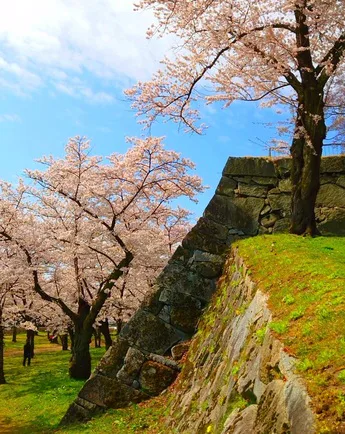
Morioka Castle is Japan’s 100 Famous Castles No.6, but the easiest mistake on a first visit is to see “no keep” and downgrade it to a generic free park. The surviving attraction is not a building you enter. It is the scale of the Honmaru, Ninomaru, Sannomaru and Awajimaru enclosures, held together by massive granite stone walls that reveal different construction periods and techniques. The castle ruins themselves are free, so the real decision in 2026 is not whether to buy a castle ticket. It is whether you want 60–90 minutes outdoors, or enough extra time to add the Morioka History and Culture Museum next door.
That museum changes the planning. Its first floor is free, the second-floor exhibition rooms cost ¥450 for adults from April 1, 2026, and the Japan 100 Castles stamp follows the museum’s opening schedule. On closed days, you cannot complete the No.6 stamp even though the park is still there. Collectors, stone-wall fans and travelers already using Morioka as a base should make room for this stop. If this is your first three- or four-day Tohoku trip and what you really want is a surviving keep or a single dramatic castle photo, Morioka Castle can stay in the flexible part of the itinerary.
30-second decision: Morioka Castle is free, so when is the ¥450 museum worth adding?
↔ Scroll table left or right
Your goal | Best choice | What actually matters |
Collecting Japan’s 100 Famous Castles stamps | Go | The No.6 stamp is at the Morioka History and Culture Museum; no stamping on museum closed days. |
You mainly want the stone walls and castle layout | Use the free park | There is no admission ticket for Morioka Castle Ruins Park itself. |
You want the Nanbu clan and castle-town story | Add the museum | First floor free; second floor ¥450 adult, ¥300 high school, ¥150 elementary/middle school. |
You only have 60–90 minutes | Castle ruins first | Ninomaru → Honmaru → key walls; do not sacrifice the outdoor site just to “use” the museum ticket. |
You are in Morioka on Sep 14–16, 2026 | Especially worthwhile | Autumn Festival floats use the castle area; September museum closure shifts to Sep 8. |
You only want an original surviving keep | Lower priority | Most castle buildings were removed in 1874; the value is in walls, enclosures and scale. |
If you have not decided whether Morioka should be a base or just a rail stop, compare it with Sendai, Aomori and Hachinohe in Where to Stay for Tohoku Autumn Leaves. The castle becomes much easier to justify once Morioka is already part of your overnight plan.
Morioka Castle has no keep — what survives is a timeline written in stone
Morioka Castle is also known as Kozukata Castle. Nanbu Nobunao began construction around 1597, Toshinao continued the project, and the castle took shape over decades marked by flooding and prolonged work before Shigenao entered the completed castle complex in 1633. After the Meiji Restoration, most buildings inside the castle were dismantled in 1874. That is why a visit today cannot be organized around “enter the keep, climb to the top, then leave.”
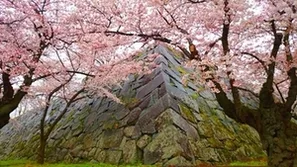
What remains is not a scattering of random rocks. The Honmaru, Ninomaru, Sannomaru and Awajimaru still make the site legible as a castle, and the granite walls were built largely from stone quarried within the castle and nearby Uchimaru area. The payoff comes from walking through multiple enclosures and noticing how the masonry changes. Morioka Castle is stronger as a place you read over time than as a place you photograph once.
The best thing to slow down for at Morioka Castle: nozura-zumi, ran-zumi and nuno-zumi are not the same wall
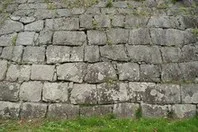
Morioka City specifically highlights several masonry styles across the castle. Nozura-zumi stacks natural stones with their irregular shapes still obvious. Ran-zumi uses cut stones of different sizes in a more puzzle-like arrangement. Nuno-zumi aligns more squared stones into clearer horizontal courses. You do not need to memorize Japanese masonry vocabulary before you arrive; use those terms as a viewing tool rather than a test.
Look first at three simple things: stone size, the shape of the joints, and whether the horizontal lines feel regular. Compare sections around Ninomaru, Honmaru and Sannomaru. Once you do that, the site stops feeling like one long stone wall and starts showing separate building phases. For castle enthusiasts, this is the reason to stretch the visit toward two hours. For everyone else, it is the easiest way to make a keep-less castle visually meaningful.
Free castle ruins vs the ¥450 Morioka History and Culture Museum: do not treat them as one ticket
Morioka Castle Ruins Park is the outdoor site; the Morioka History and Culture Museum beside it is a separate decision. The museum’s first floor is free. From April 1, 2026, the second-floor exhibition rooms cost ¥450 for adults, ¥300 for high-school students and ¥150 for elementary- and middle-school students. From April through October the museum is open 9:00–19:00, with final second-floor admission at 18:30. From November through March it closes at 18:00, with final second-floor admission at 17:30.
There is one small but practical detail for overseas visitors: the museum’s official FAQ says payment for the second-floor admission fee is cash only. If your day has become mostly cashless, this is exactly the kind of ¥450 problem that should not exist but can still derail the add-on. Carry a little yen if you plan to go upstairs.
If you only have an hour, the correct response to “the museum is only ¥450” is still not automatically yes. See the castle first. If the walls and layout make sense and you are ready to move on, you have lost nothing. If you finish the outdoor loop wondering who the Nanbu were, why the town formed here or how the festival culture connects to the castle town, the museum becomes much more valuable. In other words, pay for context only when context is the thing you are missing.
Japan 100 Castles collectors: the No.6 stamp follows the museum, not the always-accessible park
This is the most important operational detail for stamp collectors. The official Japan 100 Castles No.6 stamp is handled at the Morioka History and Culture Museum. Museum closure notices explicitly state that on closed days the Morioka Castle goshuin-style castle seal is not sold and the Japan 100 Castles stamp cannot be used. That is very different from Nejo Castle No.5, where an outdoor stamp arrangement can rescue a late arrival.
So do not translate “the park is open” into “I can finish No.6 at any hour.” If you reach Morioka late, you can still walk the walls, but you may have to return another day for the stamp. On a rail-heavy Tohoku trip, lock the museum opening window first and let the free park flex around it.
September 2026 has a closure exception: do not blindly apply the “third Tuesday” rule
The museum normally closes on the third Tuesday of each month, moving to the following day if that Tuesday is a public holiday. September 2026 is different. Because the usual third-Tuesday closure would overlap the Morioka Autumn Festival period, the official 2026 notice moves the museum closure to Tuesday, September 8. That means September 15 should not be treated as closed just because an older rule-of-thumb says “third Tuesday.”
For a casual visitor this is a small calendar detail. For a Japan 100 Castles collector it determines whether the trip succeeds. Always check the museum’s current calendar rather than memorizing the regular closure formula.
If you are in Morioka on September 14–16, the castle becomes part of the Autumn Festival route
The 2026 Morioka Autumn Festival float operations run September 14–16. On September 15 at 18:00, the Morioka Dashi Grand Picture Scroll parade starts from the Morioka History and Culture Museum / Morioka Castle Ruins Park lawn area before heading through central Morioka. That changes the value of the site. You are no longer seeing the old castle footprint in isolation; you are watching a living castle-town tradition use the same urban core.
The trade-off is obvious: more people, traffic restrictions and slower movement. If your goal is quiet masonry photography, avoid the peak parade period. If you already want the festival, a castle visit in the afternoon followed by the evening floats is far more efficient than making two separate trips from Morioka Station. For a bigger festival route across the region, the Tohoku Summer Festival One-Week Itinerary 2026 shows how Morioka fits beside Aomori, Akita and Sendai.
From Morioka Station: the 20-minute walk is reasonable, but the bus is better for a short stop
The museum’s official access information puts the walk from JR Morioka Station at about 20 minutes. That is perfectly manageable in good weather if the walk itself is part of your city day. If you are protecting energy for stone-wall slopes, carrying a day bag, working around rain or trying to fit the castle between trains, the bus is more useful. Central-city services take roughly 10 minutes to Kencho/Shiyakusho-mae, followed by about a four-minute walk; Morioka Bus Center is about a five-minute walk away, and the Morioka Castle Ruins Park stop is also listed about four minutes away on foot.
Morioka is often a mid-route base rather than a single-attraction destination. If you are deciding whether to sleep here or keep moving north, use Where to Stay for Tohoku Autumn Leaves first. If you are already based in Morioka for Hachimantai or rail day trips, the castle is an easy city half-day rather than a detour.
60 minutes, 90 minutes or 2.5 hours: Morioka Castle should be three different visits
↔ Scroll table left or right
Time available | Recommended route | What to cut |
About 60 min | Ninomaru → Honmaru → key stone walls → stamp | Skip the paid second-floor museum rooms; protect outdoor time. |
About 90 min | Compare masonry + Honmaru/Sannomaru + stamp | Do not read every monument and plaque in sequence. |
About 2 hr | Full ruins + Sakurayama Shrine / nearby castle-town streets | Add the museum only if its context is useful that day. |
2.5–3 hr | Castle ruins + paid second-floor museum | Best for a first visit when you genuinely want the Nanbu story. |
Festival / peak autumn day | Castle + seasonal event | Do not force the normal 60-minute template onto a special-date visit. |
If Morioka is part of a larger fall-color route, use the Tohoku Autumn Leaves Itinerary to decide whether No.6 belongs on a Morioka base day or on a transfer day.
The stone walls are still under long-term conservation: barriers are part of the reality, not a failed visit
Morioka City says the castle has roughly 16,000 square metres of stone walls, with around 5,000 square metres showing damage. Detailed surveys, dismantling and restoration work have continued since 1984. Earthquakes, rainfall and tree roots have all affected the masonry, and some sections can be fenced or restricted because of bulging or safety concerns.
The practical consequence is simple: do not arrive with one old internet photo and assume that exact camera position will always be accessible. Follow current barriers, do not climb or touch restricted masonry, and change angle when necessary. For a castle fan, the conservation work is not visual clutter with no meaning; it is part of how a 400-year-old stone system survives into the next century.
Do not only look for a keep: Hiko-gura is one of the rare surviving feudal-period buildings
Most of Morioka Castle’s buildings disappeared in the early Meiji period, but the Hiko-gura storehouse is a useful exception. Morioka City records that it was rebuilt in 1837 after a fire and is now a city-designated cultural property. It is easy to miss if your mental checklist contains only keeps, gates and turrets. Yet it is exactly the detail that prevents the site from being described as “nothing original survives.”
Treat Hiko-gura as supporting evidence, not the main attraction. The castle’s identity still comes from its plan and masonry. But if you enjoy sorting reconstructed, relocated and genuinely historic fabric, it deserves a deliberate look.
Spring cherry blossom season is over: do not use a past 2026 event to justify an August–winter visit
Morioka Castle Ruins Park has roughly 250 cherry trees and spring is a major visual season, but the 2026 blossom period is already past. If you are planning from late summer onward, do not let an old festival page persuade you that spring-only lighting or event dates are still relevant. A future spring visit needs a fresh bloom forecast and that year’s official event schedule.
For autumn, the bigger planning question is elevation. Morioka city foliage and mountain foliage do not peak at the same time. Start with Tohoku Autumn Leaves: Timing from Aomori and Iwate to Miyagi and Yamagata rather than forcing Morioka Castle onto the same day as whichever mountain area happens to peak first.
If Morioka Sansa Odori brought you here, see the castle in daylight and protect the evening for the festival
For a summer festival trip, Morioka Castle works best as a daytime slot. The ruins do not require a timed reservation, while Sansa Odori has its own viewing-position, arrival-time, crowd and return-to-station problems after dark. The cleanest split is castle first, festival later. Our Morioka Sansa Odori Free Viewing 2026 guide handles the roadside-versus-reserved-seat choice separately so this castle visit does not have to carry two decisions at once.
The one part you should not leave until after the festival is the No.6 stamp. Because it follows museum hours, a late-night castle walk can never substitute for an open museum if you are collecting the series.
Is the ¥450 museum actually worth it? Decide by what you still do not understand
If you finish the castle loop already understanding the chronology, the Nanbu clan and how the castle town spread into modern Morioka, the second floor is optional. This is especially true on a two-hour stop: paying a modest fee is not a good reason to compress the part of Morioka Castle you came to see. Cheap does not mean mandatory.
The museum becomes more useful when you are new to Morioka history, the weather is poor, winter makes a long outdoor stay unpleasant, or the current exhibition gives you a reason to linger. In 2026 the museum continues to rotate exhibitions around Morioka history, Nanbu material and cultural properties, so the value can change by date. Before paying, ask one question: do I need more sights, or do I need the things I just saw to make sense? The ¥450 is best spent on the second problem.
Driving is not required — and parking can be an extra cost rather than an advantage
Morioka Castle is central enough that a rental car is not necessary. The museum itself has no general visitor parking. The adjacent Morioka Castle Ruins Park underground car park is paid: current city information lists 7:00–22:00 entry/exit, ¥150 per 30 minutes from 8:00–18:00 with a ¥1,100 daytime cap, and different evening/night rates. For a 60–90 minute visit from a Morioka Station hotel, walking or the bus can be simpler than adding a parking transaction.
A car becomes useful when the castle is only one part of a wider Iwate day. If the next destination is Hachimantai, the logic changes: you may accept city parking because you need the vehicle later. Our Hachimantai Autumn Leaves Guide is the better place to make that driving-versus-bus decision.
Why there is no Klook, KKday or Trip.com purchase CTA in this Morioka Castle guide
A fresh product check did not find an exact Klook ticket, guided visit or bookable product that genuinely includes Morioka Castle. More importantly, the ruins park itself is free and does not require advance admission. Sending readers to a generic Tohoku tour or a different Japanese castle simply to create an affiliate click would solve the wrong problem.
The useful next action here is operational: check the museum calendar, make sure the stamp window works, carry cash if you want the paid second floor, and decide whether Morioka deserves 60, 90 or 180 minutes. If a genuinely relevant bookable product appears later, it should be verified against the exact itinerary before any CTA is added.
Failure plan: late arrival, museum closure or only 30 minutes left
Arrive after the museum has closed: walk the castle ruins if you still want the walls, but accept that the No.6 stamp is not finished. Hit a museum closed day: do not assume the free park can substitute for the stamp; move the stamp to another opening day. End up with only 30–45 minutes: cut the museum and the wider castle town, then go straight to Ninomaru, Honmaru and the most legible wall sections.
Find a conservation barrier where an old photo suggests an open route: change the angle. Do not cross fencing or climb masonry for a “complete” shot. There is no single camera position that defines Morioka Castle. If you understand the enclosures, compare more than one wall and complete the stamp when required, the visit has done its job.
Final verdict: Morioka Castle is worth visiting, just not because there is a “castle building” to enter
If this is your first stay in Morioka and you are interested in Japanese castles, go and budget about 90 minutes. If you are collecting Japan’s 100 Famous Castles, go but lock the Morioka History and Culture Museum opening day before anything else. If stone walls are the reason you travel, stretch toward two hours and compare construction styles rather than treating the site as one wall. If your definition of a rewarding castle is an original surviving keep, lower Morioka on the list without guilt.
The biggest trade-off is not money. The outdoor site costs nothing. It is whether you are willing to read a castle whose architecture survives mainly as ground plan, elevation and masonry rather than a landmark tower. The two wasteful versions of this visit are opposite: taking one stone-wall photo and leaving before the castle becomes legible, or spending time in the ¥450 museum simply because the price feels cheap and then rushing the ruins. Build the visit around what you actually came to understand.
If Morioka is only one stop in a longer rail trip, the Tohoku Autumn Leaves Itinerary helps decide whether the castle belongs on a base day or a transfer day; for lodging, return to the Tohoku autumn accommodation comparison before committing to another hotel move.
Official sources and verification date
Castle number and basic history were checked against the Japan Castle Foundation’s official Japan 100 Famous Castles list. Morioka City’s Morioka Castle Ruins Park page was used for the stone-wall construction styles, long-term restoration, cherry trees and underground parking information.
Museum fees, opening hours, access and the September 2026 closure change were checked against Morioka City’s Morioka History and Culture Museum information and the museum’s official visitor information. The cash-only second-floor payment note comes from the museum’s official FAQ. The 2026 Autumn Festival dates and parade start point were checked against Morioka’s official tourism information. Final verification: August 20, 2026. Opening days, temporary restrictions, event routes and transport can change, so recheck the official sources before travel.