
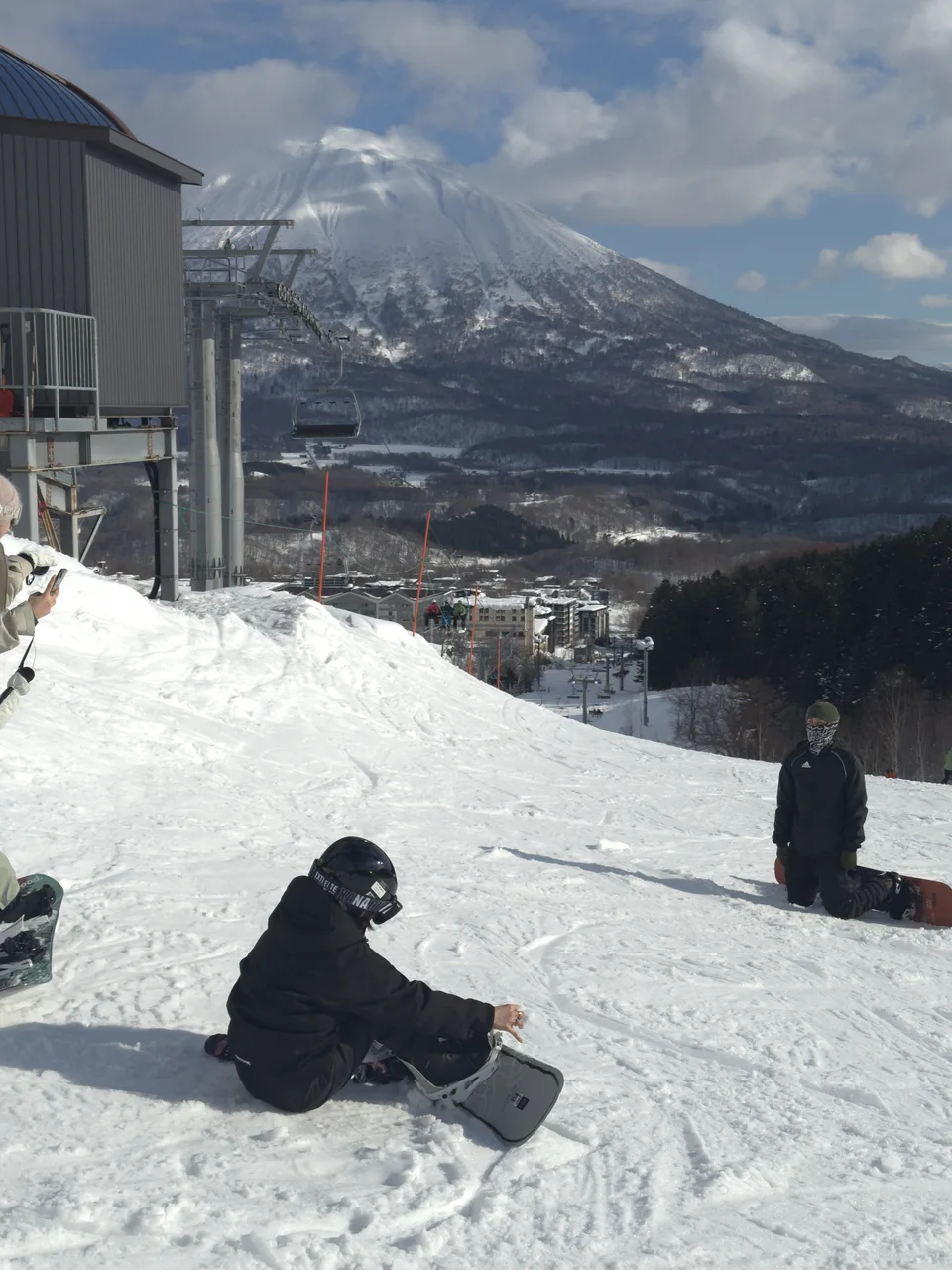
Grand Hirafu is the best Niseko base when you want the mountain and the village to work together: lessons, rentals, night skiing, restaurants and several accommodation zones in one place. But the right 2026–27 plan is not “buy the biggest pass and ski all day.” First decide how many complete ski days you actually have, then keep the first 90 minutes of each day simple. Beginners should put the hotel, rental shop, lesson meeting point and first easy lift on the same side of the resort. Advanced skiers should protect fresh-snow mornings rather than spending them crossing the village or collecting equipment.
For 2026–27, Niseko United currently lists Grand Hirafu from November 28, 2026 to May 5, 2027, with night skiing planned from December 12, 2026 to March 22, 2027. The 2026–27 Niseko United All Mountain prices are already published, but Grand Hirafu’s own site still says the new-season Grand Hirafu × HANAZONO local ticket prices and sales schedule will be announced once confirmed. That means nobody can honestly calculate the exact local-pass-versus-All-Mountain premium yet.
↔ Scroll table left or right
Your actual trip | Start with | Why | Main thing that can reverse it |
First Niseko trip, 2–3 ski days, hotel/lessons in Hirafu or HANAZONO | Price the local Grand Hirafu × HANAZONO product once 2026–27 rates are released | You may not need Annupuri/Niseko Village at all | You already know you will ski the other Niseko United sectors or need the all-mountain shuttle benefit |
3–5 ski days and resort variety is a trip objective | Niseko United All Mountain | Annupuri and Niseko Village become usable options rather than theoretical map space | Wind shuts upper connections or you never leave the Hirafu/HANAZONO side |
Beginner on Day 1 | Optimise hotel → rental → lesson → easy lift | The first 90 minutes matter more than the total trail map | Your school/rental package is based somewhere else |
Fresh-snow advanced skier | Prepare everything the night before and protect first-lift time | Queue and equipment friction consume the most valuable powder window | Wind delays upper lifts or patrol keeps target terrain closed |
Arrival afternoon during night-ski season | Use night skiing as a salvage session | It can turn a partial travel day into useful slope time | Rental, fatigue or weather makes the session more costly than it is worth |
Full hard ski day followed by another powder morning | Do not automatically add night skiing | Recovery can be worth more than extra low-light laps | The next day is intentionally slow or poor weather is forecast |
The 2026–27 price fact that matters most is what is not published yet
Niseko United has already published the All Mountain table for 2026–27. During the current peak-price period of December 24, 2026 through February 28, 2027, the adult All Mountain pass is JPY 13,500 for one day, JPY 26,500 for two consecutive days, JPY 39,500 for three days and JPY 52,500 for four days.
Grand Hirafu, however, currently states that 2026–27 Grand Hirafu × HANAZONO lift-ticket prices and the sales schedule will be announced once confirmed. That makes a precise “local pass saves JPY X” claim impossible today.
The correct decision is therefore behavioural before it is numerical:
Stay and ski mainly on the Hirafu/HANAZONO side: wait for the local product price before paying an all-mountain premium just because four resort names exist.
You have a real Annupuri or Niseko Village day: All Mountain becomes much easier to justify because the extra terrain is now part of the itinerary.
You are buying early only because prices might rise: read the refund rules before treating advance purchase as risk-free.
This is a better comparison than using last season’s local rate beside this season’s All Mountain rate. Different information years produce a fake saving.
An All Mountain pass does not guarantee an all-mountain ski day
Paying for all four Niseko United areas buys eligibility, not weather control. Upper lifts and the connections that make cross-resort skiing elegant can close because of wind or operating conditions. On those days, the theoretical value of the larger map can collapse back toward the area you can actually reach from your hotel.
That is why I would not justify an All Mountain pass with a vague plan such as “we might ski Annupuri one afternoon.” Make the second area a real itinerary item: which day, which access route, what happens if upper connections do not open, and whether the shuttle or road transfer still makes the day worthwhile.
Niseko United currently allows valid All Mountain day, hour and season products to use the Niseko United shuttle. A local resort pass does not automatically provide that same network benefit. For a group deliberately moving among base areas, shuttle access can therefore be part of the premium. For a group living entirely in Upper Hirafu, it may contribute almost nothing.
Advance lift tickets carry schedule risk, not only price risk
Niseko United’s current online ticket conditions are unusually important for a long-haul traveller: online lift passes are generally non-refundable and non-replaceable for problems including illness, injury, transport delays or cancellations, purchase mistakes and ordinary weather-related disruption under the published terms. A separate JPY 500 keycard purchase is also non-refundable.
This does not mean “never buy early.” It means the right purchase date depends on how fixed the trip already is. A family with non-refundable accommodation, booked lessons and confirmed airport transfer may accept the ticket risk. A traveller whose ski days are still competing with Rusutsu, a rest day or uncertain arrival transport should not confuse a lower online price with flexibility.
For a short trip, schedule resilience can be worth more than a small advance-purchase saving.
Beginners should optimise the first 90 minutes, not the biggest trail map
For a first-day skier or snowboarder, the morning friction often looks like this:
hotel → breakfast → rental fitting → boots → locker → lesson registration → meeting point → first easy lift.
Every unnecessary move is paid before the person has learned enough to benefit from a wider mountain. Put the rental and lesson on the same side of Hirafu whenever possible, and choose the hotel around that chain rather than around nightlife alone.
This is also the correct way to compare Upper, Central and Lower Hirafu:
Upper Hirafu: strongest when verified slope access, ski valet or a nearby lesson/rental meeting point deletes morning hand-offs.
Central Hirafu: strongest when dining, rental shops, airport-transfer stops and mixed-group evenings need to be easy even if the hotel is not truly ski-in/ski-out.
Lower Hirafu: can offer larger apartments or better headline value, but an uphill winter walk or shuttle dependency must be counted twice—out in the morning and back when everyone is tired.
If you are paying a large Upper-Hirafu premium, use the Niseko ski-in/ski-out hotel comparison to confirm that the guest exit, ski-back route and weakest skier all fit the claim.
Powder mornings are a queue-management problem before they are a terrain problem
Fresh snow creates the most expensive time of the day. You cannot recreate the first hour at 14:00. Prepare the lift pass, layers, gloves and equipment the previous evening. If rental equipment is still being fitted after lifts begin, the hotel may be close to the slope but the itinerary is not.
Once more lifts open, do not keep repeating the most obvious base queue because it was the first one you found. Move with the open terrain and patrol information. A busy base does not prove that the whole ski area is equally congested.
The red-team condition is wind. Overnight snowfall can be excellent while upper lifts remain delayed or closed. A “powder plan” that only works if one exposed lift opens is not a resilient ski plan. Use lower open terrain safely, take a lesson, eat early or shift some energy into night skiing rather than waiting indefinitely for a single chair or gate.
Night skiing is most valuable as a salvage session
Niseko United currently plans night skiing from December 12, 2026 through March 22, 2027. The mistake is treating that as several free extra hours every day.
Night skiing has its highest marginal value on a day that otherwise contains too little skiing:
Arrival afternoon: check in, collect equipment, then use a short night session to recover part of the travel day.
Lesson day: a beginner can repeat simple movements later if energy and visibility are still good.
Day disrupted by wind or visibility: a later improvement can turn a poor daytime session into a useful second window.
It has lower value after an exhausting full powder day when the next morning matters more. For a four- or five-day ski block, one tired evening can damage the following morning more than another hour of laps adds to the holiday.
Use a simple test: does tonight add a ski session, or merely extend a day that is already complete? The first often adds value; the second needs a stronger reason.
Do not let dinner reservations destroy first-lift strategy
Hirafu’s restaurant ecosystem is one of its advantages over more self-contained resorts, but popular winter dining also introduces another fixed-time commitment. If tomorrow is a powder morning, a late dinner, long walk home and drinks can undermine the reason you paid to sleep close to the lifts.
For groups, reserve the dinners that genuinely matter and keep simple backup food at the accommodation. A kitchen can be worth more than a famous restaurant on storm nights, with children, or when everyone needs to sleep early.
The Niseko food guide is useful once you know whether your base is Upper, Central or Lower Hirafu; restaurant choice should follow the winter walking route rather than the other way around.
Mixed-ability groups should stop trying to ski together all day
Grand Hirafu works well for mixed groups because everyone can use the same village while following different mountain plans. The mistake is forcing an advanced powder skier and a first-day beginner onto one shared route so that neither person gets the day they need.
Separate after breakfast or after the first lesson, then set one simple lunch or après meeting point. The weakest skier should control the hotel access decision; the strongest skier does not need to control every run.
If one person will not ski at all, Hirafu’s restaurants, cafés and accommodation ecosystem can be a stronger fit than a mountain-only decision would suggest. Use the Niseko non-ski guide to test whether the non-skier really has a full independent day rather than just somewhere to wait.
Arrival and departure days should not be counted as full ski days
Airport transfers, winter roads, ski-bag handling, equipment return and hotel check-in/out consume the edges of a Niseko stay. A four-night stay commonly gives three complete local mornings, not four full ski days.
Do not schedule the most important lesson immediately after an airport transfer whose 2026–27 winter timetable is not yet confirmed. Do not chase the final chair on departure day when equipment return and winter-road disruption sit between the mountain and the flight.
Count complete local-start ski mornings before buying consecutive multi-day products. If one day is really an arrival session and another is a departure half-day, the biggest pass may not match the actual skiing.
A practical 3-day Hirafu plan
Day 1 — setup and terrain learning: fit equipment, take the lesson if needed, learn the local lift geometry and keep the afternoon flexible. Use night skiing only if it adds a useful session rather than exhausting the group.
Day 2 — highest-priority ski day: protect first-lift time, follow open terrain and avoid fixing the whole route before seeing wind and visibility. This is the day to use fresh-snow conditions if they appear.
Day 3 — branch day: stay local if Hirafu/HANAZONO is still delivering what you want. Use Annupuri or Niseko Village only if the larger Niseko day is genuinely worth the travel and the mountain connections are operating. Do not cross the resort merely because an All Mountain pass makes it financially possible.
Final verdict
Choose Grand Hirafu when you want skiing plus a real village ecosystem, then make the booking around the repeated edges of the ski day. Beginners should minimise the hotel-rental-lesson chain. Powder-focused skiers should protect first-lift time. Night skiing should rescue partial days rather than automatically lengthen every day.
For lift tickets, the honest August 2026 answer is conditional: the 2026–27 Niseko United All Mountain table is already public, while the new Grand Hirafu × HANAZONO local prices are not. Wait for the local table before claiming a precise saving. Buy All Mountain when Annupuri, Niseko Village or the wider shuttle network is a real part of the trip—not because a larger map looks like better value.
Continue planning
Next use Where to Stay in Niseko, the true ski-in/ski-out comparison, the Niseko lift pass, rental and lesson guide and the New Chitose Airport to Niseko transport guide.
References
Niseko United — 2026–27 operating dates, All Mountain prices and night-ski period · Grand Hirafu — 2026–27 operations and local-ticket publication notice · Niseko United — online lift-pass terms and Niseko United shuttle rules. Checked August 25, 2026. Local Grand Hirafu × HANAZONO 2026–27 prices were not yet published at the time of checking; live lift status, weather and ticket terms should be rechecked before purchase.