
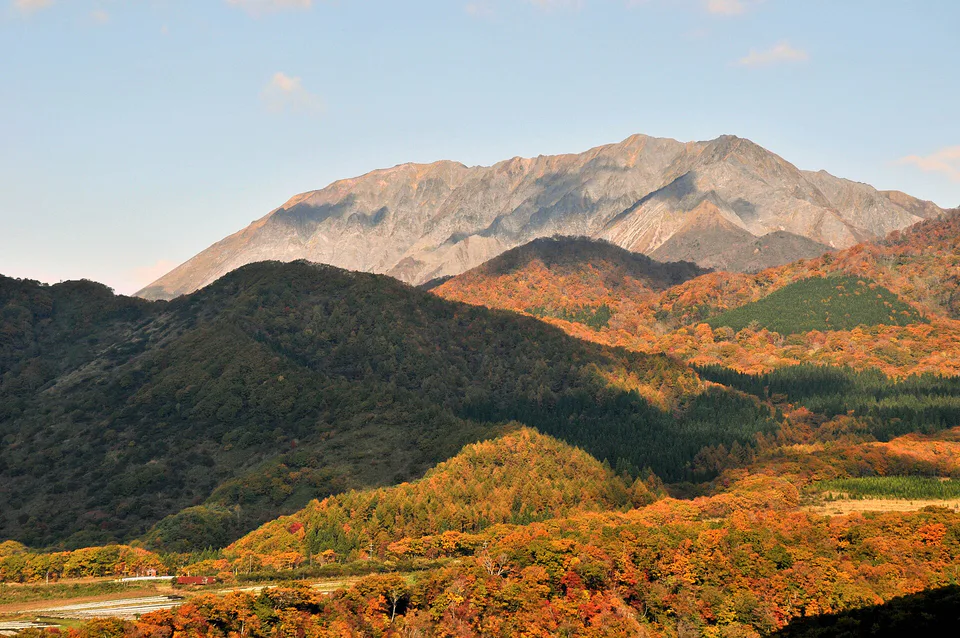
For a first Mt. Daisen autumn-leaves trip, choose the transport product before choosing the viewpoints. Self-drive is the strongest option when Kagikake Pass, Masumizu and the wider mountain faces are the purpose. Without a car, the most resilient day is Daisenji + Bakuroza + the Ōgamiyama Shrine approach, because the regular bus actually serves the Daisenji area. If you want several dispersed viewpoints without driving, pre-book a sightseeing taxi instead of planning around a vague “loop bus.”
Autumn at Daisen is also two different trips that should not be mixed casually: foliage sightseeing and mountain hiking. The first can be built around roads, temples and short walks. The Natsuyama route to Misen is a proper mountain day with its own weather, equipment and turnaround decisions. Do not turn a scenic drive into an unplanned summit attempt because the trailhead happens to be there.
↔ Scroll table left or right
Your trip | Start with | Why | Main catch |
Daisenji / shrine / temple atmosphere | Regular bus from Yonago | The bus serves the Daisenji area directly | It does not turn the whole scenic mountain into a hop-on city network |
Kagikake + Masumizu + Daisenji | Rental car | Best control over dispersed viewpoints and route order | Parking, road conditions, fog and early-winter conditions remain hard constraints |
No car but want several mountain viewpoints | Pre-booked sightseeing taxi | Current 2026 fixed-hour products make the trade-off explicit | Higher group cost than a bus-focused Daisenji day |
Formal summit hike | Separate hiking day | Weather, daylight and equipment should drive the schedule | Do not add a scenic-road checklist around the climb |
One overnight | Only if it unlocks an early hike, dawn/late light or a second weather window | The mountain night must delete a real return journey or unlock scarce time | A hotel move alone does not make Kagikake easier without the right transport |
Use late October to early November as a planning window, not a guaranteed peak date
Daisen Tourism Bureau describes the broader local leaf season as peaking around October 20 to November 5, while Tottori’s official tourism guide gives late October to early November as the normal viewing window for Kagikake Pass.
Those are useful historical planning ranges, not a promise that every altitude will peak together. Daisenji, Kagikake, exposed upper forest and the lower foothills can be in different stages on the same day. Wind, temperature and early snow can also change the mountain faster than a city park.
ValueNavi rule: use the historical window to choose the trip week, then use live weather, road notices and recent imagery to choose the altitude and route on the actual day. Do not rebuild the entire trip because one famous viewpoint is early or late.
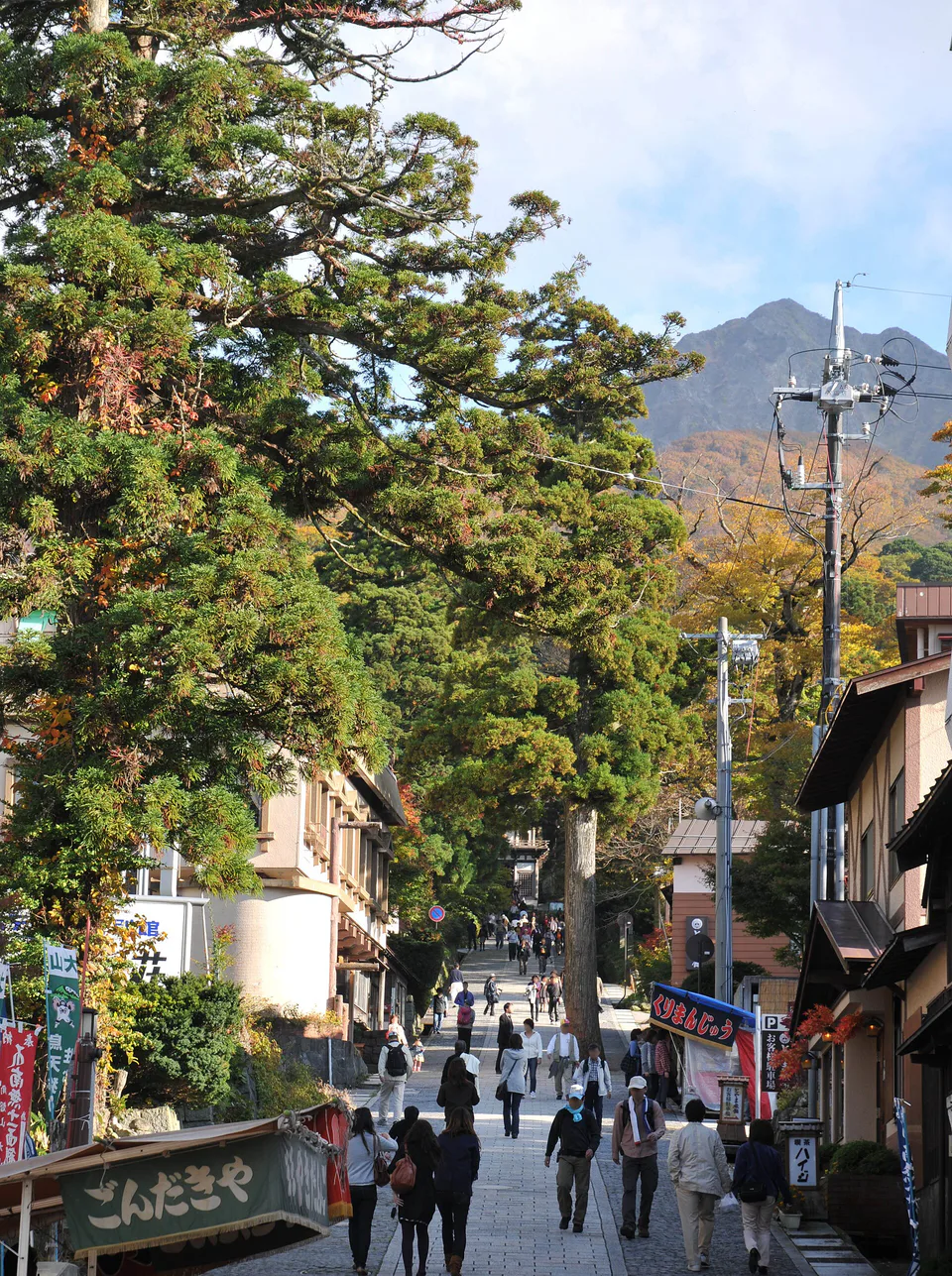
Without a car, make Daisenji the destination—not the transfer point
The Daisen Tourism Bureau currently describes local buses between Yonago Station and Daisenji as running about five times a day. Tottori’s official Mt. Daisen page gives roughly 50 minutes from Yonago Station to Daisenji by bus.
That frequency changes how a car-free day should be designed. Daisenji is not the place where you casually arrive and then improvise a full scenic ring. It is the place around which you build the day.
A strong car-free plan is:
bus to Daisenji;
Bakuroza / temple area;
Ōgamiyama Shrine approach if the group can handle the surfaces;
one short forest walk or café/museum stop;
return on the specific bus you already identified.
Ōgamiyama Shrine is not an urban-temple add-on. Tottori’s official guide says the inner shrine is reached via a roughly 700-metre natural-stone approach, and the Daisenji stop still leaves about a 20-minute walk toward the shrine route. Wet leaves, moss and descent control matter more than the flat map distance.
For older travellers or a group with limited balance, Daisenji and Bakuroza can be the complete autumn day. “We came all this way” is not a reason to force the shrine approach.
No car but want Kagikake and Masumizu? Price the taxi before abandoning the trip
A useful 2026 alternative is the official Daisen foothills sightseeing-taxi program. The current published products are JPY 12,000 for three hours, JPY 15,000 for four hours and JPY 18,000 for five hours, operating within the program period from April 25, 2026 to March 31, 2027, subject to the annual vehicle limit and weather/seasonal road conditions.
This creates a cleaner decision than generic advice to “rent a car.”
Solo budget traveller: the bus-focused Daisenji day is usually the rational product.
Two to four adults who do not want to drive: a fixed-price sightseeing taxi can become more reasonable when the cost is divided and the trip specifically wants dispersed viewpoints.
Driver comfortable with rural mountain roads: a rental car still gives the most control over timing and weather changes.
The taxi does not eliminate weather risk. If the road or viewpoint is inaccessible, the driver cannot manufacture the route. What it buys is a pre-arranged mobility solution rather than reliance on sparse local buses between places they were not designed to connect.
Self-driving is best for the scenic ring—but the car does not cancel mountain rules
Tottori’s official guide explicitly recommends a leisurely drive to see Mt. Daisen’s different faces and autumn beech forest. That is the strongest reason to rent a car: the sightseeing product is geographically dispersed.
But “self-drive” should not be translated into “follow whatever Google Maps suggests.” During foliage season, full parking, fog, wet leaves, narrow roads and seasonal restrictions can reverse a route. If a legal viewpoint car park is full, move on rather than waiting on a shoulder or bend. If navigation sends you onto a road that is uncomfortable for the vehicle or driver, return to the larger signed road.
Fuel, toilets and daylight also matter. A scenic ring after lunch is not equivalent to an early start. The later you leave the mountain, the more the same wet leaves and wildlife become a dusk problem rather than a photography problem.
Red-team condition: if the driver is inexperienced with left-side rural roads, uncomfortable with mountain weather or the rental company’s tyre requirements are unclear after a cold snap, do not let “car is best” become “car is mandatory.” Use Daisenji by bus or pre-booked taxi instead.
Kagikake Pass is a viewpoint, not a reason to ignore the rest of the route
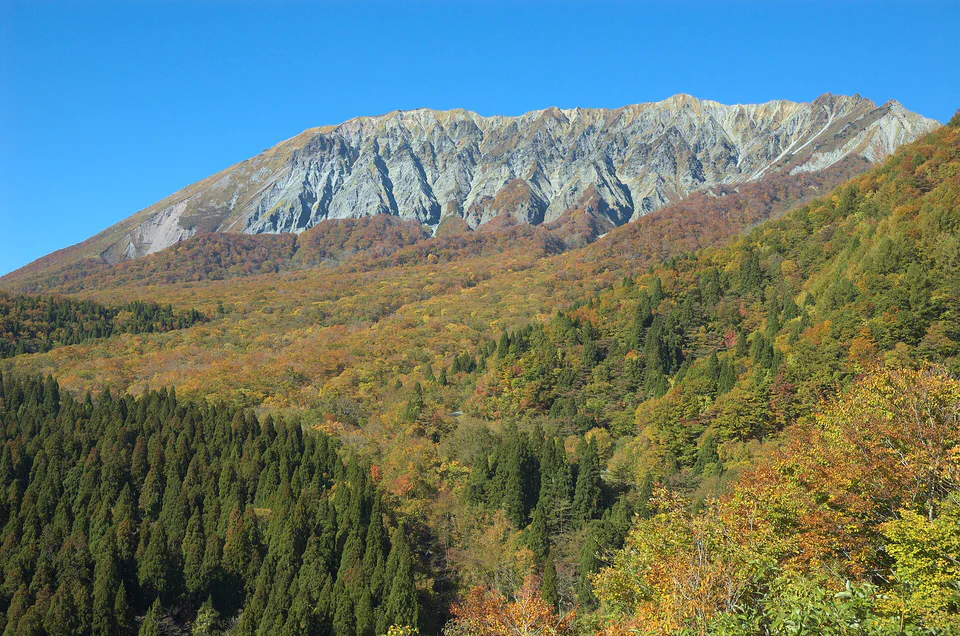
Kagikake Pass is one of Daisen’s classic autumn views because the beech forest frames the mountain’s south face. Tottori’s official tourism guide lists late October to early November as the normal autumn viewing season.
The mistake is letting one viewpoint dictate the whole day. If Kagikake is fogged in, crowded or inaccessible, Daisenji, Masumizu, the western mountain face and lower forests can still make the trip worthwhile.
That makes a car-based Daisen day more resilient than a single-photo itinerary. You are buying several altitude and mountain-face options. If the entire trip only works when Kagikake produces one exact composition, the itinerary is too fragile.
Do not mix a sightseeing day with an unplanned summit hike
Mt. Daisen’s Misen summit is 1,709 metres, the highest point in the Chugoku region. The Natsuyama route is a formal mountain hike. It should be planned as such.
A sightseeing visitor can spend the day around Daisenji, Bakuroza, Masumizu and scenic roads without needing to climb. A hiker should do the opposite: protect the weather window, daylight, equipment and turnaround rather than surrounding the climb with a long scenic-drive checklist.
The dangerous middle ground is deciding at the trailhead that the weather “looks okay” and starting without hiking footwear, insulation, food, water, a plan or sufficient daylight. An autumn car trip does not automatically make you mountain-ready.
If snow, ice, strong wind or summit fog makes the climb inappropriate, cancel the climb and keep the lower sightseeing day. A hotel booking or long journey from Osaka/Okayama is not a safety argument.
Ōgamiyama Shrine and the summit are different physical commitments
The 700-metre natural-stone shrine approach can be enough for a traveller who wants a forest-and-cultural walking experience without a summit hike. It still contains gradients, uneven stone, moss and leaves, so it is not the “easy accessible version” of the mountain.
For families, older travellers and photographers carrying heavy gear, decide between three levels before arriving:
Low-load sightseeing: Bakuroza + Daisenji + viewpoints.
Moderate walking: add the Ōgamiyama Shrine approach if surfaces and mobility allow.
Mountain hike: separate plan with hiking equipment and weather rules.
This is more useful than describing everything around Daisenji as one “temple hike.”
When is one night near Daisen actually worth it?
An overnight should not be justified by “Daisen is far from Yonago.” It should unlock a useful hour or delete a repeated journey.
Strong reasons to stay:
a formal hike that needs an early start;
dawn/early photography or late light around the mountain;
a Daisenji-area autumn evening/event that you specifically want to experience;
two weather windows where the second morning materially increases the chance of seeing the mountain;
Weak reason: you are doing one ordinary daytime Daisenji sightseeing day and then returning to Yonago anyway. In that case, a Yonago or Kaike base often handles large luggage, restaurants and onward transport better.
Also remember that a mountain hotel does not solve the Kagikake problem by itself. If you have no car and no pre-arranged taxi, sleeping near Daisenji still leaves Kagikake geographically separate the next morning. Do not pay for the hotel assuming “closer to Daisen” means “closer to every Daisen viewpoint.”
Yonago, Kaike or Daisenji: choose by the next morning
Yonago Station: strongest for rail, buses, airport connections, rental-car pickup and large luggage. Best when Daisen is one day inside a wider San’in itinerary.
Kaike Onsen: stronger when the onsen/half-board evening is part of the trip and you still want city-side flexibility. It is not a first-trailhead hotel; the value is the accommodation experience plus a workable road base.
Daisenji area: strongest for an early hike, mountain morning, late local event or photography. The trade-off is less evening dining flexibility and more dependence on the exact hotel’s meals, shuttle and arrival rules.
For a one-night non-hiking first visit, I would normally keep the main suitcase in Yonago or Kaike and carry only an overnight bag uphill if the mountain night has a clear job.
Bad weather should change the product, not just the viewpoint
Fog: drop the long-view photography goal and use Daisenji, forest, shrine or museum time.
Heavy rain: remove summit hiking and exposed scenic-road goals. Do not compensate by driving farther on unfamiliar roads.
Snow / ice / cold snap: confirm roads and the rental company’s tyre requirements before leaving Yonago. No suitable tyres or no winter-driving confidence means no mountain drive.
Parking full: move to the next legal stop. Do not protect one viewpoint at the cost of road safety.
Bus disruption: keep the day in the Daisenji zone or return to Yonago; do not convert a transport failure into a long roadside walk.
The trip succeeds when it preserves daylight and safe movement, not when it collects every pin saved in Google Maps.
Final verdict
Drive if the trip is about multiple Daisen viewpoints. Use the bus if the trip is about Daisenji and the cultural/forest zone. Use a sightseeing taxi if you want the dispersed scenic route but do not want to drive. Keep summit hiking as a separate mountain decision.
For one night, stay near Daisen only when the overnight unlocks a first-light/early-hike/weather window or a specific evening experience. Otherwise, Yonago or Kaike is usually the more resilient base for luggage and onward travel.
The most important boundary is transport. A room near Daisenji does not magically connect Kagikake, Masumizu and the rest of the mountain. Choose the mobility first, then let the hotel and viewpoints follow it.
Compare Yonago and Mt. Daisen stays
Official sources
Daisen Tourism Bureau — access and local buses · Tottori Tourism — Mt. Daisen driving and hiking overview · Tottori Tourism — Kagikake autumn season · Tottori Tourism — Ōgamiyama Shrine approach · Daisen Tourism Bureau — 2026 sightseeing taxi · Daisen Tourism Bureau — autumn timing. Checked August 25, 2026. Bus timetables, road conditions, parking and mountain weather can change; verify the travel date.
Hachimantai Autumn Leaves Guide: Scenic Drives, Buses, Onsen and Road Closures
How Many Nights in Lake Kawaguchi? Fuji Weather, Autumn Leaves and Hotels
Takayama Autumn Leaves: Old Town, Hida Folk Village, Transport and Hotels
Kokonoe Dream Suspension Bridge Autumn Leaves and Kuju Mountains Guide: Access, Hiking and Onsen
14-Day Japan Autumn Leaves Itinerary: Six Routes, Flights and Hotels