
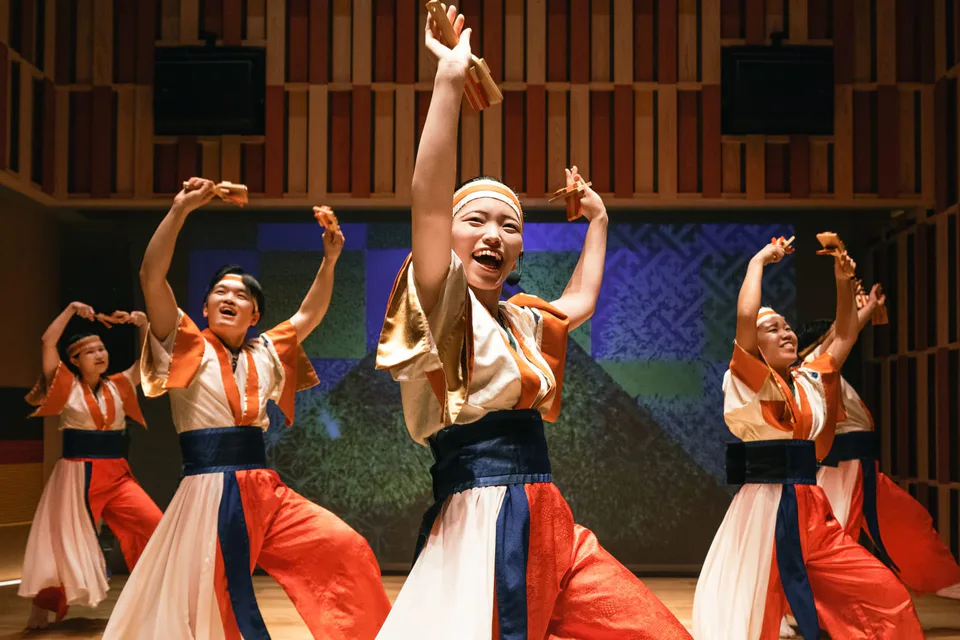

OMO7 Kochi is worth paying more for when you will actually spend part of the evening at the hotel. Its strongest advantages are scheduled rather than passive: an Okyaku culture programme around 17:00, a nightly Yosakoi show from 21:00, OMO Dining, and the Tosa-no-Yu public bath that reopens early the next morning. If your Kochi night will instead be spent at Hirome Market, bars, a festival venue or an early intercity departure, a simpler hotel closer to JR Kochi Station can be the more rational purchase.
The key is to count hotel hours you will really use. OMO7 Kochi is about four minutes on foot from Saenbacho tram stop and about five minutes by taxi from JR Kochi Station. Hoshino Resorts currently lists no hotel shuttle. That location is workable, but it means the hotel must repay the extra station transfer through experiences, room practicality or a better evening—not merely through the OMO brand.
↔ Scroll table left or right
Your Kochi stay | My call | Why | What reverses it |
First Kochi visit, back at the hotel before 21:00 | OMO7 gets strong | You can use the nightly Yosakoi show and bath instead of treating the hotel as only a bed | You prefer a late night outside and will miss the hotel programme |
One-night rail stop with large luggage and an early train | Start with a Kochi Station hotel | OMO7 has no shuttle; the station transfer becomes a larger share of a short stay | The OMO evening programme is a priority worth the extra transfer |
Three or four people wanting one room | OMO7 gets stronger | Current official inventory includes a 40 m² Semi-Suite for three and a 52 m² Suite for four | Two smaller station rooms are materially cheaper and group common space is not important |
Visiting during the actual Yosakoi Festival | Do not pay for the hotel show alone | The real festival runs into the evening; you may be outside during the 21:00 hotel performance | You specifically want a predictable indoor Yosakoi session as part of the stay |
Driving and expecting to leave very early or return after 22:00 | Check parking before booking | The hotel currently states no entry or exit to its parking garage from 22:00 to 07:00 | You will not need the car during that window or can use another permitted parking option |
The biggest correction: this is not a Kochi Station hotel with a free shuttle
OMO7 Kochi’s current official access page puts Saenbacho tram stop about four minutes away on foot. From JR Kochi Station, the published route is about ten minutes by tram to Saenbacho via Harimaya Bridge, followed by the walk. The official page also gives about five minutes by taxi from JR Kochi Station. From Kochi Ryoma Airport, the airport bus can stop at Saenbacho, followed by roughly a three-minute walk.
More importantly, the current hotel overview says shuttle service is not available. That changes the luggage calculation. A large suitcase, rain, a child and an early JR departure make the difference between “near public transport” and “beside the main station” much more tangible.
I would therefore value OMO7’s location in two different ways. For a normal sightseeing stay, Saenbacho is a useful city position with tram access and a direct airport-bus stop nearby. For a one-night rail connection, Kochi Station is the harder constraint. If the hotel is only being used to sleep between two trains, OMO7 has to overcome a transfer it does not eliminate.
If your whole Shikoku sequence is still unsettled, use the four-day Shikoku no-car itinerary before choosing the hotel. A good property cannot repair an itinerary that repeatedly sends you back to the wrong transport hub.
OMO7 Kochi is a timed-experience hotel: count the sessions you can actually use
The hotel’s distinctive value is concentrated into specific parts of the day. Hoshino Resorts currently schedules its Okyaku culture introduction at 17:00, dinner from 18:00, and the Yosakoi Rakuen LIVE at 21:00. Tosa-no-Yu runs from 15:00 to 01:00 and again from 05:00 to 10:00. Breakfast is served from 07:00 to 10:00.
That creates a simple ValueNavi test. Before paying a premium over a station hotel, count the sessions that fit your real schedule:
17:00 Okyaku programme: useful only if you return from sightseeing early enough.
Dinner: useful if the hotel buffet is intentionally replacing a Kochi restaurant night, not being added on top of one.
21:00 Yosakoi: the clearest hotel-only experience, but worthless if you are still out in town.
Evening or morning bath: potentially two sessions from one night, but only if public bathing is something your group actually wants.
Breakfast: useful for an easy start; less useful if Sunday Market, Hirome-area food or an early train already owns the morning.
If you will use three of those five, OMO7 becomes a coherent product. If you will use one, compare a station hotel again. This is the deletion test for the hotel premium: remove every facility your timetable makes unusable, then ask what is left.
The 21:00 Yosakoi show is the clearest reason to choose OMO7 outside festival week
Hoshino Resorts currently runs Yosakoi Rakuen LIVE every night from 21:00 at the hotel. It is free for staying guests and does not require a reservation. The programme is designed as a participatory Local Rhythm Night rather than a passive lobby display, and seasonal versions change parts of the performance.
For a visitor who is not in Kochi during the August festival, this is unusually useful. You can spend the day on Kochi Castle, markets and other city sights, then still encounter a compact version of the city’s Yosakoi culture after dinner without adding another journey.
But it should not be oversold. A hotel performance is not a substitute for the real Yosakoi Festival. In 2026 the festival programme runs from August 9 through 12, with the main competition on August 10 and 11 and performances at multiple city venues running into the evening. On those dates, the logic can reverse: a traveller who came specifically for the festival may be outside until 21:30 or 22:00 and miss the hotel’s 21:00 show entirely.
That is an important pricing boundary. Outside festival dates, the nightly show can justify part of an OMO7 premium. During festival dates, do not count the show as extra value unless your actual evening plan leaves you at the hotel at 21:00. Use the Kochi Yosakoi accommodation-area guide when the real festival—not the hotel programme—is controlling your nights.
Tosa-no-Yu is useful, but it is not a natural hot spring
The current official bath page is explicit: Tosa-no-Yu is not an onsen. It is a guest-only public bathing facility with indoor and open-air baths, a cold bath, dry sauna and relaxation area. Current hours are 15:00–01:00 and 05:00–10:00.
This correction matters because “open-air bath” and “onsen” are not interchangeable. If your booking decision depends on natural hot-spring water, OMO7 Kochi does not solve that requirement. If your real requirement is simply a large bath and sauna after a walking-heavy day, it can still be a meaningful hotel advantage.
The opening pattern also creates two potential uses from one night. A traveller back after the 21:00 Yosakoi show can bathe before bed; another can use the facility early in the morning. But do not double-count both sessions automatically. If the group dislikes public bathing, or the morning starts with an early train, the bath becomes decorative value rather than used value.
Families should also check the bath rules rather than assuming every child can use the main tubs in the same way. The current official notice says children using diapers may not enter the main baths and should use the baby bath provided; opposite-sex parent/child bathing is limited to children aged six and under.
The current room ceiling is four guests, not six
The hotel’s current official overview lists total room occupancy as one to four guests. That directly contradicts older copy that described OMO House or corner rooms for five or six. I would not book a five- or six-person group on the assumption that one current OMO7 Kochi room can hold everyone; use the live room inventory for the actual date and plan on two rooms unless the hotel itself offers a different valid arrangement.
For groups that do fit the current inventory, the more useful comparison is one larger common room versus two smaller rooms. Hoshino Resorts’ May 2026 property information highlights two categories:
Utage Semi-Suite: 40 m², capacity three. The current room concept uses a living area and sofa bed so the room can function as a shared evening space as well as sleeping space.
Utage Suite: 52 m², capacity four. The official description specifically highlights a raised tatami-style living area and under-bed luggage storage.
For three or four travellers, that shared space is not automatically a luxury upgrade. It can replace a second room, give several suitcases somewhere to go and create one place for the group to regroup after sightseeing. The trade-off is bathroom timing and privacy: four adults in one room may save money or improve social space while still losing the convenience of two separate bathrooms.
Price both structures. For four adults, compare one 52 m² Suite versus two two-person rooms on the same date, with the same meal basis and cancellation rule. The larger room wins when common space and staying together matter; two rooms win when sleep privacy and bathroom parallelism matter more.
Breakfast is now a ¥3,300 decision, not an automatic add-on
OMO Dining’s current English page lists breakfast from 07:00 to 10:00. The current walk-in/reference price is JPY 3,300 for adults and children aged seven and older, JPY 1,500 for ages four to six, and free for ages zero to three. The same official page says the effective charge is JPY 3,000 for adults and children seven and older when booked under the breakfast plan.
That price is reasonable only if breakfast is actually solving the morning. For a family that wants one predictable meal before driving or sightseeing, the buffet can remove another decision. For a traveller planning Sunday Market food, a local café or an early JR departure, paying for breakfast can duplicate the morning rather than improve it.
The same logic applies to dinner. OMO Dining currently runs dinner from 18:00 to 20:30 and requires reservations, with a listed adult price of JPY 6,000. It can work beautifully if your plan is hotel dinner → 21:00 Yosakoi → bath. But if the reason for visiting Kochi is to spend the evening eating and drinking around the city, hotel dinner is competing with that experience, not supplementing it for free.
This is why OMO7 Kochi should be booked as a sequence, not as a list of amenities. The hotel earns its premium when the timetable connects.
One night and two nights produce different value
For one night, I would book OMO7 only when the evening is deliberately hotel-heavy. A strong sequence is: arrive or finish sightseeing by late afternoon → Okyaku programme or bath → dinner → 21:00 Yosakoi → bath or sleep → breakfast or morning bath. That uses the property several times in a short stay.
A weak one-night sequence is: arrive at 21:30 from another city → sleep → leave for JR Kochi Station at 07:00. In that case you have paid for experiences you never had time to use while also accepting a hotel that is not beside the station.
For two nights, the hotel is easier to justify because you can separate the city and the hotel. One evening can be spent at Hirome Market or elsewhere; the other can be shaped around the OMO programme. You also have a second chance to use the bath, breakfast, OMO Base and local activities instead of forcing all value into a single evening.
The red-team exception is festival week. Two nights during the real Yosakoi Festival can still be excellent because of the city location, but the more time you spend at outdoor performance venues, the less you should pay specifically for the hotel’s scheduled Yosakoi and dining programme.
Large luggage: use the tram or taxi, not an imaginary shuttle
With one small bag, the tram-to-Saenbacho route is straightforward. With two 29-inch cases, a stroller or an older traveller, I would price the short taxi from JR Kochi Station rather than forcing the public-transport transfer merely because it exists.
The hotel’s current general information says lockers are available, and Hoshino Resorts’ suggested itinerary explicitly uses the hotel lockers for pre-check-in and post-checkout sightseeing. The hotel also accepts some luggage sent ahead from the day before the stay, subject to its stated exclusions and labelling requirements.
That can improve a Shikoku multi-city route: send the large case, travel into Kochi with a smaller bag, and let the hotel’s location work as a sightseeing base. But the hotel still does not become a station hotel. If the next morning has a hard early train, work backwards from JR Kochi Station and decide whether the extra city transfer still makes sense.
Drivers have a parking failure mode that rail travellers do not
OMO7 Kochi currently lists 103 partner parking spaces at JPY 1,000 per night, first come and not reservable. The important detail is operational: the parking information states no entry or exit from 22:00 to 07:00.
That matters if your road trip includes an early dawn departure, a late return from outside central Kochi or a plan to use the car after dinner. “Hotel has parking” is not enough. The parking window has to match the itinerary.
If the car is only being stored while you explore central Kochi by tram and on foot, the restriction may be irrelevant. If you need to leave at 06:00, it can become a hard veto unless another confirmed parking arrangement solves it.
Who should book OMO7 Kochi?
I would book it for: first-time Kochi visitors who want a structured introduction to Yosakoi and Okyaku culture; couples or families who will actually be back at the hotel for the 21:00 show; three- or four-person groups that value a larger shared room; and two-night stays where one evening can belong to the hotel.
I would compare a Kochi Station hotel first for: one-night rail transits, travellers with several large bags and an early JR departure, guests who will spend every evening outside, or anyone who does not care about the Yosakoi show or public bath.
I would not pay an “onsen premium” here: the official bath page explicitly says Tosa-no-Yu is not a hot spring. Pay for the bath as a bathing-and-sauna facility only if that is what you want.
For five or six travellers: the current official hotel overview caps room occupancy at four, so do not rely on older descriptions of five- or six-person rooms. Compare two current rooms and the live occupancy rules.
Final verdict: buy the evening, not the brand name
OMO7 Kochi’s best feature is that it can continue the destination after sightseeing ends. The 21:00 Yosakoi show, Okyaku programming, dining and public bath can turn a normal hotel evening into part of the Kochi itinerary. That is meaningful original value when you are physically there to use it.
But the hotel is not next to JR Kochi Station, has no shuttle, and its bath is not a natural onsen. During the real Yosakoi Festival, the city itself may keep you outside through the exact hours when the hotel programme happens. Those conditions can reverse the recommendation.
My default is therefore conditional: choose OMO7 Kochi when at least two hotel-specific evening or morning experiences are genuinely in your schedule. Choose a station-side hotel when the room is mainly a transport buffer. That rule survives changes in nightly rate because it asks the right question: what are you actually buying time to use?
Compare Kochi hotel locations for your dates
References and verification date
Hotel access, shuttle status, parking restrictions, room-capacity overview, bath rules, dining hours/prices and Yosakoi programme were checked against current Hoshino Resorts OMO7 Kochi pages and the May 2026 Hoshino Resorts property information. The 2026 Yosakoi Festival dates and evening programme were checked against Kochi City / Kochi City Tourism Association information. Checked August 25, 2026. Hotel programmes, meal prices, parking operations and room inventory can change; verify the exact stay date before payment.
Oriental Hotel Okinawa Resort & Spa Review: Is the 170m Pool Worth a 7-Minute Beach Walk?
MUWA Niseko Review: When Is Ski-in/Ski-out Worth the Premium?
KAZENO KURAYOSHI Review: Which Heritage Room Is Worth Booking?
Yanagawa Ninja Boatman Cruise: Is the 40-Minute Loop Worth It?
Hotel Gracery Shinjuku: Is the 5-Minute East Exit Walk Worth Staying in Kabukicho?

