
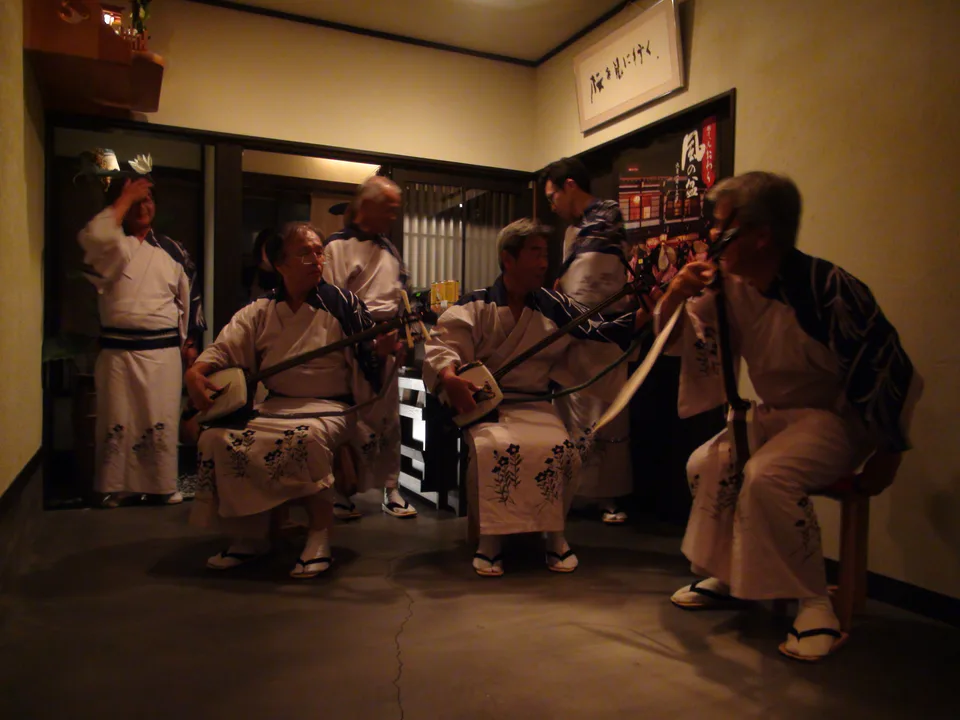
If this is your first Owara Kaze no Bon, September 1 or 2 is the safer choice. The official 2026 festival window is 17:00–23:00 on September 1 and 2, but only 19:00–23:00 on September 3. Those extra two hours do not buy a different festival; they buy room for a slow arrival, a missed street performance, food, uphill walking and one wrong turn without destroying the evening.
September 3 becomes the better choice only when you have a specific reason to want it. The strongest case is the 18:00–19:00 indoor Kyōenkai: on the final night, that session finishes exactly when the outdoor festival begins, so the stage consumes almost none of the official street window. On September 1 and 2, the same ticket overlaps an hour of already-active outdoor time.
ValueNavi verdict: choose September 1 or 2 for first visits, photography and maximum recovery margin. Choose September 3 for a deliberately compact night, especially if you want the 18:00 Kyōenkai first. Do not choose September 3 merely because you can only arrive late: a late arrival hurts a four-hour festival window more, not less.
The 30-second decision matrix
↔ Scroll table left or right
Your priority | Best night | Why | Main trade-off |
First visit, no fixed neighborhood plan | Sep 1 or 2 | Six official hours gives you more recovery from slow walking, waiting and route mistakes. | Longer evening means more stamina required. |
Photography from daylight into lantern-lit streets | Sep 1 or 2 | The 17:00 start preserves the transition from late afternoon into night. | You may need a longer rest strategy if staying until 23:00. |
18:00–19:00 indoor Kyōenkai + street festival | Sep 3 | The stage ends at the same time the outdoor program begins. | Only four outdoor hours remain. |
Rain forecast, one-night-only trip | Any night with a Kyōenkai ticket | The official indoor performance is weather-protected; outdoor processions and circle dancing may pause in rain. | You trade spontaneous street time for certainty. |
Arrival after 19:00 | Sep 1 or 2 | Late arrival consumes a smaller share of the six-hour window. | You still need to plan the final transport before entering the old town. |
Shorter evening by choice | Sep 3 | 19:00–23:00 creates a concentrated night without the temptation to stretch to six hours. | Less tolerance for delays and wrong turns. |
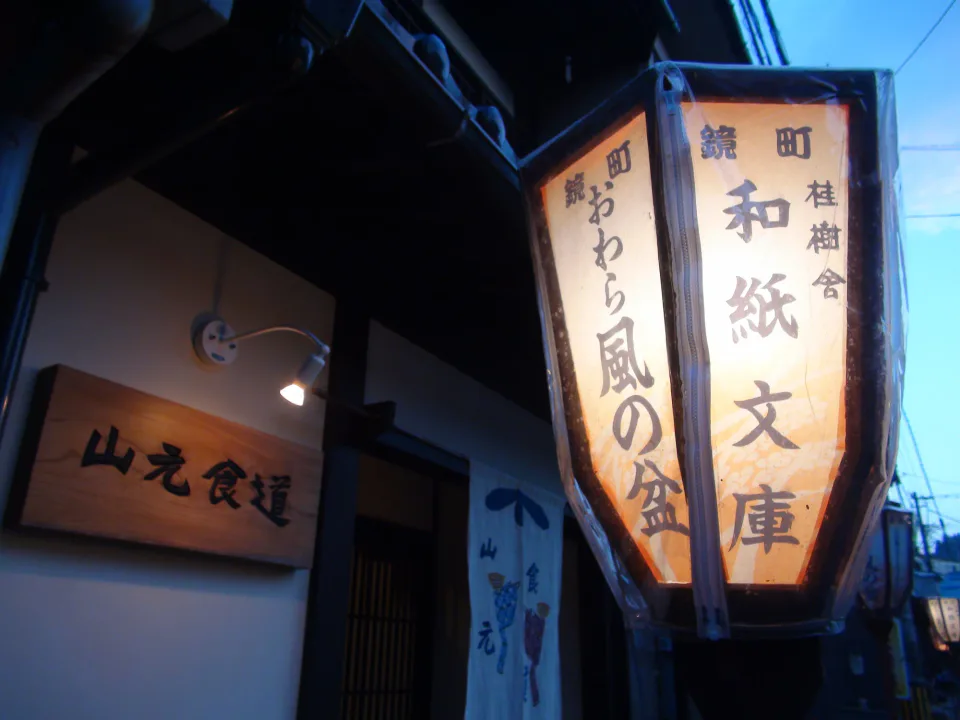
Owara is spread through Yatsuo’s streets rather than concentrated around one fixed stage. Photo: さかおり / Wikimedia Commons, CC BY-SA 4.0.
ValueNavi’s Usable Festival Hours test: official hours are not the hours you actually get
The biggest planning mistake is treating 17:00–23:00 or 19:00–23:00 as if every minute were available for watching Owara. Your real usable time is smaller.
Usable Festival Hours = official window − station-to-old-town time − food/toilet stops − route-finding friction − return buffer.
The official event access page currently gives roughly 25–30 minutes by JR Takayama Main Line from Toyama Station to Etchu-Yatsuo Station. It also warns that transport capacity is limited during the festival and that passengers using the Takayama Line will need an event-day numbered ticket. That already tells you something important: reaching Etchu-Yatsuo Station is not the end of the logistics problem.
If you arrive at the station at 19:00 on September 3, you do not have a clean four-hour festival. You still need to move into the old-town area, orient yourself and decide where to wait. The same delay on September 1 or 2 hurts less because the six-hour window has more slack.
The Arrival Damage Ratio
For a simple planning tool, divide your unavoidable delay by the official festival window. A one-hour delay consumes about one-sixth of a six-hour night but one-quarter of a four-hour night. The exact walking and crowd time varies, so this is not a timetable claim; it is a way to understand why the final night is less forgiving.
↔ Scroll table left or right
Scenario | Nominal street window | ValueNavi interpretation |
Sep 1/2, ready in Yatsuo by 17:30 | About 5.5 hours | High slack. You can stay longer in one neighborhood instead of chasing every procession. |
Sep 1/2, ready by 19:30 | About 3.5 hours | Still workable for a focused first visit. |
Sep 3, ready by 19:30 | About 3.5 hours | Reasonable only if you already know your priority. |
Sep 3, ready by 20:30 | About 2.5 hours | Low slack. Pick one or two neighborhoods; do not attempt a broad town circuit. |
Why September 1 or 2 is usually better for a first visit
Owara does not behave like a festival where one main parade passes a single grandstand. Part of the appeal is the uncertainty: you move between the old streets, hear music before seeing the dancers, wait, then decide whether to remain or move on. That style rewards time margin.
The extra two hours on September 1 and 2 buy four things:
Route recovery: a wrong turn or slow uphill section does not immediately become a missed evening.
Waiting tolerance: you can stay in a neighborhood instead of abandoning it after ten minutes because nothing is happening yet.
Photography range: the earlier start preserves different light conditions before full darkness.
Energy control: you can stop for food or sit down without feeling that every break is consuming a quarter of the night.
This is why “six hours” should be read as flexibility, not as a target to stay on your feet for six continuous hours.
The ¥4,000 Kyōenkai: buy certainty, not prestige
The official 2026 Kyōenkai is held indoors at the Toyama City Yatsuo Hikiyama Exhibition Hall. Tickets are ¥4,000 per person (about US$25.09 at the August 27, 2026 exchange rate), seating is unreserved, and each session has 350 seats. All three festival dates offer the same two session blocks: 18:00–19:00 and 19:20–20:20.
The official organiser explicitly says the indoor stage is not affected by rain, while outdoor machi-nagashi and circle dancing may be interrupted. That makes the ticket useful as a form of weather insurance, not simply a “premium” version of the street experience.
ValueNavi’s Stage Cannibalization test
Before buying a ticket, calculate how much street time the stage consumes.
↔ Scroll table left or right
Choice | Street-time overlap | Decision |
Sep 1/2, 18:00–19:00 session | Overlaps 1 hour of the 17:00–23:00 outdoor window | Worth it when rain certainty or seated viewing matters more than dusk street time. |
Sep 1/2, 19:20–20:20 session | Overlaps a central hour of the evening | Best for travellers who actively want stage performance, not those trying to maximize roaming. |
Sep 3, 18:00–19:00 session | Almost no overlap with the official 19:00 outdoor start | Best stage-to-street efficiency. |
Sep 3, 19:20–20:20 session | Consumes 1 hour of a 4-hour street window | Choose for the final-night participation experience, not for pure time efficiency. |
The official organiser also notes that the second session on September 3 includes an extra participation element: visitors can learn some dance movements before joining circle dancing in town. That is a valid reason to choose the final night even though its outdoor window is shorter.
Rain changes the value of the ticket — but should not control three hotel nights
Because outdoor dancing can pause in rain, a one-night-only visitor faces a different risk from someone staying in Toyama for several nights. The one-night visitor may reasonably pay ¥4,000 to guarantee at least one complete performance indoors. The multi-night traveller has another option: keep the evening flexible and shift the street-focused visit to the better forecast.
Use a Rain Insurance Threshold: buy the stage ticket when the cost of seeing almost nothing outdoors is materially worse than the ticket price. That threshold is lower for a long-haul traveller who built the route around Owara and higher for someone already spending three nights in Toyama.
Do not let the prepaid ticket reverse the logic. If severe weather creates broader transport problems, the existence of a ticket is not a reason to force the trip.
September 3 is not the “late-arrival night”
The final night looks attractive to a late arriver because it starts at 19:00. That is the wrong comparison. You should compare how much usable time remains after you arrive.
If your train reaches Etchu-Yatsuo at 20:00, a 19:00 start does not help you. It simply means you have already missed the first hour of a four-hour event. On September 1 or 2, the same arrival still leaves a larger share of the official evening.
Choose September 3 when you prefer its structure, not because your itinerary forced you to arrive late.
Stay in Toyama or Yatsuo? Use the Return-Risk test
The accommodation decision should follow your final hour, not your first hour. Staying in Toyama preserves hotel supply, rail connections and next-day flexibility. Staying in or near Yatsuo protects the end of the festival and removes the need to build the entire evening around a final train or temporary transport arrangement.
Return-Risk = importance of the last hour × transport uncertainty × fatigue × next-morning penalty.
Staying locally becomes more rational when:
the 22:00–23:00 atmosphere is a core reason for going;
you want to wait rather than constantly check a departure clock;
you are photographing or travelling with equipment;
your next morning is not a hard early departure.
Toyama is usually more rational when:
Owara is one evening inside a broader Hokuriku route;
you have onward rail travel the next day;
you are willing to leave before the final moments;
you want to avoid a one-night hotel move purely for the festival.
If Yatsuo would create a single-night split stay, run the same hotel-move tax test used elsewhere on ValueNavi: check-out, luggage handling, new check-in and next-day repositioning all count against the benefit of staying closer.
Driving is not automatically the low-friction backup
The organiser’s current 2026 access page lists two general parking areas and a ¥3,000 per-car cooperation fee. The Yatsuo Sports Arena parking area has a shuttle to Yatsuo Bridge; the Konagatani parking area does not. The organiser also warns that parking capacity is limited and asks drivers to car-share where possible.
This matters because “we will just drive” does not eliminate last-mile friction. It changes the friction from train capacity to parking, shuttle queues, road restrictions and having a designated driver after a long evening.
For two travellers already sleeping in Toyama, public transport may still be the simpler system if the current event-day train arrangements fit. For a family or group sharing one car from another part of Toyama Prefecture, driving can make more sense — but only after comparing the parking and shuttle structure, not from normal-day Google Maps driving time.
Do not combine Owara with a mountain day unless you budget recovery
Owara rewards a late evening. Tateyama Kurobe, Kamikochi and many alpine routes reward early starts and good daylight. Putting both into one 24-hour block can make each experience worse.
Use a Recovery Tax: if the next morning requires a 06:00 wake-up, subtract the final festival hour from your plan before adding another attraction. A night that ends at 23:00 on paper may still mean a later hotel arrival once you walk out, wait for transport and reach Toyama.
For a route that already includes several mountain and transfer days, compare the Tateyama Kurobe crossing and Hokuriku–Chubu 5-day itinerary before deciding that Owara deserves a hotel move.
Three realistic one-night plans
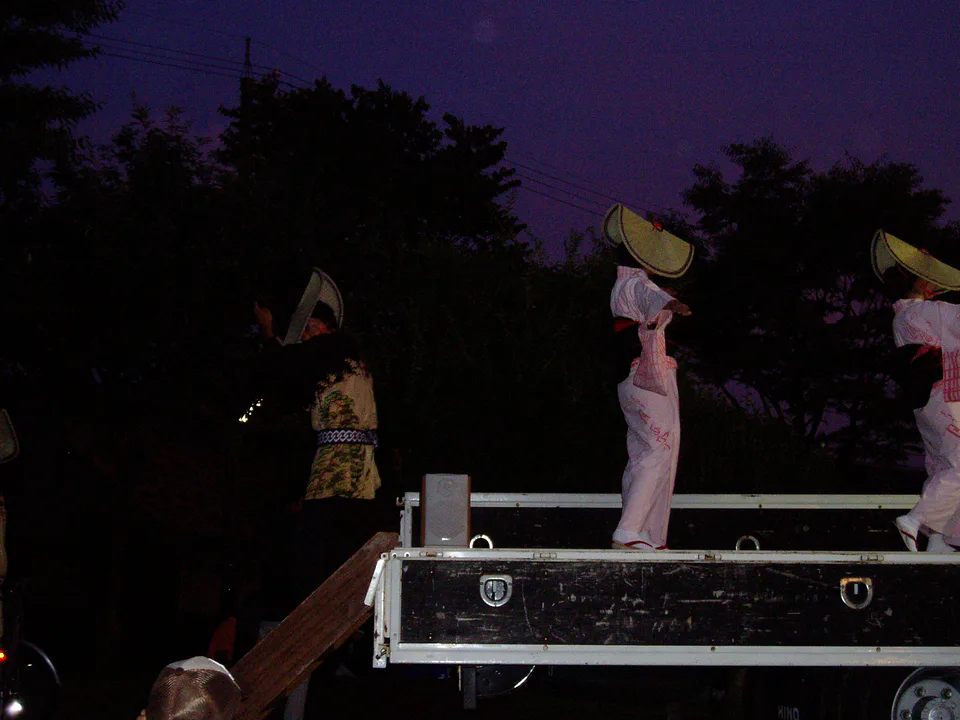
Plan A — first visit, based in Toyama
Choose September 1 or 2. Reach Yatsuo early enough to orient yourself before the evening gets dense, then protect the return transport rather than trying to use every minute until 23:00. This is the most resilient first-visit setup.
Plan B — rain risk, Owara is the main purpose of the trip
Book a Kyōenkai session. Treat the indoor hour as your guaranteed minimum experience, then use the street only as conditions allow. On September 3, the 18:00 session is especially efficient because it hands directly into the 19:00 outdoor start.
Plan C — final-night atmosphere matters more than breadth
Choose September 3 and stay close enough that the return does not control the evening. Accept that you are buying a shorter, more concentrated experience. Do not spend the first half trying to replicate everything a six-hour night could contain.
ValueNavi score: which night has the best planning margin?
Night | First-visit margin | Photography range | Kyōenkai efficiency | Late-arrival tolerance |
|---|---|---|---|---|
September 1 | 6/10 | |||
September 2 | 6/10 | |||
September 3 | 10/10 for the 18:00 session |
These scores are ValueNavi editorial tools, not official festival ratings. Their purpose is to expose the trade-off: September 3 wins one very specific combination — stage first, street second — while September 1 and 2 remain more forgiving overall.
When the recommendation reverses
The September 1–2 recommendation reverses when the earlier start has little value to you. If you do not care about dusk, dislike long evenings, definitely want the 18:00 Kyōenkai, and prefer four concentrated street hours, September 3 can be the better fit.
The September 3 recommendation reverses immediately if you are arriving after 19:00, want broad neighborhood coverage, need generous food/rest breaks or are photographing changing light. In those cases, the missing two hours are not cosmetic; they are your error budget.
Final verdict
For most first-time visitors, choose September 1 or 2. The extra two hours are valuable because Owara is a slow, distributed festival where waiting, walking and uncertainty are part of the experience. September 3 is not “worse”; it is more specialised.
Choose September 3 when you deliberately want a compact night or the 18:00–19:00 Kyōenkai → 19:00 outdoor start sequence. And whichever night you choose, decide your exit before you start roaming. The festival ends at 23:00; your transport problem does not.
Official sources
Owara Kaze no Bon Event Operations Committee — 2026 dates, hours and parking
Official 2026 Kyōenkai — ¥4,000, 350 seats, session times and September 3 participation note
Official 2026 access guidance — Toyama–Etchu-Yatsuo rail time, event-day rail notice and parking
Facts last checked on August 27, 2026. Event-day transport arrangements can change; use the organiser’s latest notice for the final return plan.