
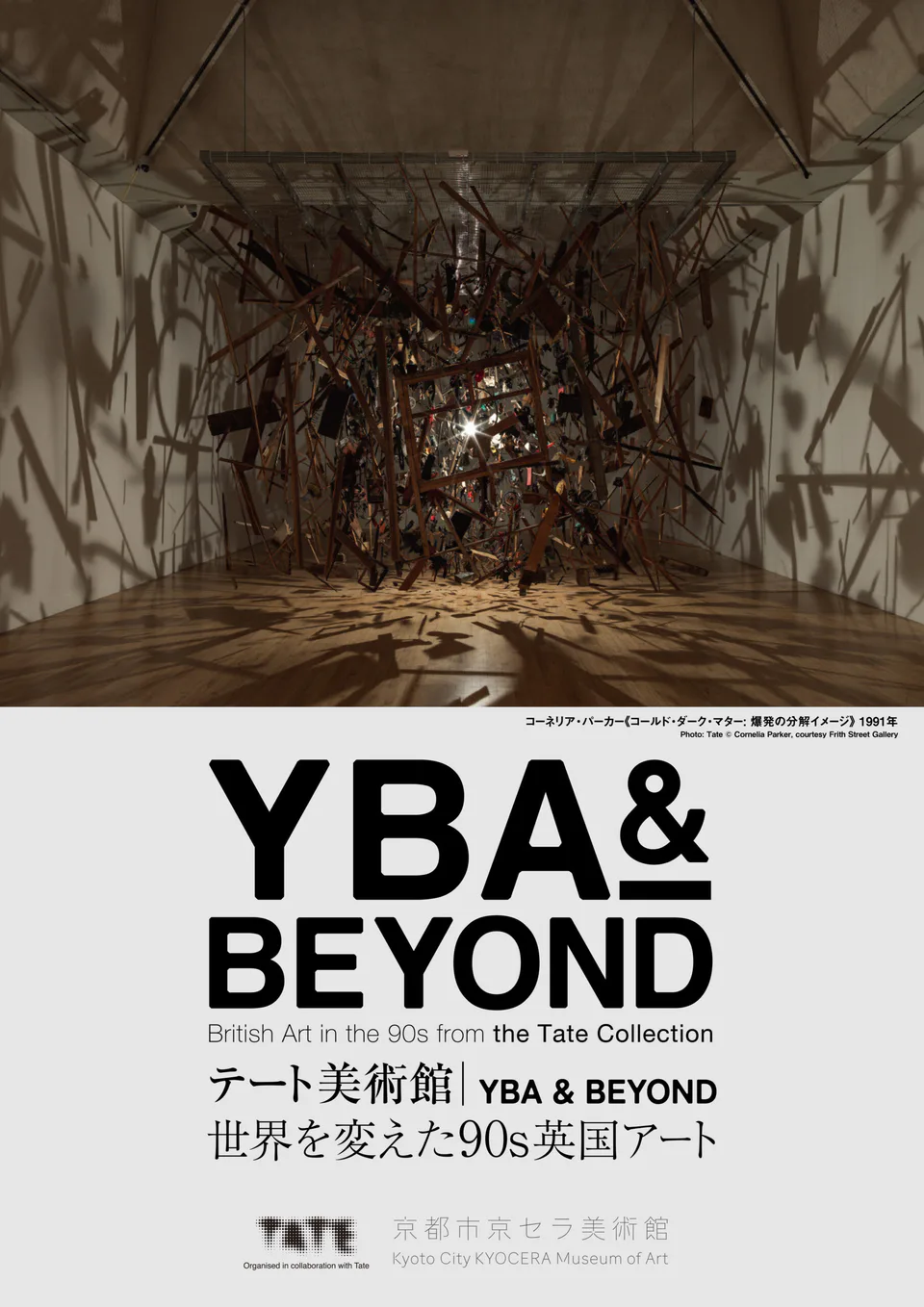
YBA & BEYOND Kyoto 2026 is worth a Kyoto half-day if you want to understand why 1990s British art changed, not if you only want to tick Damien Hirst off a list. The exhibition runs through September 6 at Kyoto City KYOCERA Museum of Art, with around 90 works by more than 50 artists spanning the late 1980s to the early 2000s. Hirst, Tracey Emin, Wolfgang Tillmans, Lubaina Himid and Julian Opie are part of a much wider argument about the period.
The adult same-day ticket is ¥2,300 (about US$14.40 at the August 27, 2026 exchange rate), but ticket price is not the main cost. Once you add the walk from Higashiyama Station, 90–120 minutes inside, and a realistic buffer before or after, this is closer to a 2.5–3 hour itinerary block. That makes the real decision simple: if contemporary art is one of your Kyoto priorities, the show is unusually dense for the time. If your first Kyoto trip is already short on temples, gardens and neighborhoods you genuinely want to see, the exhibition should replace something rather than being squeezed in because it is temporary.
This is not a Damien Hirst retrospective. Around 90 works by more than 50 artists make the period—not one celebrity—the main subject. Image: Kyoto City KYOCERA Museum of Art official.
ValueNavi decision table: who should actually spend a Kyoto half-day here?
↔ Scroll table left or right
Your situation | Verdict | Why | Main trade-off |
You already like contemporary art or 1990s British culture | Strong yes | The breadth across painting, sculpture, photography, video and installation is the point of the show. | You are giving up roughly half a sightseeing day in Kyoto. |
You only know Damien Hirst and Tracey Emin | Yes, if you want context | The exhibition is useful precisely because it places famous names inside a wider generation. | It will disappoint if you expect a Hirst-heavy greatest-hits show. |
First Kyoto trip, only 2–3 full days | Usually skip unless art is a priority | Kyoto has unusually high opportunity cost: a museum block competes with entire neighborhoods. | The deadline can make a temporary show feel more urgent than your actual interests. |
Hot or rainy day and you need an indoor plan | Good backup, with a caveat | The museum is weather-resilient and easy to combine with Okazaki. | Some works contain sexual expression, so “indoor” does not automatically mean neutral for every family group. |
You have only 60 minutes free | Skip | Video, installation and context-heavy works lose value when rushed. | The transfer and entry overhead become too large relative to actual viewing time. |
You are already spending a half-day in Okazaki/Higashiyama | Very good route fit | The museum becomes part of an existing east-Kyoto cluster rather than a standalone detour. | You still need to protect at least 90 minutes inside. |
ValueNavi Score: the exhibition is stronger on uniqueness than first-trip priority
This is an editorial decision model, not an official rating. A higher score means the factor is more favorable for a traveler deciding whether to include the exhibition.
Dimension | Score / 10 | What drives the score |
|---|---|---|
Uniqueness | A concentrated Tate-led view of 1990s British art is not something Kyoto offers year-round. | |
Time efficiency | About 90 works can deliver a lot in 90–120 minutes, but door-to-door time turns it into a 2.5–3 hour block. | |
Route fit | Strong when paired with Okazaki/Higashiyama; weaker as a cross-city standalone detour. | |
Weather resilience | One of the easier substantial indoor activities to keep on a wet or very hot day. | |
Booking flexibility | Official same-day admission provides a straightforward fallback if capacity remains. | |
Value at ¥2,300 | Good if the period interests you; poor if the famous names are your only reason for going. | |
First-time Kyoto fit | Kyoto’s traditional sights create a very high opportunity cost on short first visits. |
Overall ValueNavi verdict: 8.1/10 for contemporary-art travelers; closer to 6/10 for a first-time Kyoto visitor with no particular interest in the subject. The gap matters more than the average. This is a specialist “strong yes,” not a universal must-see.
The hidden cost is 2.5–3 hours, not ¥2,300
The museum is open 10:00–18:00, with last admission at 17:30, and is normally closed on Mondays except public holidays. Higashiyama Station is roughly an eight-minute walk away. A practical planning block looks like this:
↔ Scroll table left or right
Time component | Plan for | Why it matters |
Station-to-museum approach | 10–20 min | The official walk is short, but station exit, traffic lights and museum entry add friction. |
Exhibition | 90–120 min | Enough for labels, photography and some video/installation without turning the visit into a sprint. |
Buffer / shop / toilet | 15–30 min | Temporary exhibitions rarely end exactly when your mental schedule says they should. |
Optional ENFUSE stop | 30–45 min | The themed menu is an extra activity, not part of the exhibition viewing time. |
Realistic total | 2.5–3 hours | That is the scarce resource you are really spending. |
If you are splitting a Kansai stay between cities, decide whether Kyoto or Osaka should be your main base before donating another half-day to a museum. If you are doing Osaka in four days with USJ, use our Osaka-and-Kyoto 4-day decision guide first. YBA can replace something; it cannot manufacture extra hours.
Next decision: Kyoto or Osaka as your main base?
Go for a decade, not one famous name
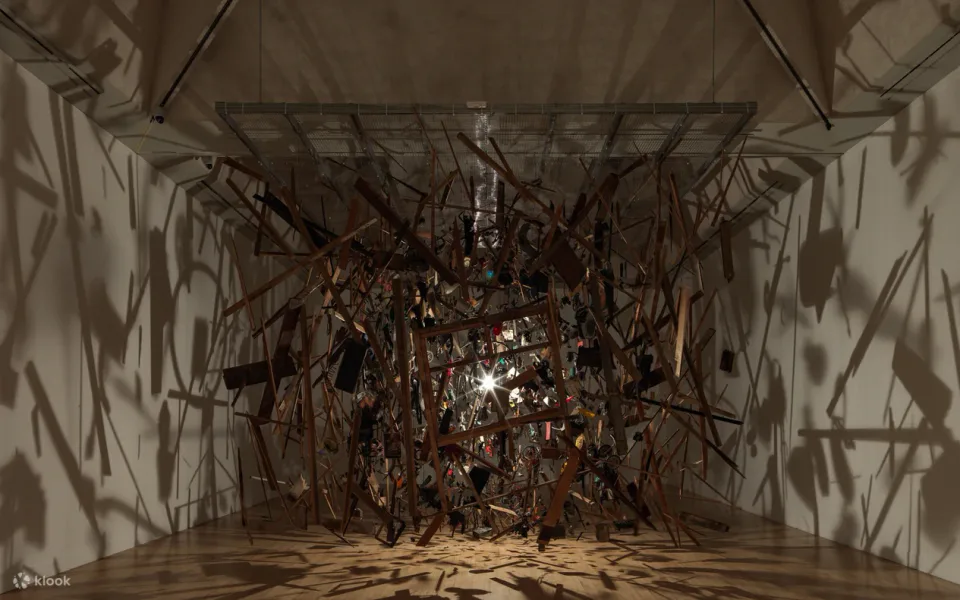
The strongest reason to go is curiosity about why British art changed so quickly in the 1990s. The exhibition moves across painting, sculpture, photography, video and installation, with themes including popular culture, personal narratives, identity and shifting social structures. You do not need to know every artist in advance. You do need to enjoy the question of why this generation became so experimental, confrontational and media-aware.
If Damien Hirst is your only hook, reset expectations. The museum describes a broad line-up and more than 50 artists. Your ticket is buying Tate’s argument about a period, not a greatest-hits room for one person. That distinction can reverse the verdict: someone wanting a Hirst mini-retrospective may leave underwhelmed; someone wanting to understand how Hirst sits beside Emin, Tillmans, Himid and Opie may find the same ticket unusually dense.
Photography, sculpture, video and installation matter as much as painting here. Image: Klook activity listing.
Ticket decision: use the official ¥2,300 price as the anchor
The official same-day adult admission is ¥2,300 (about US$14.40). University students pay ¥1,500, high-school students ¥900, and junior-high-school-age visitors and younger are free under the official pricing rules; discounted or student admission requires the applicable proof. The key point is not to treat any third-party listing as automatically cheaper. Compare the final price, selected date, cancellation terms and whether you are accidentally adding another attraction you did not already want.
Klook Activity 220579 is the exact YBA & BEYOND exhibition listing used by this article. If a Kyoto Tower set option appears for your date, only choose it if Kyoto Tower was already in the itinerary. A bundle can reduce the visible price per attraction while increasing the day’s travel and time cost.
Once the exhibition has earned the half-day, check your exact date

This article may contain affiliate links. If you complete an eligible booking through one, ValueNavi may receive a commission at no extra cost to you.
Check YBA & BEYOND tickets for your Kyoto date|Klook
Use the official ¥2,300 adult same-day price as the reference point, then compare the exact total and conditions shown for your date before paying.
The ¥650 audio guide only makes sense if context is the missing piece
If the optional audio guide is offered at ¥650 (about US$4.10), the useful question is not whether ¥650 is cheap. It is whether extra context will change how much you get from the wider group of artists. It is most useful if Hirst and Emin are familiar names but the wider network and 1990s British background are not. If you already know the period well—or prefer moving at your own pace—the exhibition does not become incomplete without it.
On a tight schedule, protect viewing time before buying commentary. The worst-value version is paying for a guide and arriving so late that the 17:30 last-admission rule and 18:00 closing turn the visit into cardio with headphones.
The exhibition rewards visitors who give the media and historical context time rather than racing for celebrity names. Image: Klook activity listing.
Failure mode: treating “museum” as an automatic family rainy-day choice
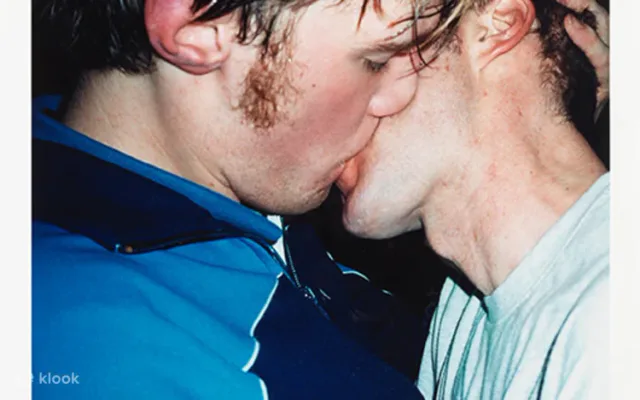
The museum explicitly states that some works include sexual expression. That is useful planning information, not a reason to sensationalize the show. If you are visiting with children or anyone sensitive to that material, check the official exhibition information first and decide whether it fits the group.
This is where a generic “Kyoto rainy-day attraction” list can mislead. Weather fit and content fit are two different filters. YBA scores highly for weather resilience, but that does not make it the default indoor choice for every family. If your only requirement is somewhere air-conditioned because Kyoto is hot, choose an indoor activity the group actually wants.
Route fit: do not move hotels for one exhibition
Kyoto City KYOCERA Museum of Art sits in Okazaki, roughly an eight-minute walk from Higashiyama Station. It pairs naturally with the broader Higashiyama and Okazaki side of the city. If your hotel base is still open, compare Kyoto Station vs Gion rather than choosing around this museum alone. One exhibition is not a reason to move hotels; several east-Kyoto mornings may be.
Travelers with train-heavy day trips may still prefer Kyoto Station, while visitors repeatedly spending mornings and evenings on the east side may value Gion more. The exhibition should fit the base decision, not dictate it.
ENFUSE collaboration menu: a pleasant finish, not a reason to buy the art ticket
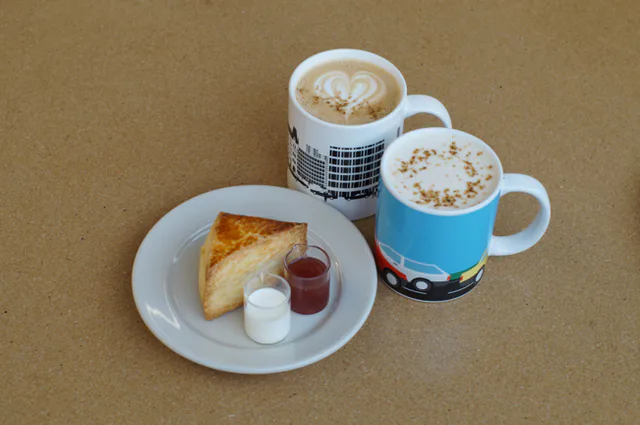
ENFUSE has a limited YBA collaboration menu through September 6. The butterscotch latte or butterscotch chai latte with a buttermilk scone is ¥1,500 (about US$9.40), while the drinks alone are ¥850 (about US$5.30). The official collaboration notice says the menu runs from July 1 through September 6 and uses the exhibition’s original mug design.
Treat this as a themed ending if you already want the exhibition. Do not reverse the logic and spend a Kyoto half-day on an art show because the café photo looks good. A useful hidden-cost check is simple: exhibition + optional audio guide + café set is ¥4,450 (about US$27.90) before transport. That may still be good value for an art-focused afternoon, but it is no longer a ¥2,300 decision.
The ENFUSE collaboration ends on September 6, the same day as the exhibition. Image: YBA & BEYOND official.
Final verdict: specialist strong yes, first-trip optional
Go if 1990s British art, contemporary photography, installation or the wider YBA moment genuinely interests you, especially if you already have an Okazaki/Higashiyama half-day. Skip if the famous names are your only hook, if you have under 90 minutes to view the show, or if this is a short first Kyoto trip where you are already cutting places you care about more.
The strongest counterargument to this recommendation is Kyoto itself: a temporary Tate exhibition can be excellent and still lose against a city-specific experience on a first visit. That is why the verdict changes with the traveler. For an art-focused return visitor, the show is a high-value temporary opportunity. For a first-time visitor with two full days, it is an optional specialist detour.
Before payment, confirm five things: your date is no later than September 6; the museum is open that day; you can give the show at least 90 minutes; the content warning works for your group; and the ticket conditions are acceptable. A closing date creates scarcity, but it does not create personal relevance.
A deadline makes the exhibition finite; it does not make it mandatory. The scarce resource is still your Kyoto half-day. Image: Klook activity listing.
Facts checked August 27, 2026. Official exhibition information confirms the June 3–September 6 run, 10:00–18:00 hours with last admission at 17:30, Monday closure except public holidays, the ¥2,300 adult same-day price and the sexual-expression notice. USD figures are approximate conversions using the August 27 exchange rate and will move with FX. Before departure, recheck the official Kyoto City KYOCERA Museum of Art exhibition page and the official YBA & BEYOND website for your exact date.