
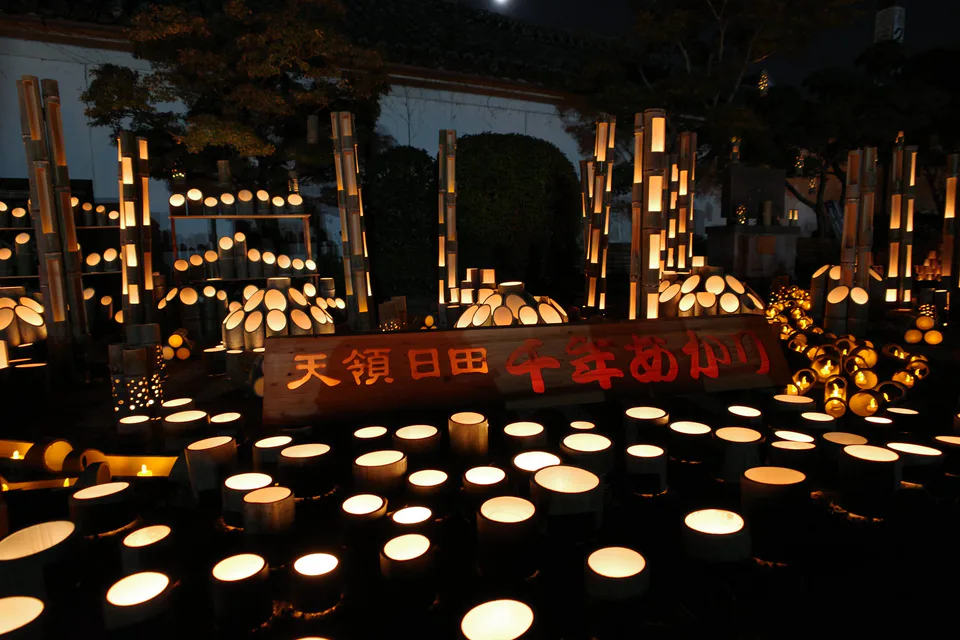
For Sennen Akari 2026, choose Friday, November 13 if the bamboo lanterns are the main event and you want the cleanest lantern-first evening. Choose Saturday or Sunday, November 14–15 if you want to combine the daytime Hita Tenryo Festival with the lanterns after dark. The bigger decision is whether to return to Fukuoka the same night. Current regular transport already starts constraining the evening before a recent Sennen Akari would normally be finished, so an overnight stay is not just about atmosphere: it buys back the part of the festival that the return clock would otherwise take away.
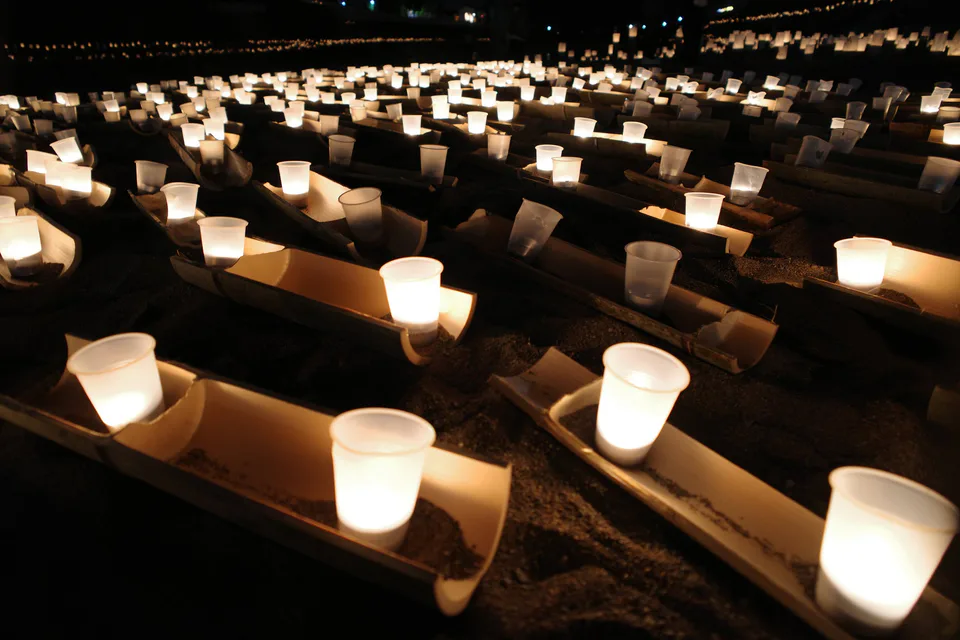
The dates are confirmed, but the 2026 lighting hours have not yet been published as of August 25. Hita’s tourism association corrected Sennen Akari to November 13–15 and the Tenryo Festival to November 14–15. Recent editions have lit the bamboo lanterns from roughly 16:30 to 21:00, but that is previous-year context, not a promise for 2026. Recheck the official programme before locking a non-refundable hotel or the final return service.
Sennen Akari 2026: choose the day before you choose the transport
↔ Scroll table left or right
Your priority | Best starting point | Why | Main trade-off |
Lanterns and night photography first | Friday, Nov 13 | Sennen Akari is running, while the daytime Tenryo Festival does not begin until Saturday | You miss the weekend historical-festival programme |
Tenryo Festival + lanterns in one day | Saturday or Sunday, Nov 14–15 | You can use the daytime historical programme, then stay for the bamboo lights | More reasons for crowds, traffic controls and accommodation pressure |
Fukuoka day trip, no hotel | Arrive before sunset and set a hard departure | You can see the transition from Mameda daytime to early candlelight | You are buying an abbreviated evening, not the full night programme |
Full evening with no transport clock | Stay in Hita | You can keep walking after the regular Fukuoka-bound options become inconvenient | One hotel night and a slower next-morning departure |
Why November 13 and November 14–15 are different products
The official 2026 correction creates a useful choice rather than three interchangeable dates. Sennen Akari runs from Friday through Sunday, but the Hita Tenryo Festival is scheduled only for Saturday and Sunday. If your trip is built around bamboo lanterns, river reflections and photography, Friday lets the evening stand on its own. If the attraction is the contrast between historical daytime Hita and the lantern-lit town after dark, the weekend is the stronger product.
The recent Tenryo Festival format has been daytime-heavy, while Sennen Akari starts around dusk and continues into the evening. That creates a natural two-session day on Saturday or Sunday: historical Hita before dark → meal or rest break → candlelit Mameda and Kagetsu River after dark. It also creates the highest fatigue and crowd load. Do not add Yufuin, Dazaifu or another major destination simply because Kyushu distances look short on a map.
Friday has a different advantage: you can arrive later, keep the whole trip lantern-focused and avoid spending the morning on festival programming you do not particularly care about. For a photographer or couple whose main reason for travelling is Sennen Akari itself, that can be the better use of one scarce Japan day.
The Fukuoka day-trip problem is the return clock, not the distance
The Fukuoka–Hita highway bus is convenient in daylight. Nishitetsu currently lists the route at about 1 hour 35 minutes between Tenjin and Hita Bus Terminal, with roughly half-hourly service and no advance reservation requirement. The catch is that it is a capacity-based service: when a bus is full, you may not be able to board.
More important for Sennen Akari, the current April 2026 timetable does not run deep into the festival evening. On weekdays, the final regular Hita Bus Terminal departure shown toward Fukuoka is 19:10. On Saturdays, Sundays and holidays, it is 19:00. That means a Fukuoka day trip built around the highway bus has to leave while the evening is still developing if the 2026 event follows the recent roughly 21:00 lighting pattern.
This is the key ValueNavi distinction: “Hita is only 95 minutes from Fukuoka” does not mean “the whole lantern evening is a comfortable Fukuoka day trip.” The outbound journey is easy; the final useful return service controls how much of the event you actually bought with the travel time.
JR gives you a different evening window, but do not invent a 2026 festival train
JR can extend the practical evening compared with the highway bus, but the exact November 2026 service must be rechecked when the event timetable is final. The current Yufuin no Mori schedule shows the last named Yufuin no Mori departure from Hita at 18:12, arriving Hakata at 19:27. Other JR services exist later, but the special-train calendar and November operating details are date-sensitive.
The planning mistake is saving a summer screenshot and treating it as a November festival guarantee. Use the live JR Kyushu search for November 13, 14 or 15 once tickets are bookable. If a later direct limited express or connection appears, it can improve the day-trip case. If it does not, the overnight case becomes stronger.
For the same reason, do not buy a Northern Kyushu Rail Pass solely because this event is in Oita Prefecture. Compare the whole route in the Northern Kyushu Rail Pass guide; the pass only matters if the journeys you actually take make it pay off.
When staying overnight is actually worth paying for
Do not justify a Hita hotel with the vague phrase “more relaxing.” Count the evening minutes it buys back.
If your same-day return forces you to start walking toward the station or bus terminal around 18:30–19:30, while the strongest candlelight period is still ahead, the hotel is buying a real event window. You can move more slowly between Mameda-machi, Maruyama and the Kagetsu River, wait for the crowd to shift, photograph the same scene after the sky becomes fully dark and stop treating every ten-minute detour as a threat to the final departure.
An overnight stay is especially easy to justify when two or more of these apply:
night photography is one of the main purposes of the trip;
you want both the weekend Tenryo Festival and Sennen Akari without compressing dinner;
you are travelling with children, older relatives or a tripod and do not want to sprint to a final service;
the next day continues toward Yufuin or Beppu rather than immediately returning to Fukuoka;
you want to see Mameda again the next morning without event crowds.
The overnight case is weaker if you only want a quick look at the lanterns after a daytime Kyushu itinerary and are satisfied with an early-evening sample. In that case, a day trip with a deliberately early return can be the more efficient choice.
Station-side hotel or atmospheric stay?
Once you have decided to sleep in Hita, the hotel’s job should follow the next morning. A station-side property such as Hotel Route-Inn Hita Ekimae is the low-friction answer when luggage, an early departure or a train/bus onward matters. A more atmospheric riverside or onsen-style stay makes more sense when the hotel itself is part of the night and you are not protecting an early connection.
Do not overpay for a “festival hotel” label if you will still need a long taxi or walk after the lights. The useful comparison is festival exit → hotel door → next-morning departure. A cheaper room far from both can give back the time you paid to save.
Walk the lantern areas as one route, not as separate photo stops
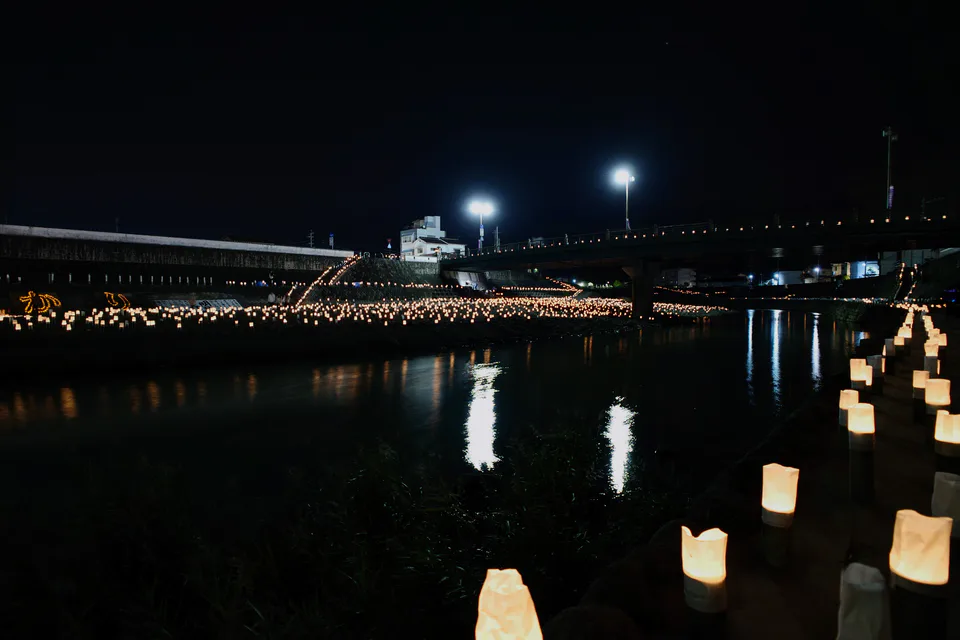
Kagetsu River gives the largest open compositions and the chance of water reflections. Mameda-machi gives tighter frames with traditional streets and buildings. Maruyama links the experience rather than needing to be treated as another checklist stop.
A practical sequence is to see Mameda before full darkness, then move toward the river as the sky deepens, and return through the historic streets after dark. This gives you two different visual versions of Hita without backtracking purely for photographs.
Photography strategy: protect the scene before the technical settings
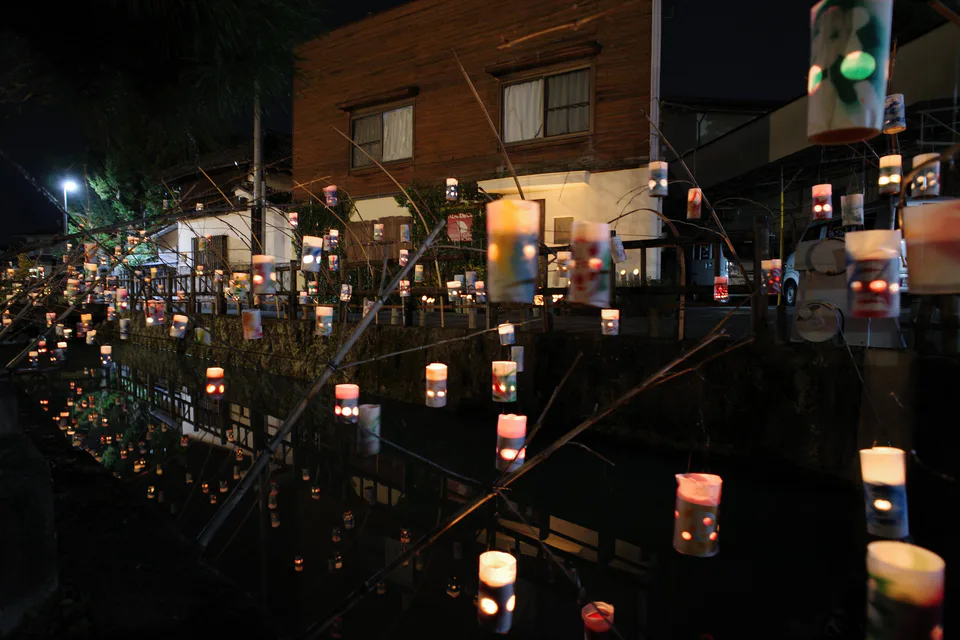
Arrive before sunset so you are not learning the riverbank layout after it is already crowded. Real candlelight has a large brightness range, so slight underexposure is usually safer than blowing out every flame. Include bridges, water, stone walls or old buildings so the photograph still reads as Hita rather than a generic lantern event.
A tripod can help, but it is not worth blocking a narrow walking line. Use the smallest footprint possible and move when staff or crowds need the space. Wind also changes the scene: reflections weaken, flames flicker and some lanterns may go out. Take several frames instead of designing the whole visit around one long exposure.
Weather is a bigger failure mode here than at an LED illumination
Sennen Akari depends on real outdoor bamboo lanterns. Rain, wind and river conditions can change the experience more than they would at a permanent indoor attraction. A non-refundable hotel is therefore buying schedule freedom, not a guarantee that every lantern display will operate exactly as photographed in previous years.
If weather is poor, check Hita’s official event information before travelling. Do not treat a 2026 date confirmation as confirmation of every lighting zone, ceremony or operating hour.
Final decision
Choose Friday, November 13 for the cleanest lantern-focused trip. Choose November 14 or 15 when you specifically want the daytime Hita Tenryo Festival plus Sennen Akari after dark. From Fukuoka, a day trip is reasonable when you are happy to leave on a hard timetable and see only the earlier part of the evening. Stay overnight when the whole point is full darkness, photography, an unhurried meal or the ability to keep walking after normal Fukuoka-bound transport starts disappearing.
The recommendation can change if Hita announces special late transport or materially different 2026 lighting hours. Recheck those two facts close to November; they matter more than another generic hotel recommendation.
Continue planning
If Hita is part of a wider Kyushu route, use the Fukuoka–Hita–Yufuin–Beppu hotel sequence and the Beppu vs Yufuin decision. For luggage, see Hakata-to-Yufuin luggage forwarding. If you are choosing between autumn evening events, compare this lantern-first trip with the Dazaifu Shinko-sai guide.
References
Hita Tourism Association — corrected 2026 Sennen Akari and Tenryo Festival dates · Nishitetsu — Fukuoka–Hita highway bus, April 1, 2026 timetable · JR Kyushu — current Yufuin no Mori schedule and operating-calendar notices · Hita City — recent Sennen Akari operating structure. Checked August 25, 2026. The 2026 event dates are confirmed; 2026 lighting hours and any special festival transport should be rechecked when the final programme is released.