
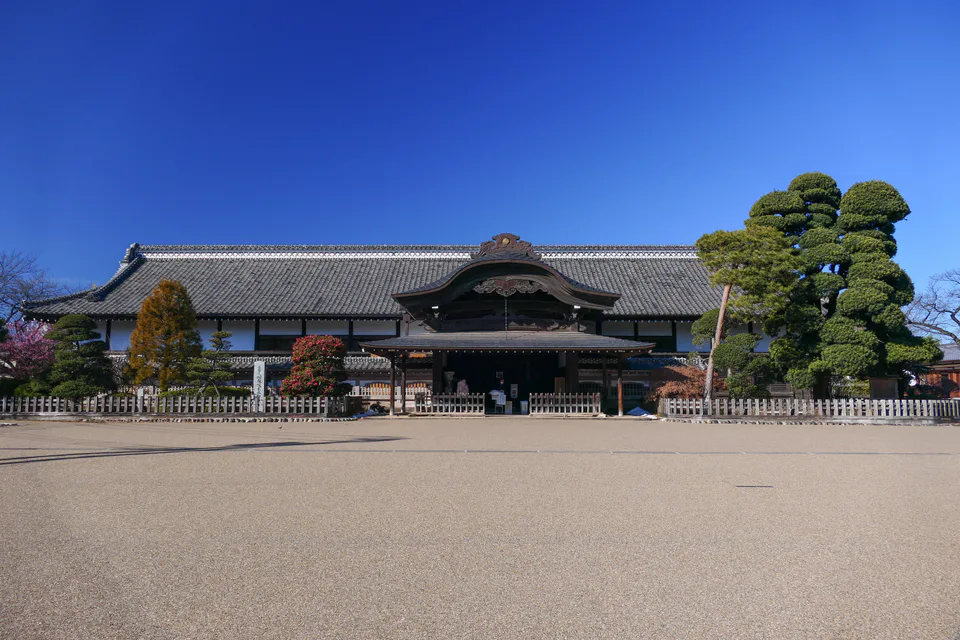
If Kawagoe is already in your day-trip plan, Kawagoe Castle is usually worth one extra stop. Honmaru Palace costs only ¥100 for adults, and what you see is surviving late-Edo palace architecture rather than a reconstructed castle tower. The real trade-off is not the ticket price: it is leaving the main Kurazukuri Old Town shopping corridor. If your entire day is about sweet-potato snacks, Kashiya Yokocho and the Bell Tower, you can skip it. If you collect castle stamps or care about Edo-period buildings, the value-to-time ratio is unusually strong.
The second easy mistake is treating a museum closure as a failed stamp day. On normal opening days the castle stamp is inside Honmaru Palace; on regular closure days it moves to the Hatsukari Park Rest Area from 9:00 to 17:00. So the question to solve first is not “Will I miss the stamp?” but “Do I actually want to enter the surviving palace?”
30-second decision: who should add Kawagoe Castle to a Kawagoe day trip?
↔ Scroll table left or right
Your goal | Best plan | The mistake to avoid |
Collect the castle stamp | Check whether the palace is open; use Honmaru Palace on open days and the Hatsukari Park Rest Area on regular closure days | Assuming a closure day means no stamp, or waiting for the palace to open when you only need the stamp |
First Kawagoe visit, with some interest in history | Group Honmaru Palace with the museum and Hikawa Shrine side of town | Walking back to the station mid-day and then starting a second trip to the castle area |
Old Town food and shopping only | Skip it without guilt | Adding it only because ¥100 sounds cheap, then losing more time than expected to detouring |
Castle / Edo architecture enthusiast | See Honmaru Palace and Kawagoe City Museum together | Stamping the book at the entrance and leaving without seeing the surviving palace rooms |
Festival or seasonal-event day | Check road closures and bus changes first | Building the day around normal weekday bus intervals |
If you have not even decided whether Kawagoe deserves one of your Tokyo days, start with our Tokyo day trips comparison. Kawagoe Castle works best as a high-value layer on a Kawagoe trip you already want to take, not as the main reason most first-time Tokyo visitors should give up a whole day elsewhere.
The stamp is not lost on a normal closure day — it simply moves out of Honmaru Palace
Kawagoe City currently uses two normal stamp locations. When Honmaru Palace is open, the stamp is available there during the 9:00–17:00 opening window; last admission to the palace is 16:30. On regular closure days, including Mondays and the fourth Friday in the usual schedule, the stamp is placed at the Hatsukari Park Rest Area from 9:00 to 17:00. For stamp collectors, that makes an ordinary closure day much easier to recover from than many older guides imply.
Do not turn that into a blanket rule for every date. The city published a special year-end arrangement for December 29, 2025 through January 3, 2026, when the stamp moved again to the City Hall duty room because both the palace and park rest area were closed. That period has passed. A future year-end plan should be checked against the latest city notice rather than assuming the same backup location will repeat.
For the current placement rules, use the official Kawagoe City castle-stamp page rather than an old stamp blog.
The ¥100 ticket is not the real cost — leaving the Old Town route is
Honmaru Palace currently charges ¥100 for adults and ¥50 for high-school and university students; junior-high students and younger enter free. It opens 9:00–17:00 with last admission at 16:30. At that price, the admission fee is almost irrelevant to the decision. The real cost is whether the palace fits naturally into the rest of your Kawagoe day.
The palace is not on the busiest stretch of Kurazukuri shops. If your day is built around eating, shopping, Kashiya Yokocho and the Bell Tower, a there-and-back detour can feel larger than the ¥100 ticket suggests. The better move is to treat Honmaru Palace, Kawagoe City Museum and the Hikawa Shrine side of town as one eastern cluster, then continue or return by bus instead of repeatedly walking back toward the station.
Why ¥100 is worth paying: surviving honmaru palaces are rare, and this one is not a modern replica
The surviving Honmaru Palace was completed in 1848 under Kawagoe lord Matsudaira Naritsune. The original complex was much larger: 16 buildings covering about 1,025 tsubo. Most of it was dismantled after the Meiji Restoration. What remains today is only part of that original scale, including the entrance and great-hall section, plus the relocated and restored senior-retainer quarters.
That limitation is part of the value rather than a reason to dismiss it. Kawagoe City designates the Honmaru Palace and retainer quarters as a Saitama Prefectural Tangible Cultural Property. If you judge castles mainly by tall keeps and stone walls, it may look understated. If you want to understand how a feudal domain actually used interior administrative and ceremonial space, surviving rooms are much harder to replace than another concrete reconstruction.
Kawagoe Castle itself dates back to 1457 and is traditionally associated with Ota Dosshin and Ota Dokan building it under Uesugi Mochitomo. You do not need a full list of lords before visiting. The useful distinction is simpler: the site is a castle ruin, while the building you enter is a genuine surviving component of the late-Edo Honmaru Palace. That sets the right expectation before you arrive.
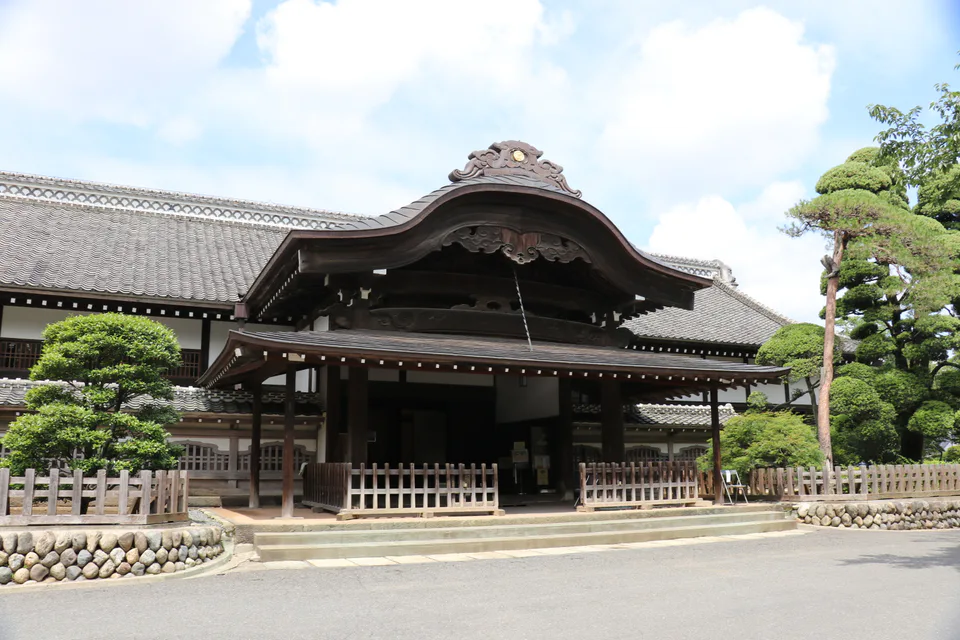
From Kawagoe Station or Hon-Kawagoe: do not go back to the station halfway through the day
From Kawagoe Station, the official city access page gives several useful choices. East Exit bus stop 3 serves the Tobu Koedo Famous-Places sightseeing bus to Museum-mae, roughly 1–2 buses per hour and fewer on weekdays. West Exit bus stop 2 serves the Eagle Bus Koedo Loop to Museum/Art Museum-mae, also around 1–2 per hour with fewer weekday services. If timing is poor, the much more frequent regular Tobu buses via Kura-no-machi run from East Exit stops 1, 2, 4, 5 and 6 to Fudanotsuji, followed by about an 8-minute walk.
From Hon-Kawagoe Station, regular Tobu buses from East Exit stop 5 run via Kura-no-machi to Fudanotsuji at roughly ten buses per hour, or to Kawagoe City Hall-mae with about a 5-minute walk on the relevant route. Eagle Bus also serves Museum/Art Museum-mae. That frequency difference matters: if a loop bus has just left, waiting for the “perfect tourist bus” can waste more time than taking a regular service and walking the last few minutes.
The planning rule is more important than the bus number: once you are in Old Town, do not walk all the way back to Kawagoe Station just to “start again” for the castle. Treat Old Town, Hikawa Shrine and the palace/museum area as one broad sightseeing zone, then use a bus for the final return to Kawagoe or Hon-Kawagoe Station.
Old Town, Hikawa Shrine and Honmaru Palace: let the fixed closing time decide the order
↔ Scroll table left or right
Traveller | Route that usually works best | Why |
Stamp first | Honmaru Palace / closure-day stamp point → museum → Hikawa Shrine → Old Town | Handle the fixed 17:00 stamp window first; shopping can stay flexible later |
Typical first visit | Old Town → Hikawa Shrine → Honmaru Palace / museum → bus back | Moves broadly east/northeast without returning to the station mid-day |
Afternoon arrival | Check the 16:30 last-entry deadline first, then decide whether to bus directly to the palace | You can still be in Kawagoe after 16:30 but no longer enter Honmaru Palace |
Festival / major event day | Rebuild the route around same-day traffic restrictions | Road closures can invalidate the normal bus-based sequence |
Travelling on October 17–18, 2026? Read our Kawagoe Festival 2026 route guide because normal traffic logic may not hold. In summer, if Hikawa Shrine is the main draw, use the Kawagoe Hikawa Wind Chimes day-versus-night guide to decide where the castle fits before the palace closes.
Honmaru Palace only, or add Kawagoe City Museum? The extra ¥200 buys context, not another “must-see” room
Kawagoe City Museum sits in the same area. Its standard admission is currently ¥200 for adults and ¥100 for high-school and university students, with junior-high students and younger free; opening hours are likewise 9:00–17:00 with last admission at 16:30. If your only goal is the castle stamp, you do not need the museum. If this is your first serious attempt to understand why Kawagoe is more than a Little Edo shopping street, the museum does useful work by linking the castle, castle town and later urban development.
The time trade-off is simple. With only 30–45 minutes for the castle area, prioritise Honmaru Palace because it gives you the irreplaceable physical space. If you can give the district 1.5–2 hours, the museum plus palace makes a much more coherent visit. Even then, the meaningful cost is your schedule, not the combined ticket price.
Should you add the Fujimi Yagura site? Castle enthusiasts yes; most Old Town visitors no
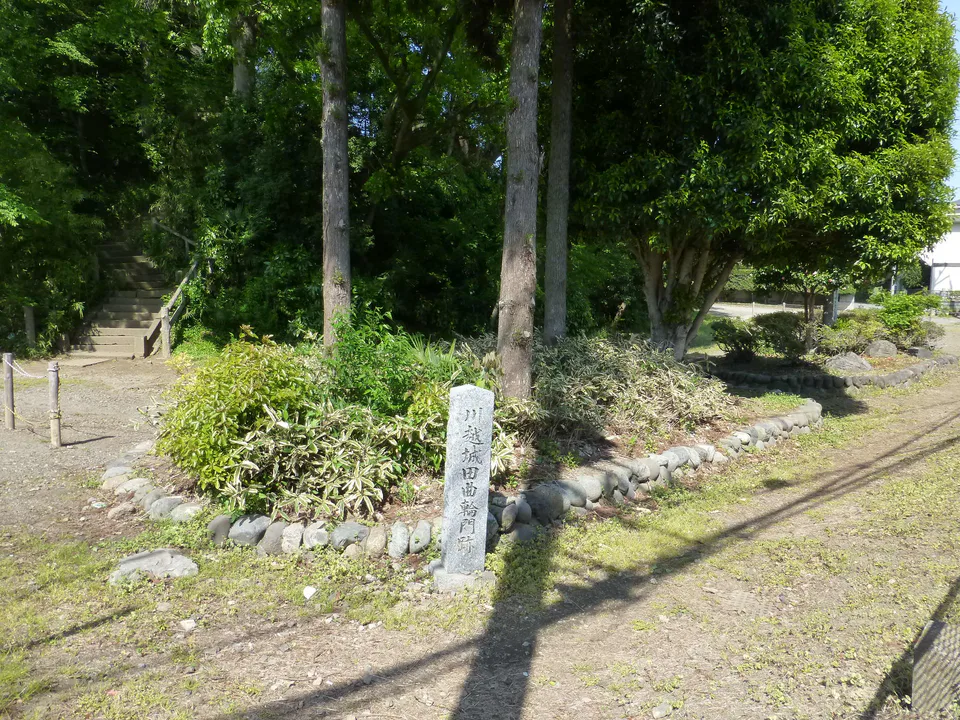
Kawagoe Castle has no surviving keep. Fujimi Yagura once served lookout and defensive functions, while today the site preserves the former turret platform and related remains. For castle enthusiasts, it helps restore a sense that Honmaru Palace belonged to a much larger defensive complex. For a visitor whose priority is simply the surviving palace, it is not an obligatory extra stop.
If Old Town, Hikawa Shrine and lunch already fill the day, seeing Honmaru Palace properly is better than collecting every minor castle marker. Kawagoe Castle rewards understanding a few key surviving elements; it does not require turning a relaxed Kawagoe day into a checklist hike.
Who should skip Kawagoe Castle? A cheap ticket does not make it essential for everyone
Skip it if you have only half a day in Kawagoe and your priorities are explicitly Kurazukuri Street, Kashiya Yokocho, the Bell Tower and food. The danger in that itinerary is fragmentation: even a ¥100 attraction can cost too much when it breaks a short shopping-and-snacking route into several distant blocks.
Also skip it if what you want is a visually dramatic keep, high stone walls or a panoramic castle view. Kawagoe Castle is valuable for its palace interiors and the surviving footprint of a former castle, not for a giant exterior “castle photo.” If you arrive expecting the visual scale of Himeji or Osaka Castle, the mismatch is likely to dominate the visit.
Finally, be cautious on festival and major seasonal-event days. City transport guidance explicitly warns that surrounding roads can be closed for events. On those dates, “It is only one cheap stop” can become a bad assumption if the detour displaces the exact festival or evening period you came to Kawagoe for.
Verdict: worth adding once you are in Kawagoe; worth a dedicated Tokyo trip only for specific travellers
Kawagoe Castle Honmaru Palace has a very clear advantage: admission is low, the surviving architecture is genuine, and the palace sits close enough to Kawagoe City Museum and Hikawa Shrine to form a sensible historical cluster. If you are already visiting Kawagoe and have even a moderate interest in castles or Edo-period architecture, it is usually worth adding.
The answer narrows if you ask whether Kawagoe Castle alone justifies a special trip from Tokyo. Castle-stamp collectors, people interested in surviving honmaru-palace architecture, and travellers studying Edo-period castle towns have a strong reason to go. Travellers who simply want the most photogenic “Japanese castle” do not.
The decision can be reduced to four rules: check the day’s stamp location; arrive before 16:30 if you want to enter the palace; connect Old Town, Hikawa Shrine and the palace/museum in one directional loop instead of returning to the station; and if you only have half a day with no interest in history, skip the castle without feeling that you missed the core Kawagoe experience.
Official sources and verification date
Kawagoe City — Honmaru Palace opening hours, admission and closures: verified 9:00–17:00 opening hours, 16:30 last admission, ¥100 adult admission, regular closure days and current public-transport guidance.
Kawagoe City — castle stamp locations: verified the open-day Honmaru Palace location, regular closure-day Hatsukari Park Rest Area location, and that the published year-end backup arrangement applies only to the stated past period.
Kawagoe City cultural-property record for Honmaru Palace and the senior-retainer quarters: verified the 1848 completion date, original 16-building / 1,025-tsubo scale and the surviving portion.
Kawagoe City — bus access for the museum / palace area: verified station exits, bus stops, walking distances and approximate service frequencies. Facts last checked August 20, 2026.
Images: Kawagoe-Castle Honmaru-Goten.jpg (MaedaAkihiko, CC0 1.0); 川越城本丸御殿.jpg (Wu Po-Ting, CC BY-SA 4.0); KawagoeJo-FujimiYaguraAto.JPG (Mocchy, Public Domain).