
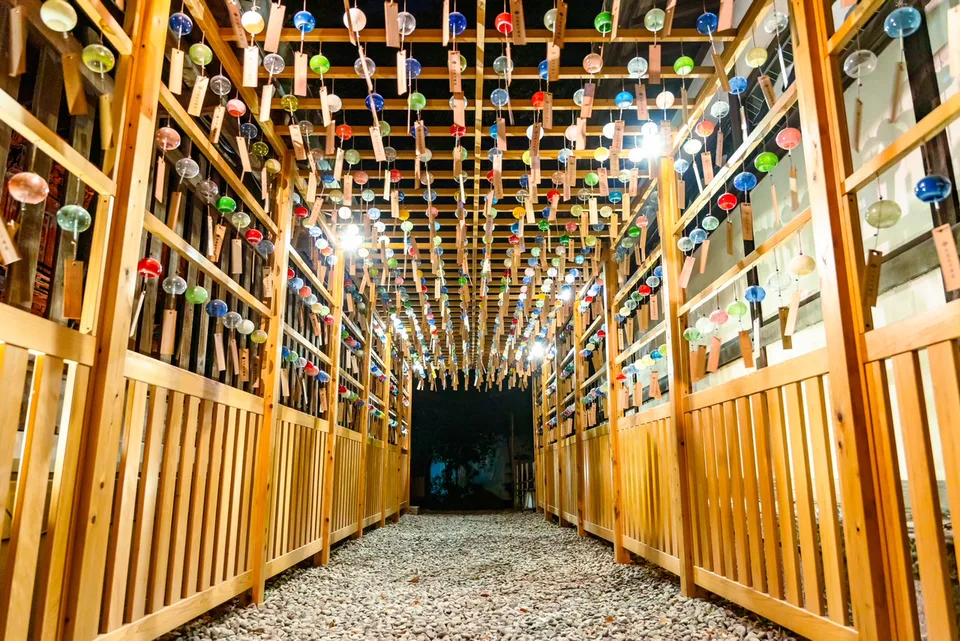
For most first-time visitors, the best version of Kawagoe Hikawa Shrine's 2026 Enmusubi Furin is not “day or night.” It is old town in daylight, then the shrine before dusk, with the option to stay for the evening lights. That sequence lets you see the handmade Edo wind chimes before and after the atmosphere changes without sacrificing Kawagoe's historic streets to a late arrival.
The event runs from June 27 to September 6, 2026, 09:00–20:00. The shrine says the lights come on from the evening; it does not publish a fixed “7 PM lights” start in the current event overview. Treat sunset, weather and same-day notices as the clock. Shrine-service hours for amulets and omikuji also vary by day, so an after-dark visit is not equivalent to a full daytime shrine visit.
↔ Scroll table left or right
Your priority | Best window | What you gain | Main cost |
First Kawagoe visit | Old town → shrine before dusk | Historic streets in daylight plus both versions of the wind chimes | Later return to Tokyo |
Families / early dinner / low fatigue | Daytime | More predictable transport, food and shrine-service timing | No illuminated corridor |
Photography / atmosphere | Late afternoon through evening | Glass colour, twilight and illumination in one visit | More waiting and a later trip home |
Only the lights matter | Evening | Shortest event-focused visit | Old-town shops and some shrine services may no longer fit |
Strong wind / typhoon risk | Do not lock the evening | You keep the trip flexible | Lighting and wind-chime displays can be altered or suspended |
Dusk wins because it buys two versions of the same event
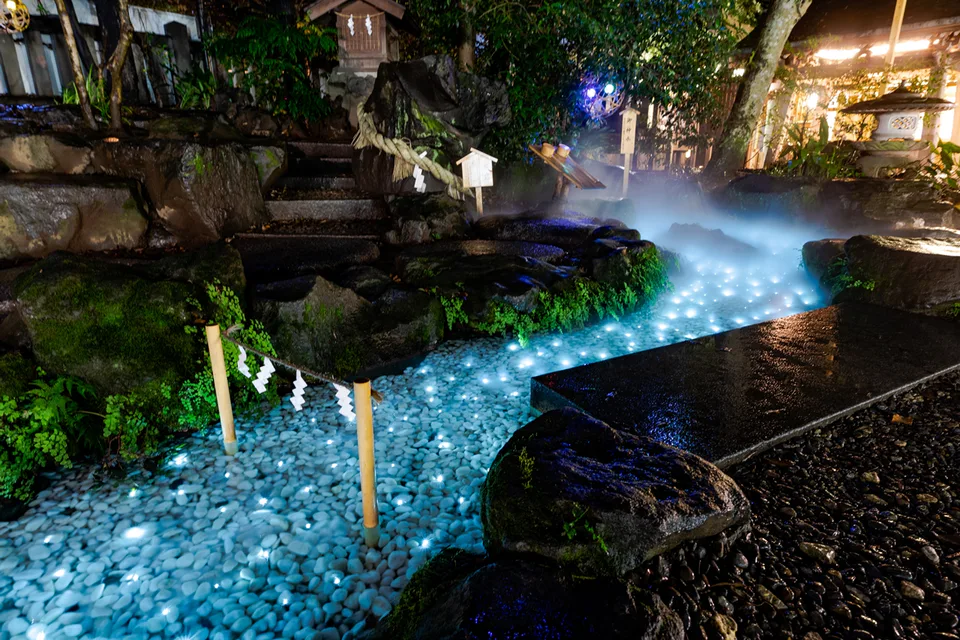
In daylight, the value is detail: colour differences in the hand-made glass, wish strips and the shrine setting. In the evening, the wind-chime corridor and stream area shift toward light and shadow. If both matter, arriving before dusk is more efficient than choosing one extreme and wondering what the other looked like.
This is also why there is no need to arrive at the shrine at 09:00 unless the shrine itself is the main purpose. Kawagoe's warehouse streets, Toki no Kane and Kashiya Yokocho are more dependent on daytime business hours. The shrine's 20:00 event close gives you a later window than much of the old-town sightseeing day.
The real time cost is not the shrine visit; it is protecting the evening return
Hikawa Shrine sits north of Kawagoe's main historic core. Official access lists buses from both Kawagoe Station and Hon-Kawagoe Station, including services that stop directly at the shrine or at Kita-machi followed by a short walk. That makes a directional route more sensible than repeatedly returning to the station between sights.
Use this order on a full day: station → old town → Hikawa Shrine → station → Tokyo. Once you reach the shrine, your next fixed edge is the bus-and-rail journey home. Do not assume a tourist loop bus will serve the exact late-evening journey you need; check the current regular bus departure that gets you back to your chosen station with margin.
↔ Scroll table left or right
Time in Kawagoe | Route shape | What to cut |
3–4 hours | Old-town core + daytime shrine | Waiting for full darkness |
5–7 hours | Old town + shrine before dusk + optional lights | Extra museums if they push the shrine too late |
Evening-only | Station → shrine → station | Trying to recreate a full Kawagoe day after shops close |
Do shrine services before you optimise the photographs
The event itself runs until 20:00, but the official overview warns that hours for amulets, omikuji and other shrine services vary by weekday and calendar day. That distinction matters if a limited-period amulet, goshuin or fortune is part of your reason for going.
ValueNavi rule: if you want a shrine service, complete it when you arrive; treat the later light-up as the optional second session. Do not spend the best service window photographing the corridor and then discover that the item you came for is no longer being issued.
The official event site also lists wooden wish strips for the wind chimes at ¥300 (about US$1.90 at the August 25 exchange rate). That is a small purchase, but it is another reason to use the shrine-service window rather than treating 20:00 as the deadline for everything.
Weather is a hard boundary, not a photography preference
Wind chimes are unusually exposed to weather. The shrine's own 2026 notices show why: on August 10 it added protective netting because of an approaching typhoon, and on August 11 it closed the shrine office at 17:00 and suspended Enmusubi Furin, the evening illumination and the glowing-stream presentation. The nominal 20:00 event time did not override safety operations.
That gives this event a clearer weather rule than an ordinary urban night walk. If strong wind or a typhoon is forecast, check the shrine's news page on the day and keep the evening swappable. A weather app showing “light rain” is less useful than the organiser's actual operating notice.
Daytime is the stronger family version
For young children, older travellers or anyone already tired from summer heat, daylight is usually the better trade. You can preserve the old town, use more food and transport options, and return to Tokyo before the trip becomes an endurance test. Missing the illumination is a real sacrifice, but it is smaller than turning the entire day into a late, overheated return.
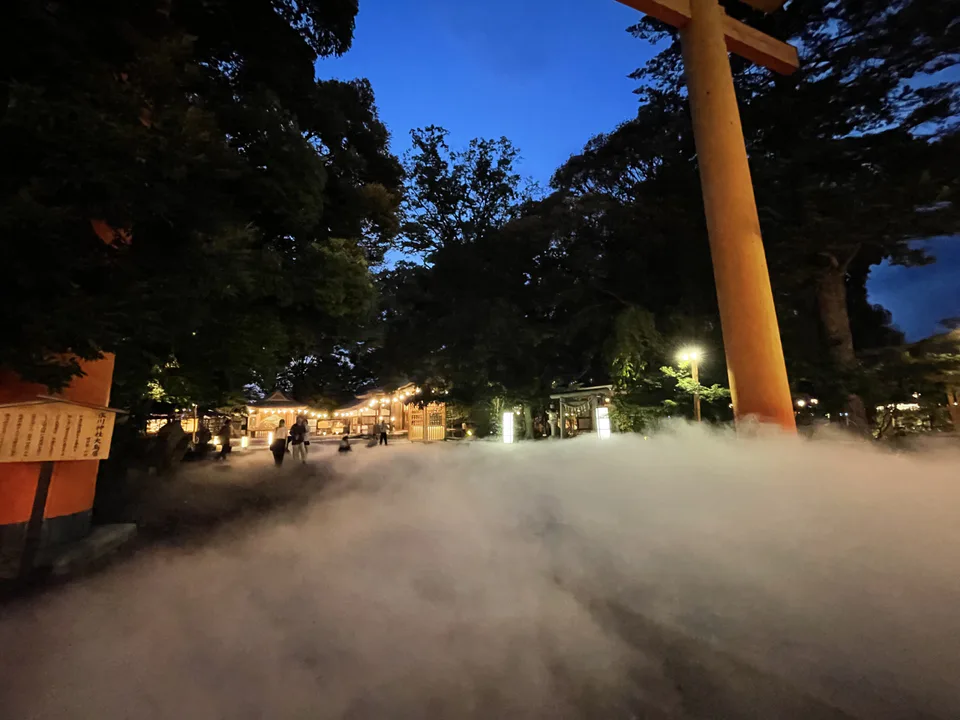
If the family still wants some evening atmosphere, shorten the old-town wander and reach the shrine in late afternoon. The goal is not to “get your money's worth”—the event itself is not a high-priced timed attraction. The goal is to preserve enough energy that the final hour is enjoyable.
Do not change Tokyo hotels for one Kawagoe evening
A west-side Tokyo base can make Kawagoe feel easier, but one day trip should not control a multi-night Tokyo stay. Compare Shinjuku vs Shibuya and Tokyo Station vs Shinjuku using the rest of the itinerary, airport and Shinkansen days.
The useful question is simpler: after a 20:00 event finish, are you comfortable with the bus-to-station transfer and the rail journey back to your existing hotel? If yes, keep the hotel. If no, choose a daytime Kawagoe visit rather than moving accommodation for one illumination.
Three versions I would actually use
First visit, full day
Arrive in the late morning, use daylight for Ichibangai, Toki no Kane and Kashiya Yokocho, then continue north to Hikawa Shrine in late afternoon. Complete any shrine services first, see the wind chimes in daylight, and stay only as long as the evening light is worth the later return.
Family / heat-sensitive day
Start earlier, shorten the old town before fatigue builds, visit the shrine in daylight and return to Tokyo for dinner. The event still works even without the illuminated version.
Photography-first evening
Arrive at the shrine before dusk rather than after dark. This gives you daylight colour, transition light and the illuminated scene. Skip extra old-town stops if they threaten the return plan.
Final verdict
Choose late afternoon through dusk for the best overall first visit: old town first, shrine services on arrival, then stay for the lights if weather, energy and the return bus still work. Choose daytime when family comfort or an early Tokyo return matters more. Choose evening-only only when the illuminated shrine is the main product and you are willing to give up much of the daytime Kawagoe experience.
The recommendation reverses when weather becomes the hard constraint. The shrine has already shortened and suspended the 2026 event during typhoon conditions, so same-day official operations outrank any prebuilt itinerary.
Official sources
Kawagoe Hikawa Shrine — 2026 Enmusubi Furin dates, hours and access · Kawagoe Hikawa Shrine — wind-chime highlights and wish-strip information · Kawagoe Hikawa Shrine — same-day event notices and weather changes.
Checked August 26, 2026. The event is scheduled through September 6, 2026, but weather and shrine operations can change individual days.