
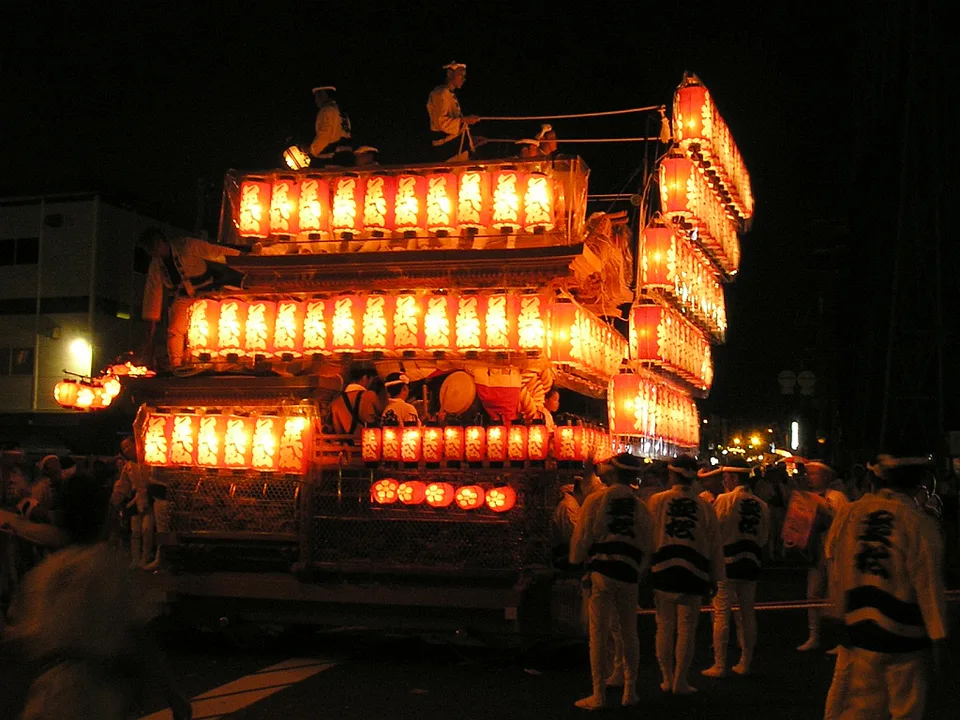
A Kishiwada Danjiri half-day itinerary works only when you choose which version of the festival you want. In 2026, the September yoimiya runs September 19 from 06:00 to 22:00 and honmiya runs September 20 from 09:00 to 22:00, with trial pulls on September 6 and 18 from 14:00 to 16:00. Daylight is for speed, sharp turns and team coordination; evening is for lanterns, carved detail and a shorter, more flexible visit.
Choose the festival day first with Yoimiya vs Honmiya, then use the Kishiwada viewing-area guide to pick a legal place where you can actually leave after the float passes.
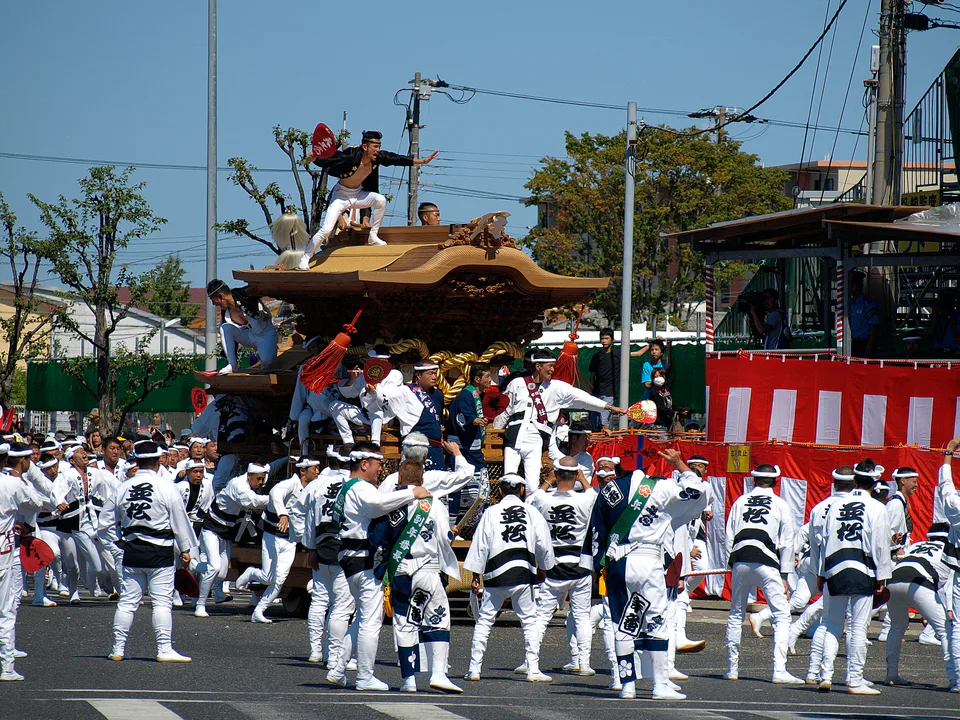
Daylight is the stronger first visit when movement is the reason you came
September and October do not use the same festival map
Kishiwada 2026 is not one single September event map. September 19 Yoimiya runs 06:00–22:00 and September 20 Honmiya 09:00–22:00 in the Kishiwada and Haruki districts. October moves to Higashi-Kishiwada, Minami-Somori, Yagi, Yamanao, Yamanao-Minami and Yamataki. The published baseline is an October 4 test run from 13:00–17:00, October 10 Yoimiya from 06:00–22:00 and October 11 Honmiya from 07:00–22:00, with district variation. A September station, viewing and exit plan should not be copied into October.
If September is the target, choose the date with Yoimiya vs Honmiya. If you only have two to four hours, use the half-day itinerary; if the real decision is dawn, midday or lantern night, use the arrival-time guide. For legal viewing areas and the exit route, continue to the viewing and transport guide instead of opening a long footer list.
The signature experience is the float in motion, not the longest number of hours spent beside the route. A two- to four-hour daylight block lets you see the pullers, hear the teams and wait for one or two strong passages without turning the day into an endurance test. If arrival timing is still unclear, the morning–midday–lantern arrival guide is the next decision.
Travellers based in Osaka should also price the journey home. Where to Stay in Osaka for First-Time Visitors explains why a Namba-side base can be more convenient for this southern excursion than a hotel chosen only for JR day trips. The Namba vs Umeda comparison makes that trade-off explicit.
Evening is a different product, not a weaker version of daytime
After dark, lanterns shift attention toward the float itself: carving, roof lines, neighbourhood identity and a slower visual rhythm. This suits travellers who arrive later, families who cannot stand all day, older companions and photographers who prefer controlled low-light detail to high-speed action.
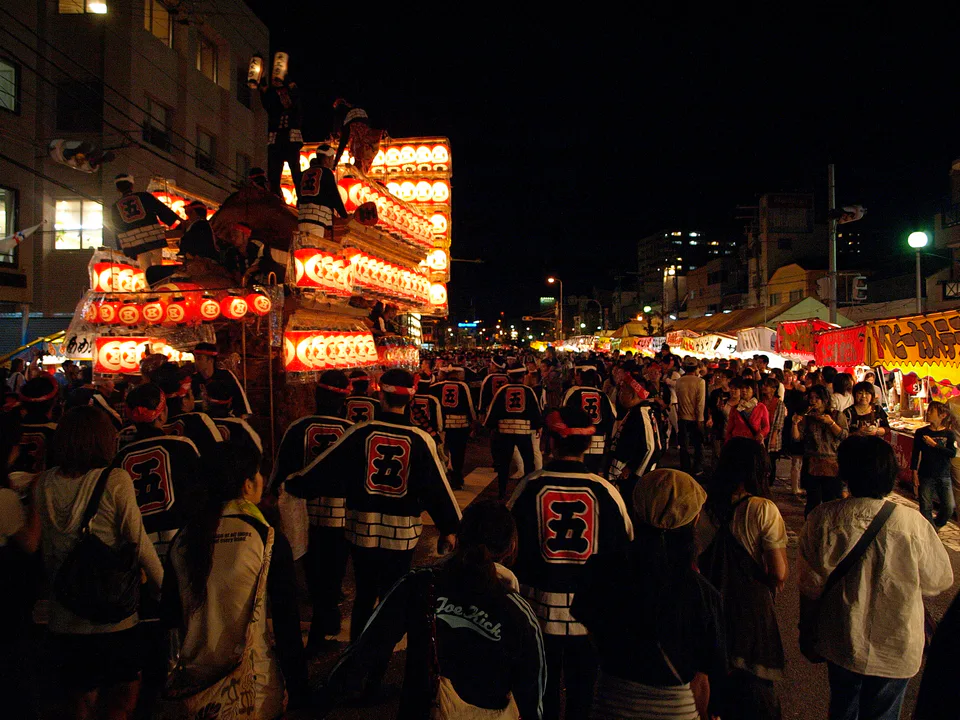
If you are deciding between a daytime event and a night-focused one elsewhere in Japan, compare Japan Summer Festivals Compared. For another city festival where arrival time changes the value of the visit, the Asakusa Samba Carnival guide is a useful comparison.
Pair this with
If Kishiwada is important enough to shape the hotel plan, pair this half-day decision with where to stay for the Danjiri Festival and the broader Kyoto vs Osaka base comparison. The goal is to avoid spending the best festival hours moving luggage or crossing Kansai unnecessarily.
Families and older travellers should choose the exit before the viewpoint
Keep the target to one or two street sections with an obvious route back toward Kishiwada Station. One complete passage and a clean exit usually beat chasing three corners. The same exit-first logic appears in the Koenji Awa Odori exit guide and the Akita Kanto early-exit guide.
Rain and luggage need a compact Plan B
Danjiri operations can change for weather and safety, so recheck Kishiwada City before leaving. If several outdoor days in the trip are exposed, use the Japan rainy-day backup guide rather than chasing an outdated route. On a hotel-change day, solve large bags with the Japan luggage-forwarding guide before entering the controlled streets.
Do not let the festival overload the whole Japan itinerary
If this is a first trip, test the festival against the 10-, 12- or 14-day Japan itinerary and How to Plan a Trip to Japan. A strong half-day should replace weaker sightseeing, not sit on top of an already full Kansai day.
For another question of whether to protect one peak scene or stay for the entire event, revisit the Koenji exit decision or the Sapporo Summer Festival late-arrival guide.
Final choice
Choose daylight when speed, sharp turns and team coordination are the image you came for. Choose evening when lanterns, carving detail and a flexible exit matter more. A successful half-day is not the one that sees the most; it is the one where the festival scene, stamina and train home all fit together.
References
Source note: 2026 September dates and operating hours were rechecked against Kishiwada City guidance on August 16, 2026; road controls and same-day operating changes should still be reconfirmed before travel.