
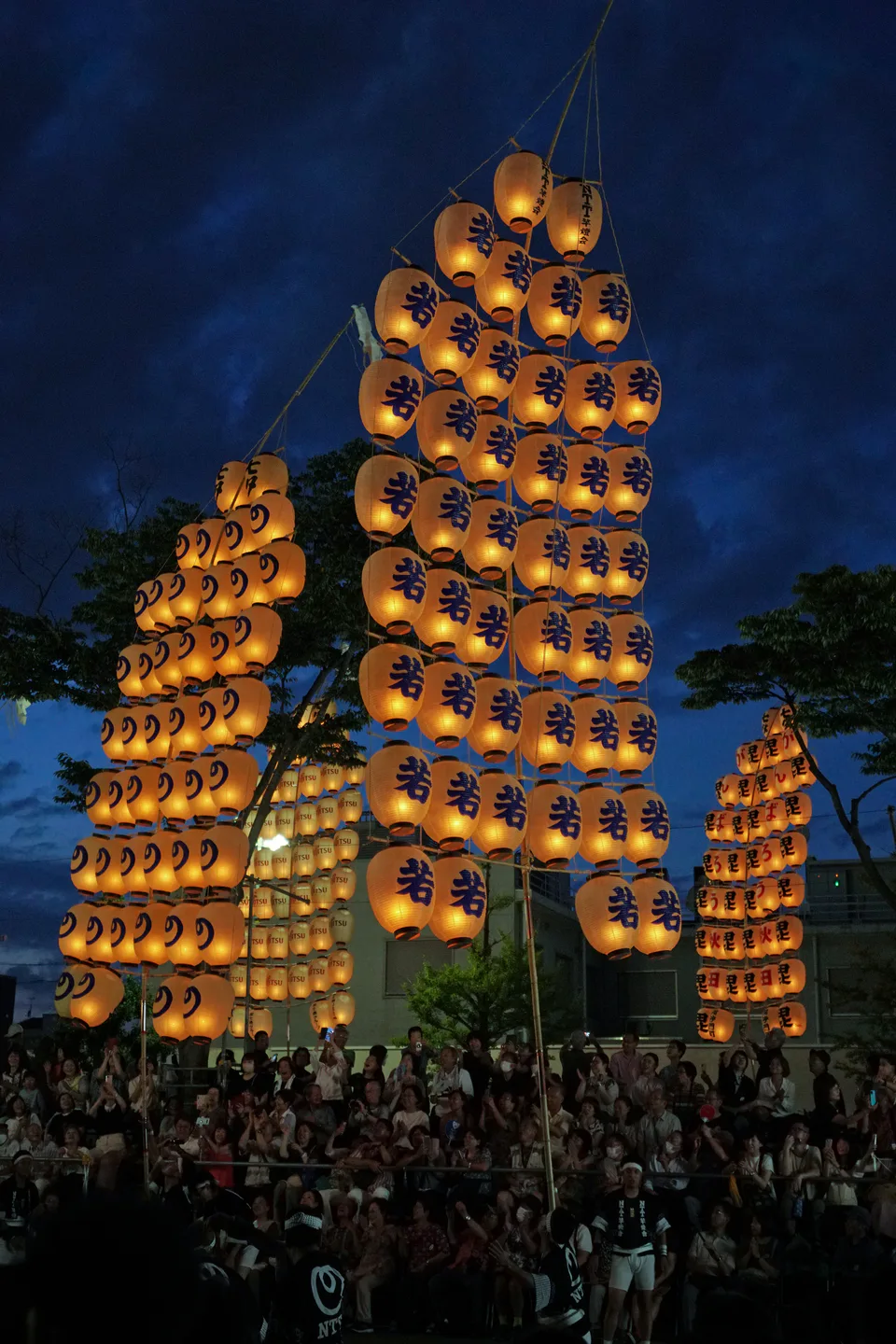
The 2026 Akita Kanto Festival has finished, but its timetable is still a useful model for the early-exit decision. On August 3 and 6, the formal performance began at 19:10, Fureai Kanto followed at 20:25, a drone show was scheduled from 20:35, lantern-pole withdrawal followed at 20:50 and the programme ended at 21:00. On August 4 and 5, Fureai Kanto began later and there was no listed drone show. Leaving around 20:25 and staying to the finale were therefore genuinely different products.
Use the complete Akita Kanto guide for the wider event, and compare reserved seats vs free viewing before treating exit time as an isolated decision. A seated spectator, a free-viewing family and a photographer can all reach 20:25 with very different levels of fatigue.
The 30-second answer: leave when the formal show was your goal
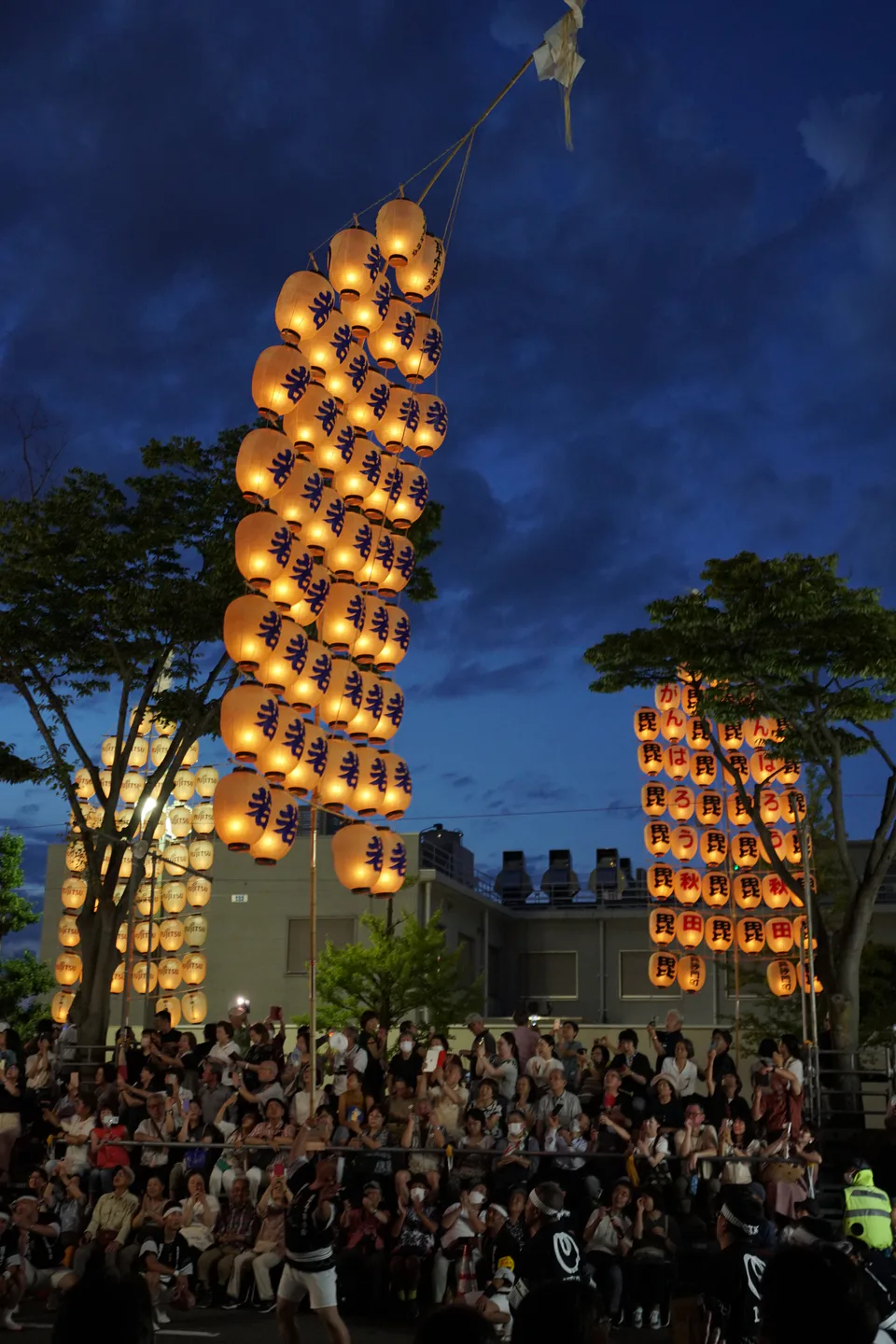
Leave around the start of Fureai Kanto when the formal avenue performance was the main reason for coming, the group is already tired or the next transport connection matters. Stay when close interaction with performers, ground-level photography or the August 3/6 drone show was a central part of the trip. This is not a question of whether the last thirty-five minutes are objectively better; it is a question of what they cost the rest of the evening and the next morning.
Families should compare that cost with the Aomori Nebuta with kids guide. Travellers choosing among several festival nights should use Japan Summer Festivals Compared to decide where a full finale deserves to be protected instead of assuming every late section must be collected.
What you had already seen by about 20:25
By the start of Fureai Kanto, visitors had already seen the main avenue performance, music, balancing sequences and the visual effect of the lantern poles filling Kanto Odori. An early exit therefore did not mean missing the whole festival. It meant giving up the post-performance phase. For a first-time visitor who mainly wanted the iconic night scene, that can be a rational trade. For a repeat visitor or photographer who wanted to move closer, the later section had much more value.
Staying late bought access, not another repeat performance
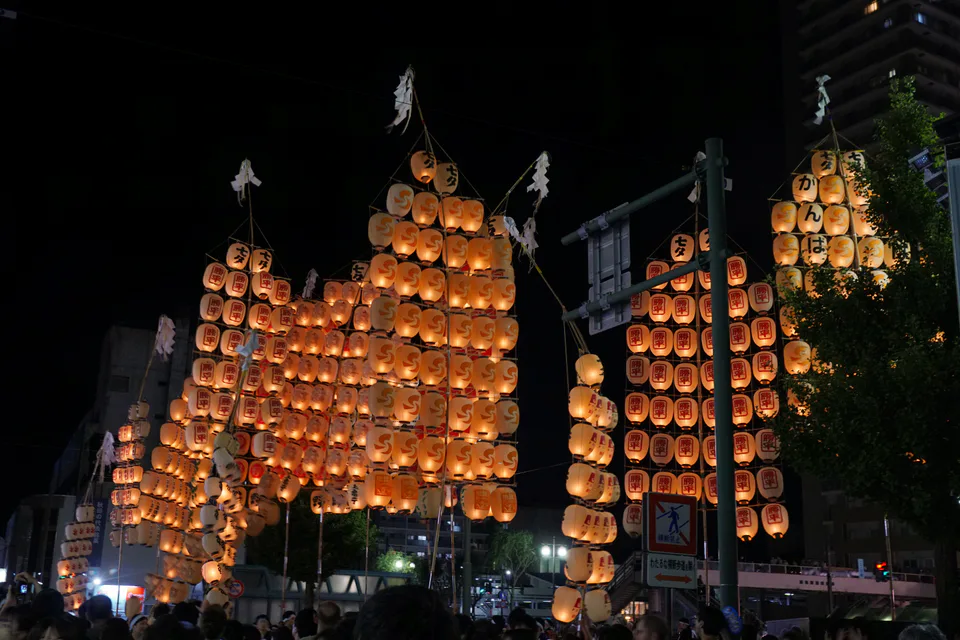
Fureai Kanto changed the experience from watching to moving among performers and poles. It favoured first-time visitors who wanted to see the equipment close up and photographers who had already made the wide crowd images. The trade-off was less predictable movement. Anyone with reduced mobility, a child who was already fading or a group that separates easily had a stronger reason to leave before the crowd reorganised.
The same logic appears in the Koenji Awa Odori exit plan and the Kishiwada Danjiri arrival-time guide: the best final hour depends on what you are still trying to buy with your energy.
Choose your side of the avenue with the exit in mind
An early-exit plan should begin before the show. If the hotel or station lies in one direction, avoid settling in a viewing position that forces the group to cross the densest part of Kanto Odori after leaving. The goal is not to stand closest to the station at all costs; it is to reduce unnecessary backtracking once everyone is tired. A free-viewing group has more flexibility to choose that edge than a reserved-seat holder, which is one reason the seat decision and exit decision belong together.
If you need to collect bags before moving on, solve that earlier with the Japan luggage-forwarding guide or hotel storage. A 20:25 exit loses most of its advantage if the next step is dragging a large suitcase through the same festival streets.
Pair this with
Pair the exit decision with the Yamagata Hanagasa reserved-seat guide and the Yamagata Hanagasa late-arrival plan so hotel and rail timing stay coherent across Tohoku rather than optimising one festival in isolation.
One Akita night and two Akita nights create different answers
With only one Akita night, I would stay later when Kanto is the reason for visiting the city and the next morning is not fixed. You have one chance to see the formal performance and the post-show phase, so the extra thirty-five minutes can be proportionally valuable. With two nights, there is less reason to force everything into the first evening. One night can prioritise the full finish, while the other can be used for an earlier exit, a different viewing position or a quieter dinner.
If Akita is one stop inside a wider route, the one-week Tohoku summer festival itinerary shows why a second Akita night can sometimes be less valuable than protecting the following Aomori or Yamagata morning.
The next morning can be worth more than the finale
A 21:00 finish is easy when you sleep near the event and the next morning begins slowly. It is much more expensive when the group needs an early intercity train, a rental-car pickup or another festival queue. Count the time from the end of the show to actual sleep, not just the programme finish. A later dinner, shower, repacking and alarm time are part of the same decision. If the next event is already demanding, an early exit can buy a more useful morning than the finale buys at night.
For that reason, compare the Nishimonai Bon Odori arrival guide before scheduling another late night immediately after Akita. Different festivals reward different hours.
Weather can erase the value of the finale
The official FAQ notes that Kanto can be shortened depending on weather. A finale plan therefore never deserves a fragile last-train connection. If wind or rain threatens several outdoor nights, use the Japan rainy-day backup guide rather than protecting one event at the cost of the entire route.
Do not stack too many late festival nights
The Asakusa Samba Carnival guide shows how heat and standing time can be more important than the advertised finish. Four consecutive late events can turn daytime sightseeing into recovery. For a first Japan trip, check the 10-, 12- or 14-day itinerary and How to Plan a Trip to Japan before allowing festival extras to consume every morning.
When staying to 21:00 is clearly worth it
Stay when at least two of these are true: it is your only Kanto night; the hotel is easy to reach after 21:00; the group still has energy; Fureai Kanto is specifically important; or the August 3/6 drone show is part of what you came to see. The finale is also easier to justify when the next morning begins locally rather than with an early train. In that situation the later exit is not stealing useful time from another fixed commitment.
When 20:25 is the better decision
Leave around 20:25 when the formal performance was already enough, the group has children or older travellers, you need a train connection, the hotel is outside central Akita or another festival starts early the next day. An early exit also makes sense when weather is worsening or the crowd itself has become the least enjoyable part of the evening. The point is to leave while the choice is still deliberate, not ten minutes later after the group is already exhausted.
2026 verdict
Leaving at about 20:25 made sense when the formal street performance was the main goal and the group valued an easier exit. Staying made sense when Fureai Kanto, close photography or the August 3/6 drone show was central to the trip. Future editions must be rechecked instead of inheriting the 2026 timetable. For another paid-seat versus flexibility decision, compare the Yamaga Lantern Festival seat guide.
Where to Stay in Kamakura or Fujisawa: The Best Base for Two Nights, With Enoshima as the Wild Card
Early Flight or Late Arrival at KIX: Should You Move Hotels for the Last Night in Osaka?
Sapporo vs Chitose for the Last Night: Where to Stay in Hokkaido
Kawagoe Festival 2026: Stay for Hikkawase or Make It a Day Trip?
Where to Stay for the Saga Balloon Fiesta 2026: Saga, Tosu or Hakata
References
Akita Kanto Festival official site — 2026 night-performance timetable, reserved-seat information and weather FAQ. Rechecked August 16, 2026.