
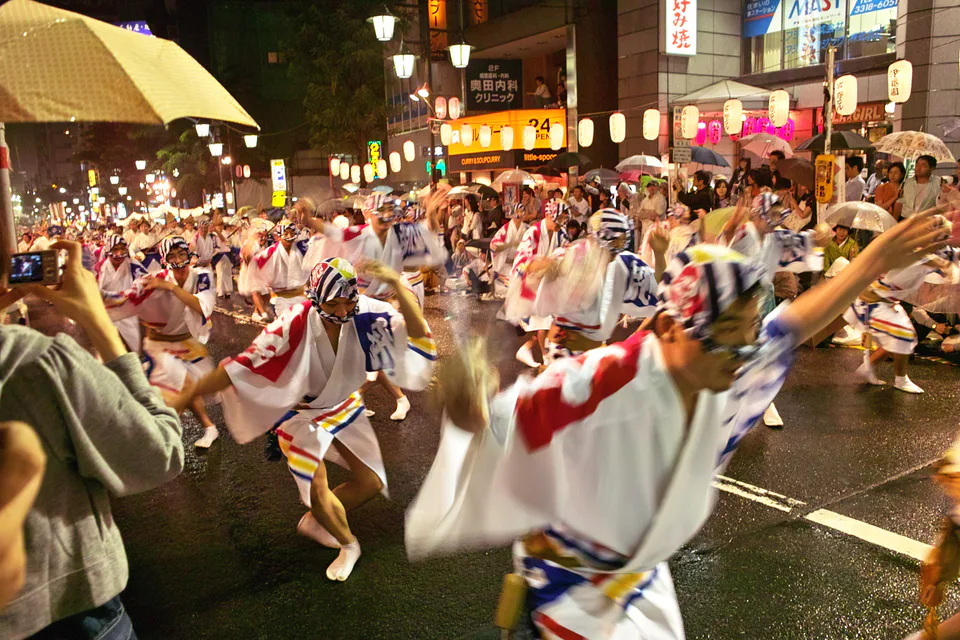
Koenji Awa Odori exit transport is a direction choice, not just a walking-time question. The 67th Tokyo Koenji Awa Odori is confirmed for August 29–30, 2026, with street dancing from 17:00 to 20:00 across eight performance areas and traffic controls from 16:10 to 20:30. The safest plan is to decide your final station before the last hour, then finish on the side of the festival that points toward that station.
Start with the main Koenji Awa Odori guide if you still need the viewing areas. If standing for three hours is the bigger problem, use the daytime stage plan instead of forcing the whole street programme.
JR Koenji or Shin-koenji: choose by the journey after the festival
JR Koenji is usually the cleaner exit for Nakano, Kichijoji, Mitaka and other westbound Chuo–Sobu trips. Shin-koenji is often more useful when you finish on the southern side and are heading toward Shinjuku or another Marunouchi Line stop. On festival weekend the JR Chuo Line rapid service does not stop at Koenji, so do not build the exit around a normal weekday assumption.
If your hotel decision is still open, compare Tokyo Station vs Shinjuku and the broader first-time Tokyo base guide. The best exit is the one that avoids an unnecessary cross-city transfer after 20:00.
Stay for the final dance or start moving around 19:40?
Stay to the final beat when this is your only Koenji night and the complete atmosphere matters more than a quick station entry. Begin edging toward the correct side around 19:40 when children, older travellers, limited stamina or a fixed onward connection matters more. The twenty-minute head start does not promise an empty station; it reduces the chance that you end the festival on the wrong side of the crowd.
A similar trade-off appears in the Akita Kanto early-exit plan and the Kishiwada Danjiri arrival-time guide: the event clock matters less than the point where your group still has energy to leave cleanly.
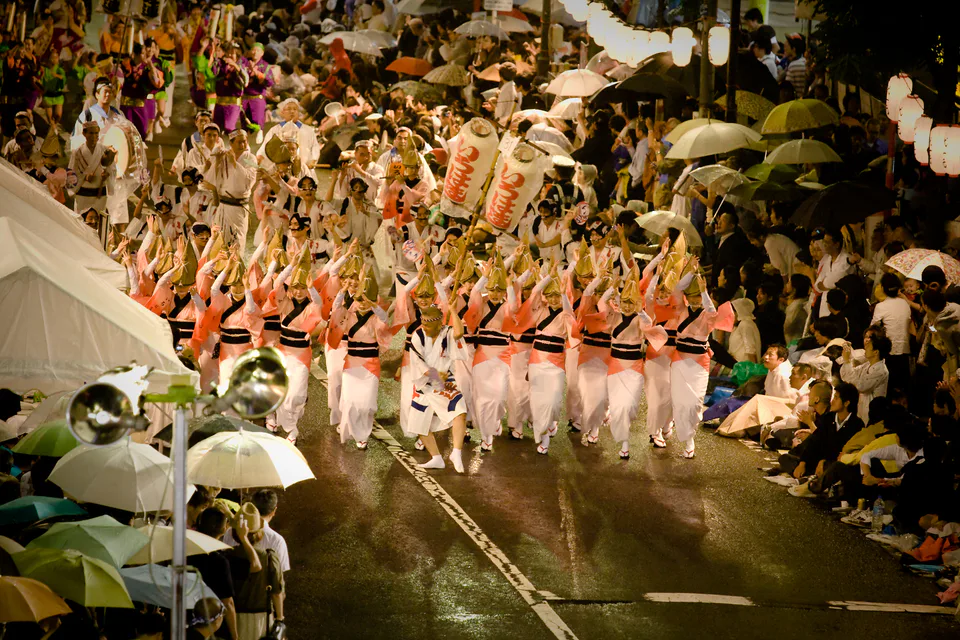
Do not cross the whole festival after 20:00
The eight performance areas sit across different shopping streets and roads. Finishing north and then deciding to use Shin-koenji, or finishing south and pushing back to JR Koenji, creates the hardest kind of movement at the busiest time. Earlier in the evening you can roam; during the last hour each move should bring you closer to the exit you already chose.
Pair this with
If Koenji is one event inside a larger summer trip, compare it with Japan Summer Festivals Compared and the Asakusa Samba Carnival arrival plan. If you want a more structured paid-seat street event, the Super Yosakoi Omotesando plan gives a useful contrast.
Families, luggage and rain need an earlier trigger
Large suitcases belong at the hotel, a staffed storage point or a suitable locker before entering the core streets. If this festival sits on a hotel-change day, solve the bags first with the Japan luggage-forwarding guide instead of dragging wheeled luggage through traffic controls.
Rain concentrates people under arcades and near station entrances. Keep the Tokyo rainy-day indoor itinerary as the city-level fallback and the Japan rainy-day backup guide when several outdoor days are at risk. On a wet evening, move earlier rather than trying to preserve a dry-weather exit time.
Do not let one festival distort the whole Tokyo stay
A late festival night is easier to absorb when the surrounding itinerary has slack. Use How Many Days in Tokyo to protect a recovery morning. For a wider first trip, the 10-, 12- or 14-day Japan itinerary and How to Plan a Trip to Japan are better places to decide what should be cut rather than stacking another late event.
If you are comparing the visual payoff of day and night rather than only transport, the Kishiwada Danjiri half-day guide and Kishiwada Yoimiya vs Honmiya comparison show how the same festival can reward different arrival windows.
Final exit plan
Use JR Koenji when your final viewing area and onward Chuo–Sobu trip already point north or west. Use Shin-koenji when you finish on the south side and the Marunouchi Line is genuinely useful. Leave around 19:40 when stamina or a hard connection matters; otherwise accept the 20:00 surge and wait locally if necessary. Recheck live railway information before leaving the final performance area.
Sapporo Shopping Hotels: Stay Where You Can Drop Your Bags, Not Just Where the Shops Are
Japan August Weather: The Heat Changes Your Itinerary More Than Your Packing List
Kishiwada Danjiri October 2026: Districts, Transport and How to Plan the Day
Hakone Open-Air Museum 2026: 4:30 Is Last Entry, Not the Time You Should Arrive
Sapporo Summer Festival After 8 PM: Is Odori Park Still Worth the Walk?
References
Tokyo Koenji Awa Odori Association — 2026 event overview, access map and traffic-control notice. Details rechecked August 16, 2026.