
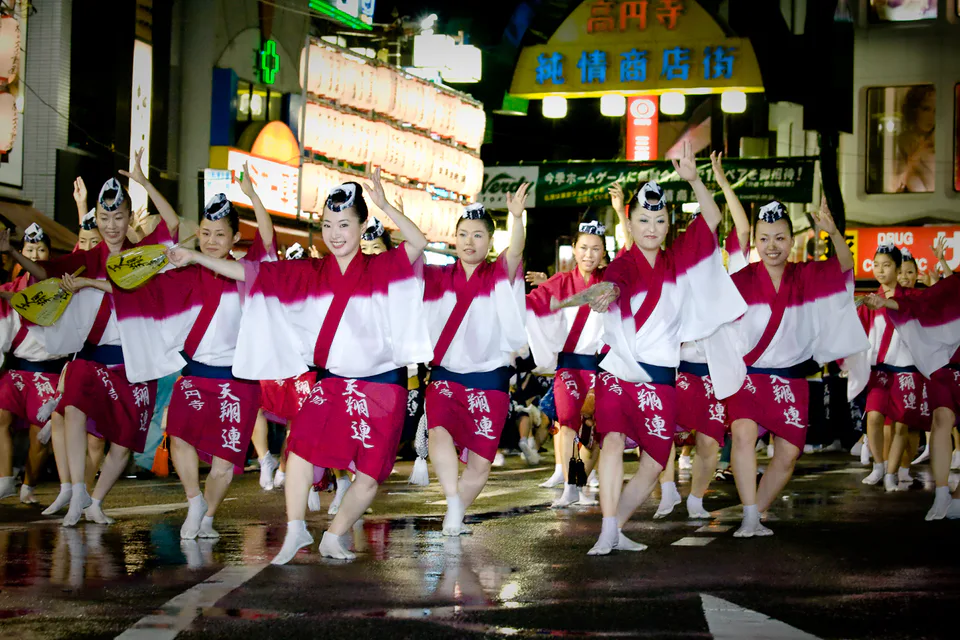
Tokyo Koenji Awa Odori is this weekend: August 29–30, 2026. The street festival runs from 17:00 to 20:00, but travellers who cannot comfortably stand in a dense crowd for three hours have a much cleaner option: Za-Koenji runs fully reserved indoor performances at 11:30 and 14:00 on both days for ¥2,500 (about US$16) per show.
The important booking detail is timing. The theatre says tickets are advance-only, all seats are assigned and there are no same-day tickets. Sales are scheduled to continue until the day before each performance unless sold out. The special wheelchair-space reservation deadline, however, was August 21 at 18:00 and has already passed. Do not read “accessible theatre” as proof that a last-minute wheelchair space can still be reserved.
If you still need the overall festival map, start with the main Koenji Awa Odori guide. If the bigger problem is getting home after the street finale, use the Koenji exit guide.
Daytime stage or street festival in 30 seconds
↔ Scroll table left or right
Your constraint | Best plan | Trade-off |
Cannot stand for three hours | Za-Koenji stage | Assigned indoor seat, but less street immersion |
Want both, with the least rushed transition | 14:00 stage + short street block after 17:00 | Long overall day; protect the break between shows |
Photography and close street energy matter most | Street-first | Free to watch, but sightlines, heat and standing are less predictable |
Wheelchair space needed and not already reserved | Contact Za-Koenji before buying anything | The published wheelchair-space deadline passed Aug 21 and the dedicated capacity was only two spaces |
You are deciding at the last minute on festival day | Street programme | The theatre explicitly says no same-day tickets |
The ¥2,500 stage ticket buys four things the street cannot guarantee
One Za-Koenji performance costs ¥2,500 (about US$16). The value is not that indoor Awa Odori is “better.” It is that one ticket converts four uncertain variables into fixed ones:
seat: fully reserved rather than standing behind an unknown crowd depth;
start time: 11:30 or 14:00;
weather: indoor rather than exposed to late-August heat or rain;
duration: a contained performance rather than a three-hour street window you feel obliged to endure.
That makes the stage disproportionately useful for older travellers, heat-sensitive visitors, people with chronic standing limits, families who need a predictable break structure and anyone already carrying fatigue from several long Tokyo days.
It is weaker for a photographer whose main objective is the moving street procession. The theatre allows still photography only from your own seat under specific rules; video, recording, flash and tripods are prohibited. You are buying a controlled performance, not roaming access.
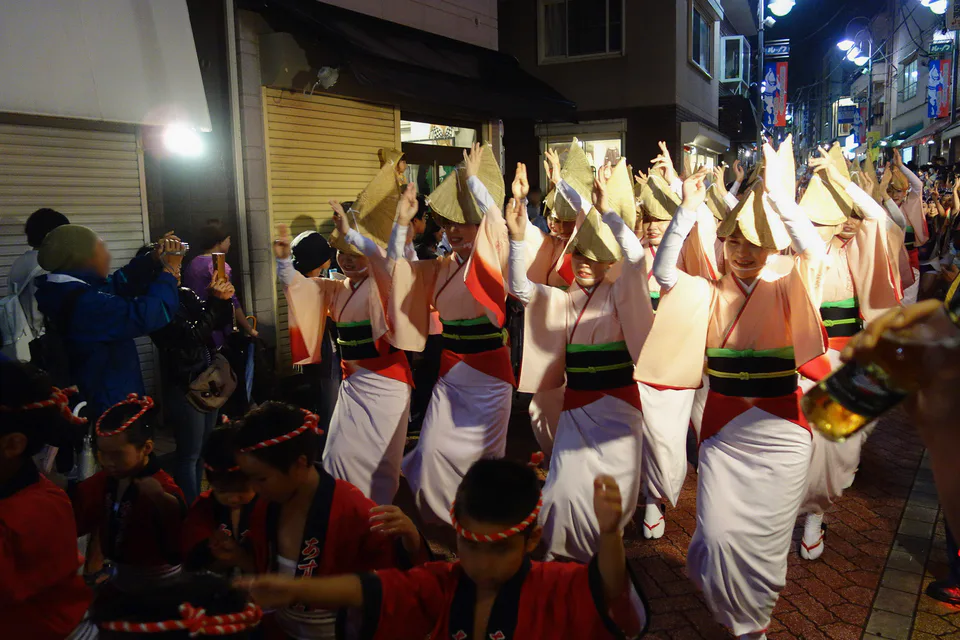
11:30 or 14:00? The second show is the better bridge to the street
↔ Scroll table left or right
Show | Best for | Hidden cost |
11:30 | Stage-only visitor, family, early dinner plan | Large afternoon gap before the 17:00 street start can turn into needless waiting |
14:00 | Stage + one short street block | You still need a genuine rest, meal and toilet stop before the roads fill |
The 14:00 show is the cleanest combined plan because it reduces dead time without forcing you directly from theatre seats into the street crowd. The official event traffic restrictions begin at 16:10, while dancing starts at 17:00. Use the interval to eat, hydrate, use the toilet and decide your final station—not to defend a curb for another two hours.
The 11:30 show is better when the theatre itself is enough. A visitor with limited stamina can see a complete performance, have lunch and leave Koenji before the street core tightens. That is a successful festival visit, not an incomplete one.
The wheelchair deadline has passed; the disability discount is a separate rule
The official theatre page separates two things that are easy to blur together. A disability certificate gives a ¥500 discount, so the ¥2,500 ticket becomes ¥2,000 (about US$13) under the stated procedure. One assistant can be admitted free when the required arrangement is made. Separately, the theatre offered dedicated spaces where a visitor could remain in a wheelchair.
Those dedicated wheelchair spaces were limited to a maximum of two and had to be requested by August 21 at 18:00. That deadline has passed. If you need wheelchair access now, contact the Za-Koenji box office before purchasing a standard seat and explain whether you can transfer to a theatre chair. Do not improvise from the wording of the discount alone.
This is a useful general accessibility rule: ticket discount, companion policy and physical wheelchair space are three different products. Confirm all three when they matter.
Stage seat vs street special seat: do not compare only the word “seated”
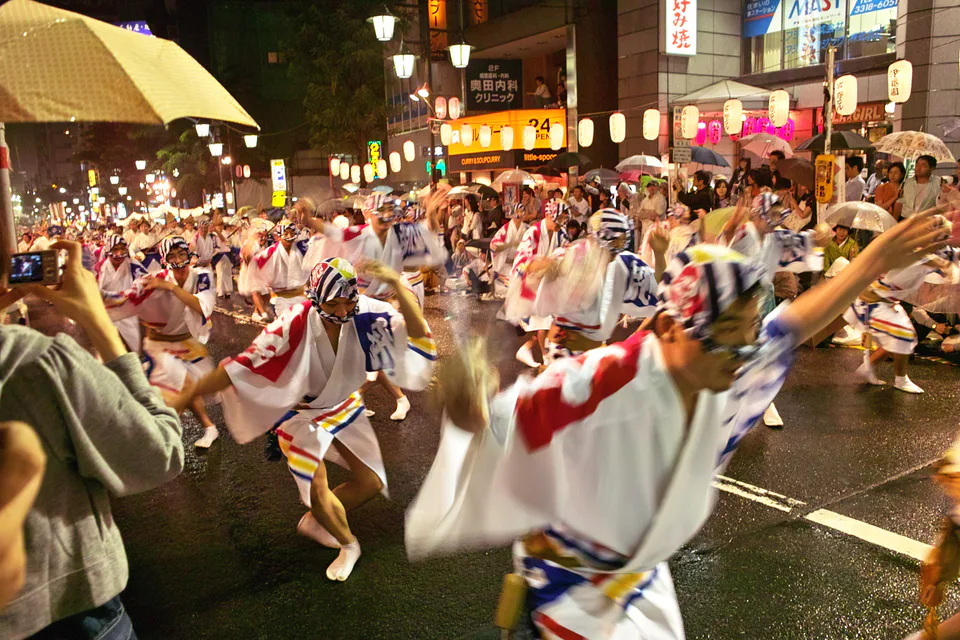
The street festival also has special viewing seats tied to sponsorship donations. The 2026 official site lists ¥15,000 (about US$94) for the Central performance area and ¥10,000 (about US$63) for selected other areas, subject to inventory. Those are not ordinary refundable ticket products: the association describes the payment as sponsorship, and says it is not refunded if the event is cancelled by rain or other circumstances.
For a traveller whose only requirement is “I need to sit and see Awa Odori,” the ¥2,500 theatre show is a much lower-commitment solution. Pay the street-seat premium only when outdoor street atmosphere itself is the reason for spending more.
The street becomes optional after the stage—and that is the point
After a full indoor performance, you do not need to prove anything by staying outdoors from 17:00 to 20:00. A strong low-stress plan is:
14:00 reserved stage performance;
proper meal and rest;
45–90 minutes at one street performance area;
leave before fatigue turns the station exit into the hardest part of the day.
That structure works especially well for families and older companions because the street is now a bonus. If energy, weather or crowd density is poor at 17:00, you already had a complete Awa Odori experience indoors.
JR Koenji and Shin-koenji are not interchangeable exits
The street festival spans the area between JR Koenji and the Marunouchi Line around Shin-koenji. Decide the final station before entering the last outdoor block. The official festival runs across multiple performance areas, and traffic restrictions cover a broad zone from 16:10 to 20:30.
On the festival weekend, JR Chuo Line rapid trains do not stop at Koenji; use the local Chuo-Sobu service if leaving from JR Koenji. Shin-koenji can be the cleaner finish when the final viewing area is on the south side and the Marunouchi Line already points toward your hotel.
Do not cross the whole event after 20:00 simply because a route planner says the other station is slightly faster in normal conditions. The dedicated exit guide goes deeper into that trade-off.
Rain and heat make the stage more valuable, not less
The theatre is not merely a backup for bad weather. On a very hot day, it can be the anchor that prevents the festival from becoming an endurance test. On a wet day, the stage guarantees the core dance experience while the street portion can shrink or disappear from your plan without wasting the whole trip.
Keep the Tokyo rainy-day indoor itinerary available if the weather affects the entire day, and the Japan rainy-day backup guide if several outdoor events are competing for the same trip.
Final verdict
Choose the Za-Koenji daytime stage when sitting, shade and a predictable performance matter more than three hours of free street access. The 14:00 show is the best bridge into a short 17:00 street session; the 11:30 show is better when you want the stage to be the whole event.
As of August 26, the booking rules matter more than another venue recommendation: the ¥2,500 (~US$16) shows are advance-only with no same-day tickets, and general sales are scheduled to close the day before each performance unless sold out. The dedicated wheelchair-space deadline has already passed, so anyone needing that setup should contact the theatre rather than assuming a standard reserved seat solves the accessibility requirement.
Owara Kaze no Bon 2026: September 1, 2 or 3? Choose by usable hours, stage overlap and return risk
Edogawa Fireworks 2026: The Best Free Side to Watch, When to Arrive and How to Get Out
Katakai Festival 2026: September 11 or 12? Daytime Fireworks, Seats and the Nagaoka Exit
Nada no Kenka Matsuri 2026: If You Only Go One Day, Choose Oct 15
JR Kyushu Rail Pass 2026: Is the Northern Kyushu Pass Worth It?