
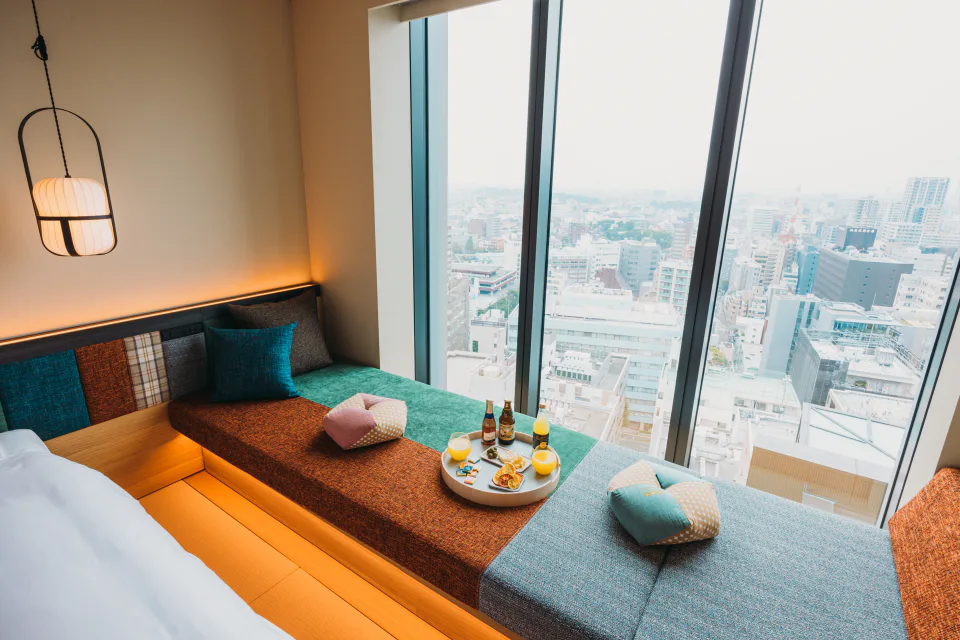
OMO5 Tokyo Gotanda is a strong base when your Tokyo itinerary repeatedly points south—Shinagawa, Haneda, Yokohama or an early Shinkansen—and when at least some evenings can end in Gotanda instead of forcing another cross-city return. It is not a station-connected hotel: the official walk from Gotanda Station is about six minutes. The premium buys high-floor rooms, OMO Base, a 60-metre-high garden and useful group-room options, not the shortest possible last mile.
The most overlooked decision is airport access. From Haneda, Hoshino Resorts currently gives two valid routes: about 45 minutes by rail via Shinagawa and Gotanda, then the six-minute hotel walk; or about 50 minutes by airport limousine bus to Osaki, followed by one JR stop of roughly two minutes to Gotanda or about a 13-minute walk directly to the hotel. With two large suitcases, the nominally slower bus can be the more comfortable product because the luggage sits in the bus hold for most of the journey.
↔ Scroll table left or right
Your trip pattern | My call | Why |
2+ south-side mornings / transfers | Strong fit | Gotanda keeps Shinagawa and Haneda-oriented movement simple without moving the whole stay to Shinagawa |
Haneda + two large suitcases | Compare limousine bus via Osaki | A few extra minutes can remove rail-platform luggage handling |
2+ late Shinjuku/Shibuya nights | Recompare west Tokyo | The repeated return plus the six-minute final walk starts working against the base |
Family/group of 4–6 | OMO gets stronger | Larger room supply can avoid splitting the party into several conventional Tokyo rooms |
You only want a cheap Yamanote bed | Look elsewhere | You may be paying for high-floor public space and programming you will not use |
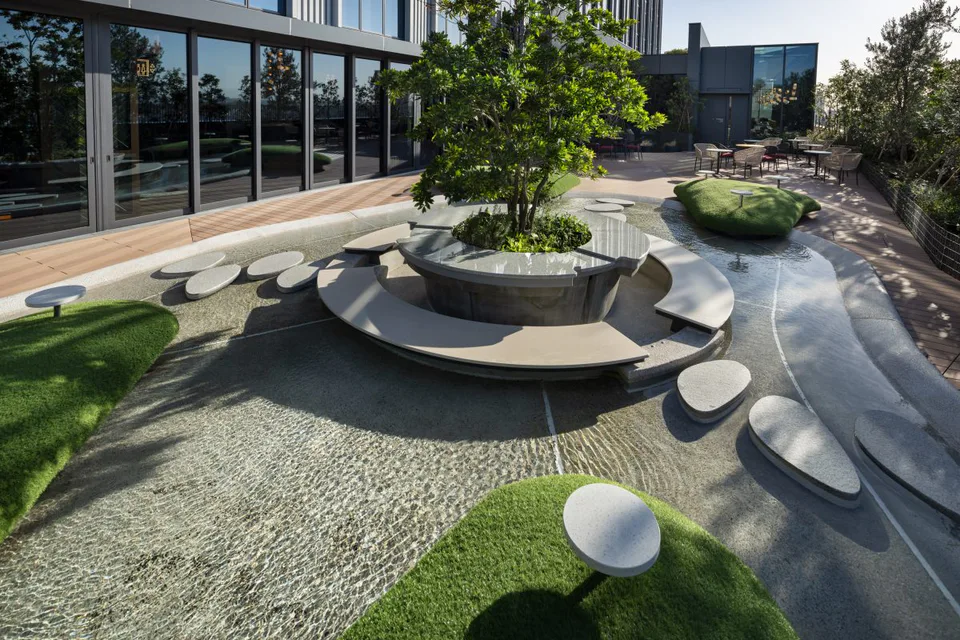
First choose Gotanda as a base; then decide whether OMO5 is worth the premium
Gotanda sits on the JR Yamanote Line with the Toei Asakusa Line and Tokyu Ikegami Line also available. Hoshino Resorts currently gives roughly six minutes by JR from Shinagawa to Gotanda and roughly seven from Shibuya, before the six-minute hotel walk.
That geography works when the same south-side anchors repeat. Two Shinagawa mornings, a Haneda transfer and one Yokohama day can make Gotanda operationally useful even if it is not the most famous Tokyo neighbourhood. The logic reverses when the emotional centre of the trip is late Shibuya and Shinjuku on several nights. A seven-minute train is still a train, and the final six-minute walk is still repeated after it.
If the base itself is not settled, use Where to Stay in Tokyo for First-Time Visitors before comparing OMO5 with other hotels.
Haneda rail vs limousine bus: luggage can reverse the “fastest route” answer
The official access page currently lists about 45 minutes from Haneda by train: Keikyu to Shinagawa, transfer to the Yamanote Line, then Gotanda and a six-minute walk. It also lists an airport limousine bus from Haneda to Osaki at about 50 minutes. From Osaki you can take one JR stop, roughly two minutes, to Gotanda or walk about 13 minutes directly to OMO5.
For a solo traveller with one carry-on, rail is the natural baseline. For two adults with two 28- or 29-inch suitcases, the bus deserves a serious comparison because the cases can stay in the luggage hold for the long segment. The trade-off is that Osaki is not the hotel door: you still need one short JR hop or a longer walk.
This is a classic ValueNavi hidden-cost problem. “45 minutes vs 50 minutes” is not the whole decision. Count the number of lifts, platforms and luggage hand-offs. The slower headline time can produce the easier arrival.
OMO5 is worth more when the hotel itself replaces another evening journey
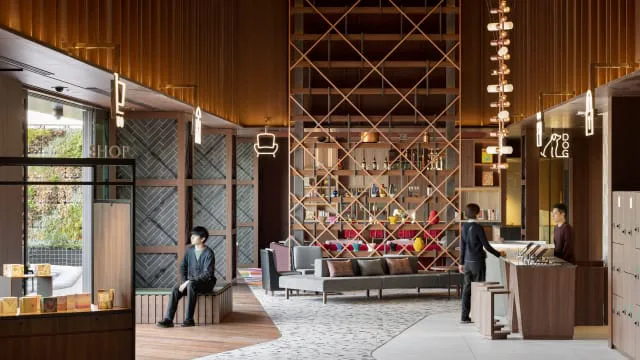
All 188 rooms sit on the upper floors, and the property is built around the high-floor OMO Base, garden and neighbourhood food layer. Those features only justify a premium if you actually use them.
A strong pattern is sightseeing → Gotanda dinner → OMO Base/garden → room. A weak pattern is 07:00 departure → 23:00 return every day, with every dinner in another district. In the second pattern, the high-floor environment is mostly decorative and a simpler Gotanda hotel may be better value.
Groups should compare rooms before comparing per-person price
Hoshino Resorts’ current property details give Deluxe Rooms capacity for four and a published size range of roughly 32.1–40.5 m². The 57.3 m² OMO House Suite accommodates six and adds a kitchen. This is a meaningful supply advantage in Tokyo, where groups can otherwise end up splitting across two small rooms.
But occupancy is not usable space. Four adults with four full-size cases can consume a 32 m² room very differently from two adults and two children. Check the exact room size, sleeping surfaces and bathroom layout for your date before celebrating a low per-person rate.
The red-team condition is price: if the room you actually need pushes OMO5 into the price range of a better-located alternative, reopen the base decision instead of assuming Gotanda must still win.
The city view is broad, not a guaranteed landmark product
The hotel markets its elevated cityscape, but do not infer a guaranteed Tokyo Tower or TOKYO SKYTREE view from a general high-floor room. If one specific landmark is the reason for paying more, confirm that the exact room category promises it. Otherwise value the high-floor environment as a broad city-view product.
Breakfast is useful when it fits the morning, not because it is “part of OMO”
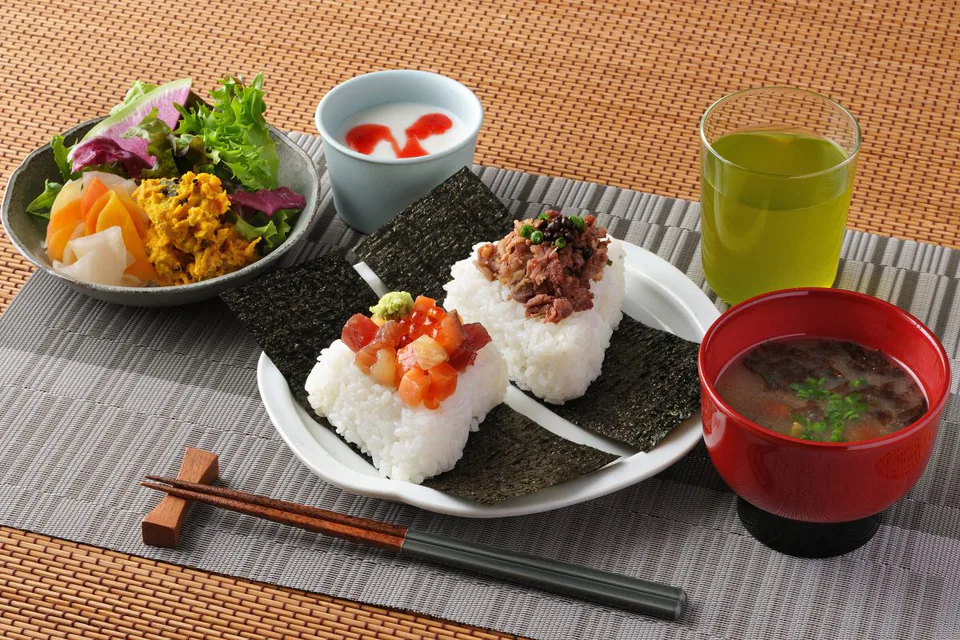
OMO Cafe & Bar currently serves breakfast from 07:00 to 10:00, with last order at 09:30. That works for a slow Tokyo morning or a family wanting breakfast solved in the building. It is weak on an early Shinkansen or airport morning. Compare room-only rates if two of your mornings start before breakfast becomes useful.
How many nights make sense?
One night: particularly good before or after Haneda/Shinagawa movement when Gotanda dinner also solves the evening.
Two to three nights: probably the cleanest use for a mixed Tokyo trip. You can use the south-side geometry without asking Gotanda to be your perfect base for every district.
Four to five nights: count anchors. If at least two mornings still point south and several evenings can end locally, keeping one room is valuable. If the itinerary has become repeated Shibuya/Shinjuku nights, the recommendation reverses.
Final verdict
OMO5 Tokyo Gotanda works best when both the neighbourhood and the hotel have jobs. Choose it for repeated south-Tokyo movement, a Haneda/Shinagawa-oriented stay, useful group-room supply and evenings you are happy to finish in Gotanda. For heavy luggage from Haneda, compare the official Osaki limousine-bus route instead of assuming the rail route wins because it is a few minutes faster on paper.
Reconsider when the six-minute station walk is a meaningful mobility cost, late west-Tokyo evenings dominate, or the room upgrade needed by your party removes the price advantage. Gotanda is not a universal “hidden best Tokyo area”; it is a very specific geometry that becomes excellent when your itinerary actually uses it.
Hilton Okinawa Chatan Resort Review: Are the Pool and 37m² Ocean-View Rooms Worth It?
40 Best Things to Do in Tokyo in 2026 — What’s Actually Worth Your Time by Area
Tokyo Disney Hotels vs Official and Partner Hotels: Which Is Worth It?
OMO7 Kochi Review: Is the Nightly Yosakoi Experience Worth It?


References
OMO5 Tokyo Gotanda — official access, including Haneda rail and limousine-bus routes · official hotel information. Checked August 25, 2026.