
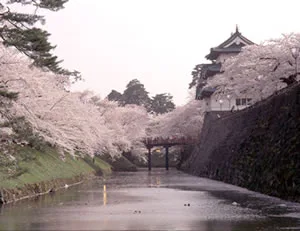
Hirosaki Castle is worth visiting in 2026, but not for the reason many first-time visitors expect. Its three-storey keep is an authentic Edo-period survivor, completed in 1810, yet the interior is now closed while the building is returned to its original stone base and prepared for major preservation and seismic work. The ¥320 admission charge does not buy entry to the keep. It buys access to the Honmaru and North Bailey — the core of a castle complex that still has the keep, three corner turrets, five historic gates, moats, baileys and bridges.
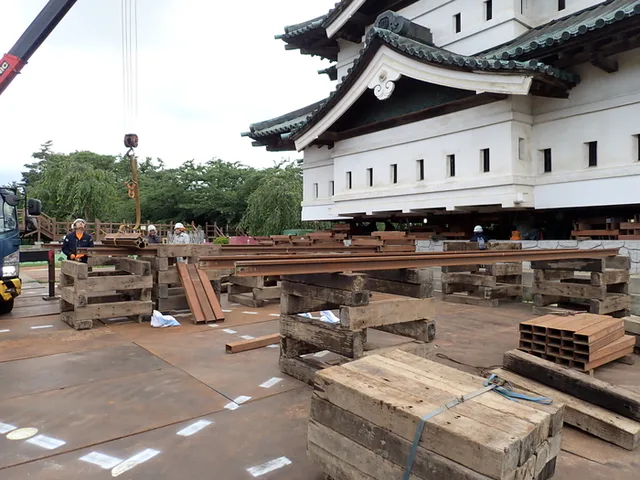
That makes 2026 unusually interesting rather than simply inconvenient. The keep was moved away from its original base in 2015 so the stone walls could be repaired; this year it is being moved roughly 78 metres back in stages. From August 21 to 28, Hirosaki is also holding a dedicated return event around the work. Castle collectors, architecture fans and cherry-blossom visitors still have strong reasons to go. If your only goal is to climb inside one of Japan’s 12 surviving keeps, however, this is not the year to build a trip around that experience.
30-second decision: who should visit Hirosaki Castle in 2026?
↔ Scroll table left or right
Your goal | 2026 verdict | What matters most |
Japan 100 Famous Castles collector | Go | The stamp is not inside the keep; there are two official stamp locations |
First visit to Hirosaki, interested in castles | Go | Treat the keep, turrets, gates, moats and Honmaru as one castle — not one building |
You only want to enter an original keep | Wait or change expectations | Interior access is currently planned to remain closed through FY2032 |
In Hirosaki August 21–28, 2026 | Exceptionally interesting | The return event is running, but public slots to physically pull the keep were pre-application/lottery |
Cherry-blossom trip | Worth a special trip | The park, moats and blossom views work even without keep entry |
You want clean photos of every historic gate | Adjust your shot list | North Gate and East Inner Gate are under conservation work, with scaffolding and covers planned to around March 31, 2027 |
The ¥320 ticket is not a keep ticket: it pays for the Honmaru and North Bailey
Hirosaki Park itself is not simply a paid attraction. The specific paid zone is Hirosaki Castle’s Honmaru and North Bailey. Under the current standard schedule, that zone is charged from April 1 through November 23, normally from 9:00 to 17:00. A one-day adult ticket is ¥320 and an elementary/junior-high ticket is ¥100. From November 24 through March 31, the same zone becomes free, while the keep remains closed.
The distinction matters because “¥320 Hirosaki Castle ticket” sounds like a ticket to climb the tower. In 2026 it is not. Paying gets you into the castle’s core area so you can see the keep exterior at closer range, read the stonework and Honmaru layout, and move through the North Bailey. If you only want a distant photograph and a short park walk, the free areas already have value. For a first visit where the castle itself matters, ¥320 is still an easy yes — just buy it for the right reason.
The counterintuitive part: this is a real 1810 keep, yet you cannot go inside for years
Hirosaki’s current keep is not a modern reconstruction. The present three-storey structure was completed in 1810, after the original five-storey keep was lost to fire in the seventeenth century. It is one of Japan’s 12 surviving original keeps and the only surviving Edo-period keep in the Tohoku region. That makes it fundamentally different from Matsumae Castle, where the current keep is a reinforced-concrete reconstruction.
Its authenticity is exactly why the closure is long. The temporary reinforcement that allowed visitors inside at the relocated position has to be removed for the move, and the building still needs permanent seismic and preservation work after it returns to the stone base. Hirosaki City’s June 2026 update says the interior closure is currently planned from November 24, 2025 through FY2032. Moving the keep home in 2026 does not mean reopening it in 2026.
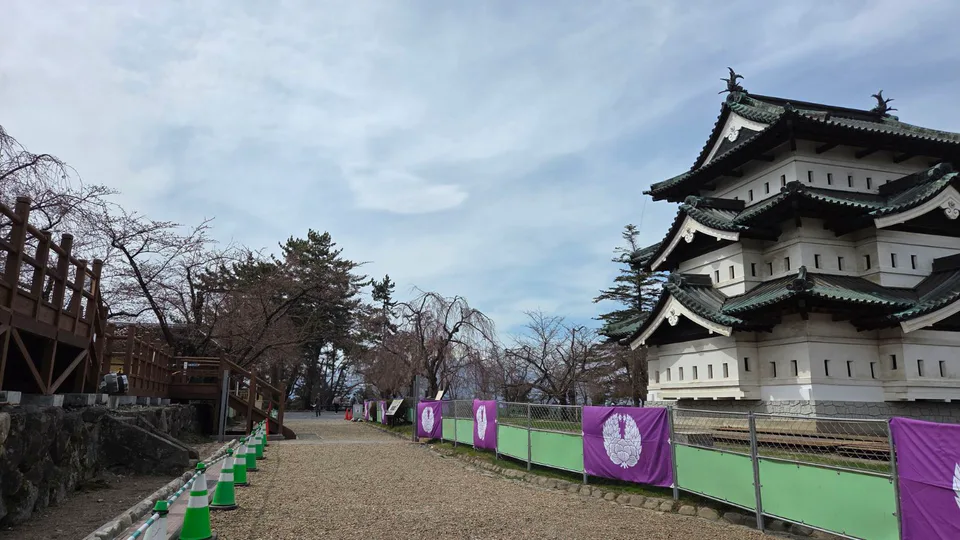
August 21–28, 2026 is the exception: you are visiting while the castle is literally moving
If your Hirosaki dates fall between August 21 and 28, 2026, this is not a normal sightseeing week. The city’s “Hipparé! Kepparé! Hirosaki Castle” program is built around the return of the keep to its original base. The August 21 opening program includes night-time presentation elements, while August 22 and 23 center on the public pulling experience; later dates continue with related viewing and photo-oriented activities. The work is part of an actual conservation project, not a theme-park reenactment.
There is one important catch for anyone arriving at the last minute. The public pulling experience was not designed as a walk-up attraction. Applications closed in July and were subject to a lottery when oversubscribed. You can still visit Hirosaki during the event, watch the setting and see the return project in progress, but do not build a non-refundable trip around the assumption that you can simply queue on August 22 or 23 and pull the keep yourself.
After August, the keep will still be visible — but “back in place” and “open again” are separate milestones
The 2026 return project moves the keep roughly 78 metres in three stages toward the original keep base. The city publishes working schedules because the operation is deliberately visible, but those schedules can change with weather and construction progress. Treat them as engineering plans, not guaranteed performance times. Arriving on a particular morning does not guarantee you will see the building move at that exact moment.
There is also a longer-term reason to understand the timeline. Hirosaki City currently says the keep exterior should remain visible after the return and until around autumn 2028. Later preservation work will require a protective enclosure, potentially hiding the exterior for several years. In other words, 2026–2028 is a strange but meaningful window: you cannot enter the keep, but you can still see the genuine structure while a conservation project unfolds around it.
Japan 100 Famous Castles collectors do not need to wait: there are two official stamp points
Closing the keep does not put Japan’s 100 Famous Castles No.4 on hold. Hirosaki City currently lists two official stamp locations: the Hirosaki Castle Information Center and the Green Consultation Office. The Information Center is the simpler default for most collectors because it also handles the castle’s goshuin-style commemorative seal sheet. The 100-castle stamp and the goshuin are separate things, so do not treat one as a substitute for the other.
This is also a good example of why old castle blogs can become dangerous during a long restoration. A visitor who remembers stamping inside the keep may walk all the way to the Honmaru before checking. In 2026, make the stamp location part of your route from the start. Winter visitors should be even more deliberate because facility closure days can differ from the park’s open outdoor areas.
Looking only at the keep undersells Hirosaki: one keep, three turrets and five gates still survive
The strongest reason to keep Hirosaki Castle in a 2026 itinerary is that the site is not a one-building attraction. Nine Important Cultural Property buildings survive: the 1810 keep, three Ninomaru corner turrets and five historic gates generally associated with the original 1611 castle. Add the multiple moats, baileys, earthworks and bridges, and you have a much fuller castle landscape than the small size of the keep suggests.
For castle-focused travelers, two to three hours makes more sense than a “tower and leave” visit. The pay-off is seeing how the defensive layers relate to one another: enter through a surviving gate, cross a moat, pass the turrets, then reach the Honmaru and keep. That sequence explains Hirosaki far better than standing in front of the keep for twenty minutes and judging the whole site by whether one door is open.
There is a photography cost in 2026: two historic gates are under conservation covers
Photographers should update their shot list before arriving. The North Gate, also known as Kikkōmon, and the Ninomaru East Gate are undergoing preservation work. Current visitor information says passage remains possible, but scaffolding and protective sheets cover the structures; the work is expected to continue to around March 31, 2027. If your reference image shows every old gate completely uncovered, it is not a reliable picture of the 2026 visit.
That does not make the whole castle a construction site. Otemon, the Sannomaru East Gate, other surviving structures, moats and the keep exterior give you alternative compositions. The practical decision is simply to stop spending forty minutes walking across the park for one gate that you already know will be wrapped, unless documenting the conservation itself is part of your interest.
Hirosaki Station is not next door: use the bus if the rest of your day is busy
Hirosaki Castle sits in the city center, but it is not a station-front sight. Current access guidance gives two straightforward bus approaches. From Hirosaki Station, one route takes about 15 minutes to Shiyakusho-mae Koen Iriguchi, followed by roughly three minutes to Otemon and another eight minutes to the keep area. Another route takes about 10 minutes to Bunka Center-mae, then about four minutes to the East Gate and six more minutes to the keep.
Walking from the station can work when the weather is good and the city walk is part of your plan. But if you are saving energy for an evening festival, the bus is not an admission of defeat — it is what protects the useful part of your day. If your visit overlaps the summer festival season, compare the Dotemachi, Station Area and daytime-finale routes in our Hirosaki Neputa 2026 guide before deciding how much walking to spend before sunset.
A 90-minute visit and a three-hour visit should be two completely different routes
↔ Scroll table left or right
Time available | Prioritize | What to cut |
60–90 minutes | Stamp → Honmaru/keep exterior → Otemon or East Gate | Do not circle the whole park just to tick off every gate |
About 2 hours | Honmaru + two or three major gates/turrets + moat | Skip the botanical garden or remote corners if time is tight |
2–3 hours | Historical route: keep + three turrets + five gates + major bridges | Do not spend the entire visit repeating the same Honmaru photo angle |
Cherry season, half day or more | Castle + moats + blossom conditions + evening or nearby city sights | Do not compress peak blossom season into a normal 90-minute template |
Cherry-blossom season changes the answer: the park is a destination even with the keep closed
Outside spring, Hirosaki’s surviving castle fabric is the main reason to visit. During cherry-blossom season, the park itself becomes part of the decision. Moats, blossom tunnels, petal-covered water and classic keep views do not depend on entering the building. That is why “the keep is closed” is much less damaging to a spring visit than it sounds on a checklist.
Autumn travelers should make a different calculation. Hirosaki can fit naturally into a wider foliage route, but the best stop length depends on what else is peaking in northern Tohoku. Use our Tohoku autumn leaves itinerary to decide whether Hirosaki belongs on a five- or seven-day route, and compare it with Hakkoda’s ropeway, Sukayu and weather risks if mountain color is competing for the same day.
If you are also seeing Hirosaki Neputa: castle by day, festival by night is the cleaner split
One of the most natural summer pairings is Hirosaki Castle in daylight and Hirosaki Neputa after dark. That does not mean staying inside the park until the paid zone closes. Two or three focused hours is enough for the main historic fabric, leaving buffer for food, your viewing position and the post-festival exit. The castle is easy to schedule; the evening crowd is usually the part that punishes poor planning.
If you have not chosen your base yet, compare Hirosaki with Aomori Station, Hachinohe and the resort areas in our Aomori accommodation guide. If you are trying to see both major summer festivals, read Aomori Nebuta vs Hirosaki Neputa before booking hotels. The best castle route is not much help if your night transport leaves you stranded in the wrong city.
Is the ¥520 combination ticket better? Only if you actually want the other two sights
The current one-day combination ticket covering Hirosaki Castle’s Honmaru/North Bailey, Hirosaki Castle Botanical Garden and Fujita Memorial Garden is ¥520 for adults. Against the ¥320 castle-only ticket, the extra cost is only ¥200. That makes it look like an automatic upgrade. It is not. The combination becomes useful only when you genuinely have time and interest for the botanical garden and Fujita Memorial Garden.
With only 60–90 minutes, the combination ticket can create the wrong kind of pressure: you start rushing through the castle because “the other attractions are already paid for.” Saving ¥200 is not the decision. Protecting the two or three hours you wanted to spend understanding an unusually complete historic castle is the decision.
Winter makes the Honmaru free, but free does not mean more complete
From November 24 through March 31, the Honmaru and North Bailey switch from paid to free access under the standard schedule. That is useful for a winter walk, but it should not be sold as a “better-value” version of Hirosaki Castle. The keep remains closed, snow changes walking speed, and indoor facilities or stamp locations can have their own winter closure patterns.
A winter castle collector should therefore plan around the Information Center first, then build the outdoor route around weather and daylight. The saving is ¥320. The real cost can be twenty extra minutes on snow-covered paths or arriving after the facility you needed has closed.
Arriving in Aomori does not mean you should force Hirosaki Castle into your first afternoon
Hirosaki Castle fits an Aomori itinerary well, but airport arrival time, baggage and onward transport matter more than collecting No.4 on day one. If your flight or train reaches Aomori late, there is little value in racing across the prefecture just to reach the Honmaru near closing time. Our guide to where to stay on your first night in Aomori compares Aomori Station, Hirosaki and the resort areas by arrival logistics rather than by hotel glamour.
Giving Hirosaki a proper morning or half day on the following day usually produces a better trip: two to three hours in the castle, then western-style historic buildings, gardens or an evening festival. A rushed “I stamped No.4 before dinner” stop is possible; it is simply not the best use of a site whose value lies in its full layout.
There are bookable Hirosaki tours in 2026 — that does not mean a ¥320 city sight needs one
Klook currently lists tours that genuinely include Hirosaki Castle, including a Hirosaki Castle and Tsugaru Nebuta Village full-day autumn tour and a private Hirosaki highlights half-day option. Those products solve a different problem from castle admission. They may make sense if you want a guide, lunch, private transport or a multi-stop day without managing transfers yourself.
If you are already staying in Hirosaki and are comfortable with the local bus, a high-priced tour still makes little sense for a ¥320 castle zone. The exception is when you already want Hirosaki Castle and Tsugaru Neputa Village in the same day and would rather pay to have the transport and day structure handled. Klook now lists an exact full-day product covering both, so the value is in logistics rather than castle admission.
ValueNavi may earn a commission if you complete an eligible booking through an affiliate link, at no additional cost to you.
Want Hirosaki Castle + Tsugaru Neputa Village handled in one day? Check the tour | Klook
Failure plans: the biggest 2026 mistakes come from using an old guide
Mistake one is arriving expecting to enter the keep. Fix it by removing interior access from the 2026 plan before you travel and replacing it with the Honmaru, exterior viewpoints, turrets, gates and moats. Mistake two is walking to the keep to find the 100-castle stamp. Use the Information Center or Green Consultation Office instead. Mistake three is crossing the park specifically for the North Gate or East Inner Gate and discovering only after arrival that the building is wrapped in scaffolding.
The fourth mistake is uniquely 2026: treating the published return-work schedule like a show timetable. This is engineering work on an Important Cultural Property. Weather and progress can move the schedule. Visit because the restoration phase itself interests you, not because you have built an inflexible trip around seeing the keep move a precise number of centimetres at a precise hour.
Final verdict: Hirosaki Castle is worth visiting in 2026 precisely because the keep is not a normal attraction right now
If Hirosaki Castle were only a small 16-metre keep, “interior closed” would be a strong reason to postpone. But No.4 is stronger than that. The keep is genuinely historic, three turrets and five gates also survive, the moats and baileys remain legible, and 2026 adds a conservation event most travelers will never see in an ordinary year: the real 1810 structure moving back toward its original stone base.
First visit to Hirosaki: go, and think of ¥320 as access to the castle core rather than a tower ticket. Japan 100 Famous Castles collector: go; the stamp remains available at official locations outside the keep. Only want to enter an original keep: postpone that specific goal, because current planning keeps the interior closed through FY2032. In Hirosaki August 21–28: add the return event, but do not assume the pulling experience is walk-up. Cherry-blossom season: still a strong destination even without interior access.
The useful question in 2026 is not “Is the keep open?” It is “Does seeing an authentic castle landscape — and, this year, the restoration process itself — matter enough to my trip?” For most castle-focused travelers, the answer is yes. For someone who only wants the experience of climbing inside a surviving keep, the honest answer is not yet.
Official sources and verification date
Information last checked: August 20, 2026. The castle number and heritage listing follow the Japan Castle Foundation’s official Japan 100 Famous Castles list. Admission, paid-area dates, stamp locations and winter access are from Hirosaki City’s Hirosaki Park paid-area information.
The long-term keep closure, return work and exterior-view timeline are from Hirosaki City’s Honmaru stone-wall restoration project. Gate-conservation conditions come from the 2026 Hirosaki Park visitor notice, and station-bus timings from the Hirosaki Park route-bus guide.