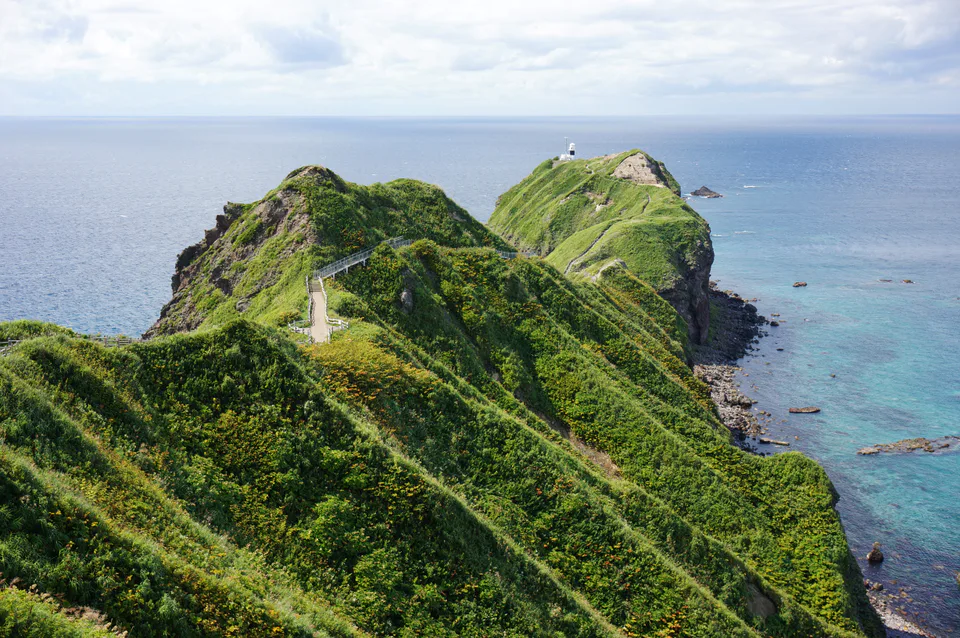
Shakotan is worth a summer day when you want one exposed coastal walk, one shorter sea viewpoint and—between June and August—fresh uni strongly enough to give the peninsula most of a day. It is a weak add-on to a full Otaru sightseeing day. Cape Kamui alone needs roughly an hour for the walk from the parking area to the tip and back, the gate can close because of wind, and the current 2026 public-transport system is connection-based rather than a frequent tourist shuttle.
For most first-time visitors, I would self-drive from Otaru if a car is already part of the Hokkaido trip. Without a car, I would compare the official Sapporo sightseeing coach before attempting a DIY local-bus day. The self-drive version buys weather and lunch flexibility; the coach buys certainty; the DIY bus version is cheapest only if the timetable and reservation rules fit perfectly.
↔ Scroll table left or right
Your trip | Best starting plan | Why | Main failure mode |
Car already rented, staying in Otaru | Self-drive | Cape Kamui is about 90 minutes from Otaru by car and you can reorder the day around wind and restaurant supply | Trying to turn the same day into a full Otaru sightseeing day as well |
No car, first Shakotan visit from Sapporo | Official sightseeing coach | Current 2026 summer route handles Cape Kamui, lunch and Shimamui without local-bus transfers | You accept a fixed pace and little control over restaurant or viewpoint timing |
No car, DIY public transport | Only after checking the exact connections | Otaru–Bikuni is already about 1h20, then the town bus continues toward Cape Kamui; some town-bus trips are reservation-operated | A missed connection can remove an entire coastal stop |
Uni is the main reason to go | Travel June–August and protect lunch time | Shakotan Tourism Association gives June–August as the local uni season | Fishing/weather can still remove supply; a restaurant opening time is not an uni guarantee |
Cape Kamui is the main reason to go | Check the live gate status first, then go early | Wind can close the inner gate even during normal opening hours | Driving west only to discover the tip trail is closed |
Only 3–4 hours available | Do not force a full peninsula loop | Cape Kamui + driving already consumes much of the block | Buying a long road day for two rushed photographs |
Start with one decision: is Cape Kamui the trip, or is uni the trip?
Shakotan has two time-sensitive products that do not fail in the same way.
Cape Kamui is weather-sensitive. Shakotan Town states that the park gate and the inner Nyonin Kinsei gate can close because of rain, wind or snow, including after the day has already started. The trail from the gate toward the tip is about 770 metres each way. The tourism association describes roughly 20 minutes to the tip and about 40 minutes for the trail round trip; the town’s current visitor notice advises allowing about an hour from the parking area for the complete out-and-back.
Uni is supply-sensitive. Shakotan Tourism Association describes the local sea-urchin fishing season as June through August, but that is a season, not a restaurant guarantee. Hokkaido’s Shiribeshi tourism office likewise notes that local uni dishes are seasonal and can be unavailable depending on the day’s catch.
That creates a better planning rule than “Cape first every time.”
Forecast says wind worsens later: protect Cape Kamui first.
A specific uni restaurant is the entire reason for the trip and you have confirmed its serving plan: protect the restaurant window, but do not leave Cape until close to final admission.
You care about both equally: use Cape as the morning anchor, eat around late morning/noon, then make Shimamui the shorter afternoon scenic stop.
Do not let a restaurant queue consume the only period in which the cape trail is safely open, and do not postpone uni until mid-afternoon assuming “June to August” means every bowl remains available all day.
Cape Kamui has two deadlines: final entry and the weather gate
One of the easiest mistakes is reading the park closing time as the latest time you can arrive. Shakotan Town currently separates opening hours from final entry.
↔ Scroll table left or right
Month | Park hours | Final entry |
June | 08:00–18:30 | 17:30 |
July | 08:00–18:00 | 17:00 |
August–October | 08:00–17:30 | 16:30 |
Those are normal operating times, not a promise that the tip trail will remain open. The town explicitly says the inner gate may close when wind or other conditions become unsafe. A concrete 2026 example is useful: on August 24 the town posted a same-day notice that the inner gate was closed because of strong wind. That is why checking the live town notice before leaving Otaru is more useful than checking only the weather icon in Sapporo.
ValueNavi rule: if Cape Kamui is non-negotiable, do not schedule it as a late-afternoon leftover after Otaru, Yoichi and a long seafood lunch. The gate is a hard cutoff and the wind is a moving cutoff.
Shimamui Coast is a viewpoint stop in 2026, not a beach-descent stop
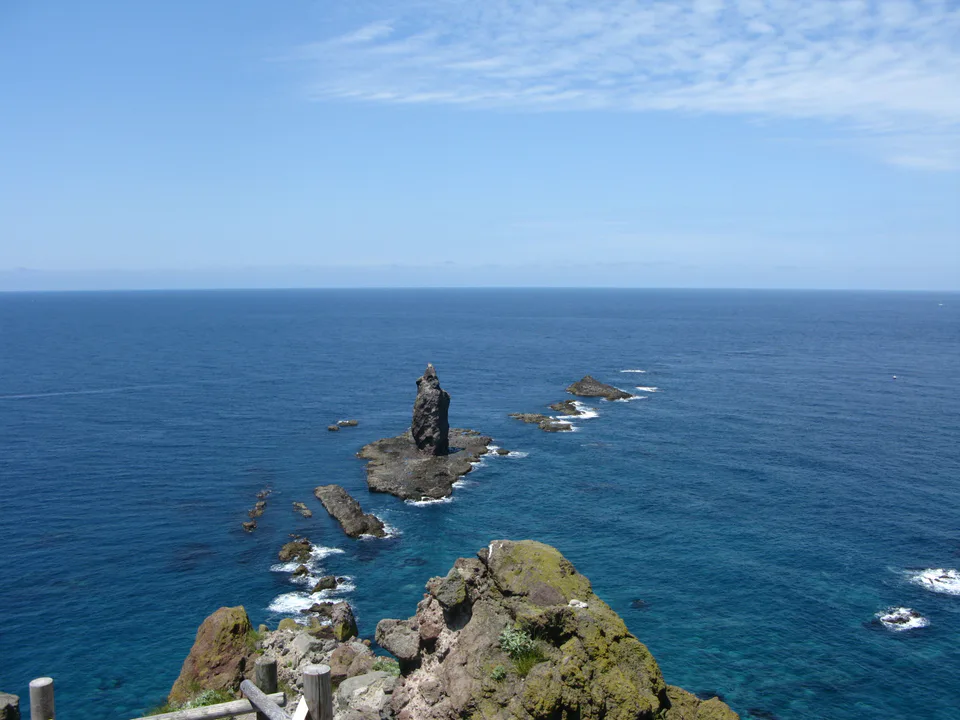
This is the most important correction to older Shakotan guides. Shakotan Town’s current natural-trail notice says the Shimamui Coast viewpoint is open, but the walking path down to the beach remains closed. The higher viewpoint and famous tunnel reveal are still usable; the beach descent should not be built into a 2026 itinerary.
That changes the comparison with Cape Kamui. Shimamui is now the shorter scenic stop. It works well when:
Cape Kamui took longer than expected;
the group does not want another exposed hour-long walk;
you need a scenery fallback after the Cape tip gate closes;
or lunch has already absorbed much of the day.
It does not replace Cape Kamui for someone who wants the headland walk. Conversely, Cape Kamui does not make Shimamui redundant if the tunnel-to-sea reveal is one of the peninsula images you came for. The two stops deliver different effort-to-view ratios.
If you are self-driving, Otaru is usually the cleaner launch point
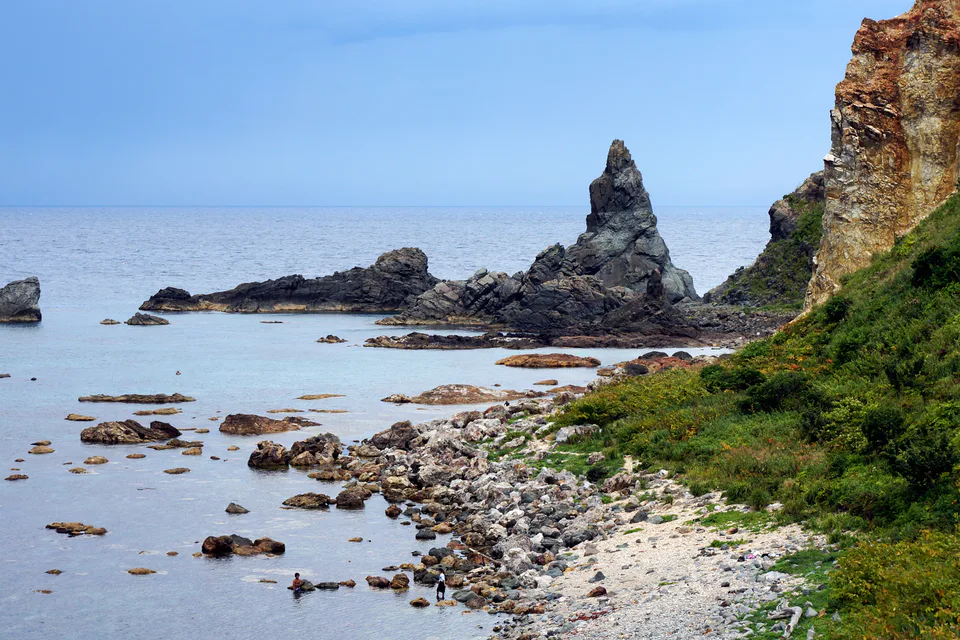
Hokkaido’s official tourism site currently puts Cape Kamui at about 90 minutes by car from JR Otaru Station and about 70 minutes from JR Yoichi Station. That is why an Otaru overnight works so naturally with Shakotan: you can leave in the morning, reach the exposed western end before the day is old, then work east through lunch and Shimamui.
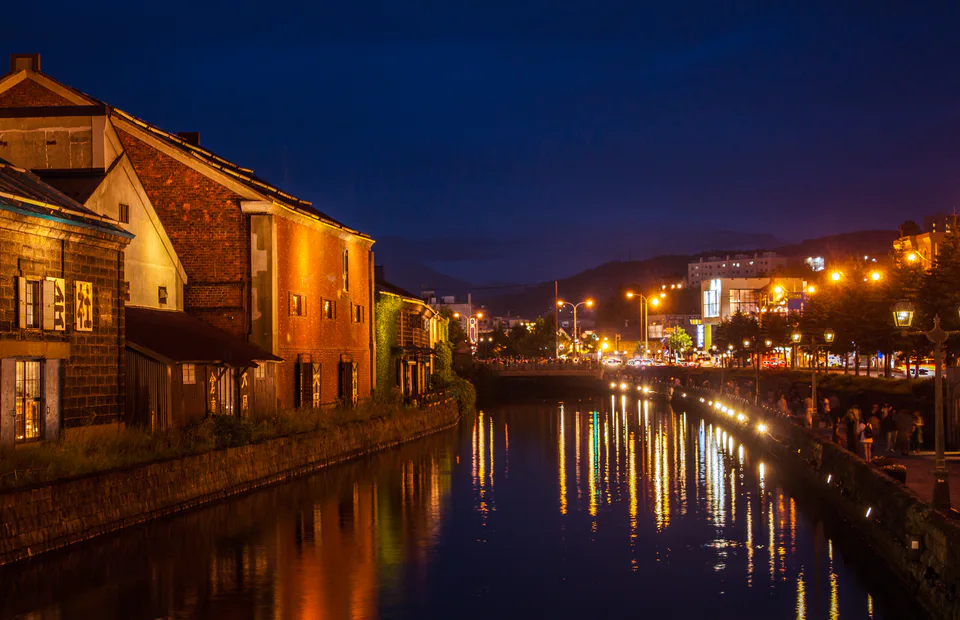
I would not move hotels from Sapporo to Otaru solely because one Shakotan day exists. But if Otaru is already in the itinerary, sleeping there before Shakotan gives the hotel night a second job: Otaru evening + shorter coastal start.
The weak version is trying to do a full first-time Otaru day and a full self-drive Shakotan day on the same date. The geography allows it; the experience does not. Cape Kamui, two-way driving, lunch and Shimamui already form a substantial day. If Otaru is new to you, protect its canal/Sakaimachi time on a different half-day or overnight.
For the accommodation decision, use Otaru Day Trip or Overnight? before adding a hotel move only to save road time.
No car: the official sightseeing coach is a different product from DIY buses
Shakotan is possible without a car, but “possible” hides two very different products.
Option 1 — Sapporo sightseeing coach: buy certainty and give up flexibility
Hokkaido Chuo Bus currently operates its 2026 summer “Marugoto Shakotan” sightseeing course from May 9 to September 30. It leaves Sapporo Station at 08:40 and returns at 18:36, a published duration of 9 hours 56 minutes. The current adult fare is JPY 9,700 including lunch.
The schedule gives roughly 1 hour 20 minutes at Cape Kamui, about 50 minutes for lunch, about 20 minutes at Shimamui Coast and an optional one-hour glass-bottom boat stop in Bikuni. It can also drop passengers at Otaru Station at 17:20.
This is the strongest no-car answer when your priority is see the peninsula with minimal transport planning. The trade-off is obvious: you cannot move lunch earlier because uni is selling out, stay longer because Cape is perfect, or skip one stop because the wind makes it unpleasant. The coach removes the transfer risk by replacing it with a fixed itinerary.
Option 2 — DIY buses: cheaper and more independent, but connection risk is the itinerary
Shakotan Town’s current 2026 summer transport information says the Chuo Bus ride between Otaru Station and Bikuni Terminal is about 1 hour 20 minutes. Travel onward from Bikuni toward Cape Kamui uses the town-operated Shako Bus. The town’s summer schedule runs from April 1 through November 30, 2026.
The critical rule is that services marked reservation-operated require a phone reservation by 17:00 the previous day; same-day reservations are not accepted. Once a reserved service is triggered it can also carry riders who did not reserve, but building a tourist day around “maybe someone else booked it” is not a resilient plan.
This makes the DIY version appropriate for travellers who are comfortable reading the exact timetable, calling ahead where needed and accepting fewer stops. It is not the public-transport equivalent of having a rental car.
ValueNavi verdict: for a first visit without a car, the sightseeing coach is usually worth comparing first. Choose DIY buses when schedule independence matters enough that you are willing to plan the connections as carefully as the attractions.
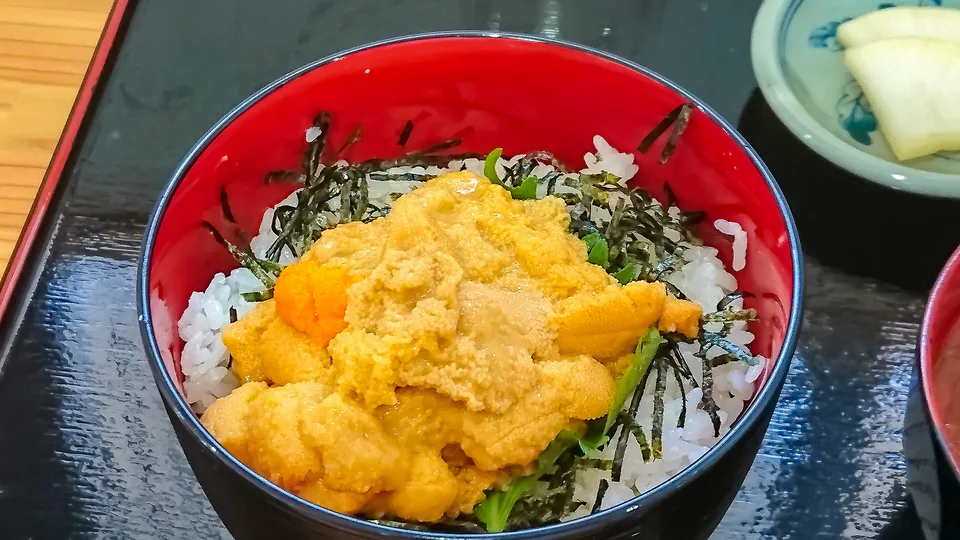
Uni season is June–August, but do not turn fishing into a reservation promise
Shakotan Tourism Association gives June through August as the local sea-urchin fishing season. That is the right planning window for travellers whose dream is fresh local uni. It is not a guarantee that a particular restaurant will have the bowl shown online.
Hokkaido’s Shiribeshi tourism office gives the more useful operational warning on a current Shakotan restaurant listing: the uni offering is June–August, but availability can change with fishing conditions and travellers are advised to check in advance.
Use three rules:
June–August: uni can be one of the day’s anchors.
Late August: call or check the exact restaurant; do not assume the season ends neatly at the same moment everywhere.
September onward: go for the coast. Treat seafood as a bonus rather than building the day around a product whose main local season has passed.
If the restaurant you wanted is sold out, do not sacrifice the Cape gate to drive between several lunch options. A bowl of different local seafood is a smaller loss than missing the main coastal walk after final entry.
A one-day self-drive route should have one hard anchor and two flexible blocks
For a normal summer day from Otaru, I would use this structure rather than a minute-by-minute schedule:
Block 1 — Cape Kamui while the weather margin is strongest
Leave Otaru early enough to reach the cape in the morning. Check the town’s live gate notice before departure and again if the weather changes. Protect about an hour for the full walk rather than treating it as a roadside photograph.
Block 2 — lunch with a cutoff, not an open-ended restaurant crawl
If uni is important, choose one primary restaurant and one backup in the same general direction. Eat around late morning or noon. Do not spend 90 minutes driving between famous shops after one sells out.
Block 3 — Shimamui or a slower eastbound return
Use Shimamui as the shorter second viewpoint. In 2026, plan only the open viewpoint/tunnel experience, not the beach descent. If weather has deteriorated or the group is tired, downgrade this block and return through Yoichi or Otaru without treating the day as failed.
This route works because only Cape is hard to replace. Lunch and the second viewpoint can shrink without destroying the entire day.
What if Cape Kamui closes?
A closure does not mean you should spend the entire day waiting in the car park. Strong wind is an operational boundary, not a challenge to defeat.
I would use this recovery order:
Confirm whether only the inner Nyonin Kinsei gate is closed or whether access to the broader park is restricted.
Use the available entrance-area viewpoint if safe and permitted.
Move to Shimamui Coast viewpoint if its current status remains open.
Bring lunch forward.
Use Yoichi or Otaru as the flexible half-day rather than driving back to Cape repeatedly.
The current town notices show why this matters: the Cape gate can be open on one day and closed because of strong wind on another. Build the peninsula day so one weather closure reduces the value rather than destroys the whole itinerary.
Families and older travellers: Cape Kamui is the effort test
Shakotan is not technically difficult sightseeing, but the effort is concentrated. Cape Kamui is exposed, uneven and windy; the full tip walk is materially different from stepping out at a viewpoint. Shimamui’s current 2026 situation actually simplifies the decision because the beach descent is closed—the accessible experience is the upper viewpoint.
For families with young children or older travellers, I would ask one question before adding stops: who in the group genuinely wants the full Cape walk? If the answer is only one person, the rest of the day should not be built as though everyone has the same walking appetite.
It is completely rational to stop at the entrance view, eat well and use Shimamui as the second coast stop. “We did not reach the tip” is a better outcome than forcing a tired or unstable walker onto an exposed path because the car has already driven 90 minutes.
Do not pair Shakotan with a full Otaru day unless you accept a sampler
Hokkaido Chuo Bus’s own 2026 sightseeing route demonstrates the trade-off. Its combined Cape Kamui + Otaru + Shiroi Koibito Park course takes about 9 hours 51 minutes, but gives only about 65 minutes at Cape Kamui and two hours in Otaru. That is a professionally timed sampler, not evidence that a first-time Otaru visit and a relaxed Shakotan day fit comfortably together.
If you have never been to Otaru, decide which place owns the daylight. Use Shakotan as the main day and enjoy Otaru in the evening or on another half-day, or make Otaru the main destination and leave the peninsula for another trip. A checklist that contains both is not automatically better than a day that lets one of them breathe.
Who should skip Shakotan?
Skip it on a short Hokkaido first trip when Furano/Biei, Otaru and Sapporo already compete for three or four days. The peninsula is a long coastal commitment, not a quick addition.
Skip it if the forecast is persistently poor and Cape access is already restricted unless the seafood or coastal drive itself is enough to justify the road time.
Skip the DIY no-car version if you do not want to build the day around bus connections and previous-day reservation rules. Take the coach or spend the day somewhere with denser transport.
Skip a uni-led trip outside the main June–August season if the seafood is the only reason you are going. The coast remains worthwhile; the food premise has changed.
Final verdict
Self-drive from Otaru is the best all-round Shakotan plan when the car is already part of your Hokkaido itinerary. It lets you check Cape Kamui first, move lunch around fishing supply and shorten the day when wind or fatigue changes the plan.
Without a car, compare the official Sapporo sightseeing coach before building a DIY bus itinerary. The 2026 coach turns a complex connection day into a fixed product; the price buys transport certainty, not only sightseeing. DIY buses remain possible, but reservation-operated Shako Bus services and the Otaru–Bikuni transfer make the timetable part of the attraction.
And in 2026, do not plan Shimamui as a beach visit. The viewpoint is open, but the descent path remains closed. Put the day’s scarce time into Cape Kamui, one good meal and one shorter coastal stop rather than chasing an old itinerary that no longer exists.
How to Book the Fuji Excursion—and What to Do When It Sells Out
Hakone Ryokan with Private Onsen: Dinner, Tattoos and Car-Free Access
Sapporo Budget Hotels: Snow, Laundry, Public Baths and Hotel Tax Matter More Than the Lowest Rate
Kyoto Gozan Okuribi: What the 2026 Viewpoint and Exit Plan Teaches
References
Shakotan Town — Cape Kamui opening/final-entry times and weather closure rules · Shakotan Town — current natural-trail status including Shimamui Coast · Shakotan Town — 2026 Shako Bus and Otaru/Bikuni connections · Hokkaido Chuo Bus — 2026 summer Shakotan sightseeing coach · Shakotan Tourism Association — June–August uni season. Checked August 25, 2026. Gate status, wind closures, bus reservations, fishing supply and restaurant service can change on the day; recheck live conditions before departure.