
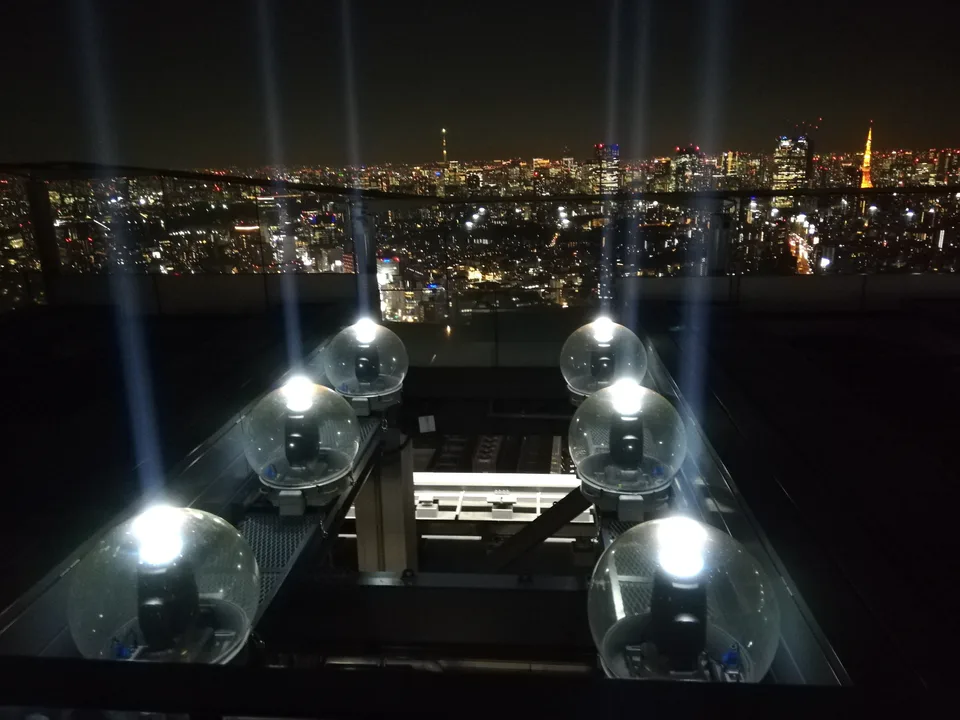
On a first Tokyo trip, I would usually pick one paid observation deck, not collect all four. Choose SHIBUYA SKY when the outdoor rooftop and sunset transition are the experience. Choose Tokyo Skytree when your day is already in East Tokyo or maximum height matters. Choose Tokyo Tower when the landmark itself is part of the memory. Choose Tokyo City View when rain, wind or schedule flexibility matters more than open air.
The important difference is not height. It is what can ruin the visit. SHIBUYA SKY is the most weather-sensitive and booking-sensitive. Skytree is geographically inefficient for a West Tokyo day. Tokyo Tower is lower but cheap, flexible and easy to pair with Shiba Park or Azabudai. Tokyo City View is the safest weather product, but it no longer has the public rooftop Sky Deck that older guides still mention.
ValueNavi decision table: which Tokyo observation deck should you actually book?
↔ Scroll table left or right
Your trip | Pick | Why | What can reverse it |
First Tokyo trip, good weather, Shibuya/Harajuku afternoon | SHIBUYA SKY | The open rooftop and day-to-night transition are the hardest experience here to replace | Rooftop weather risk or no useful timed slot |
Asakusa/Oshiage/Ueno day | Tokyo Skytree | It fits the route and gives the highest panorama without crossing Tokyo for one attraction | Your entire day is actually in Shinjuku/Shibuya |
Classic Tokyo landmark checklist | Tokyo Tower Main Deck | Low price and the tower itself is part of the experience | Your only goal is the broadest possible city panorama |
Rainy/windy day | Tokyo City View | The core observation product is indoors and Tokyo Tower remains visible as a landmark when visibility cooperates | You specifically want open air |
Family day with meals and indoor breaks | Tokyo Skytree | Solamachi makes the deck part of a larger indoor half-day | The family is staying west and has no other East Tokyo plans |
Only 90 minutes free near Roppongi/Azabudai | Tokyo City View or Tokyo Tower | Both avoid turning a short free block into a cross-city transfer | A prebooked SHIBUYA SKY slot is already the trip priority |
ValueNavi Attraction Decision Score: one scale, seven dimensions
This is a ValueNavi editorial dataset, not an official attraction rating. We use the same seven dimensions across major attraction guides: uniqueness (20%), route fit (20%), time efficiency (15%), weather resilience (15%), booking flexibility (10%), crowd resilience (10%) and money value (10%). Every dimension is scored 0–10; higher is better. “Weather resilience” therefore means how well the experience survives bad weather, not how weather-sensitive it is.
Deck / product | ValueNavi score | Strongest dimension | Main weakness |
|---|---|---|---|
SHIBUYA SKY | Uniqueness 9.4 / route fit 9.2 for a West Tokyo day | Weather resilience 5.6 and booking flexibility 6.0 | |
Tokyo Skytree | Uniqueness 8.8 / weather resilience 8.5 | Time efficiency 6.8 if your itinerary is not already in East Tokyo | |
Tokyo Tower Main Deck | Booking flexibility 9.0 / money value 8.8 | Lower panorama; the score rewards low friction, not maximum spectacle | |
Tokyo City View | Weather resilience 9.2 / route fit 8.5 around Roppongi | Uniqueness 7.8 after the public rooftop Sky Deck closure |
This table explains why a single “best deck” ranking is misleading. Tokyo Tower scores extremely well on decision efficiency because it is inexpensive, flexible and easy to fit into a day. SHIBUYA SKY still gets my first-trip recommendation in good weather because its outdoor experience is much harder to substitute. The score tells you where the friction is; it does not replace the trip context.
Current adult prices: keep the yen as the booking reference
As checked on August 26, 2026, the main adult prices are:
↔ Scroll table left or right
Product | Current price | Approx. USD | Pricing catch |
SHIBUYA SKY web, entry by 14:59 | ¥2,700 | about US$17 | From 15:00 the web fare becomes ¥3,400 |
SHIBUYA SKY web, 15:00+ | ¥3,400 | about US$21 | The premium is a time tier, not a guaranteed sunset product |
Tokyo Skytree 350m web | from ¥1,800 | from about US$11 | 2026 uses date-based variable pricing |
Tokyo Skytree 350m + 450m web | from ¥3,000 | from about US$19 | The 450m upgrade is not automatically better value |
Tokyo Tower Main Deck | ¥1,500 | about US$9.40 | 150m only, but very low booking friction |
Tokyo Tower Top Deck Tour web | ¥3,300 | about US$21 | Includes Main Deck; timed product |
Tokyo City View online | ¥2,200 | about US$14 | Temporary exhibitions/restrictions can change the visit |
USD conversions are approximate at the August 26, 2026 rate and will move. Use the yen amount on the official booking page for the real purchase decision.
The hidden cost is the total attraction block, not the ticket
ValueNavi uses a Total Attraction Block rather than comparing only “time inside.” The planning formula is:
hotel / previous stop → station or complex approach → queue and admission → observation time → exit → next useful transport.
These are planning ranges, not official dwell times:
↔ Scroll table left or right
Option | ValueNavi planning block | Why it expands |
SHIBUYA SKY, ordinary visit | about 1.5–2 hours once already in Shibuya | Timed entry, elevator flow, rooftop locker process and photo pauses |
SHIBUYA SKY, sunset strategy | about 2–3 hours | You arrive before sunset and deliberately stay through blue hour / night |
Skytree 350m only | about 1.5–2.5 hours once at Oshiage | Vertical movement, crowd flow and a larger complex around the attraction |
Skytree 350m + 450m | about 2–3 hours | Another vertical stage and more time at the upper level |
Tokyo Tower Main Deck | about 1–1.5 hours | Simple product and lower commitment |
Tokyo City View | about 1.5–2 hours | Indoor deck; longer if a current exhibition is part of the visit |
The route can add more time than the deck itself. A Skytree ticket may be “cheaper” than SHIBUYA SKY but become the more expensive choice in scarce Tokyo hours if you cross the city from Shinjuku solely for the deck.
SHIBUYA SKY: choose it for the rooftop, not because it is the fashionable answer
SHIBUYA SKY’s adult web ticket is currently ¥2,700 through 14:59 and ¥3,400 from 15:00. The official site sells dates up to two weeks ahead and warns that late arrivals may be refused. Adult counter inventory does not rescue a sold-out web slot: when adult web tickets are sold out, adult counter tickets are also sold out.
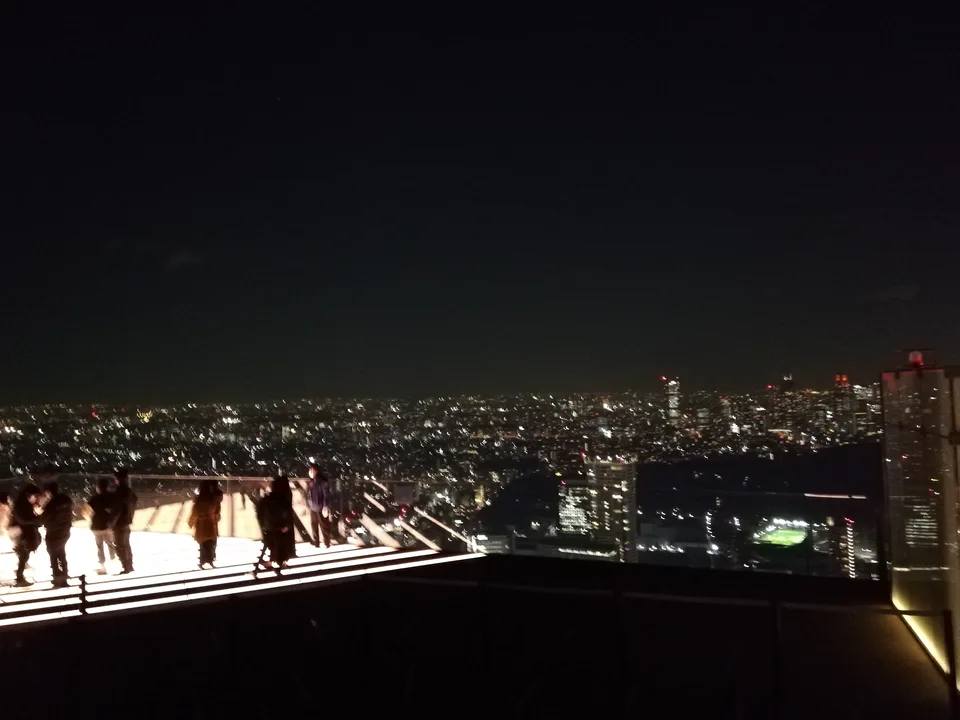
The outdoor SKY STAGE is the product advantage and the product risk. If the rooftop closes, the indoor 46F area can remain open. Eligible specified online tickets have a current rooftop-closure cancellation mechanism before entry, but an ordinary cloudy sunset with the rooftop open is not the same as an official closure.
ValueNavi verdict: book SHIBUYA SKY when you can make the ticket the anchor of a Shibuya/Harajuku/Omotesando half-day. Do not attach a hard sunset slot after a Fuji day trip, international arrival, Disney day or hotel-change afternoon. Those are high-variance days and turn a good ticket into a fragile itinerary.
If you already know SHIBUYA SKY is the deck you want, use the SHIBUYA SKY ticket and sunset guide for the seasonal 15:00-price-boundary analysis.
Skytree: pay for the 450m level only when 450m is part of the reason
Tokyo Skytree introduced date-based variable pricing for individual observation tickets from April 1, 2026. The current official web starting prices are ¥1,800 for the 350m Tembo Deck and ¥3,000 for the 350m + 450m Tembo Galleria combination. The ticket counter adds a ¥500 issuance fee per ticket.
The 350m deck already delivers the giant East Tokyo panorama. The extra 100 metres is not a proportional improvement in view. I would buy the 450m level when one of three things is true: reaching the higher level itself matters, a current collaboration/event is concentrated there, or this is the one major tower experience of the trip and you do not want to wonder whether you should have gone higher.
Do not upgrade just because you are already there. If the 350m view satisfies the objective and the next half-day matters more, the ¥1,200+ price gap and extra time are better kept for another Tokyo experience.
Skytree becomes especially strong when paired with Asakusa, Oshiage or Ueno. The attraction is weaker when it requires an isolated cross-city trip from Shibuya or Shinjuku.
Tokyo Tower: lower height, but the cleanest low-risk purchase
Tokyo Tower’s Main Deck is currently ¥1,500 for adults. The Top Deck Tour is ¥3,300 online or ¥3,500 at the counter, includes the Main Deck and runs in timed slots. The Top Deck can be suspended in severe weather or for safety/operational reasons.
The Main Deck wins a category the height rankings miss: low regret per yen and per hour. If you are already around Zojoji, Shiba Park, Azabudai Hills or Kamiyacho, it can be a compact add-on rather than an evening project.
There is also a photography trade-off. From another observation deck, Tokyo Tower can be the red landmark in your skyline. From inside Tokyo Tower, the landmark disappears from the photo because you are standing in it. Choose the tower because you want the tower experience, not because 150m is the cheapest number on a height chart.
Tokyo City View: the weather-resilient option older guides often describe incorrectly
Tokyo City View’s 52F observation deck currently operates 10:00–22:00 with last admission at 21:30. Standard pricing is ¥2,200 online or ¥2,400 on site for adults. Its public rooftop Sky Deck closed in 2024, so it should now be compared as an indoor observation product.
That changes its role. It no longer competes with SHIBUYA SKY on “open air.” It competes on weather resilience, Roppongi route fit and the ability to pair the view with exhibitions in the Mori Tower complex.
Temporary events can alter the layout, restrict portions of the observation area or change pricing. That is not a reason to avoid it; it is a reason to check the current exhibition page instead of relying on an evergreen old review.
ValueNavi weather downgrade matrix: what are you still buying when the sky turns bad?
↔ Scroll table left or right
Condition | SHIBUYA SKY | Skytree | Tokyo Tower | Tokyo City View |
Clear / calm | ★★★★★ | ★★★★★ | ★★★★☆ | ★★★★☆ |
Cloudy but good visibility | ★★★★☆ | ★★★★☆ | ★★★★☆ | ★★★★☆ |
Rain / strong wind | ★★☆☆☆ if rooftop closes | ★★★☆☆ | ★★★☆☆ Main Deck | ★★★★☆ |
Very poor visibility | ★☆☆☆☆ | ★☆☆☆☆ | ★★☆☆☆ if landmark visit still matters | ★★☆☆☆ if current exhibition adds value |
The stars above are ValueNavi itinerary guidance, not operator ratings. The critical distinction is whether bad weather removes the defining feature. SHIBUYA SKY loses more when the rooftop closes. Tokyo City View loses view quality but not its core indoor format.
One observation deck should not force you to cross Tokyo twice
A common planning error is: Asakusa in the morning → Shibuya for a sunset deck → back to Ginza or Ueno for dinner. The ticket looks like one attraction, but it has created two cross-city moves.
ValueNavi uses a simple Route Conflict Rule: if the deck requires more than one extra cross-city transfer that would not otherwise exist, it must be a headline attraction—not a casual add-on.
West Tokyo day: Harajuku → Omotesando → Shibuya → SHIBUYA SKY.
East Tokyo day: Asakusa → Oshiage / Solamachi → Skytree.
Central / south-central day: Azabudai → Shiba Park / Zojoji → Tokyo Tower.
Roppongi day: museum / Azabudai → Roppongi Hills → Tokyo City View.
The deck should finish the geographic story of the day, not interrupt it.
Families and older travellers: reduce hand-offs before chasing the highest deck
For families, Skytree is the easiest all-weather half-day because Solamachi provides meals, toilets and indoor recovery in the same complex. For an older traveller who dislikes wind or has a low tolerance for standing outside, Tokyo City View is the safest format. Tokyo Tower Main Deck is also a strong low-commitment option when the group wants one skyline experience without turning the evening into a timed-event project.
SHIBUYA SKY can still be excellent for families, but the rooftop rules, locker step, timed admission and weather sensitivity create more operational friction. If the family already has one exhausting anchor that day, I would choose a more resilient deck rather than stack another high-attention reservation.
When should you skip all four?
Skip a paid deck when the itinerary already has enough elevated views, the weather is genuinely poor, or the deck requires a large detour for a traveller who is only mildly interested. Tokyo gives you many free or incidental skyline moments from hotel rooms, public buildings, restaurants and bridges. A paid deck should earn scarce trip time by giving you a view, atmosphere or route fit you actually care about.
If you have already booked one excellent sunset deck, a second paid deck usually has declining value. I would rather spend that second evening at street level in Shinjuku, Ginza, Asakusa or a neighbourhood that changes how Tokyo feels, not simply repeat “city from above.”
Final verdict
For a first trip in good weather, choose SHIBUYA SKY if you can build the afternoon around it. For East Tokyo, choose Skytree and usually stop at 350m unless 450m is part of the objective. For the easiest low-cost landmark experience, choose Tokyo Tower Main Deck. For rain, wind or a Roppongi-heavy day, choose Tokyo City View.
The ValueNavi dataset shows why the “best” deck changes: spectacle, route fit and resilience pull in different directions. Do not buy the tallest tower, the highest review score or the most viral sunset slot in isolation. Buy the observation deck that completes the day you are already planning.
Tokyo Autumn Day Trips Compared: Spider Lilies, Kochia, Oze, Susuki and Onsen
Chiikawa × Tokyo Skytree 2026: Cute Event, Surprisingly Un-Cute Ticket Rules
Tokyo Shopping Hotels: Shibuya, Shinjuku, Ginza or Akihabara?
References
SHIBUYA SKY — official tickets and current pricing · Tokyo Skytree — official observation tickets and variable pricing · Tokyo Tower — official fees and hours · Tokyo City View — official hours, exhibitions and admission. Prices and operating conditions checked August 26, 2026.