For a first car-free Kiso Valley trip, stay in Kiso-Fukushima when schedule resilience matters most; stay around Nagiso/Tsumago when the Magome–Tsumago walk is the trip’s anchor; stay in Narai when you are deliberately buying the preserved post town after day visitors leave. With two nights, do not split them just to “experience two towns.” Split only when the move follows your direction of travel and unlocks two valuable off-hour windows. Otherwise, one Kiso-Fukushima room is usually the lower-friction base.
The most useful question is: which fragile part of the trip should the hotel remove? Tsumago/Nagiso removes the post-hike transfer. Kiso-Fukushima removes rail and luggage fragility. Narai removes the need to treat its historic street as a daytime stop before continuing to Matsumoto.
↔ Scroll table left or right
Your real itinerary | Best starting base | What the night protects | What can reverse it |
One night, no car, several onward options still open | Kiso-Fukushima | Rail flexibility, services and easier recovery from delays | The Magome–Tsumago walk or Narai overnight is the whole reason for entering Kiso |
Magome–Tsumago walk is the main event | Nagiso / Tsumago area | Dinner, bath and bed close to the end of the walking day | Your long-distance arrival is too late for a reliable bus/last-mile transfer |
Two nights, luggage-heavy, weather still uncertain | Both nights in Kiso-Fukushima | One room and the ability to swap north/south day order | You are travelling one-way Nagoya → Kiso → Matsumoto and value nights in both preserved towns |
Two nights, open-jaw south → north | Nagiso/Tsumago first, Narai second | The hotel move follows the route instead of creating backtracking | Large luggage or meal/check-in deadlines make the move more expensive than the extra train travel |
Heritage stay and quiet street after day-trippers | Narai | Evening + early-morning post-town time | You need stronger limited-express flexibility or a very early long-distance departure |
Think in three different products, not three pretty towns
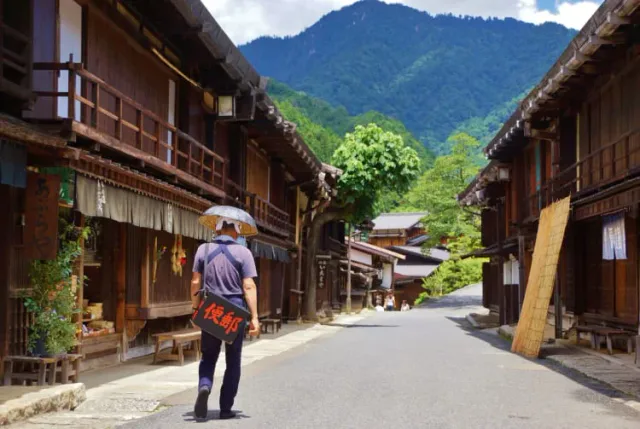
Nagiso/Tsumago is the trail-edge product. It is strongest when your day already ends in Tsumago or when a ryokan/minshuku dinner is part of the Nakasendo experience. The cost is that the final hotel transfer can depend on a local bus, taxi or property shuttle rather than simply stepping off a major rail service.
Kiso-Fukushima is the resilience product. JR Central treats it as one of the principal stations on the Chuo Main Line, with a staffed ticket office currently open 07:00–20:00 and limited-express access. It is not the most cinematic post town, but it is the easiest place to keep the next day flexible.
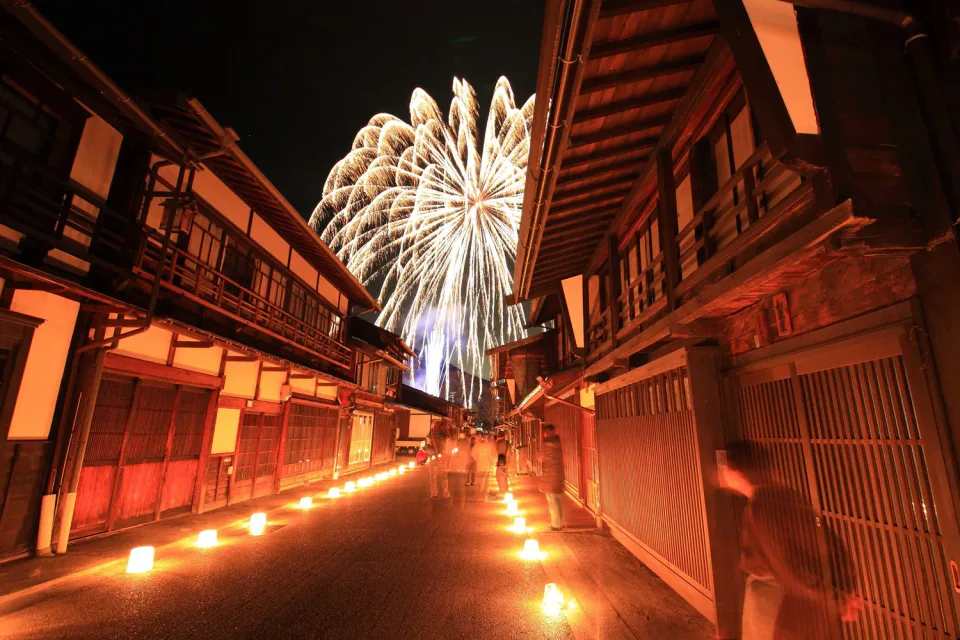
Narai is the off-hour heritage product. Shiojiri City describes Narai-juku as a preserved street of roughly one kilometre. The reason to sleep there is not that you need a room near a sightseeing stop; it is that the accommodation lets you use the street when day-trip pressure falls and again before the commercial day fully starts.
That is why hotel-rate comparisons alone are weak. A cheaper room in the wrong product can make the next morning or previous evening more expensive.
If the Nakasendo walk is the anchor, the hotel should protect the end of the walk
The Magome–Tsumago section is not only a distance problem. In May 2026, Nagiso Tourism Association warned that stone-paved sections around Otsumago toward Magome had caused injuries and can be slippery after rain. The official guidance tells walkers to slow down and use the handrails where provided.
That matters to the overnight decision. After a wet or tiring hike, a plan that still requires a bus to a rail station, a train north, another walk and a fixed dinner can be technically possible but poorly sequenced.
If you finish in Tsumago and the accommodation nearby is part of the experience, sleeping there removes the post-hike transport chain. If you are a faster walker, travelling light and still have a comfortable daytime connection to Kiso-Fukushima, the central base can remain rational.
Do not book Tsumago simply because it is on the trail. Book it when finishing the day there removes a transfer you would dislike doing tired.
The Magome–Tsumago luggage service solves one specific problem—not the whole Kiso Valley
Nagiso Tourism Association currently operates the regular Magome–Tsumago luggage-forwarding service from March 20 through November 30. Bags are accepted in the morning, generally 08:30–11:30, and collected at the other end from around 13:00–17:00. The current price is JPY 1,000 per item.
That is extremely useful for the trail, but its boundary matters: it is a trail-day forwarding service between the named reception points, not a universal hotel-to-hotel luggage system for Narai, Kiso-Fukushima, Matsumoto and Nagoya.
For a one-way hike, the service lets you walk without the main suitcase. For a two-night split across the valley, you may still need a different forwarding arrangement, station storage or a small overnight bag while the main luggage goes to the next full-service hotel.
Nagiso also currently publishes station lockers and luggage storage in Tsumago. JR Nagiso Station lockers are limited in number, while Tsumago’s information centre and other listed facilities provide additional storage. Peak-day availability should not be treated as guaranteed.
If the main suitcase is the factor stopping you from choosing the better overnight order, use the Japan luggage-forwarding guide before changing the route itself.
Kiso-Fukushima wins when you need to preserve optionality
Kiso-Fukushima is the base I would choose when the weather, energy or next-day destination is not fully settled. One room can support a southern day toward Nagiso/Tsumago or Atera and a northern day toward Narai without another checkout.
The advantage becomes larger with:
two large suitcases;
children or older travellers;
a late arrival into the valley;
an early onward train;
rain that may force you to swap a walking day with a town day;
or a trip where the next city could still be Nagoya, Matsumoto or another Kiso stop.
The trade-off is real. If every day sends you south to Tsumago and then north again, the “central” base starts charging you repeated rail time. Centrality only has value when you use the options it creates.
ValueNavi test: if you know exactly what both days will do and both move in one geographic direction, Kiso-Fukushima may be solving uncertainty you do not actually have.
Nagiso Station is useful, but Tsumago is not the station forecourt
Do not treat “stay in Tsumago” and “stay by Nagiso Station” as the same logistics choice. Nagiso Station is the rail node; Tsumago is reached by local transport or road from the station area.
Nagiso Tourism Association’s current access page publishes 2026 train and local-bus information and notes that bus tickets can be bought at the Tsumago Information Center from 08:30–17:00, with credit cards and IC cards accepted there; cash remains the driver-payment method when paying on the bus.
This is a small detail with a large planning lesson: the accommodation needs a named last mile. “Near Tsumago” can mean walkable in the preserved area, a bus ride from Nagiso, or a property shuttle with a reservation window.
Before booking half-board, write down:
the train you expect to reach Nagiso on;
the bus/shuttle/taxi that reaches the property;
the hotel’s latest check-in or dinner time;
and the fallback if one connection fails.
A beautiful ryokan is a poor late-arrival buffer when the dinner and pickup both depend on perfect timing.
Narai is worth a night when the night itself has a job
Narai’s strongest case is not access to one attraction. It is the opportunity to turn a daytime post town into an evening and morning experience.
That premium makes most sense when:
the room or restored building is part of why you are travelling through Kiso;
you will walk the street after day visitors leave;
you want an early Narai morning before continuing toward Matsumoto;
or you are using a south-to-north itinerary where the hotel move follows your actual direction.
It is weaker when Narai is only a two-hour daytime stop and the next morning immediately sends you back south. In that case, an overnight can create a hotel move without unlocking a meaningful new window.
Drivers should also remember that the preserved street is not a normal hotel driveway. Shiojiri City currently lists several visitor parking areas outside or around Narai, and parking locations/availability differ. “Driving makes Narai easy” still requires checking where the car sleeps relative to the accommodation.
Two nights: use the “two off-hour windows” test before splitting
A two-night split is only better than one base when the second hotel earns its move.
I would require one of these patterns:
Two off-hour windows: Tsumago after the hike + Narai evening/early morning.
Directional progression: Nagoya → Nagiso/Tsumago → Narai → Matsumoto, so the hotel move follows the journey.
Hard recovery need: the post-hike dinner/bath near Tsumago matters enough that returning to Kiso-Fukushima would reduce the day.
A weak split looks like this: Kiso-Fukushima night → check out → Narai night → check out → travel back south to something near Nagiso. That move has no geographic logic; it is tourism by hotel collection.
If you cannot name two benefits the second hotel creates, keep both nights in one base.
Open-jaw direction changes the answer more than nightly price
For a route entering from Nagoya and leaving toward Matsumoto/Tokyo, the valley naturally runs south to north. That makes a Nagiso/Tsumago → Narai split unusually coherent.
For a route that enters and exits through Nagoya, the same split has less value because you eventually retrace the line. Kiso-Fukushima can become a more efficient hub.
For travellers arriving from Matsumoto and heading to Nagoya, simply reverse the logic: Narai first, then move south. Do not copy a northbound itinerary while travelling southbound.
This is the main reason the “best Kiso Valley hotel” question has no universal answer. The direction of the national itinerary is a bigger variable than a small room-rate difference inside the valley.
Families and older travellers should price the hotel move differently
A split that is elegant for two light travellers can be poor for a family. Each move means repacking, checking out, carrying bags across a station or bus, waiting for the next room and rebuilding bedtime.
The trail itself also has uneven stone, hills and rain-related slip risk. If one traveller will finish the Magome–Tsumago day tired, paying for a nearby dinner-and-bed can be rational. If the group dislikes changing rooms even more than it dislikes one train transfer, two nights in Kiso-Fukushima may still win.
For mobility concerns, do not rely on “traditional inn” as a room type. Confirm stairs, lifts, room floor, bathroom access and the route from the station/shuttle for the exact property.
Three itineraries that make sense
1. Lowest-friction first visit
Night 1–2: Kiso-Fukushima. Use one day south for Tsumago/Magome and one day north for Narai, swapping the order if weather changes. Best for car-free travellers with luggage and uncertain conditions.
2. South-to-north heritage route
Night 1: Nagiso/Tsumago. Night 2: Narai. Walk the Nakasendo, finish close to dinner and bed, then move north the next day and use Narai after the day-trip window before continuing toward Matsumoto. Best for light luggage or travellers who have forwarded the main case.
3. Trail-first one-night stop
Night: Nagiso/Tsumago area. Use the luggage-transfer service where it fits, walk Magome–Tsumago, then stop moving. Best when Kiso is in the trip specifically for the Nakasendo rather than for several valley towns.
When I would not stay in Narai or Tsumago
I would not move to either preserved town simply to say I slept in a historic post town when the arrival is late, dinner is already missed, and the departure is early. In that scenario the premium off-hour window barely exists.
I would also avoid a split when the main luggage cannot move cleanly, when weather may cancel the trail, or when the next-day train is important enough that a more flexible rail base has real value.
The hotel should remove friction or unlock time. If it does neither, the scenery outside the room is not enough.
Final verdict
Choose Kiso-Fukushima for resilience, Nagiso/Tsumago for the Nakasendo finish, and Narai for the preserved-town night. With two nights, one Kiso-Fukushima room is the default for luggage-heavy or weather-flexible travel. Split Nagiso/Tsumago → Narai only when you are genuinely travelling south to north and both nights unlock something you would lose as a day trip.
The most important boundary is luggage. The current JPY 1,000 Magome–Tsumago forwarding service is excellent for the trail, but it is not a universal Kiso hotel-transfer service. Solve the main suitcase before using a hotel split to solve the sightseeing.
Where to Stay in Osaka for Couples: Choose Your Evening Before the Hotel
Where to Stay for Naoshima and Shodoshima: Uno, Takamatsu or Okayama?
Nagasaki City, Huis Ten Bosch or Unzen? Where to Stay in Western Kyushu
References
Nagiso Tourism Association — Tsumago information and luggage services · Nagiso Tourism Association — 2026 Nakasendo walking and luggage-forwarding notice · Nagiso Tourism Association — current rail and bus access · Nagiso Tourism Association — luggage storage and lockers · JR Central — Kiso-Fukushima Station · Shiojiri City — Narai-juku access and parking. Checked August 25, 2026. Local bus schedules, luggage-service dates, hotel dinner/check-in rules and train patterns can change; verify the exact travel date.