
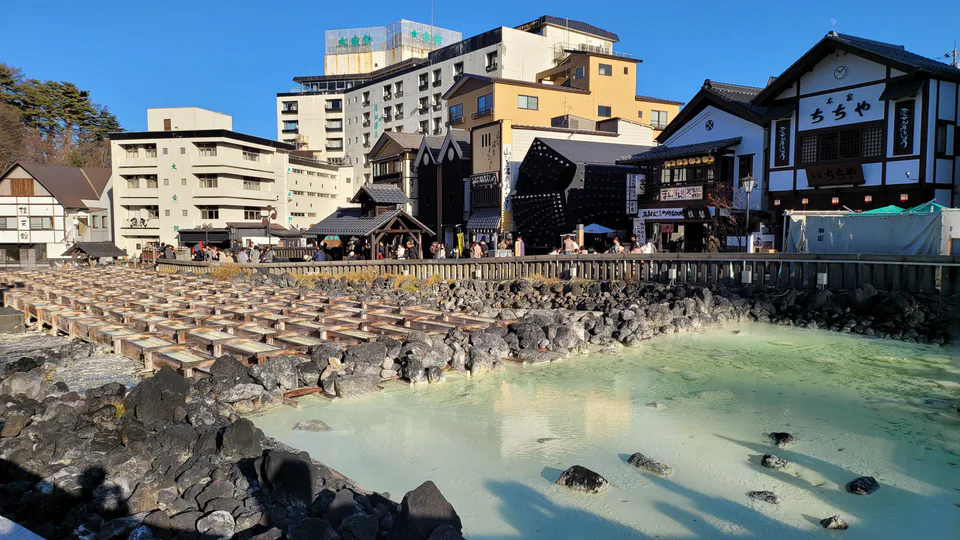
Choose Kusatsu if you want the onsen town itself to carry most of a one-night trip. Choose Ikaho if transport flexibility and an old-town walk matter more than having the most immersive hot-spring destination. Choose Shima when the ryokan and quiet river valley are the trip—and you are comfortable building the day around a much more rigid transport clock.
The three towns are not simply “lively, historic and quiet.” They solve different itinerary problems. Kusatsu has the highest destination density: Yubatake, baths, shops and evening atmosphere can justify the longer journey. Ikaho has the strongest recovery options when plans change because Shibukawa/Takasaki access gives you several rail and bus paths. Shima can have the simplest Tokyo journey of all when its direct bus fits—but the current year-round bus is essentially one fixed arrival/departure pattern, so simplicity comes at the cost of flexibility.
↔ Scroll table left or right
Your actual priority | Start with | Why | Main veto |
First onsen trip; want the town itself to feel like the destination | Kusatsu | Yubatake and the central onsen-town evening create value outside the ryokan | Longer access, busy dates and winter conditions |
Short one-night escape with flexible Tokyo return options | Ikaho | Multiple routes via Shibukawa/Takasaki plus highway buses make the schedule easier to recover | The 365-step town can be a poor mobility match if the hotel is badly positioned |
Quiet ryokan retreat; little interest in nightlife or shopping | Shima | The valley and accommodation can absorb most of the stay | The direct Tokyo bus is simple but currently very rigid |
Older traveller / stroller / limited stair tolerance | Property-specific decision | Ikaho’s 365 steps and all three towns’ hotel last miles can outweigh the town-level winner | Never book from the town label alone |
Winter self-drive | Recheck road conditions before choosing | Kusatsu sits around 1,200 m and officially warns that winter tyres/chains are needed | Do not use Tokyo weather as the driving assumption |
Kusatsu is the strongest answer when the destination—not just the ryokan—must justify the trip
Kusatsu has the highest “town-hours” value of the three. If you arrive before dinner and stay near enough to the centre, Yubatake, the steam, footbaths, shops and evening walk keep contributing after ordinary sightseeing hours. That matters on a one-night trip because the destination can still feel complete even when you only have one afternoon, one evening and one morning.
The access cost is real. Kusatsu’s official tourism site currently gives the Ueno → Naganohara-Kusatsuguchi limited-express journey at about 2 hours 33 minutes, followed by roughly 25 minutes by JR Bus. It also lists direct highway buses from Tokyo, Shinjuku, Shibuya and other Greater Tokyo terminals. In other words, Kusatsu is not hard to reach, but it deserves more total travel time than a simple Shibukawa-based Ikaho trip.
The correct value test is therefore destination hours per transfer. Kusatsu wins when you will actually use Yubatake once in daylight, again after dark, plus the ryokan/bath experience. It weakens when you arrive late, sleep and leave early. In that pattern you pay Kusatsu’s longer access cost while consuming almost none of its destination density.
For a first onsen trip, this is why Kusatsu often remains the default. You do not need the ryokan alone to carry the whole night.
Ikaho is the flexible one-night choice—but the 365 steps are a real hotel constraint
Ikaho’s strongest advantage is not simply “closer to Tokyo.” It is route flexibility. The official tourism association lists Tokyo → Takasaki at about 50 minutes by Shinkansen, Takasaki → Shibukawa at about 25 minutes, then Shibukawa → Ikaho at roughly 25 minutes by Kan-etsu bus. It also lists direct highway buses from Tokyo-area terminals.
That gives you more ways to recover if the arrival time changes. A missed connection is less likely to turn the whole trip into one rigid bus problem. Ikaho also fits more naturally into a wider Gunma route through Takasaki or Shibukawa.
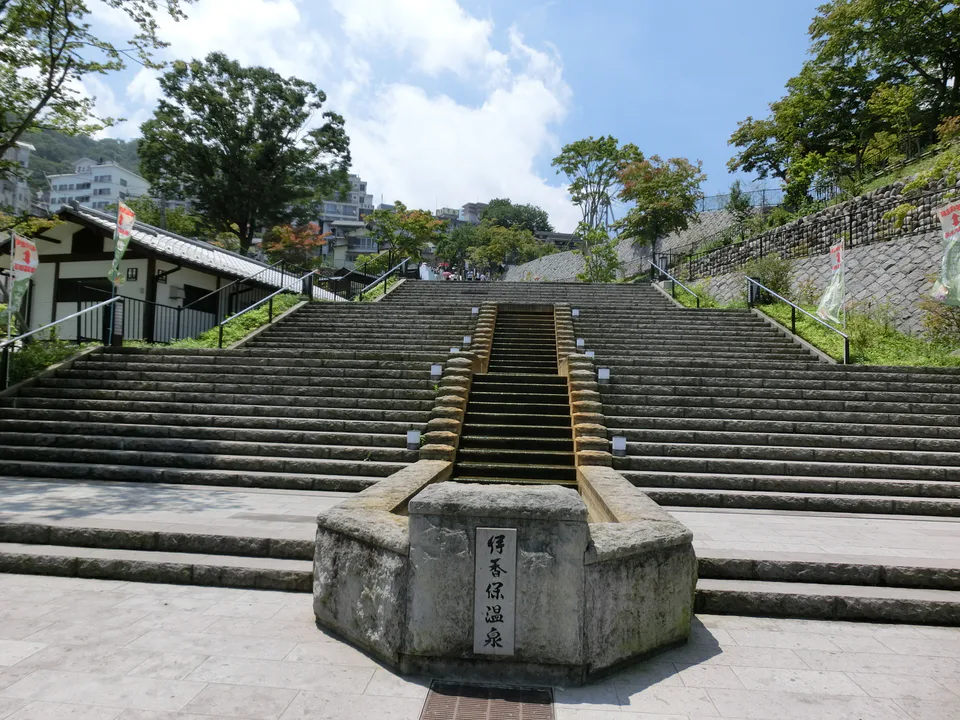
But the destination has a different physical cost. Ikaho Tourism officially describes the Ishidan-gai as 365 stone steps. That is part of the appeal for travellers who want a walkable historic streetscape; it is also the reason a hotel “near the Stone Steps” can be a terrible choice for an older parent, stroller or two large suitcases if the entrance sits on the wrong elevation.
For Ikaho, I would rank the booking questions in this order: bus-stop-to-hotel route → stairs/slope → hotel shuttle → room/onsen → view. A ryokan 200 metres away on a map can be more tiring than a property farther away with a well-timed transfer.
Shima’s direct Tokyo bus is both its best feature and its biggest scheduling trap
Shima can look inconvenient on a railway map and surprisingly simple on the actual bus timetable. Kan-etsu’s current year-round Shima Onsen Go leaves Tokyo Station at 08:50 and reaches Shima Onsen at 12:20. The return leaves Shima at 13:45 and reaches Tokyo at 17:30.
For a pure one-night retreat, that is a very coherent product: arrive around lunchtime, protect the afternoon, dinner and morning, then leave after lunch the next day. You get roughly a full 25-hour destination block without needing to manage a train-to-local-bus connection.
The catch is rigidity. Kan-etsu currently says the planned 2026–27 winter and spring extra services have been cancelled; travellers are directed to the year-round service and the separate Ikaho/Shima Haneda route. If the single year-round Tokyo departure does not fit your hotel or flight, the “fewest transfers” advantage can disappear.
This creates an important distinction: Shima is simple when your whole trip can fit inside the bus clock; Ikaho is flexible when you need the clock to fit around the rest of the trip.
Do not confuse transport simplicity with itinerary flexibility
This is the most useful three-way comparison.
Kusatsu: many access routes, but longer overall journey. The destination pays you back with more town activity and a recognisable evening centre.
Ikaho: the highest recovery flexibility because you can use Shibukawa/Takasaki rail plus several bus patterns. The town’s slope is the hidden cost.
Shima: potentially the fewest transfers from Tokyo, but the current direct service locks you into a much narrower arrival/departure window.
A traveller who values certainty should decide which kind of certainty matters. “I do not want to transfer” points toward Shima. “I want several fallback departures” points toward Ikaho. “I do not mind a longer journey if the destination clearly rewards an overnight” points toward Kusatsu.
One night: choose the town that still feels complete after you subtract transport
On a one-night onsen trip, the wrong question is “Which town has the most things to do?” The better question is how many useful hours remain after travel.
Kusatsu: strongest when you arrive early enough for Yubatake daylight + evening + ryokan. If the trip loses the afternoon, much of the destination premium disappears.
Ikaho: strongest when you want a short old-town walk, bath, dinner and easy return routing. It does not need as many destination hours to feel coherent.
Shima: strongest when the direct bus gives you the full noon-to-next-afternoon retreat. Weak when you try to squeeze the town between other same-day obligations.
Do not visit two of the three in one overnight trip just because they are all in Gunma. The transfers consume the exact evening and morning hours that justify an onsen stay.
The ryokan matters most in Shima, least in central Kusatsu
This is a useful spending rule. Kusatsu has enough public town identity that a simpler hotel can still deliver a strong destination experience. You can walk Yubatake, use public/foot baths and eat outside the property.
Ikaho sits in the middle. The Stone Steps and old-town atmosphere add independent value, but hotel elevation, shuttle and bath quality still matter.
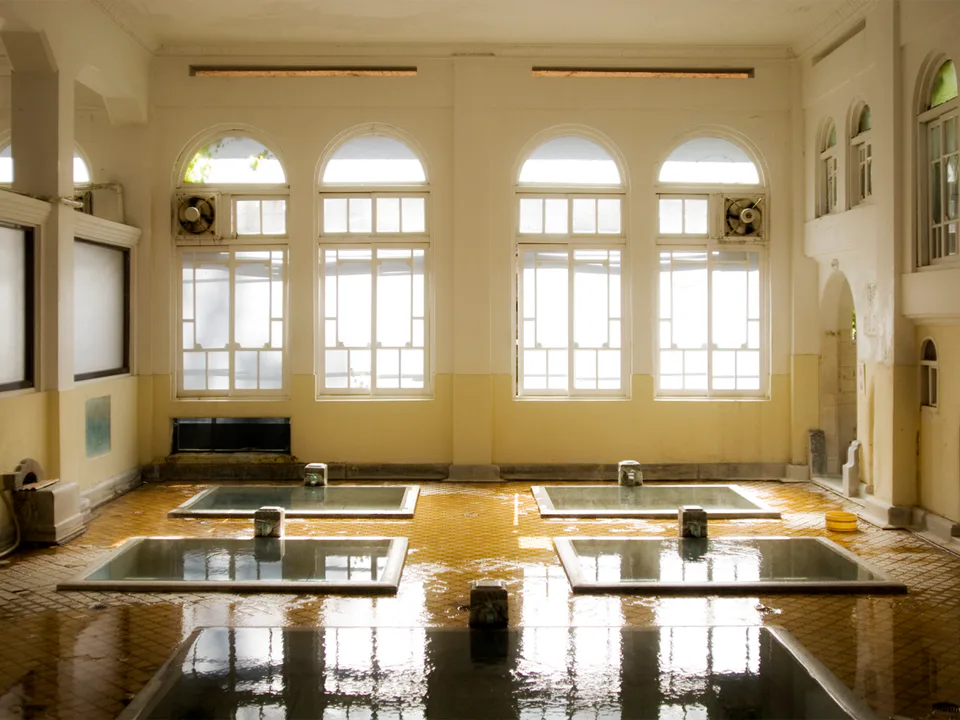
Shima is the most accommodation-dependent. If the room, meal plan, bath and river setting are mediocre, there may not be enough outside the hotel to justify choosing the quieter valley over Kusatsu or Ikaho. Conversely, a strong Shima ryokan can make the lack of nightlife irrelevant because the hotel is exactly where you planned to spend the evening.
Before paying for half board or a private bath, use the Japan ryokan and onsen selection guide. A town comparison cannot rescue a room plan that does not fit the travellers.
Families and older travellers: Ikaho is the town most likely to reverse on the last 300 metres
A family or older traveller can enjoy any of the three, but the physical route changes the ranking.
Ikaho’s 365 steps are an attraction and a mobility cost at the same time. If the hotel requires repeated climbing between the bus stop, ryokan and dining/baths, the “easier access from Tokyo” advantage can be consumed after arrival.
Kusatsu’s centre is compact but winter ice and snow matter. Shima is quieter but properties are spread along the valley and the final bus stop/walk varies. Ask the exact hotel for shuttle, stairs, lift access and baggage handling before applying a town-level recommendation to a specific room.
If luggage is the only reason the preferred ryokan looks difficult, see whether the main cases can be forwarded using the Japan luggage-forwarding guide.
Winter changes the failure mode in each town
Kusatsu’s official portal places the town at about 1,200 metres elevation and explicitly warns drivers to use winter tyres or chains when snow conditions require them. The winter premium is obvious—snow plus hot water—but so is the road risk.
Ikaho’s problem is more pedestrian: the Stone Steps and sloped hotel approaches become the part of the trip to scrutinise. A beautiful room is poor value if the party avoids leaving it because the route feels unsafe.
Shima’s problem is timetable resilience. The current cancellation of the planned 2026–27 winter/spring extra direct-bus services means the year-round bus should not be treated as a high-frequency shuttle. Recheck the exact service and road conditions before locking a non-refundable ryokan plan.
In all three cases, winter should make the hotel itself more important. If bad weather removes the town walk, the bath, dinner and room need to be strong enough to carry the night.
Two nights: when does the second night add real value?
Two nights in Kusatsu work when you want a slower town stay, several baths, snow/seasonal activities or simply a buffer against the long access journey. The second night is easier to justify because the destination has more independent activity.
Two nights in Ikaho make sense when the second day includes Lake Haruna, Mizusawa or another nearby branch. If both days are only Stone Steps + baths, one night may already capture the core.
Two nights in Shima should be deliberately resort-like: a high-value ryokan, long baths, reading, walks and no pressure to accumulate attractions. If you need a long sightseeing list to feel the second day was worthwhile, Shima is probably the wrong town.
Do not split one night between two Gunma onsen towns unless the second stay also advances the onward route. Two checkouts do not create two times the onsen value.
Final verdict
Kusatsu is the best first onsen-town choice when you want the destination itself to justify a longer journey.Ikaho is the better short-trip choice when route flexibility matters and your party can handle—or avoid through smart hotel selection—the 365-step geography.Shima is the best retreat when you want the ryokan to carry the trip and the current fixed direct-bus window fits your schedule.
For a one-night trip from Tokyo, I would not rank them by travel time alone. Rank them by what happens after arrival: Kusatsu gives the most independent town hours, Ikaho gives the most recovery options, and Shima gives the cleanest retreat only when you accept its clock.
Fukuoka Hotels With Public Baths: Will You Actually Use the Onsen, Spa or Sauna?
Toy Story Hotel vs Grand Nikko Tokyo Bay Maihama: Which Is Better for Families?
Kinosaki Private Bath vs Public Baths: Do You Need a Private Onsen?
Tokyu Stay Hida-Takayama Musubi no Yu: Which Room Works for Two Suitcases and Three Nights?
Fukushima Waraji Festival 2026: Aug 7, 8 or 9? Which Day Should You Choose?
References
Kusatsu Onsen Tourism Association — rail access · Kusatsu Onsen Tourism Association — bus access · Shibukawa Ikaho Onsen Tourism Association — current access · Ikaho Tourism — 365 Stone Steps · Kan-etsu — year-round Shima Onsen Go and 2026–27 service notice. Checked August 25, 2026. Recheck live buses, ryokan meal deadlines and winter road conditions for the travel date.