
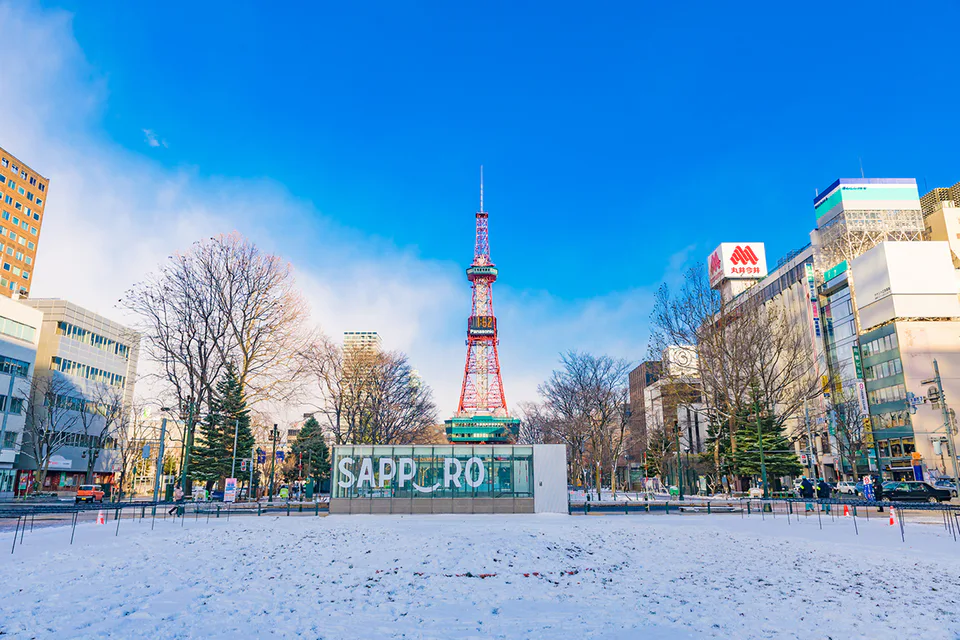
For skiing, stay in Sapporo or at the resort? If skiing is only Sapporoone day within a city trip, staying in Sapporo is usually right. For two consecutive ski days, if they are at SapporoTeine, SapporoKokusai, or another nearby resort and you still want city dinners, nightlife, and the same hotel, Sapporostill makes sense. When skiingbecomes three or more full mountain days, every day involves an early lesson or catching the first lift, or repeated transfers begin consuming more useful time than one hotel move, move to the resort. The real comparison is not city hotel versus resort hotel; it is the larger cost of ‘daily commuting’ versus ‘moving accommodation once.’
If you have not even decided how much skiing will matter in your overall Hokkaido trip, first see Hokkaido regions, nights, and transport itinerary planning. This guide handles the next decision only: whether you need to stay at the resort or can keep Sapporo as your base throughout.
For skiing, stay in SapporoSapporo or a ski resort: the 30-second decision
↔ Scroll table left or right
Yourskiingplan | Better base | Reason |
SapporoOnly one ski day in the trip | Sapporo | Moving hotels for one nearby ski day is usually more trouble than one commute |
Two nearby Sapporo ski days plus city evenings | Usually still choose Sapporo | No hotel move, and you can still use Sapporo evenings after skiing |
Early lessons both days, children, or a heavy equipment routine | Start considering resort accommodation | Morning preparation repeats and transport delays hurt more |
Three or more full ski days | Ski resort | The first and last mountain time gained each day adds up considerably |
Someone travelling with you does not ski at all | Usually lean toward Sapporo | Unless the resort itself has enough non-ski content for the whole group |
For one ski day, Sapporo is the default: you save a hotel move, not give up skiing
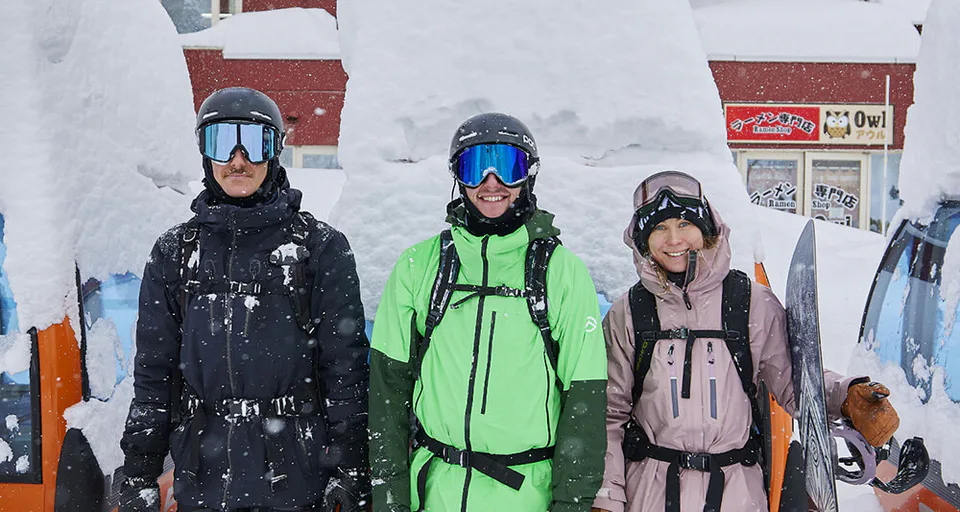
This is especially compelling when the trip is already about Sapporo—restaurants, the Snow Festival, shopping, or another city day. Checking out, managing bags, fitting a shuttle, and checking in again just to spend one night at a resort usually buys only a little extra mountain time around the ski day. For one casual ski day, it is usually not worth it.
If the same city hotel is itself part of the value, compare four nights in a Sapporo winter hotel first. Station distance, laundry, and snow walking used repeatedly across the stay often matter more than a transfer on one ski morning.
Two consecutive ski days are the boundary, not an automatic reason to leave Sapporo
Two nearby ski days still suit a Sapporo base well. Ski by day, return to the city at night, and do not move hotels. This is usually best for travellers for whom skiing matters but is not the sole focus of the Hokkaido trip.
The answer changes when both days depend on early lessons, lengthy equipment hire, children’s ski school, or a resort farther from Sapporo. Then the commute is no longer one journey; it removes time from each valuable ski morning.
If you remain in Sapporo and will leave early with equipment on consecutive days, see Hotel Emion Sapporo vs Keio Prelia, comparing station walks, luggage routes, and large baths rather than a small room-rate difference.
Sapporo Teine best shows why a city ski base can work
Sapporo Kokusai is a day trip only when ‘the return is already solved’
That is the real price of day skiing. Staying in Sapporo preserves the city hotel but puts you at the mercy of a transfer schedule; staying at the resort simply removes the ‘return bus’ problem. For one day it is usually easy to accept; over many consecutive days it becomes a reason to move nearer the mountain.
A resort stay buys first- and last-run time each day, not merely proximity to snow
A resort-hotel premium becomes easier to justify only with repeated use. Wake up, eat, collect equipment, meet a lesson, or take the first lift without first transferring from the city; finish skiing and return directly to the room rather than organise another bus back to Sapporo. Across three ski mornings, those small frictions accumulate into a visible time difference.
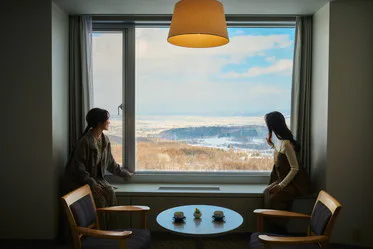
Once skiing becomes a multi-night segment, do not force a Sapporo-commute mindset. First see the complete Niseko ski guide for transport, areas, lift passes, and a four-to-seven-day structure.
Beginners and families cross the ‘stay at the resort’ line sooner
A first ski morning is already more complex than an experienced skier’s: fit equipment, put on boots, register for lessons, find the right beginner area, and repeat the whole process with children. Adding a city commute beforehand is not merely a few extra minutes; it adds a chain of steps that must all work on time.
For one lesson day, Sapporo can still be reasonable; for two or three consecutive early lessons, sleeping beside the same rental and meeting point may be worth more than the convenience of Sapporo evenings. If Niseko is the destination, first use Niseko lift passes, equipment hire, and ski lessons to organise the lesson meeting point, rentals, and first ski morning; if Furano is the destination, first use where to stay in Furano to settle the base question before deciding whether to pay the resort-convenience premium.
Mixed groups should often stay longer in Sapporo because the hotel must serve non-skiers too
Skiers see a resort hotel as convenience; someone who does not ski may see it as ‘stuck beside a mountain for three days.’ Sapporo resolves that naturally: some people ski, others use the city, and everyone eats together at night without designing a separate resort non-ski itinerary.
The answer can reverse at a resort with enough non-ski content of its own. Niseko and Rusutsu are more likely than a purely functional ski area to work for everyone. In Niseko, first compare Hirafu, HANAZONO, Annupuri, and Niseko Village, because restaurants, supermarkets, nightlife, and non-ski time differ greatly.
Do not turn Niseko, Furano, or Rusutsu into daily Sapporo commutes just to avoid one checkout
The strategic rule is nevertheless stable: if you will ski several consecutive mornings at the destination resort, stay there. The next Niseko question is whether you need true ski-in/ski-out, or are willing to accept a little more snow-route friction for a village position that is better for evening dining.
If Sapporo wins, the accommodation area and morning departure point matter more than a small price gap
Skiing from Sapporo adds early departures, equipment, and winter walking to the usual hotel choice.Hotel Emion Sapporo vs Keio PreliaCompare station walks and luggage routes; if laundry or natural hot springs matter more, see the Sapporo winter four-night hotel guide.
For two consecutive ski days from Sapporo, multiply the actual hotel-to-bus/JR departure walk by two. A slightly cheaper room quickly loses its rate advantage if it adds a long icy walk every morning.
Conclusion: stay in Sapporo or move to the ski resort?
For one ski day, stay in Sapporo. For two consecutive days at a nearby resort, keep staying in Sapporo if you still want Sapporo evenings. Move to the resort when skiing becomes three full days, early lessons or family equipment routines make mornings crucial, or the same long transfer repeats each day.
The wrong question is ‘is a ski-resort hotel worth it?’ The real question is ‘what does it remove?’ If it removes only one checkout but adds one day-trip commute, stay in Sapporo. If it removes three early buses, three return journeys, and three lesson mornings where lateness matters, move up the mountain.
How to decide the next step
Hokkaido itinerary: choose regions by season, nights, airport, and transport
Four winter nights in Sapporo: laundry, station distance, or natural hot spring?
Hotel Emion Sapporo vs Keio Prelia Hotel Sapporo
Complete Niseko ski guide 2026–27
Where to stay in Niseko: Hirafu, HANAZONO, Annupuri, or Niseko Village
True ski-in/ski-out hotels in Niseko compared
Where to stay in Furano: Furano Station, Nakafurano, Asahikawa, or Sapporo
Official sources used for this guide
Checked 14 August 2026: Visit Sapporo city ski-area information, Sapporo Teine’s official access and 2026–27 season-pass announcement, Sapporo Kokusai official access, and the current Niseko/Rusutsu access pages. Some detailed winter bus schedules still show 2025–26 dates, so they cannot be treated as confirmed 2026–27 services; reconfirm current-season transport before booking lessons or fixed activities.