A Tokyo sumo experience can mean three completely different purchases: a real Grand Sumo tournament, morning practice inside an active stable, or a designed entertainment show with food and audience participation. Do not compare them as if they are three versions of the same attraction. Start with your dates. If your Tokyo stay overlaps an official tournament and you can get a ticket, that is usually the first option to evaluate. If it does not, choose morning practice when access to the working sport matters most, or a show when explanation, comfort and a predictable evening matter more.
For 2026, the September Tokyo Grand Sumo tournament runs September 13–27 at Ryogoku Kokugikan, with general advance sales beginning August 8. That calendar fact can overturn the entire decision. If your dates overlap, check ValueNavi’s September Grand Sumo Tokyo 2026 ticket strategy before paying for a separate tourist product.
Next decision | Check the real Tokyo tournament first
ValueNavi decision table: choose the memory first, then the product
↔ Scroll table left or right
Your situation | Best first choice | Why | Main failure mode |
Your dates overlap a Tokyo Grand Sumo tournament | Official tournament | You are seeing active wrestlers compete in the real ranking system, not a demonstration. | Buying a tourist show first and discovering the tournament later. |
No tournament; you care about training, discipline and access | Morning practice | You observe active athletes in a working stable rather than a staged performance. | Expecting entertainment, conversation or freedom to move around. |
Family or mixed-interest group; you want an easy evening | Entertainment show | English explanation, food, demonstration bouts and audience interaction create a lower-friction introduction. | Assuming the audience wrestling challenge is guaranteed. |
You only have one free evening even during tournament season | Show can still win | Compact timing may matter more than competitive authenticity. | Calling it “worse” simply because it is designed entertainment. |
Sumo is only a vague Japan checklist item on a 2–3 day Tokyo trip | Skip paid sumo | The money and time may displace neighborhoods or museums you actually care about. | Letting high ratings create a false must-do. |
ValueNavi Score: tournament, practice and show optimize different things
These are editorial scores for decision-making, not official ratings. A higher number means the format is stronger on that dimension for a typical first-time visitor.
Dimension | Official tournament | Morning practice | Entertainment show |
|---|---|---|---|
Competitive authenticity | |||
Behind-the-scenes access | |||
English accessibility | |||
Family / mixed-interest fit | |||
Time efficiency | |||
Interaction potential | |||
Schedule flexibility |
The important result is not an overall winner. The tournament dominates when the goal is real competition. Morning practice wins when the goal is observing how the sport is built. The show wins when the goal is a compact, understandable and social introduction. Treating one score as “best sumo” would erase the exact decision you are trying to make.
The tournament should usually win when your dates line up
A Grand Sumo tournament is not a longer tourist show. It is the competitive season itself: active rikishi, real rankings, an arena following the day’s bouts and an atmosphere that changes as the higher divisions approach. If you have never seen sumo and your dates line up, a separate entertainment show can become redundant unless you specifically want dinner, comedy, explanation and audience participation.
The trade-off is time and certainty. Tournament tickets can be harder to secure, and the event works best when you let it become a major part of the day rather than a two-hour slot squeezed between unrelated attractions. A first-time visitor may also understand less without some advance context. A show solves those problems by sacrificing competitive reality.
That is why “tournament if possible” is a strong recommendation with a boundary condition, not a universal rule. If you have one usable evening and no half-day to spare, the entertainment show can be the more rational purchase even while the tournament is in town.
Morning practice: choose it for access, not spectacle
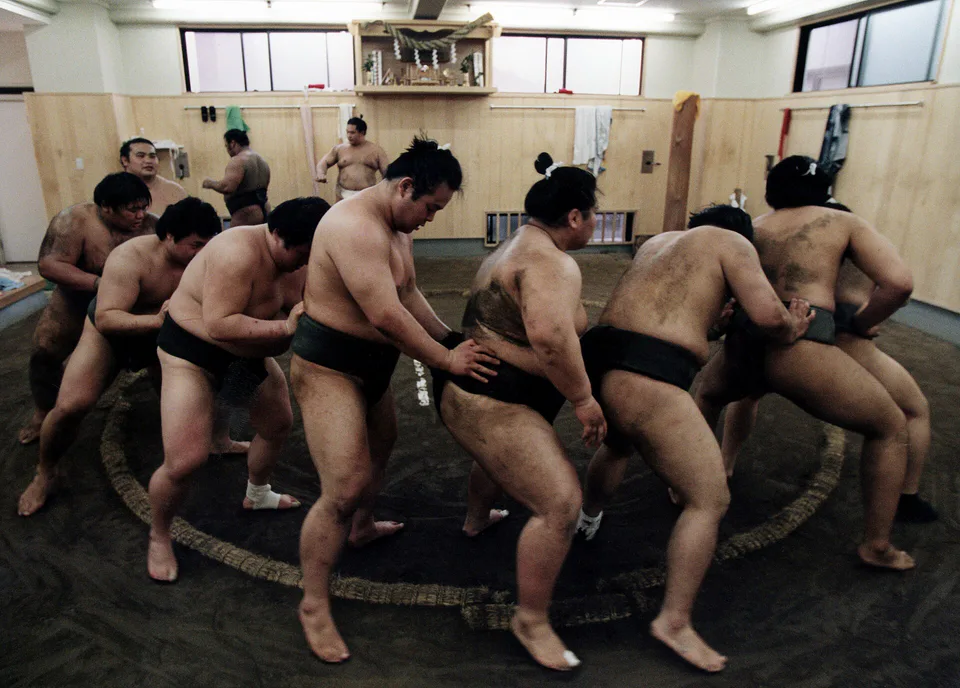
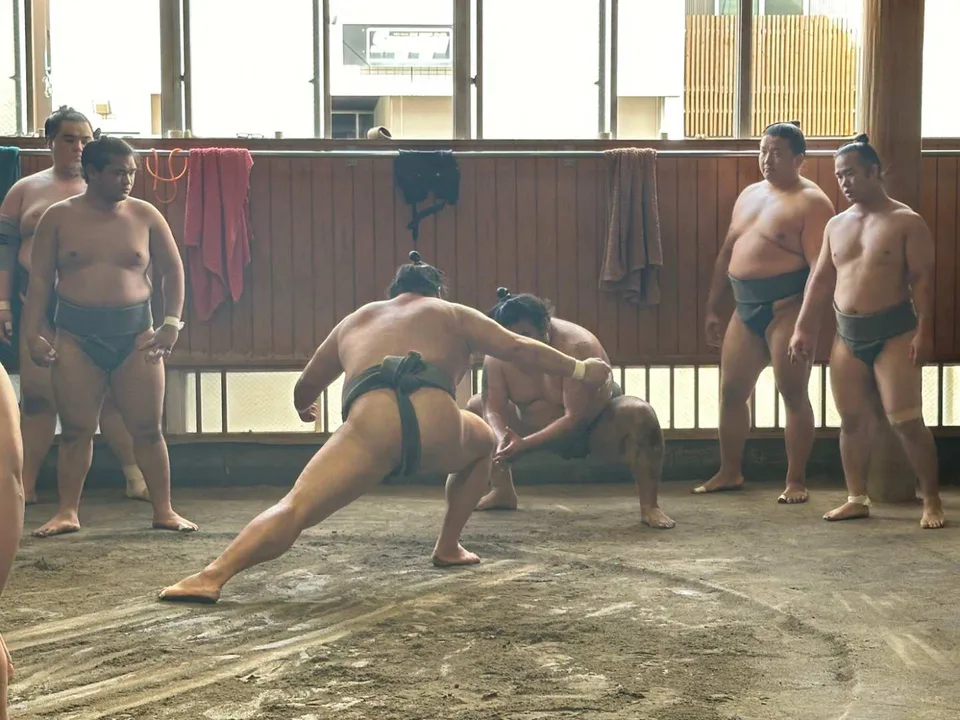
The current morning-practice product checked for this guide lasts about two hours, includes an English-speaking guide and visits a real working stable in Tokyo’s historic sumo area. Its value is observational: you are watching athletes train. Long stretches may be quiet. Visitors are expected not to stand and move around during practice, phones must remain silent, and late arrival can mean you are unable to enter.
The current listing does not accept children under 11. That single rule can settle the decision for a family before price or reviews matter. It is also a poor fit for anyone who needs flexible bathroom breaks, constant stimulation, guaranteed photos or hands-on participation. “More authentic” is not automatically “better” when the restrictions are exactly what your group dislikes.
On August 27, 2026, the listing showed about ¥14,500 (US$91) per person at the prevailing exchange rate. The marketplace price and FX can change. At that spending level, the question is not whether two hours of sumo is “worth ¥14,500” in the abstract. It is whether quiet access to real training is the outcome you would choose over a more interactive evening.
Check current morning-practice dates, price and age rules
The entertainment show: you are paying to remove friction
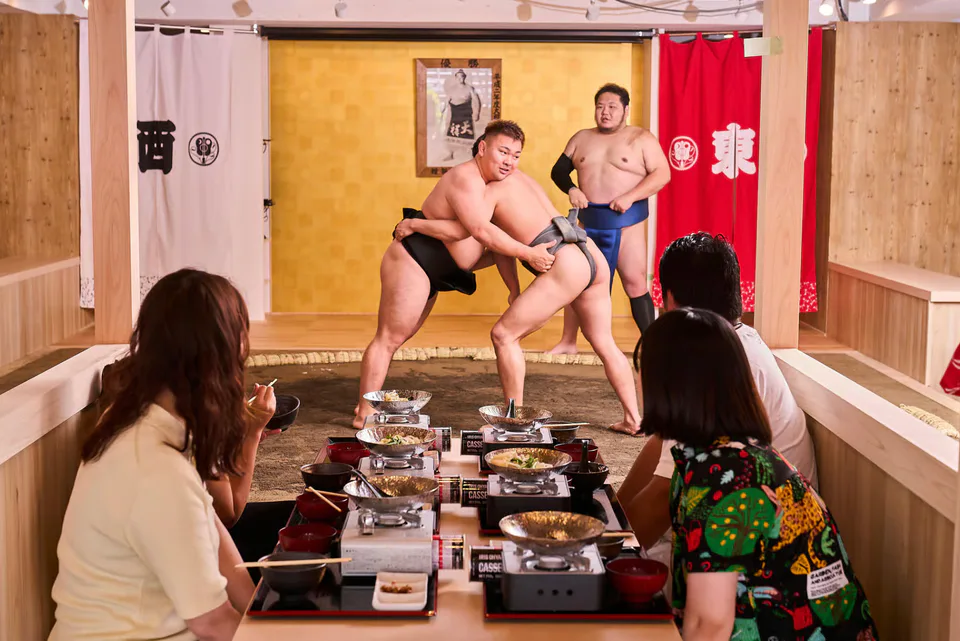
The current two-hour show product combines bilingual English/Japanese explanation, demonstration bouts by retired professional wrestlers, chicken chanko and other Japanese dishes, a geisha dance segment, souvenir photography and a chance for selected guests to enter the ring. The product itself describes the experience as entertainment, which is exactly the right expectation to bring.
On August 27, 2026, the listing started around ¥16,100 (US$101) per person at the prevailing exchange rate. That puts it in roughly the same spending band as the morning-practice option. Price therefore does not solve the decision. Morning practice buys access to a working sport; the show buys interpretation, food, pacing and interaction.
Do not overvalue the wrestling challenge. Participant places are limited and can be allocated by lottery if too many people volunteer. The show should still be worth the price to you if you remain in your seat all evening. The current listing also says vegetarian and vegan requests can be handled with advance notice, while halal and gluten-free meals are not provided; those food constraints can matter more than a small price difference.
If your group includes children, people with only casual interest in sumo or travelers who do not want to research the rituals beforehand, the show often produces more usable value. It is also easier to make it the anchor of an Asakusa evening rather than restructuring the entire day.
Compare current sumo show times, seats and meal conditions
The hidden cost is the slot: protect 3 hours for practice, 3 hours for the show, half a day for a tournament
↔ Scroll table left or right
Format | Advertised / core duration | Realistic itinerary block | Hidden cost |
Official tournament | Flexible within the tournament day | Protect a half-day if sumo is a main event | Ticket logistics plus the temptation to arrive late and miss the gradual build-up. |
Morning practice | About 2 hours | About 3–3.5 hours including travel and early-arrival buffer | Late arrival can destroy the whole purchase, so buffer has real value. |
Entertainment show | About 2 hours | About 2.5–3 hours including arrival and exit | It occupies the same evening slot that could hold a long dinner, night view or shopping. |
This is why hotel location should not be optimized around one sumo booking. If your trip already involves multiple Shinkansen day trips, Tokyo Station vs Shinjuku may be a bigger decision. If most plans sit in eastern Tokyo and you arrive through Narita, Ueno vs Shinjuku may expose a different trade-off. Move hotels for a route pattern, not one two-hour activity.
For a family deliberately building around Asakusa, room layout may matter more than saving ten minutes on a train. The Asakusa CROSS Suites room guide is useful if you are deciding whether everyone can stay in one room.
Next decision | Decide where your Tokyo base should be
Five failure modes that change the answer
1. Booking a show before checking the official calendar
This is the biggest avoidable mistake. If a real Tokyo tournament overlaps your trip, you should at least compare it before locking in a simulation-style product.
2. Treating morning practice like a normal attraction
A stable is a workplace. Quiet behavior, fixed timing and limited movement are not minor details; they are the price of access.
3. Building the show around a guaranteed ring challenge
The chance to participate is attractive, but places are limited. The meal, demonstrations and explanation need to justify the purchase even without your name being called.
4. Ignoring age or meal restrictions until after payment
The specific morning-practice product checked here excludes children under 11. The show has its own meal and seating conditions. These are decision filters, not footnotes.
5. Spending ¥15,000–¥16,000 because “sumo is Japanese” rather than because you want sumo
On a short Tokyo trip, a paid experience plus travel can replace an entire neighborhood block. If your interest is weak, walking around Ryogoku, seeing Kokugikan from outside and having chanko elsewhere may be enough.
What if authenticity is your top priority?
The obvious objection is that morning practice feels “more authentic” than a show, so why not recommend it to everyone outside tournament dates? Because authenticity is only valuable when you want the constraints that come with it. A traveler who wants athlete observation, etiquette and quiet access will probably find practice exceptional. A family that wants explanation, laughs, dinner and photos may find the same two hours frustrating.
The opposite objection also matters: if the show is easier and better explained, why bother with morning practice? Because a designed performance cannot reproduce the uncertainty and discipline of watching active wrestlers train. Easier is not automatically deeper. The right question is which type of friction you are willing to accept for the memory you want.
Final verdict: calendar first, then choose sport, access or entertainment
Official tournament first if your dates line up and tickets are realistic. Morning practice next if no tournament overlaps and you most want behind-the-scenes access to active wrestlers. Entertainment show if you want the lowest-friction introduction, especially for a family or mixed-interest group.
Skip all three if sumo is only a checklist item and the ¥14,000–¥16,000 spending band plus travel time would force out something you care about more. There is no abstract “best Tokyo sumo experience.” The expensive mistake is buying the wrong category.
Next decisions
If your dates overlap September 2026, go next to the Tokyo Grand Sumo ticket guide. If you are building the trip around eastern Tokyo, compare Ueno and Shinjuku as bases. If you are adding more east-Tokyo culture to the same day, the Tokyo National Museum booking guide is a natural follow-up.
FAQ
Is a Tokyo sumo show the same as a real tournament?
No. The current show is an entertainment performance by retired professional wrestlers with commentary, food and audience interaction. An official Grand Sumo tournament is live competitive sumo by active wrestlers.
Is morning practice more authentic than a sumo show?
Yes in the sense that you are observing active wrestlers train inside a working stable. That authenticity comes with stricter behavior rules, an early schedule and less participation.
Should I book a show during the September 2026 Tokyo tournament?
Check official tournament tickets first. A show can still make sense if you only have an evening or specifically want dinner, explanation and interaction, but it is no longer the automatic first choice.
What is the easiest option with children?
The entertainment show is usually easier. The specific morning-practice product checked for this article does not accept children under 11. Recheck the rule for your date before paying.
Facts and product conditions checked August 27, 2026. The Japan Sumo Association confirms the September 13–27 Tokyo tournament and August 8 general ticket sale. Marketplace prices, cancellation terms, age limits, meal options and exchange rates can change, so recheck your exact date before booking. USD-to-JPY figures are approximate conversions using the August 27 exchange rate.