
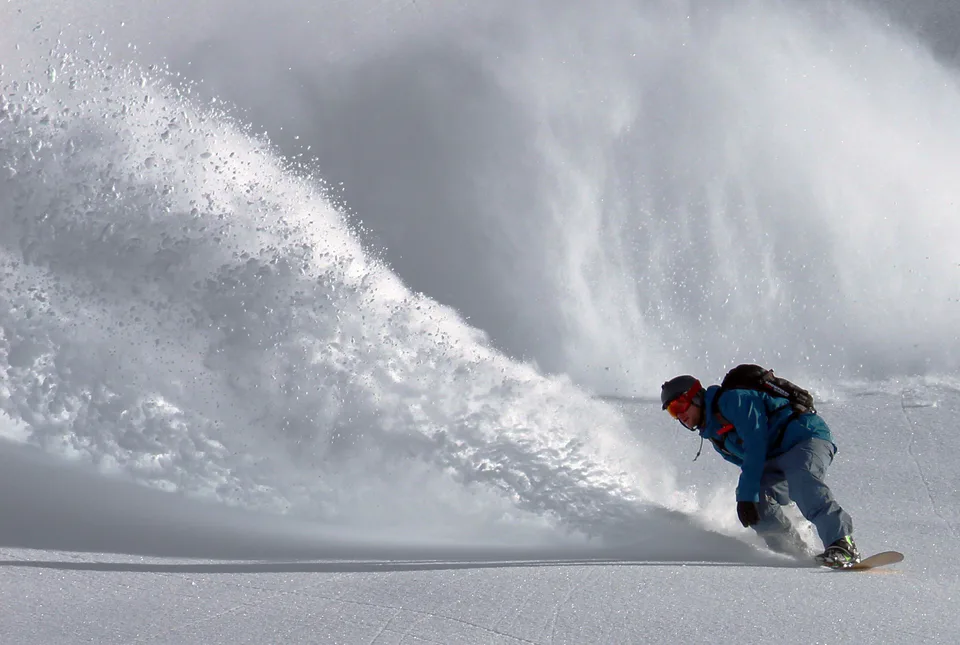

If powder is the main reason you are flying to Niseko, January gives you the strongest bet on repeated cold-snow refreshes, but it is not automatically the best ski holiday. February is often the better balance for travellers who still want midwinter snow but place more value on visibility, lesson days and a little less obsession with “maximum storm frequency.” March is the value/family compromise: fresh powder can still happen, but you must accept more temperature swings, sun and refreeze risk.
The key mistake is treating powder quality as a snowfall number. A useful ski day needs new snow × lift access × visibility × terrain that matches your ability. A 30 cm storm with upper lifts suspended can be a worse day for a first-time visitor than a 5 cm refresh on a fully operating mountain.
↔ Scroll table left or right
Your priority | Best starting window | Why | Main trade-off |
Powder probability above everything | January | Cold midwinter pattern gives the best chance of repeated refreshes | Wind, whiteout, peak demand and expensive flexible inventory |
Strong winter snow + more balanced first trip | February | Established base and winter conditions without making January mythology the whole holiday | Still peak pricing and no powder guarantee |
Beginners / families / value | Early–mid March | Longer daylight and often more comfortable groomer days | Warm spells, crust and lower-slope variability increase |
Lowest price / spring skiing | Late March–April | Cheaper lift rates and fewer visitors | Japow probability is much lower and resort operations contract by date |
One-day “powder chase” from overseas | Do not build the trip this way | Storm timing is too volatile | You are paying long-haul cost for one weather roll |
“Japow” is useful slang, not a measurable guarantee
Japow is an informal blend of Japan and powder. It is not a Japan Meteorological Agency category, a unique snow crystal or a quality label that applies to every Hokkaido ski day.
JMA explains one of Hokkaido’s major heavy-snow patterns as cold, dry continental air crossing the relatively warmer Sea of Japan, taking up heat and water vapour, becoming unstable and forming snow clouds. Hokkaido’s mountains then force those clouds upward and can intensify snowfall on the Sea of Japan side. That mechanism helps explain the reputation. It does not tell you what the surface under your skis will feel like at 11:30 tomorrow.
After snow falls, wind can redistribute it, grooming can pack it, traffic can track it, sun can soften it and warming followed by cooling can create crust. “20 cm overnight” is therefore an input, not the verdict.
Use the powder-day equation: snow × access × visibility × ability
For trip planning, I would judge a potential powder day through four filters.
1. New snow
Recent snowfall matters more than the seasonal total. A deep base helps cover terrain, but it does not tell you whether the top 15 cm are new, wind-affected or tracked.
2. Access
Niseko United publishes live lift states such as operating, slowed, standby and suspended/closed. If upper lifts or cross-resort links are down, a large storm can shrink the usable mountain dramatically.
3. Visibility
Heavy snowfall and wind can create flat light or whiteout. The snow can be excellent while the day is operationally poor for a skier who cannot read the terrain safely.
4. Ability
Deep snow is not automatically easier. Beginners can struggle to turn, stand up and recover buried equipment. The “best powder day” for an advanced tree skier may be a terrible lesson day for a first-timer.
This is why the same overnight snowfall can produce different answers for different travellers.
January vs February: choose probability or balance
Choose January when powder is the core product and you are willing to accept storm-day disruption as part of the bargain. Your trip should be long enough that one windy or low-visibility day does not feel like failure.
Choose February when you still want a serious winter trip but the group also contains beginners, children or travellers who value clearer sightseeing and more predictable daily rhythm. February can still deliver major storms; it is not “the dry month after Japow January.”
The important point is that no calendar month guarantees a particular storm sequence. JMA climate data describes long-term context, not your booked week. A seven-day January trip can miss a major refresh; a February or March trip can catch one.
March is not “bad snow” — it is a wider-variance product
March can be excellent when a cold front arrives. It can also produce sunny afternoons, softening lower slopes, overnight refreeze or more obvious elevation differences. That makes the month less attractive to a traveller whose only acceptable outcome is dry untracked powder.
For families and beginners, however, the trade can be rational: longer daylight, potentially friendlier outdoor temperatures and strong established base depth can improve the overall holiday even if the pure Japow probability falls.
Niseko United’s current 2026–27 pricing also reflects the seasonal change. March 1–22 is classified as regular season, while March 23–April 4 moves into spring rates. Price falls because the product changes; it is not a secret discount on identical January conditions.
Early December and April should pass a snow-dependency test
Niseko United currently plans all four ski areas to open from November 28, 2026, but explicitly states that opening days and hours can change. Early-season travellers should not assume every lower connection, ski-back route or beginner zone will function exactly as it does in January.
Likewise, the four resorts do not share one spring closing date. For 2026–27, Niseko Village is scheduled to April 4, HANAZONO to April 11, while Grand Hirafu and Annupuri continue to May 5. A spring hotel can remain open while the slope relationship you expected has changed.
If skiing the entire linked network is essential, book inside the core season rather than relying on the first or last theoretical operating week.
How many nights increase the chance of getting powder?
The most effective way to improve powder odds is not picking a magical date. It is increasing the number of independent weather windows.
For a long-haul first trip, I would rather book six nights with four core ski days and one flexible weather/rest day than four nights with three mandatory ski days. The longer trip does not guarantee snow; it reduces the damage from bad timing.
Use the flexible day aggressively:
storm + good lift access → ski;
storm + upper lifts suspended → local lower-mountain session, lesson or rest;
clear day + full connections → explore all four Niseko United areas;
fatigue → onsen/rest instead of turning tomorrow into a bad day too.
The rebuilt Niseko Ski Trip Guide uses this “usable ski day” model for the full itinerary.
A heavy-snow day can be a bad All Mountain day
The current 2026–27 peak All Mountain adult price is JPY 13,500 for one day. That product buys access to all four resorts when operations allow it; it does not guarantee that the links you want are open.
If strong wind puts upper connections on standby, the value of All Mountain may collapse for a beginner or a skier staying local. Check the live lift board before deciding whether the day is a local-area day or a roam-the-mountain day.
This is a direct example of why snowfall and ski-day value are different variables.
Beginners should chase soft groomers, not deep powder
A first-time skier usually gets more learning value from well-maintained beginner terrain with soft snow than from knee-deep ungroomed powder. Deep snow changes turning mechanics, hides the firm surface and makes falls/restarts more tiring.
The practical beginner priority is:
lesson;
correct boots/equipment;
open beginner lifts;
visibility;
surface condition.
“Powder” comes after those. Do not buy specialist powder skis or a powder snowboard because Instagram says it snowed overnight.
Intermediate riders: the best day is often the second storm day, not the deepest headline
Intermediates may enjoy soft pistes, trees and shallow powder within permitted terrain, but they are also the group most tempted to follow advanced riders into terrain they cannot confidently exit.
A smaller refresh with good visibility and open lifts can be a better progression day than a huge storm with poor contrast. Warm up on familiar terrain, reassess after each lift change and do not follow tracks simply because other people went there.
Advanced powder riding: an open gate is not a safety guarantee
Niseko’s official rules require riders to use designated gates for backcountry access, prohibit ducking boundary ropes and require compliance with patrol instructions. Avalanche risk, tree wells, hidden terrain and wind slabs remain even when snow quality is exceptional.
This article does not provide backcountry route instructions. Riders without the equipment, partner system and risk-management skill should use in-bounds terrain or an appropriately qualified guide.
Snowboarders need to price flat sections into the powder fantasy
Deep snow can make a snowboard feel extraordinary in pitched terrain and miserable on a flat traverse. Fresh snow increases resistance, and a board that loses speed on a resort link may require unstrapping and walking.
That matters when choosing both resort area and ski-in/ski-out accommodation. Verify the actual return gradient rather than assuming a “ski-back” route is equally easy for skiers and snowboarders. Use the Niseko ski-in/ski-out checklist before paying a location premium.
Niseko, Rusutsu or Furano for powder? Do not rank snow in isolation
Niseko’s strength is not only snowfall. It combines four ski areas with a large international ecosystem of lodging, lessons, rentals, restaurants and transfers. Rusutsu is more self-contained. Furano’s inland setting creates a different climate and travel pattern.
For a five- to seven-night holiday, the better resort is the one whose snow probability + terrain + transport + accommodation + non-ski backup fit the group. Moving resorts solely because another valley got more snow yesterday can destroy more ski time than it creates.
Use Niseko vs Rusutsu or Niseko vs Furano for the base-level decision.
What to check every powder morning
Use the same sequence every morning:
Overnight snow: useful context, not the answer.
Lift status: which parts of the mountain actually operate?
Wind/visibility: can your group safely read the terrain?
Official avalanche/gate information: especially for advanced terrain.
Your body: are legs and concentration good enough for the terrain?
Only after those checks should you decide “powder day,” “local groomer day,” “lesson day” or “rest day.”
Three booking profiles
Powder-first advanced skier
Target January, stay six or more nights, keep one day flexible and prioritise refundable/flexible travel where the price difference is reasonable. Accept that storm days can also mean wind closures.
First-time ski couple
Target late January or February, prioritize lessons and convenient accommodation, and treat fresh powder as a bonus rather than a requirement. Do not pay for advanced snow equipment before you can use it.
Family with children
February or early March can be a stronger overall product if lesson availability, daylight and comfort matter more than maximising storm frequency. Keep a non-ski backup and avoid making every prepaid day compulsory.
Final verdict
For pure powder probability, January remains the strongest default. For the best first Niseko ski holiday, February is often the more balanced answer; for families and value-focused beginners, March can be rational even though the snow is more variable.
Do not judge the day by centimetres alone. New snow only becomes a great ski day when the lifts, visibility, terrain and your ability line up. Increase your odds with more usable ski days and flexible planning, not with a claim that one week is guaranteed Japow.
Hotel WBF Grande Asahikawa: Is a 2-Minute Station Walk Worth It for a Northern Hokkaido Base?
Japan March Weather: Tokyo Warms Up, Sapporo Stays Snowy, Okinawa Feels Like Another Season
Hokkaido Winter Activities Without Skiing: Ice Fishing, Dog Sledding and Drift Ice
Best Ski-In/Ski-Out Hotels in Niseko: True Slope Access Compared
Japan July Weather: Kyoto Hits 32°C, Fukuoka Stays Rainy, and Hokkaido Is the Exception
References
Japan Meteorological Agency — Hokkaido heavy-snow mechanisms · Niseko United — 2026–27 operating dates and lift-pass seasons · Niseko United — live lift status · Niseko Rules. Checked August 25, 2026. Snow quality and lift operations vary by storm, elevation, wind and date; no month guarantees a powder day.