Choose Kappabashi when the object is the reason for the trip: you want to compare Japanese knives, cookware, ceramics, baking tools or restaurant equipment across specialist shops. Choose Tsukiji when the outing should combine food, an early meal and edible souvenirs, with a knife or kitchen purchase as a secondary stop. But there is one condition that can reverse the obvious answer: the day of the week. Kappabashi's own association says only about 30% of its shops open on Sundays. If your only free morning is Sunday, a theoretically perfect specialist district can become a poor comparison-shopping day.
The useful decision is therefore not just Kappabashi vs Tsukiji. It is what you need to buy × how much comparison matters × what day/time you can go × what you must carry afterwards. With two or three hours, do one district properly. With four or five hours, doing both can work—but only if Tsukiji comes first and your Kappabashi shopping list is already narrow.
↔ Scroll table left or right
Your actual goal | Start with | Why | What can reverse it |
Compare several Japanese knives before buying one | Kappabashi | Specialist-shop density gives you comparison depth | Your only available day is Sunday, when most Kappabashi shops are closed |
Cookware, ceramics, baking tools, food models | Kappabashi | The district is built around professional kitchen and restaurant supplies | You only want one souvenir and do not need specialist comparison |
Seafood breakfast/lunch + tea, nori, dried goods and food souvenirs | Tsukiji | Eating and shopping are one outing | Your main goal is a serious knife/tableware purchase rather than food |
Mixed-interest couple/family | Tsukiji | One person can eat while another browses food and kitchen shops | The group has a defined Kappabashi shopping list |
Only 2–3 hours | Choose one | Transit and checkout time destroy the browsing advantage of doing both | You are making one exact purchase in the second district |
4–5 hours and both matter | Tsukiji first, Kappabashi second | Tsukiji's public-facing market window is earlier | It is Sunday or a closure day that weakens Kappabashi |
Kappabashi wins when you need comparison depth, not just a Japanese-looking souvenir
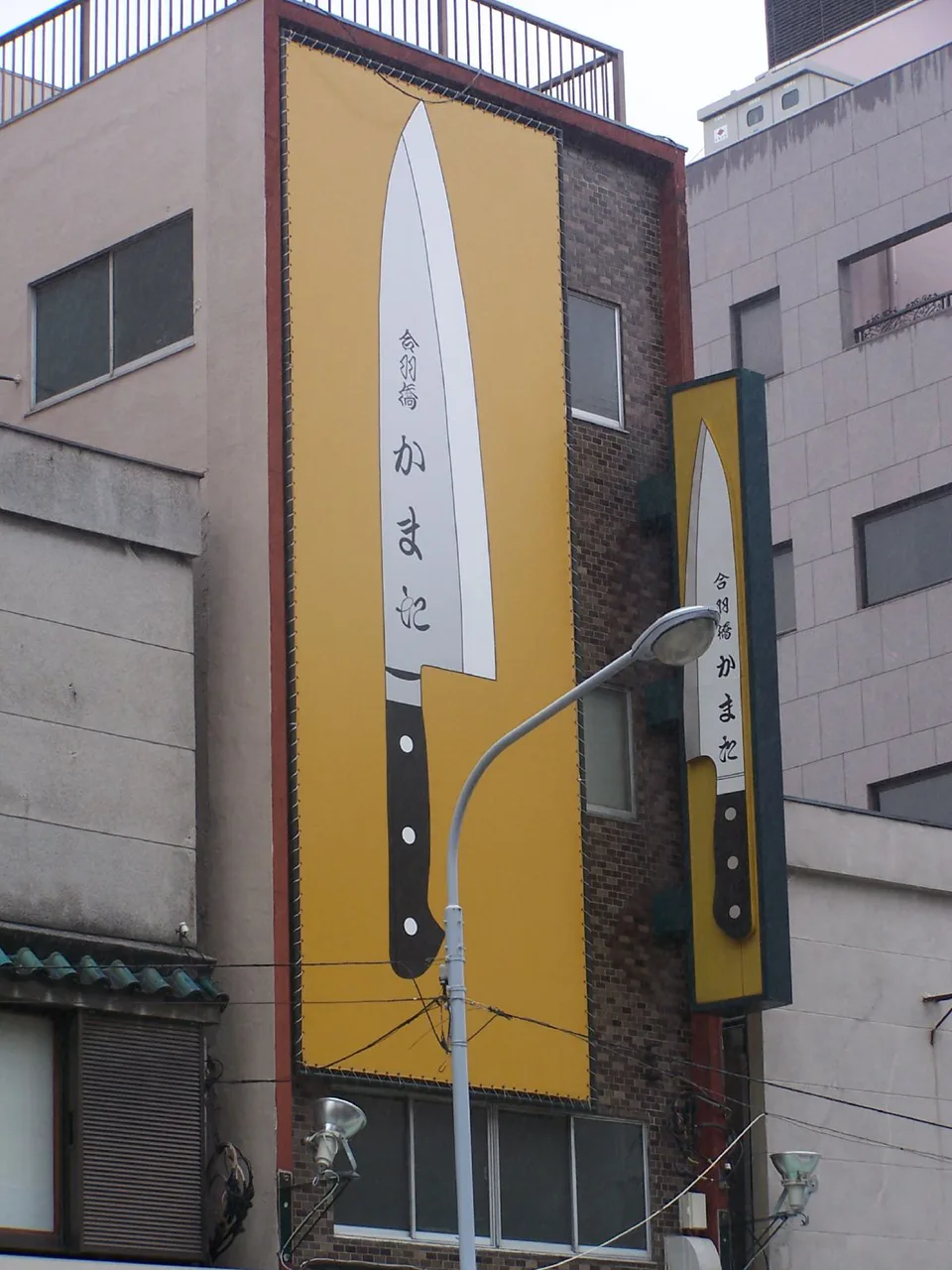
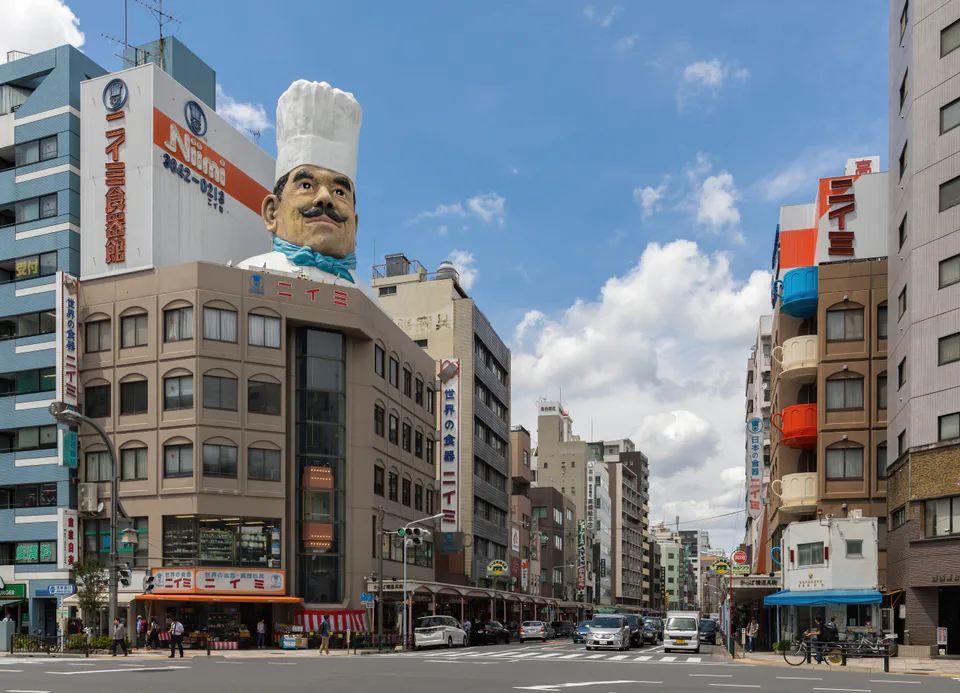
Kappabashi's official association describes an approximately 800-metre shopping street with more than 170 businesses devoted to kitchen and restaurant equipment. The product range includes Japanese, Western and Chinese tableware, cookware, baking equipment, packaging, restaurant signs, chef clothing, bamboo goods and replica food as well as knives. That concentration is the point.
If you are buying a knife, the useful part of Kappabashi is not that knives exist there. It is that you can compare blade length, profile, steel, handle, weight, sharpening service and price across multiple specialist shops before committing. The same applies to ceramics or baking tools: the district is strongest when you know enough to notice differences between products.
This creates a simple deletion test. If you would be happy buying the first acceptable kitchen souvenir you see, Kappabashi's specialist depth may be more than the trip needs. Tsukiji, Asakusa or a department store can potentially solve that lighter purchase while doing another job at the same time. Kappabashi earns scarce Tokyo hours when comparison itself has value.
Sunday is the biggest Kappabashi failure mode
Kappabashi does not have one universal weekly closing day because each shop sets its own schedule. The association says most shops are open on Saturdays but only around 30% open on Sundays; the Japanese FAQ also notes that roughly 70% are closed on Sundays and public holidays.
That changes how I would schedule a serious purchase:
Weekday: strongest default when one or more named shops matter.
Saturday: usually still a strong shopping day because most stores are open.
Sunday/public holiday: do not build the trip around broad comparison shopping without checking the exact shops first.
A Sunday visit can still work if you already know the two stores you want and both confirm they are open. What fails is the spontaneous strategy of walking the full street and assuming the same choice exists as on a weekday.
This is a case where the nominally “better” district can lose to the calendar. A traveller with only Sunday morning should compare exact open shops in Kappabashi against a Tsukiji morning rather than obeying a generic recommendation written for weekdays.
Tsukiji wins when food and shopping should share the same time block
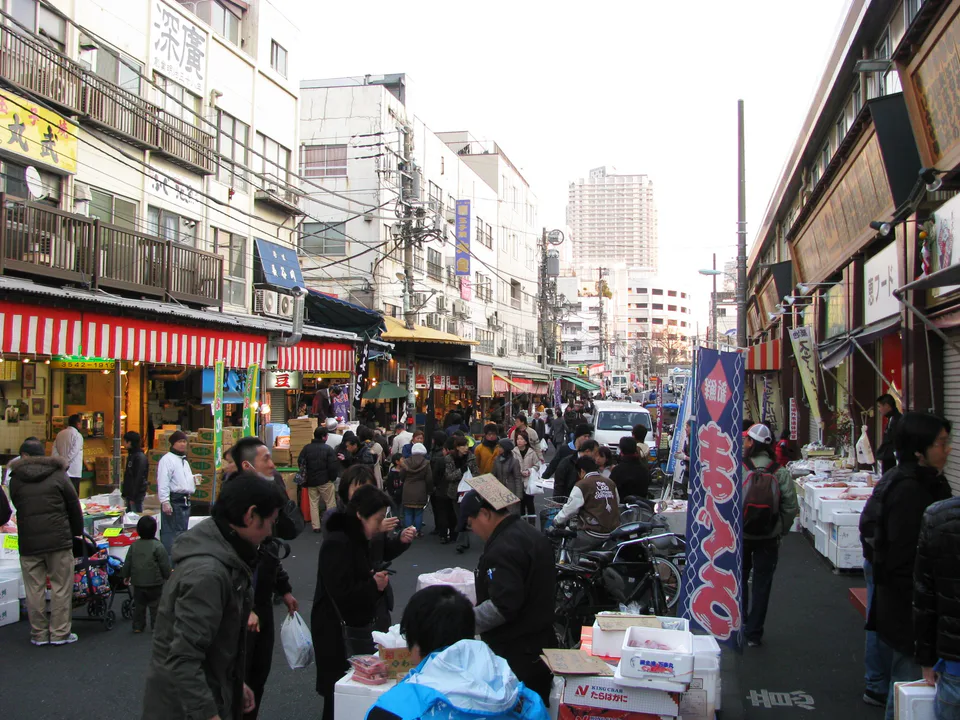
Tsukiji Outer Market is a different product. Its official shopping guidance places 06:00–09:00 mainly in the professional-buyer period and 09:00–14:00 as the main public shopping time, with individual businesses keeping their own hours. The official overseas-shopping page also warns that many shops close on Sundays and on some Wednesdays.
For most visitors, that makes 09:00–14:00 the useful window: arrive for breakfast or an early lunch, then buy nori, tea, dried seafood, seasonings, prepared food or other edible gifts while the market is fully part of the experience. Established knife shops are present too, but you are not buying the same depth of kitchen-equipment comparison that Kappabashi is designed to provide.
Tsukiji is especially strong when the group has mixed interests. A non-cook does not have to spend two hours looking at frying pans while someone else compares knives. Food, browsing and the meal all happen inside one compact outing.
The trade-off is that food-market variety can become a distraction if the mission is a precise kitchen purchase. If you care about one knife's balance or want to compare multiple ceramic styles, the time spent queuing for food is not free.
Do not arrive at Tsukiji at 06:00 just because the market is awake
The official calendar separates the professional-procurement period from the main public shopping period. That matters because “earlier is always better” is weak advice for visitors. Before 09:00, working buyers are using the market and some tourist-oriented shops or services may not yet be operating on their most useful schedule.
An early arrival can still make sense for a specific breakfast shop that publishes early hours. But if the goal is general browsing and souvenirs, 09:00 onward is the cleaner planning assumption. The official information centre Plat Tsukiji currently opens at 08:00 on weekdays/Saturdays and 10:00 on Sundays, national holidays and some market-closure days.
Use the exact shop hours when one business is the purpose of the trip. “Tsukiji opens at X” is not a reliable substitute for that check because the Outer Market is a collection of independent businesses.
Knife shopping: choose breadth at Kappabashi or convenience at Tsukiji
If you only want one Japanese knife and you are already eating at Tsukiji, there is no rule saying you must cross Tokyo to make the purchase feel authentic. A reputable shop with the blade you want can be the efficient answer.
Kappabashi becomes worth the separate trip when at least one of these is true:
you want to hold several knives with similar specifications before deciding;
you are comparing price across multiple specialist sellers;
you also want cookware, tableware or baking equipment;
the purchase is important enough that two hours of specialist browsing is part of the value.
Tsukiji becomes stronger when the knife is one item in a food-focused morning and you would not use the extra comparison depth.
After purchase, follow your airline and destination-country rules for carrying a knife. Do not assume that a shop's packaging changes aviation-security requirements. For most international itineraries, plan the purchase around checked-baggage rules rather than carrying a chef's knife through airport security.
Tableware and cookware create a different hidden cost: carrying them for the rest of the day
Kappabashi's strongest products can also be the least pleasant to carry. Ceramic bowls are fragile; pans and kitchen tools are bulky; several purchases can turn an otherwise simple Asakusa day into a luggage problem.
That means Kappabashi is often better placed near the end of an east-Tokyo sightseeing block rather than before hours of walking. Pairing Asakusa → Kappabashi → hotel can be more rational than Kappabashi → Asakusa → Ueno with heavy shopping bags.
For a multi-hotel Japan trip, the same logic applies at a larger scale. If you buy bulky tableware before changing cities, decide whether the hotel can hold or help ship the parcel rather than assuming you will carry it through the next Shinkansen day. Use the Japan luggage-forwarding guide for the broader luggage strategy.
Tax-free and card payment are store-level benefits, not district guarantees
Do not choose either district because someone says “shopping there is tax-free.” Kappabashi's official shop directory shows payment methods and tax-free status at the individual-store level; some stores have a tax-free counter and others do not. Tsukiji's official shopping guidance likewise says credit-card acceptance depends on the individual shop.
The decision consequence is straightforward: if a large purchase depends on tax-free eligibility or card payment, verify the exact shop before using that saving in your budget. A slightly more expensive shop that accepts your payment method and handles the purchase cleanly can be better value than a theoretical district-wide bargain that does not exist.
Can you do both? Use a four-hour threshold, not ambition
With two or three hours, choose one. The point of both districts is browsing, and transit plus station exits plus checkout time consumes the exact activity you came for.
With four or five hours, a two-stop route can work if the goals are asymmetrical:
Tsukiji first around the public market/lunch window.
Move to Kappabashi only after the meal.
At Kappabashi, make one defined purchase rather than starting a full district survey.
I would not use the combined plan if the Kappabashi goal is “compare many knives until I know which one is right.” That job has no predictable finish time. Give it its own block.
The answer also reverses on Sunday. A beautiful Tsukiji-first sequence does not rescue a second stop where most Kappabashi stores are shut. Check the actual date before designing the half-day.
Geography should break ties, not decide the shopping goal
Kappabashi sits on the west side of Asakusa, roughly midway between Ueno and Asakusa. The association lists Tawaramachi on the Ginza Line and Asakusa on the Tsukuba Express at about five minutes on foot. It therefore pairs naturally with Asakusa and an east-Tokyo day.
Tsukiji pairs naturally with Ginza and central Tokyo. If you would be equally happy with either shopping experience, choose the one that eliminates a cross-city transfer from the rest of the day. But do not use geography to turn the wrong district into the right specialist purchase.
If Tokyo is already overloaded, use How Many Days in Tokyo? before adding either stop. A kitchen-shopping district is valuable only if the purchase deserves the trip time it displaces.
Three traveller scenarios
Home cook buying one serious knife
Choose Kappabashi on a weekday or Saturday. Give yourself enough time to compare several stores, and make the knife the anchor of the block rather than squeezing it between sightseeing stops. If Sunday is your only option, verify named stores first.
First-time Tokyo couple where only one person cares about kitchen gear
Choose Tsukiji unless the cook already has a specific Kappabashi purchase list. A meal, food souvenirs and one knife stop create more shared value than asking the other traveller to spend half a day comparing specialist tools.
Food-focused traveller with four hours before Ginza
Choose Tsukiji only. Eat, browse and continue to Ginza. Adding Kappabashi creates a geographic detour and converts a coherent central-Tokyo block into a transport exercise.
Final verdict
Kappabashi is the better specialist shopping destination; Tsukiji is the better food-and-market outing. Choose Kappabashi when comparison depth is part of the purchase and schedule it on a weekday or Saturday when possible. Choose Tsukiji when eating and edible souvenirs do most of the work, especially when the rest of the day is in Ginza or central Tokyo.
Only combine them when you have at least four to five hours and the second stop has one defined job. If the trip gives you only Sunday, re-check Kappabashi before following any generic “go there for knives” advice: a district with 170-plus specialist shops is much less useful when most are closed.
Official sources checked
Kappabashi Dougu Street — overview and product range · Kappabashi Dougu Street — Sunday/opening FAQ · Kappabashi Dougu Street — access · Tsukiji Outer Market — shopping guidance · Tsukiji Outer Market — calendar and public shopping hours. Checked August 25, 2026. Individual shop opening days, payment methods, tax-free eligibility and services can change; verify any named shop before making it the purpose of the visit.