
Kyoto Aquarium is worth the current ¥2,600 adult ticket when it solves a specific two-to-three-hour problem: you need a strong indoor block near Kyoto Station, your children genuinely enjoy animals, or you want an aquarium whose Kyoto-specific exhibits matter more than sheer scale. It is easy to skip on a first Kyoto day if Kiyomizu-dera, Fushimi Inari, Gion or Arashiyama are still competing for the same limited hours. And if you are already visiting Osaka Aquarium Kaiyukan, the burden of proof rises again.
The right comparison is therefore not “Is Kyoto Aquarium good?” It is what would these 2–3 hours replace? If the alternative is another exhausted outdoor temple route in heavy rain or summer heat, the aquarium can be excellent value. If the alternative is your only chance to see Kyoto’s core historic districts, the same ticket is much harder to justify.
↔ Scroll table left or right
Your situation | Verdict | Why |
First Kyoto trip, only one full day | Usually skip | The opportunity cost against Kyoto’s core outdoor sights is too high unless weather or fatigue changes the day |
Family based near Kyoto Station | Strong option | Two-to-three-hour indoor anchor with animals, toilets, feeding/nursing facilities and easy Umekoji routing |
Heavy rain or extreme summer heat | Gets much stronger | It can replace a physically poor outdoor block rather than displacing a good-weather Kyoto highlight |
Already visiting Kaiyukan | Conditional | Keep Kyoto Aquarium only if salamanders, penguin interpretation, jellyfish or the Umekoji location add something your group specifically wants |
Half day around Umekoji / Kyoto Station | Strong | Location cost is low; Kyoto Railway Museum and Umekoji Park can form one compact cluster |
Only reason is one animal program | Do not pre-commit blindly | Daily animal programs can change; check the official calendar for the actual date |
The ¥2,600 question is really an opportunity-cost question
Kyoto Aquarium’s current general admission is ¥2,600 for adults, ¥2,000 for high-school students, ¥1,400 for elementary and junior-high students and ¥900 for children aged three and over. That is enough money—and enough time—to treat the visit as a real itinerary block rather than a casual “if we pass by” stop.
For a first-time international visitor with only one complete Kyoto day, the aquarium normally loses to Kyoto’s core historical areas. That is not because an aquarium is less worthy than a temple. It is because Kyoto’s historic districts are much harder to substitute elsewhere in the Japan itinerary, while a strong aquarium may already exist in Osaka, Tokyo, Nagoya or another city on the same trip.
The answer changes when the outdoor alternative becomes poor. A 35°C afternoon, persistent rain, a child who has reached the limit of shrine visits, or an older parent who needs a low-stakes indoor block can make the aquarium more valuable than one more “must-see” outdoor stop.
Kyoto Aquarium’s strongest reason to exist is that it does not try to be Kaiyukan
Travellers comparing Kyoto Aquarium with Osaka Aquarium Kaiyukan should not use tank size alone. Kaiyukan is the stronger spectacle product. Kyoto Aquarium’s differentiator is local interpretation: the River of Kyoto zone, giant salamanders, the Sea of Kyoto, the penguin relationship project and Jellyfish Wonder create a smaller attraction with a more place-specific identity.
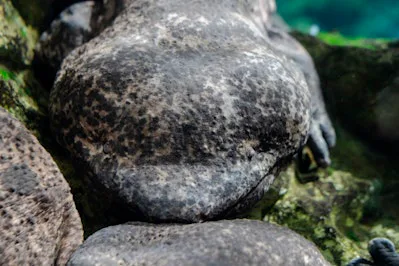
The giant salamander is especially important to that identity. Kyoto Aquarium exhibits Japanese giant salamanders and related animals in a zone based on Kyoto’s river environment. The Japanese giant salamander is a Special Natural Monument of Japan. This is a slower exhibit rather than a high-action one, which is exactly why visitor fit matters: a child or adult willing to observe details can get much more from it than someone waiting for constant spectacle.
The practical duplication test is simple: if your group would describe both aquariums mainly as “fish tanks,” choose one. If your group specifically values salamanders, penguin behaviour, jellyfish or Kyoto-local ecological interpretation, doing both becomes easier to defend.
Jellyfish and penguins change the pace more than another large tank would
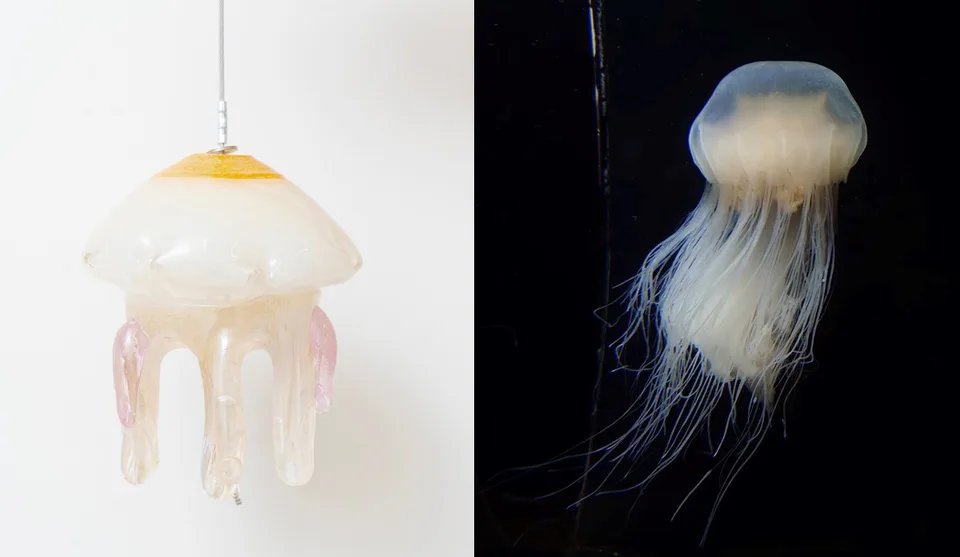
Jellyfish Wonder works as a pacing reset rather than just another species list. The area includes GURURI, a panoramic jellyfish display, as well as the Kyoto Jellyfish Research Department, which exposes part of the breeding and husbandry work. That makes the zone useful for visitors who enjoy seeing how an aquarium operates, not only photographing the animals.
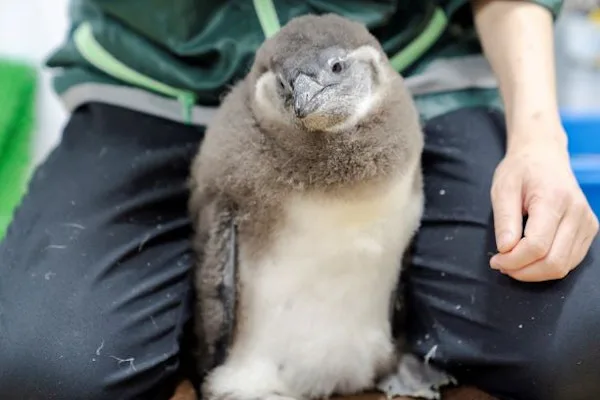
The penguin area uses a different kind of interpretation. The aquarium’s current “Kyoto Penguin Relationship Chart” attaches names and relationships to the colony, making it easier to observe individual birds rather than treating the enclosure as one anonymous group. That approach is particularly effective for families because it gives children a reason to look again instead of moving immediately to the next exhibit.
Neither feature makes the aquarium universally essential. They simply explain who gets more value from a smaller aquarium: visitors who enjoy slower animal observation and interpretation rather than scale alone.
Two hours is the minimum useful block; three hours is the safer family plan
There is no official “correct” visit duration, so this is ValueNavi planning guidance rather than an aquarium rule. For most travellers, two hours is enough to move through the major zones without treating every tank as a stop. Three hours is more realistic when children want to revisit penguins, the group stops for food, a current program is worth waiting for, or everyone simply needs a slower indoor afternoon.
The important planning mistake is allocating only the exhibit time. Add the walk or short JR connection, ticket entry, toilets, snacks and the transition to whatever comes next. A “two-hour aquarium” can easily own closer to half a day once it is placed badly between Higashiyama and Arashiyama.
That is why Kyoto Aquarium works best when the surrounding geography is already right.
Umekoji is the hidden reason the aquarium can fit better than the ticket suggests
Kyoto Aquarium currently lists about 15 minutes on foot from Kyoto Station’s Central Exit and about seven minutes from JR Umekoji-Kyotonishi Station. There is no dedicated aquarium parking lot. The immediate area also contains Umekoji Park and the Kyoto Railway Museum.
That creates a compact family cluster. A child who would not tolerate a cross-city sequence of aquarium → bus → temple → another train may cope much better with aquarium → park → railway museum, or with only two of those three. The value comes from deleting transfers, not from collecting more attractions.
Do not automatically do both the aquarium and railway museum, though. They are each substantial indoor attractions. For younger children or a rainy day, one major indoor venue plus park time can be better than forcing two ticketed institutions into a single afternoon.
Where you stay also matters. If you are choosing between bases, Kyoto Station vs Gion explains why Umekoji is much easier to insert from a Kyoto Station-oriented itinerary than from an east-Kyoto day built around Gion and Higashiyama.
Rain does not automatically make the aquarium the best backup
“Rainy-day attraction” is too broad. Kyoto Aquarium is strongest when the rain makes your original plan materially worse: heavy rain through a long Higashiyama walk, summer heat plus humidity, or a family group that needs a controlled indoor block.
Light rain can produce the opposite answer. Temples, gardens and old streets may still be enjoyable with fewer crowds, and using an entire half day indoors can consume scarce Kyoto time. Before switching, ask whether the weather is merely inconvenient or genuinely damaging to the planned experience.
For adults who are less interested in animals, the Kyoto International Manga Museum may be a better indoor choice when reading and cultural context matter more. For a very different Kyoto-specific experience, a tea ceremony can outperform both when the group wants participation rather than observation.
Families get the easiest recommendation, but age still changes the visit
Kyoto Aquarium has practical family infrastructure and does not require children to understand long written interpretation before the animals become interesting. That makes it a strong fit for preschool and primary-school ages compared with some museum-heavy alternatives.
But “family friendly” does not mean “automatic full day.” Younger children may get more from 90 minutes of focused animals plus Umekoji Park than from being pushed through every zone. Older children with strong marine-life interests may stay much longer.
For multigenerational groups, the aquarium can also act as a walking-load control. An older traveller who has already done Kiyomizu-dera slopes and long station walks may gain more from a seated indoor block than from a fourth outdoor attraction. The trade-off is that the group is using rare Kyoto time on something less geographically unique than the historic city.
Ticket rules matter more on peak dates than small third-party discounts
Kyoto Aquarium currently sells web tickets from 30 days before the planned visit. On specified busy periods such as parts of Golden Week, Obon and Silver Week, tickets can require both date and entry time; on many other dates the ticket is date-specific only. The aquarium warns that quantities are limited and that a time sold out online will not be sold again at the on-site ticket machine.
That creates a simple decision rule. On an ordinary flexible weekday, buying at the last minute can preserve weather flexibility. On a peak date, securing the entry window can matter more than a minor marketplace discount.
If you use Klook or KKday, compare the exact date, cancellation terms and ticket type. Do not assume a marketplace ticket inherits the aquarium’s own flexibility.
Klook · Check Kyoto Aquarium options for your date
KKday · Compare the same date and cancellation terms
Three cases where the ¥2,600 ticket is poor value
1. Your only full Kyoto day still lacks the core city. If Kiyomizu-dera, Gion, Fushimi Inari or Arashiyama are genuine priorities, an aquarium should not enter simply because it is easy and indoors.
2. Kaiyukan already satisfies the aquarium interest. If nobody particularly cares about salamanders, penguin interpretation or jellyfish, a second aquarium can become functional duplication.
3. One program is the entire reason for going. Animal programs and daily schedules can change for operational or welfare reasons. Check the aquarium’s current calendar before buying a ticket that only makes sense if one session runs.
Three cases where the ticket gets stronger
1. The group needs a controlled two-to-three-hour indoor reset. Heat, rain, child fatigue or an older parent can make the alternative outdoor block worse.
2. You are already near Kyoto Station or Umekoji. The lower transfer cost means more of the half day is spent inside the attraction rather than crossing Kyoto.
3. The exhibits themselves match the group. Giant salamanders, penguins, jellyfish and local ecology are not interchangeable with “we should see an aquarium somewhere.”
Final verdict
Kyoto Aquarium is not a first-day Kyoto essential. It is a strong second-layer attraction when the group, weather and geography make a 2–3 hour indoor block useful. Families get the easiest recommendation. Adults who enjoy animal behaviour and quieter exhibits can also get solid value, especially around Umekoji. Travellers with one short Kyoto day, a full classic sightseeing list or an existing Kaiyukan visit should demand a clearer reason before spending the ¥2,600 and half-day opportunity cost.
The deletion test is simple: if removing the aquarium gives you a better Kyoto day with no real loss, skip it. If removing it leaves a tired family in heavy rain, an awkward gap around Kyoto Station, or a group that specifically wanted these exhibits, the aquarium has a real job.
Sources and 2026 checks
Checked August 25, 2026. Admission prices, operating hours, programs and ticket restrictions can change.
Kyoto Aquarium — admission and annual-pass prices · Kyoto Aquarium — web ticket and timed-entry rules · Kyoto Aquarium — access and operating information · Kyoto Aquarium — current exhibits and programs
Osaka and Kyoto in 7 Days: 3 Nights Each — When One Hotel Move Is Actually Worth It
Cup Noodles Museum Yokohama: The ¥500 Ticket Is the Easy Part — Secure Your Workshop First
One Day in Kyoto: Choose Fushimi Inari or Arashiyama Before You Build the Route
Mitsui Garden Hotel Fukuoka Gion: Is the 26.6 m² Triple Room Worth It for 3 Adults?
Tokyo Dome Hotel: Is Walking Back After a Concert Worth the Premium?