
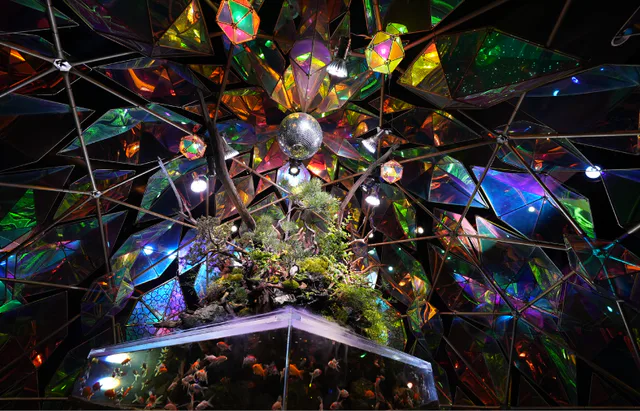
NARA KINGYO MUSEUM is worth adding when you deliberately want a second, indoor Nara destination—not when you are trying to squeeze one more attraction into a short Nara Park day. The adult ticket is ¥1,300, but the real cost is the detour to Mi Nara plus roughly 60–120 minutes inside. If your first visit to Nara has only four usable sightseeing hours, I would protect Nara Park, Todai-ji and the eastern walking core first. If you have a full day, poor weather, children who need an indoor reset or a genuine interest in visual goldfish art, the museum becomes much easier to justify.
As of August 25, 2026, the museum has returned to its normal 10:00–18:00 schedule after the summer extension ended on August 24. Last entry is 17:30. Advance tickets are available, but the museum’s own FAQ says there is no priority-entry reservation system: visitors are admitted in arrival order. Buying early therefore solves payment, not queue priority.
↔ Scroll table left or right
Your Nara day | Recommendation | Why | Main trade-off |
≤4 usable sightseeing hours, first Nara visit | Skip | The Mi Nara detour competes directly with Nara Park, Todai-ji and Kasuga-area time | You miss the indoor goldfish-art experience |
6–8 hour full day, classic sights already protected | Add it as a second cluster | 60–90 minutes indoors can fit after the park without forcing the core route to shrink | You still need a bus, shuttle or separate walk to Mi Nara |
Rain, severe heat or temple fatigue | Gets stronger | The experience is indoor and weather-proof compared with another long outdoor walk | It should replace an outdoor block, not be added on top of an already full day |
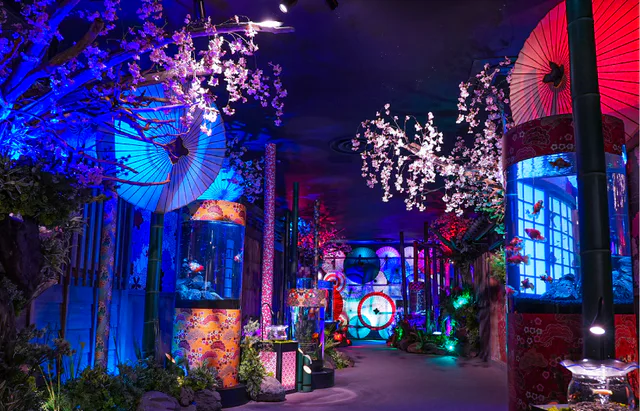
Photography / immersive-art interest | Strong fit | The seven art zones, lighting, mirrors and projection are the actual product | Expect visual entertainment, not a large conventional aquarium |
Buying the ¥2,400 combo only because it looks better value | Usually don’t | The second museum adds another attraction block, not just another ¥1,100 | The combo is worthwhile only if NARA IKIMONO MUSEUM is independently appealing |
The ¥1,300 ticket is not the expensive part; leaving the Nara Park loop is
NARA KINGYO MUSEUM is on the fourth floor of Mi Nara. The museum’s current official access information gives roughly 15 minutes by Nara Kotsu bus from Kintetsu Nara Station and about 9 minutes by bus from JR Nara Station. It also lists a complimentary shuttle from JR Nara, Kintetsu Nara and Shin-Omiya stations, but the shuttle timetable is a separate live schedule that should be checked through Mi Nara before you build the day around it.
That geography matters because the museum is not a natural stop between the deer, Todai-ji and Kasuga Taisha. Treat Mi Nara as a second sightseeing cluster. The bad version of the day is Nara Park → rush to Mi Nara → rush back toward the station. The better version is to finish the classic eastern core first, then decide whether the remaining time and energy justify a dedicated indoor second act.
If you are still choosing the departure city, settle Nara from Kyoto or Osaka first. If Nara itself may deserve more time, the Nara day-trip versus overnight decision matters more than the museum ticket.
Use a four-hour cutoff for a first visit
This is ValueNavi planning guidance rather than an official museum rule: if you have four usable sightseeing hours or less in Nara, I would normally skip NARA KINGYO MUSEUM on a first visit.
The reason is opportunity cost. A short Nara visit already has a compact, high-value walking core around Nara Park, Todai-ji and the eastern temple zone. The museum does not merely consume its time inside the building; it also moves you into another district. A ¥1,300 ticket can therefore be cheap financially and expensive geographically.
The answer changes once you have six to eight hours, especially if the classic sights are already complete by mid-afternoon. At that point, a 60–90 minute indoor attraction can diversify the day without deleting the reason most first-time visitors came to Nara.
What the ticket actually buys: immersive goldfish art, not a conventional aquarium
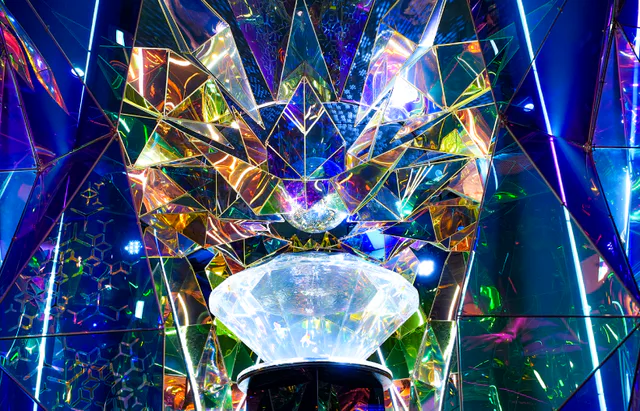
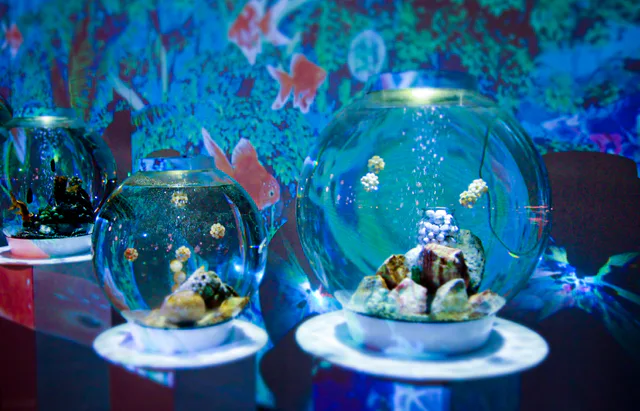
The official museum describes approximately 3,000 goldfish displayed through seven artistic spaces. The emphasis is presentation: projection mapping, Japanese umbrellas, mirrors, a diamond-cut aquarium, lighting and trick-art elements. The fish are part of an immersive visual installation rather than a large natural-history aquarium.
That distinction should decide whether you go. Choose it because the goldfish-art format sounds appealing, not because you think every Nara trip needs an aquarium. Travellers looking for extensive marine-life interpretation, large tanks or a half-day zoological experience are comparing the wrong product.
The contrast with the Kyoto International Manga Museum is useful: the Kyoto museum rewards reading and slow browsing; NARA KINGYO MUSEUM rewards moving through designed visual scenes. Both can take indoor time, but they are asking for a completely different kind of attention.
Single museum or ¥2,400 combo? The second ¥1,100 also costs time
Current official admission is ¥1,300 for an adult to NARA KINGYO MUSEUM alone. The combined NARA KINGYO MUSEUM + NARA IKIMONO MUSEUM adult ticket is ¥2,400, so the incremental ticket cost is ¥1,100.
The weak buying logic is: “two attractions for only ¥1,100 more.” The useful question is: would you still choose NARA IKIMONO MUSEUM if it had a separate entrance on the other side of town? If yes, the combo can make sense because both are at Mi Nara. If no, the bundle is creating an extra attraction simply because the incremental price looks small.
This is especially important on a first Nara visit. Two indoor museums can consume the same afternoon that could have gone to Naramachi, a slower temple visit or an earlier return to Kyoto or Osaka. Buy the combo for two genuine interests, not for arithmetic.
Budget 60–90 minutes normally; use two hours only when photography is part of the goal
The museum does not publish one mandatory visit duration. For planning, I would reserve around 60–90 minutes for a normal visit and up to two hours for travellers who want portraits, wait for cleaner photo frames, revisit visual rooms or move slowly with children.
The important scheduling rule is not to put the museum immediately before a fixed intercity train home. It is an immersive attraction where the value rises when you can stop for a scene rather than constantly checking the clock. If the return to Osaka or Kyoto is already time-sensitive, either move the museum earlier or leave it out.
As of August 25, normal hours are back: 10:00–18:00
The museum officially extended summer opening to 10:00–19:00 from July 18 through August 24, 2026. That extension has now ended. From August 25, the published normal schedule is 10:00–18:00 with last entry 30 minutes before closing, currently 17:30.
This matters because an old 19:00 screenshot can turn a viable late-afternoon plan into a missed visit. If you leave Nara Park at 17:00 and still need to reach Mi Nara, the museum is no longer a casual evening fallback. Recheck the official site on the actual day because event schedules can change again.
Advance tickets do not buy priority entry
The museum’s own FAQ says there is no reservation system that gives priority admission. Visitors enter in arrival order. The practical benefit of an advance e-ticket is therefore convenience at payment, not guaranteed queue skipping.
KKday currently sells a single-museum e-ticket; Klook’s current English result is focused on the NARA KINGYO MUSEUM + NARA IKIMONO MUSEUM set ticket. Marketplace packages and prices can change. Choose the channel only after choosing the attraction structure.
KKday | Compare the current single-museum e-ticket
Klook | Check the current set-ticket terms
Families should solve the toilet and re-entry problem before entering
Two operational rules deserve more attention than the ticket discount: the museum states that there is no restroom inside, and re-entry is not permitted. Food and drink are also not allowed inside.
For two adults, this is a small planning detail. With young children, it can determine whether the visit is relaxed or abruptly cut short. Use the restroom before admission, finish drinks beforehand and do not enter simply because you have reached Mi Nara if someone still needs food or a break.
The official FAQ also says elementary-school-age children and younger cannot enter alone and must be accompanied by a guardian aged 16 or older. Families should therefore treat the museum as a shared activity rather than a place to split the group casually.
Rain, heat and late-afternoon fatigue are the conditions that strengthen the museum most
Nara’s classic route is outdoor-heavy. Rain, summer heat or simple temple fatigue can reduce the marginal value of another long walk. In those conditions, the Mi Nara detour becomes easier to justify because the museum gives the day a fully indoor block.
But weather does not magically create more hours. If poor weather slows the bus network or the museum would force you to cut Todai-ji, the correct response may still be to shorten the day rather than add an indoor attraction. Use it as a replacement block, not as insurance that must be stacked on top of everything else.
Three itinerary versions
First Nara visit with only half a day
Protect Nara Park, Todai-ji and the compact eastern core. Skip Mi Nara unless the goldfish museum is itself one of the trip’s main reasons for coming.
Full Nara day with good weather
Do the park and temple core first. If you still have roughly two hours of uncommitted time by mid-afternoon, move to Mi Nara and use the museum as the final major attraction before returning to Kyoto or Osaka.
Full Nara day with rain or strong heat
Reduce one outdoor cluster and move the museum earlier. The indoor block is now solving a real comfort problem rather than merely increasing attraction count.
Final verdict: the museum is a deliberate detour, not a free add-on
NARA KINGYO MUSEUM is a good Nara attraction when visual goldfish art, indoor time or photography is genuinely part of the day. It is a weak first-visit add-on when you have only a few hours and still have not completed Nara Park and Todai-ji.
The ¥1,300 admission is not the deciding cost. The deciding cost is leaving the classic walking loop for a second district. Use the four-hour cutoff: short first visit, skip; full day with the core protected, consider it; rain or heat, its value rises. For the combo ticket, count the extra museum time as carefully as the extra ¥1,100.
Narita or Haneda to Tokyo: Don’t Pick the Fastest Train — Pick the Last Easy Transfer
National Museum of Nature and Science 2026: The ¥630 Ticket Is Cheap — Your 3–5 Hours Aren’t
Sapporo Summer Festival After 8 PM: Is Odori Park Still Worth the Walk?
Kawaguchiko to Oishi Park: Boat or Red-Line Bus? The Real Cost Is the Connection
Haneda Airport Hotel Comparison: Villa Fontaine Grand vs The Royal Park
References
NARA KINGYO MUSEUM official English page — hours, access and admission · Official price and visitor rules · Official FAQ — tickets, priority admission and child rules · Official 2026 summer-hours notice. Checked August 25, 2026. Hours, shuttle schedules, marketplace tickets and event operations can change; recheck the official museum and Mi Nara information for the actual visit date.