
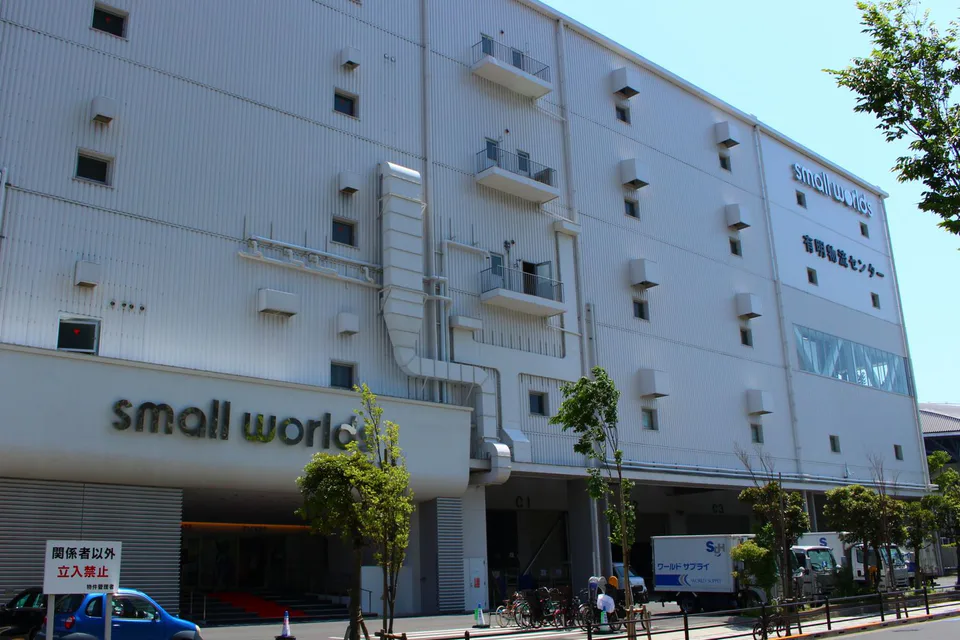
SMALL WORLDS Tokyo is worth the current ¥3,200 adult admission when you will actually spend time watching mechanisms cycle, looking for miniature details, photographing the scenes from low angles, or exploring the Evangelion areas. It is much harder to justify as a one-hour indoor photo stop on a three-day first Tokyo trip. The official FAQ says an average visit takes about two hours; for a first visit, ValueNavi would protect roughly two to three hours rather than squeeze it between two timed attractions.
There is one important current caveat before you buy: as checked on August 25, 2026, the official website says the Space Shuttle and Saturn rocket launches are temporarily suspended for maintenance. If the launch sequence is your main reason for visiting, confirm the maintenance notice before paying. That matters more because official direct tickets are non-refundable after purchase.
↔ Scroll table left or right
Your actual trip | ValueNavi verdict | Why |
3-day first Tokyo trip, no strong interest in miniatures / Evangelion / aviation | Usually skip | The ¥3,200 ticket and 2–3 hour block compete with bigger first-trip priorities |
4–5 Tokyo days, rainy or very hot half-day | Strong conditional yes | Fully indoor, easy to pair with Ariake / Toyosu / Odaiba without giving up a whole day |
Evangelion fan | Yes | The Hangar and TOKYO-III use moving scenes and scale rather than functioning as static figure displays |
Aviation / miniature / model photography fan | Yes | Kansai Airport changes to evening after roughly ten minutes and rewards waiting for a cycle |
Space Center launch is the main reason | Check maintenance first | The official site currently says the Saturn rocket and Space Shuttle launches are suspended |
You move quickly through museums and rarely stop for details | Probably skip | This is exactly the visit style most likely to turn the ticket into an expensive one-hour walkthrough |
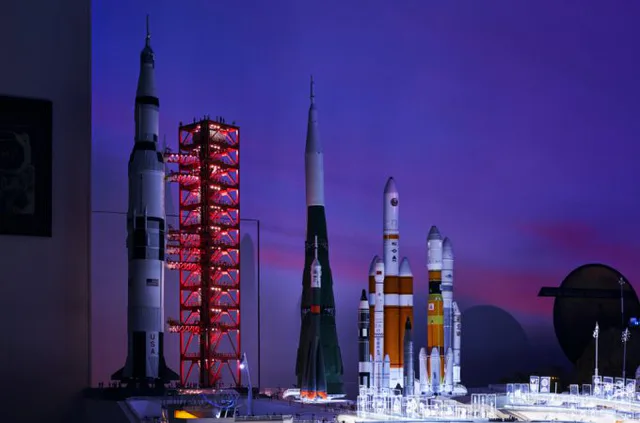
Do not buy the ticket for a single mechanism — especially during maintenance
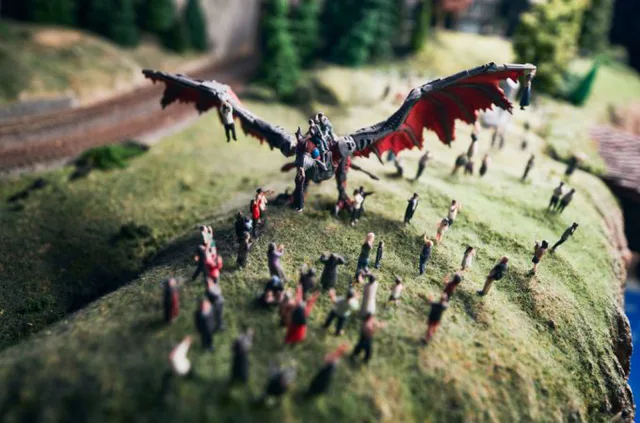
The Space Center combines an Apollo-era launch site with a future spaceport, including control rooms, mechanics, spectators, vehicles and hangars. The area is still worth inspecting as a miniature ecosystem even when a launch mechanism is unavailable. But the current maintenance notice changes the buying decision for anyone whose mental image of SMALL WORLDS is mainly “watch the Saturn V and shuttle launch.”
This is a useful failure-mode test for the whole museum: moving mechanisms are part of the value, but they are mechanical exhibits and can be suspended. If one exact motion sequence is the only reason you are willing to spend ¥3,200, check the official maintenance page before buying a non-refundable direct ticket. If you are interested in several areas, one mechanism being unavailable is much less damaging to the visit.
The strongest exhibits are the ones that change while you wait
SMALL WORLDS is easier to value once you stop treating it as a miniature checklist. Several areas reward waiting through a cycle or changing your viewing angle.
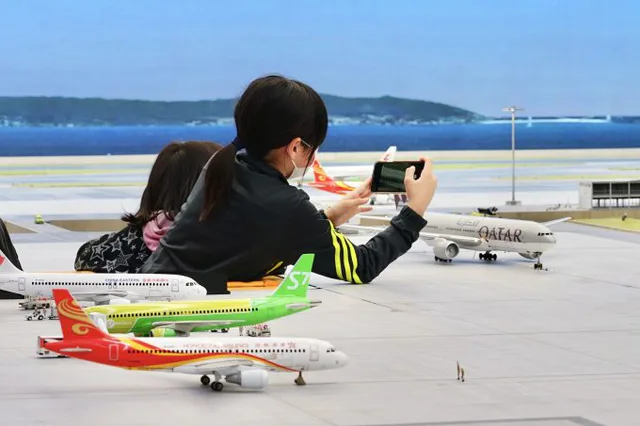
Kansai International Airport: the ten-minute test
The official airport-area page says aircraft taxi along guide lights, use the gates, take off and land, while airport announcements and support staff build the scene around them. More importantly, the model shifts into evening after roughly ten minutes.
That gives you a simple self-test. If waiting ten minutes to see the same miniature airport change from day to night sounds fun, the museum is probably a good fit. If that sounds like wasted time, the rest of SMALL WORLDS may also feel too slow for the ticket price.
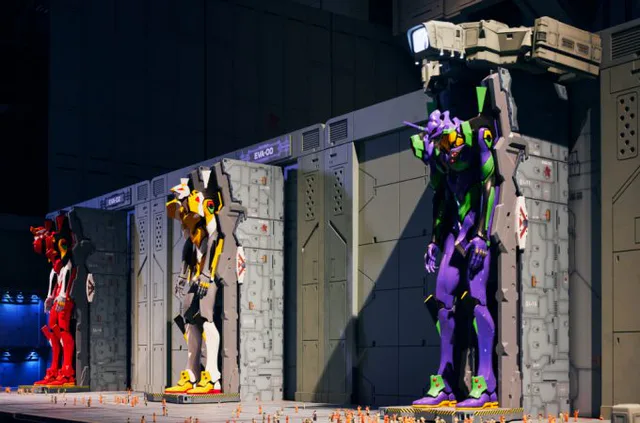
Evangelion Hangar: the scale only works if you change camera height
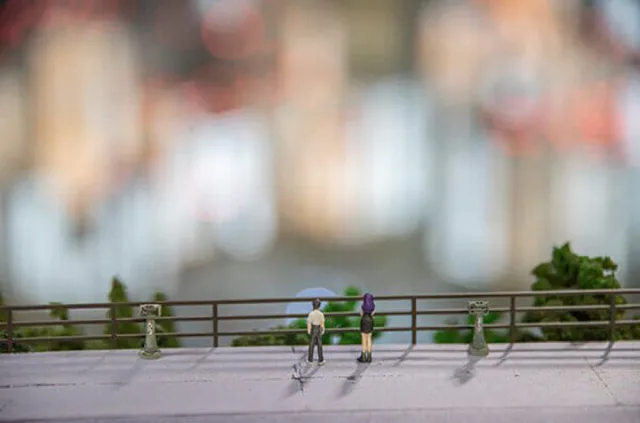
The Hangar recreates Units 01, 00 and 02 in the Cage and the launch machinery around them. The official guide specifically recommends holding the camera near the eye level of the miniature NERV staff. That is more than a photography trick: it explains why a standing eye-level photo can flatten a 1:80-scale scene into “large toys on a table,” while a low viewpoint restores the intended sense of scale.
For an Evangelion fan, this is a stronger reason to visit than simply finding familiar characters. The value comes from the relationship between the EVAs, the staff, the command space and the machinery.
TOKYO-III: the transformation is the exhibit
The second Evangelion area uses sirens, evacuating cars and a city that retracts underground. Fans can also look for Misato's apartment, Rei's room, EVA-YA, the school and Mt. Kintoki. The important distinction is that the Hangar is about the launch system while TOKYO-III is about a city designed to transform under attack. Treating both as two places to photograph EVA references misses why they are separate areas.
Shibuya: look at the vertical city, not only the crossing
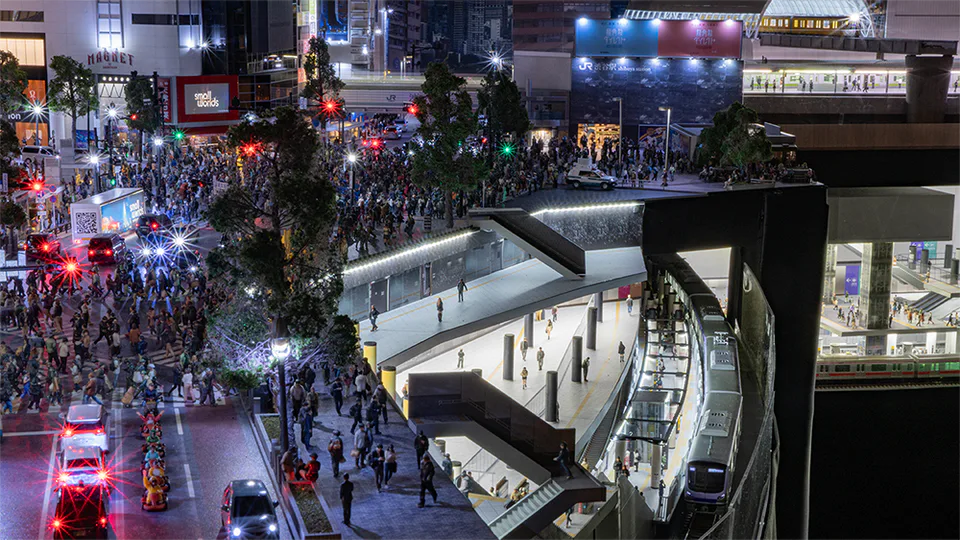
The Shibuya Area recreates the Scramble Crossing, Center Street, Hachiko, Shibuya Station and multiple railway layers. SMALL WORLDS currently says Scramble Square contains roughly 3,000 LEDs and that about 5,000 miniature figures populate the area. The more useful reason to slow down is the vertical structure: railway lines run from deep underground levels up to the Ginza Line above ground.
If you have already seen real Shibuya from an observatory, the miniature version is not trying to beat that view. Its value is showing city infrastructure and crowd movement in one frame.
Is ¥3,200 worth it? Use an interest test, not a floor-area test
The current official admission passport is ¥3,200 for adults, ¥2,100 for ages 12–17, ¥1,700 for ages 4–11 and free for children aged three and under.
For an adult, the ticket becomes easier to justify when at least two of these are true:
You enjoy miniature details enough to look for scenes that are not marked as headline attractions.
You like mechanical or changing exhibits and are willing to wait for a cycle.
You care about Evangelion, aviation, urban models or model-making.
You enjoy close photography and will actively change angle rather than take one wide shot per room.
You need a weather-proof half-day in the Ariake / Toyosu / Odaiba part of Tokyo.
If none of those apply, ¥3,200 is difficult to defend simply because the museum is large or detailed. A cheaper museum that matches your interests is better value than an attraction whose craft you do not actually want to inspect.
The adult Yurikamome bundle is unusually easy to justify if you already need the line
Checked August 25, 2026, the official site lists a value-set ticket combining SMALL WORLDS admission with a Yurikamome one-day pass for ¥3,450 for an adult. Standalone adult admission is ¥3,200, so the incremental cost is only ¥250.
That creates a more useful ticket question than hunting for a temporary coupon: will your Ariake / Toyosu / Odaiba day already use Yurikamome enough that a one-day pass has real utility? If yes, compare the official bundle before buying admission alone. If SMALL WORLDS is your only Yurikamome stop, do not assume the bundle is automatically cheaper without checking the rest of your route.
The official page says the Yurikamome pass in this package is collected by presenting the QR code at the Yurikamome ticket office at Shimbashi or Toyosu, so factor that redemption point into the route rather than treating it as an invisible add-on.
How long should you stay? Two hours is the official average; 2–3 hours is the safer first-visit block
SMALL WORLDS' FAQ currently gives three useful benchmarks: about one hour for a short visit focused on favourite areas, about two hours as the average, and three hours or more for a relaxed visit that includes café time, workshops or a 3D figure.
ValueNavi would protect two to three hours for a first visit. The reason is not that the building is physically difficult to finish. It is that the exhibits lose value when every cycle is skipped. A 60-minute visit can make sense for an Evangelion-only fan or a repeat visitor; it is a poor default for someone paying full admission to decide whether the museum is good.
This is also why SMALL WORLDS should not be squeezed directly between two reservations with no slack. If your Tokyo plan is already overloaded, fix the wider trip first with 3, 4 or 5 Days in Tokyo?
Ariake access is easy, but do not treat the whole bay as one walkable attraction cluster
The official access page lists Ariake-Tennis-no-Mori Station on the Yurikamome Line at about a three-minute walk and Kokusai-Tenjijo Station on the Rinkai Line at about nine minutes. For a stroller, mobility limitation, summer heat or heavy rain, that six-minute difference is more meaningful than it looks on a map.
SMALL WORLDS' own FAQ lists teamLab Planets in Toyosu and Miraikan in Odaiba as nearby attractions. That does not mean you should force three major indoor attractions into one day. If SMALL WORLDS receives a proper two-to-three-hour block, the cleaner pairing is usually one other major stop plus a meal or waterfront break.
If you want a science-heavy second half, compare the Miraikan Grand Antarctica Exhibition guide. If you want a shorter, photo-first entertainment stop instead, compare UNKO Museum Tokyo.
Families, photographers and travellers with luggage should know the operating rules
The museum currently welcomes wheelchairs and strollers. Coin lockers are available near the first-floor exit hall, and large luggage that does not fit can be stored at the ticket counter for a fee. That makes SMALL WORLDS more workable on a hotel-change day than many attractions where a full-size suitcase becomes an immediate veto.
Photography and video are allowed, but the rules change how serious photographers should plan. Tripods and selfie sticks are prohibited, as are lighting tools such as reflectors and softboxes. During busy periods the venue asks visitors to limit photography to roughly three minutes per spot, and filming while walking is prohibited.
That means the best gear strategy is usually simpler than expected: phone or handheld camera, lower viewpoint, patience, and fewer attempts to build a full tripod-based miniature shoot.
Who should skip SMALL WORLDS?
Skip it on a short first Tokyo trip when Tokyo's major neighbourhoods, temples, markets or one headline museum still have not made the itinerary.
Skip or postpone it if the Space Center launch is the only reason you want to go while the official maintenance suspension remains in place.
Skip it if your museum style is “one photo and move on.” The ticket is paying for detail density and changing scenes; a fast checklist extracts very little of that value.
Keep it when weather is bad and the bay area is already useful. The museum is fully indoors, so rain and summer heat reduce less of the experience than they do at an outdoor attraction.
Final verdict: the museum is worth it when you are willing to wait for the small world to change
SMALL WORLDS is not a universal Tokyo must-do. For a three-day first visit with no miniature, aviation, Evangelion or photography interest, ValueNavi would spend the ¥3,200 and two-to-three-hour block elsewhere. For a four- or five-day trip, an Ariake/Odaiba day, bad weather, or a traveller who actively enjoys model detail and moving scenes, it becomes much easier to justify.
The most useful buying rule is simple: if you are interested in at least two of the museum's real strengths and can give it two hours, it is a credible half-day. If one specific mechanism is doing all the selling, verify that mechanism before paying.
Check current SMALL WORLDS Tokyo ticket terms
References and verification
Checked August 25, 2026 against SMALL WORLDS' official English website, current ticket page, FAQ, access information, maintenance notice, Kansai International Airport area, Evangelion Hangar, Evangelion TOKYO-III and Shibuya area pages. Current official facts used here include the ¥3,200 adult admission, the ¥3,450 adult admission + Yurikamome one-day-pass bundle, the approximately two-hour average visit, Ariake-Tennis-no-Mori / Kokusai-Tenjijo walking times, photography restrictions, luggage-storage rules and the temporary suspension of the Space Shuttle and Saturn rocket launches. Opening hours, maintenance status, event programmes and ticket packages can change; recheck the official site for the visit date.
Tokyo to Kyoto or Osaka Same-Day Luggage Delivery: Is It Worth ¥13,200?
KOKO HOTEL Residence Tokyo Oshiage Review: Is 42 m²+ Space Worth the East Tokyo Base?
Hilton Okinawa Chatan Resort Review: Are the Pool and 37m² Ocean-View Rooms Worth It?
KidZania Fukuoka Tickets 2026: 4 vs 6 vs 8 Hours — and Is the English Program Worth It?
Lake Biwa Otsu Prince Hotel: Is the 36.2m² Lake View Worth the Shuttle?