
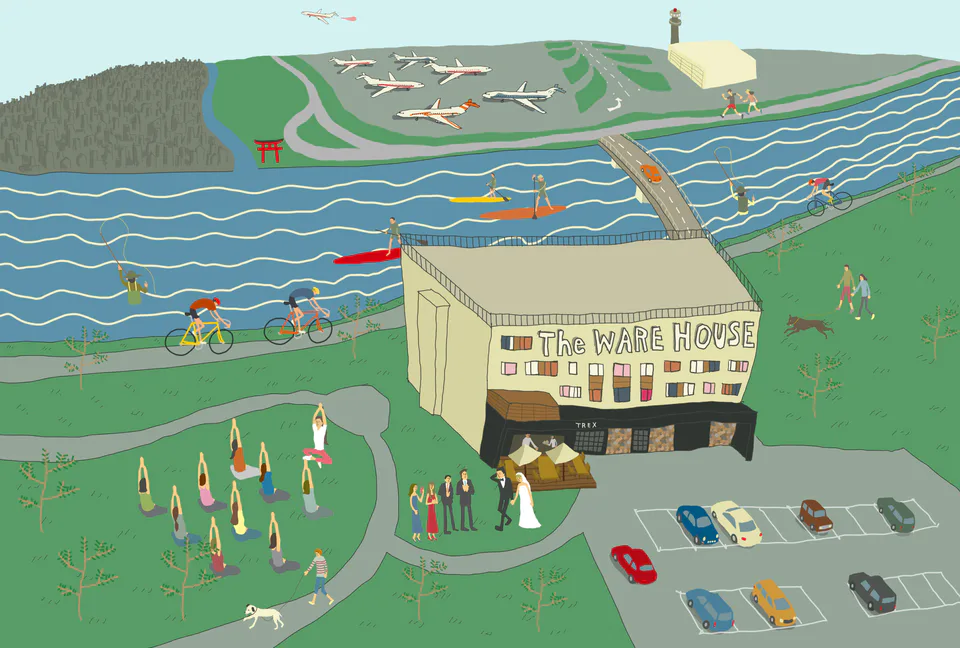
The HOTEL Well-hub Haneda is worth the extra shuttle ride when you are buying more than a bed: you have enough arrival or departure margin for a non-reservable shuttle, you will use the public bath or sauna, and the included breakfast or hotel programming survives your flight schedule. If your only objective is the shortest possible airport-to-bed or bed-to-terminal chain, a terminal-connected hotel remains the cleaner product.
The crucial 2026 correction is that “free airport shuttle” does not mean “guaranteed airport transfer.” The hotel currently publishes a 20-seat, first-come, non-reservable shuttle; limited luggage space can make a departure effectively full before all 20 seats are occupied. For Terminal 3, however, there is a useful independent fallback: the hotel lists public bus service to King Skyfront (West) at about 11 minutes, followed by a roughly three-minute walk. That makes a T3 stay more resilient than a comparison based on the free shuttle alone.
↔ Scroll table left or right
Your real situation | Verdict | Why | Main failure mode |
Late T3 arrival, but still enough time to use bath / sleep properly | Strong candidate | Free shuttle plus a published public-bus fallback from T3 | Do not assume either route waits for a severely delayed flight |
T1/T2 arrival with several large bags | Conditional | Shuttle removes rail transfers | 20-seat bus can fill early because luggage capacity is also limited |
Very early flight; terminal access is the only priority | Prefer terminal-connected hotel | No shuttle wait or road dependency | Well-hub’s included facilities may be mostly unusable before departure |
One-night arrival buffer before Tokyo / Yokohama | Good fit | Bath, breakfast, luggage space and airport proximity can make the stop restorative | You still need another transfer the next morning |
Three or more nights of central Tokyo sightseeing | Move after Night 1 | King Skyfront is an airport / Kawasaki base, not a central-Tokyo rail base | Nearest rail station is about a 15-minute walk away |
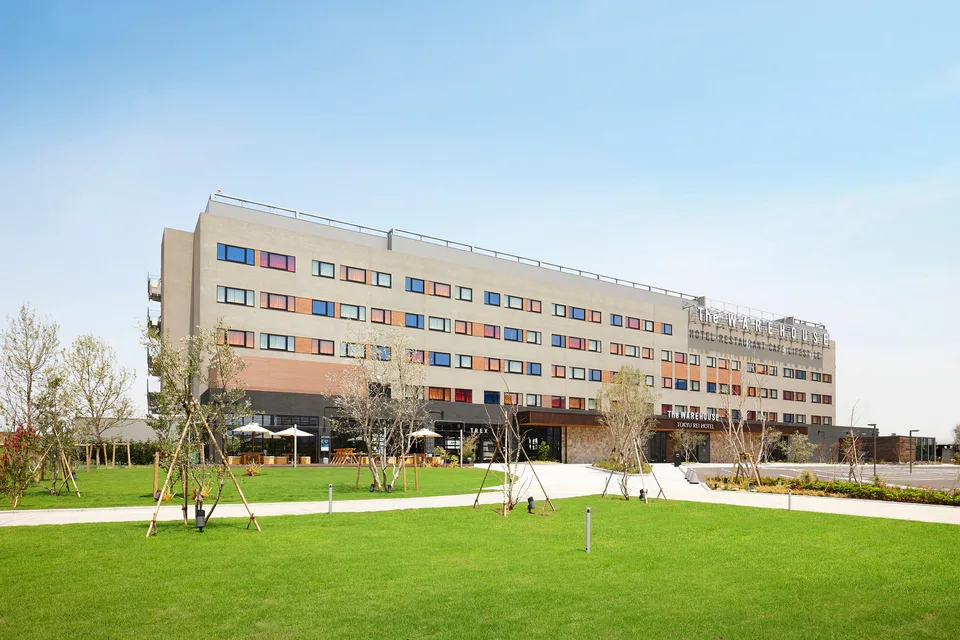
The hotel is across the Tama River from Haneda Airport, in Kawasaki rather than inside an airport terminal.
The real product is shuttle-dependent recovery, not terminal access
The HOTEL Well-hub Haneda reopened under its new brand on July 6, 2026. Tokyu Hotels positions the 186-room property as an experience-led “base camp” near Haneda, with restaurants, lounge spaces, a large public bath and sauna, activity programming and a riverside setting. The official access reference is about 10–20 minutes from Haneda by free shuttle or about 10–15 minutes by taxi.
That should not be translated into “airport hotel = terminal hotel.” The hotel is at King Skyfront in Kawasaki. Its nearest rail station, Kojima-Shinden on the Keikyu Daishi Line, is currently listed at about 15 minutes on foot. From Kawasaki Station, the hotel lists either a roughly 20-minute free shuttle, rail plus the 15-minute walk, or local bus plus a short walk.
This creates a clean ValueNavi distinction:
Terminal-connected hotel: buys minimum movement and maximum predictability.
Well-hub: accepts one vehicle transfer in exchange for a fuller recovery environment and usually more separation from the terminal itself.
Kamata / Kawasaki station hotel: buys rail access and a livelier neighbourhood, but gives up the direct airport-hotel shuttle sequence.
Choose the product whose failure mode you dislike least, not the hotel whose map pin looks closest to Haneda.
The free shuttle has a hard capacity risk
The hotel’s current shuttle rules are unusually important. Seats are first-come, reservations are not accepted, and the normal shuttle has 20 seats. The hotel also warns that luggage space can fill before the passenger count reaches 20, and temporary replacement vehicles can have lower capacity.
That changes how I would use the shuttle on both arrival and departure days.
Arrival: finding the correct pickup point is part of the transfer. T1, T2 and T3 use different hotel-bus locations. A traveller who clears immigration and walks to the wrong bus area has not “arrived at the hotel shuttle” just because the flight is at Haneda.
Departure: the ticket issued by the hotel confirms that you are eligible to use the bus; the hotel explicitly says it does not guarantee a seat. For a high-stakes early flight, do not treat the first preferred shuttle as your only workable departure. Build enough margin for the next service or a taxi.
This is the most important red-team condition in the article. A free shuttle can save more friction than a train transfer, but a non-reservable 20-seat service should never be given the same certainty as walking through a terminal corridor.
Terminal 3 has a better Plan B than many shuttle-hotel comparisons show
The official access page currently lists a public Rinko Bus / Keikyu Bus route from Haneda Terminal 3 to King Skyfront (West), taking about 11 minutes, followed by about three minutes on foot to the hotel. That is separate from the hotel shuttle.
For a T3 international arrival, this materially improves the booking logic. If the hotel bus has just left or is full, the stay does not automatically collapse into a taxi. You can check the live public-bus timetable and use that route when it still operates.
Do not carry this benefit across to T1 and T2 without checking. The hotel’s published public-bus description specifically references Terminal 3. T1/T2 travellers should build their own fallback from the current airport transport information rather than assuming the same stop pattern.
If you are landing close to the last comfortable city connection, use the Haneda late-arrival decision guide first. Well-hub should be the answer after you decide to stop near the airport, not a reason to force an airport night when Tokyo is still an easy transfer.
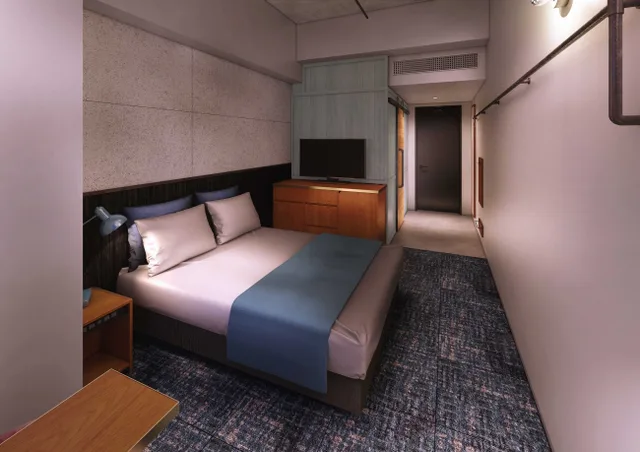
Breakfast is included — so value it by whether your flight lets you use it
The new Well-hub concept currently includes breakfast and its “Day Contents” programming in the accommodation fee. Breakfast runs from 07:00 to 10:00, with final entry at 09:30.
That corrects a major weakness in the old version of this guide: breakfast is not merely an optional add-on that should be price-compared at checkout. It is already part of the current hotel product.
But included does not mean valuable. If the shuttle or taxi to an early flight requires leaving at 05:30 or 06:00, breakfast contributes zero usable value. If your flight is later, breakfast can remove a morning food decision before you repack and return to the airport.
Use the same rule for included cultural or wellness programming. Current hotel material includes activities such as morning yoga and other scheduled experiences, but event times vary. Count only the sessions that actually overlap with your stay. An included activity happening after your airport departure is not part of the value you received.
The public bath can create two useful sessions around one airport night
The current large public bath and sauna operate from 15:00 to 25:00 and again from 05:00 to 10:00. This can create a genuine two-session airport stay:
arrive → bath / sauna → sleep;
morning bath → breakfast → airport.
That is much more useful than simply listing “public bath” as an amenity. If both sessions fit, the hotel can turn a forced airport buffer into recovery time. If your party dislikes communal bathing or the flight schedule eliminates both windows, remove the bath from the premium calculation.
The hotel currently says guests who require diapers in daily life may not use the public bath, and guests must bring towels from their rooms. For families and travellers with specific bathing requirements, this is an eligibility condition rather than a small footnote. The current public facility page does not provide a tattoo policy; do not assume one. Ask the hotel directly if tattoo access affects the booking.
Room choice: 19 m² is a one-night product; 24–27 m² is the luggage upgrade
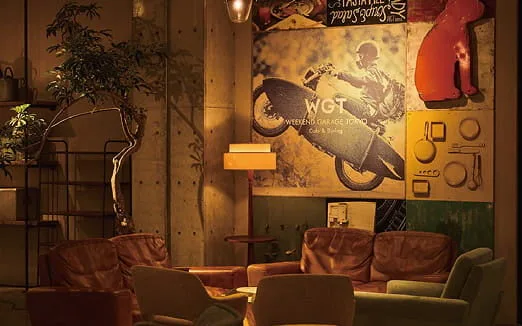
The hotel’s post-opening room page now gives enough detail to make a real room decision:
Superior Double: 19 m², 140 × 195 cm bed, 1–2 guests, shower booth.
Superior Queen: 19 m², 160 × 195 cm bed, 1–2 guests, shower booth.
Standard Twin: 19 m², two 90 × 195 cm beds, 1–2 guests, shower booth.
Superior Twin: 24.3 m², two 110 × 195 cm beds, 1–2 guests, unit bath.
Superior Large Twin: 26.9 m², two 110 × 195 cm beds, up to three guests, unit bath.
The Premium floor repeats the main 19 / 24.3 / 26.9 m² size patterns on 5F. Do not upgrade merely because “Premium” sounds superior; compare what the live rate actually includes.
For one traveller or a lightly packed couple sleeping one night, 19 m² can be perfectly rational. For two adults with two large suitcases, the 24.3 m² Twin gives about 28% more published floor area than a 19 m² room. The 26.9 m² Large Twin gives about 42% more. Those are meaningful increases for repacking after a long-haul flight.
For three adults, start with the 26.9 m² Large Twin, then verify how the third sleeping position is configured on the exact rate. Maximum occupancy does not tell you that all three guests receive equal beds.
First night and final night should use different tests
First night after arrival
Well-hub is strongest when continuing to central Tokyo would mostly buy a shorter transfer tomorrow at the cost of a much later bedtime tonight. You can stop, bathe, sleep, have breakfast if the timing works and move on after the long-haul fatigue has fallen.
It is weaker when you clear Haneda early enough that the Tokyo hotel can be reached cleanly and will be your base for several nights. In that case, staying at Well-hub postpones the same city transfer and adds another checkout.
Final night before departure
The hotel can earn more on the final night because it removes the long city-to-airport leg from flight morning. That is useful when the previous itinerary ends in Yokohama, Kawasaki or south Tokyo and the flight is not so early that you lose every included facility.
For an extremely early departure, however, terminal-connected accommodation becomes stronger again. The whole point of the final night is connection certainty; a non-reservable shuttle adds a variable that a terminal hotel removes.
Cancellation terms matter more for an airport hotel than for an ordinary city night
The hotel’s current standard policy is strict: no-show, same-day cancellation and cancellation after 15:00 on the previous day are listed at 100% of the booked accommodation price, although individual packages or prepaid plans can use different terms.
This matters because airport nights are unusually exposed to airline disruption. A cancelled flight can erase the reason for the room after the cancellation deadline has already passed. Compare flexible and prepaid rates with that failure mode in mind rather than assuming the cheapest non-refundable rate is always efficient.
The same logic applies to a last-night buffer. If your upstream domestic flight or train into Tokyo is uncertain, a slightly more flexible rate can be worth more than a small discount.
The new brand positions the stay around included breakfast, lounge time and scheduled experiences rather than a bed alone.
Do not use Well-hub as a multi-night Tokyo base by accident
The hotel is attractive enough that it can be tempting to keep the room for several nights. For an ordinary first Tokyo trip, that is usually the wrong optimisation.
Central Tokyo journeys begin with the hotel’s shuttle, local bus, taxi or a roughly 15-minute walk to Kojima-Shinden Station before the main railway network. That is completely acceptable for one airport buffer night and much less attractive when repeated every morning and evening.
Stay longer only when the itinerary itself belongs to Kawasaki, King Skyfront, Haneda, the Tama River or nearby business / activity locations. Otherwise use Night 1 or the final night here and move once to the Tokyo base that owns the rest of the trip. The Tokyo first-time hotel-area guide should decide that second hotel.
Three alternatives solve three different problems
Terminal-connected hotel: choose it when walking access to the correct terminal and minimum flight-morning uncertainty are worth more than Well-hub’s shuttle, bath and included experiences. Use the Villa Fontaine Grand vs Royal Park comparison for Terminal 3.
Haneda Innovation City / station-side hotel: choose this pattern when rail access and easy movement into Tokyo matter more than a riverside recovery stay.
Kamata / Kawasaki: choose a station district when restaurants, spontaneous late-night choices and onward rail access are more useful than being closer to the airport by road.
The correct comparison category is therefore not “other Haneda hotels.” It is the one operational problem your first or final night has to solve.
Final verdict: the shuttle is worth one extra ride only when the hotel earns it back
I would book The HOTEL Well-hub Haneda for one night when I have comfortable shuttle margin and will use at least two of these: public bath/sauna, included breakfast, included programming, luggage/repacking space, or the King Skyfront riverside setting. I would choose a terminal-connected hotel when the flight is very early, a member of the party should not wait for transport, or one missed 20-seat shuttle would create unacceptable stress.
For T3, the published public-bus route gives Well-hub a meaningful backup that many shuttle-hotel comparisons miss. For T1/T2, check the exact live fallback before payment. And for a multi-night Tokyo holiday, keep Well-hub as the airport buffer rather than turning one useful airport night into repeated commuting from Kawasaki.
Compare current Well-hub Haneda room and cancellation terms
Miyako Hotel Hakata vs JR KYUSHU HOTEL Blossom Hakata Chuo: Is Direct Access Worth the Premium?
Mitsui Garden Hotel Fukuoka Gion: Is the 26.6 m² Triple Room Worth It for 3 Adults?
Lequ Okinawa Chatan Spa & Resort: Is the Paid Rooftop Pool Worth a Chatan Stay?
Hotel Mei Fukuoka Tenjin: Is Haruyoshi Worth the Final Walk?
Toba Aquarium 2026: Is the Sea Otter and Dugong Detour Worth It?
References
The HOTEL Well-hub Haneda — official access, terminal pickup instructions and shuttle conditions · The HOTEL Well-hub Haneda — official room sizes and bed layouts · The HOTEL Well-hub Haneda — public bath, sauna and facilities · The HOTEL Well-hub Haneda — included breakfast and Day Contents · The HOTEL Well-hub Haneda — check-in, checkout and cancellation policy · Tokyu Hotels — July 2026 reopening release. Checked August 25, 2026. Shuttle times and included programming can change; verify the live timetable and your exact rate before payment.