
Five days is a good first Yakushima itinerary because it gives you three flexible middle-day slots, not because it lets you cram in five different headline attractions. Treat Jomon Sugi, Shiratani Unsuikyo and the coast as a priority queue that can be reordered around weather, trail conditions, fatigue and the tide. Keep the arrival day light and protect the departure day. If Jomon Sugi is non-negotiable, I would usually base in Anbo rather than move hotels; if Shiratani and Miyanoura Port matter more, Miyanoura can be the better single base.
The biggest planning mistake is fixing Day 2 as Jomon Sugi, Day 3 as Taiko Iwa and Day 4 as cycling before you know which mountain day has the safest conditions. Yakushima Town explicitly warns that mountain roads, local buses and Arakawa Mountain Bus service can be suspended in bad weather, and even the arrival port for some jetfoil services may change. A five-day plan should be built to absorb that uncertainty rather than pretend it does not exist.
↔ Scroll table left or right
Day | Default job | What can change it |
Day 1 | Arrive, buy food, confirm transport, prepare hiking gear, sleep early | Do not spend the buffer on a long island loop after a late arrival |
Day 2 | Best-weather major forest slot — usually Jomon Sugi | Swap with Day 3 or Day 4 if mountain access or weather is worse |
Day 3 | Second forest slot — Shiratani Unsuikyo, route chosen by recovery | Use a 1- or 3-hour course instead of Taiko Iwa if legs or visibility are poor |
Day 4 | Coast / rental-car / low-tide onsen / recovery slot | This is the sacrificial buffer if one of the forest days has to move |
Day 5 | Protected departure day | Only add a nearby low-risk activity after transport is secure |
Use hiking duration and recovery capacity to choose the forest day rather than forcing every visitor onto the longest route.
Days 2–4 are a priority queue, not a fixed itinerary
Build the middle three days around three jobs: one long Jomon Sugi slot, one Shiratani slot and one lower-load coastal or recovery slot. The order is provisional until you are on the island and have checked the latest weather, road and transport notices.
Give the strongest available mountain window to Jomon Sugi. Yakushima Town currently describes the Arakawa-route round trip as about 22 km and 10–12 hours, difficulty level 4. That makes it the day with the highest cost of a late start, a transport problem or a poor physical match. If Day 2 looks clearly worse than Day 3, preserving a rigid calendar is less important than preserving the one day that needs the most operating margin.
Give the second forest window to Shiratani. Shiratani is much more adjustable: the town currently lists a roughly one-hour Yayoisugi course, three-hour Bugyosugi course and four-hour Taiko Iwa course. That means you do not have to choose between “full Taiko Iwa” and “skip the forest.” If Jomon has left the group tired, shorten the route.
Keep the coast as the movable slot. Hirauchi Kaichu Onsen, waterfalls, beaches and a partial island drive are worthwhile, but this day has another strategic job: it is the day you are willing to give up if mountain conditions force a reschedule. That is the real value of having five days.
Where should you stay: Anbo or Miyanoura?
If Jomon Sugi is the hardest fixed objective, I would normally choose Anbo as the single four-night base. During the current March 1–November 30 Arakawa traffic-regulation period, ordinary travellers starting from Arakawa Trail Entrance must use the Arakawa Mountain Bus from Yakusugi Museum. Yakushima Town lists Anbo at about 3.6 km / six minutes by car from the museum, versus Miyanoura at about 22.3 km / 30 minutes.
That is a 24-minute positioning difference each way before and after a 10–12 hour hike — roughly 48 minutes of extra road time on the most physically demanding day if your transfer pattern mirrors those official drive-time references. It is a ValueNavi planning calculation, not a promise about traffic or an exact hotel.
Miyanoura reverses the logic for Shiratani. Yakushima Town lists Shiratani Unsuikyo at about 11.5 km / 24 minutes by car from Miyanoura Port and about 28.5 km / 44 minutes by car from Anbo Port. For bus users, Miyanoura is even more useful: the current official schedule lists seven services a day between Miyanoura Port and Shiratani, with the final published return from Shiratani at 16:10.
So the base decision is conditional:
Choose Anbo when Jomon Sugi is non-negotiable, the pre-dawn start is the hardest transport problem, or Yakusugi Land is an important fallback.
Choose Miyanoura when Shiratani is the main forest day, Miyanoura Port is central to the arrival/departure plan, or a bus-first trip matters more than minimising the Jomon morning.
Do not split four nights by default. A checkout, luggage move and second check-in can cost more than the road time they save. Split only when the second base performs at least two jobs — for example, it removes a difficult trail transfer and also aligns with the departure port.
Compare Yakushima stays after choosing Anbo or Miyanoura
Day 1: use arrival day to remove tomorrow morning’s failure points
Do not spend Day 1 proving that a five-day itinerary is “full.” Its job is to make the first mountain day boringly easy to start. Buy breakfast and trail food, organise waterproof layers, charge your phone and backup battery, confirm the exact bus/taxi/pickup arrangement and check the latest road notice before going to bed.
For Jomon Sugi during the regulated period, verify how you will reach Yakusugi Museum before the mountain bus. The current mountain-bus departures from Yakusugi Museum begin at 05:00, followed by 05:20 and 05:40, with a 06:00 service outside June and November. The current adult bus fare is ¥700 one way / ¥1,400 return, and the operator warns that services can be suspended because of road or weather conditions.
If you arrive late enough that you cannot calmly solve food, transport and equipment, do not pretend Day 2 is automatically the Jomon day. Use the first suitable middle-day slot instead.
Jomon Sugi: a rental car does not remove the mountain-bus transfer
The Jomon Sugi day is a long-distance hiking day; the transport plan must protect the early start and return bus.
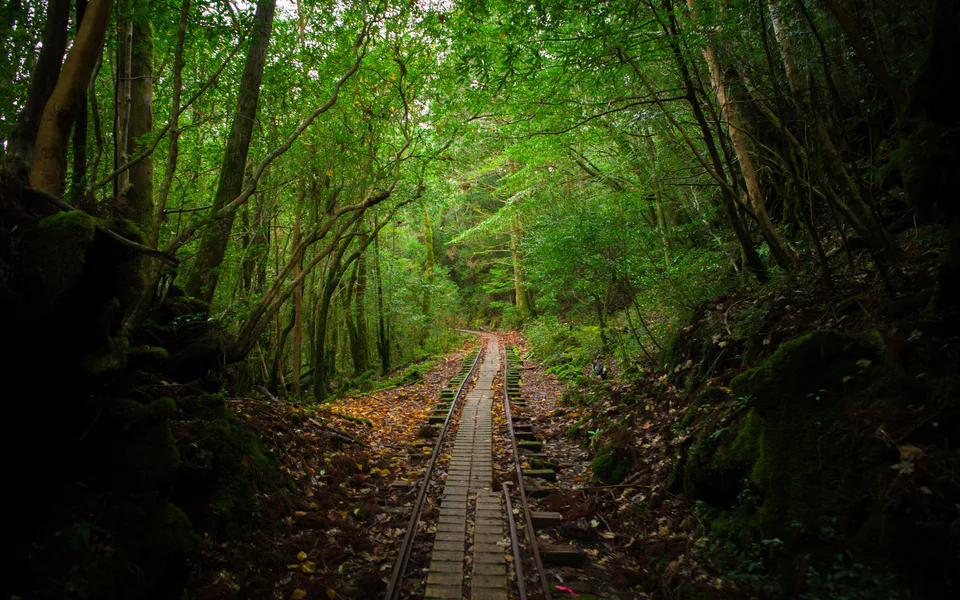
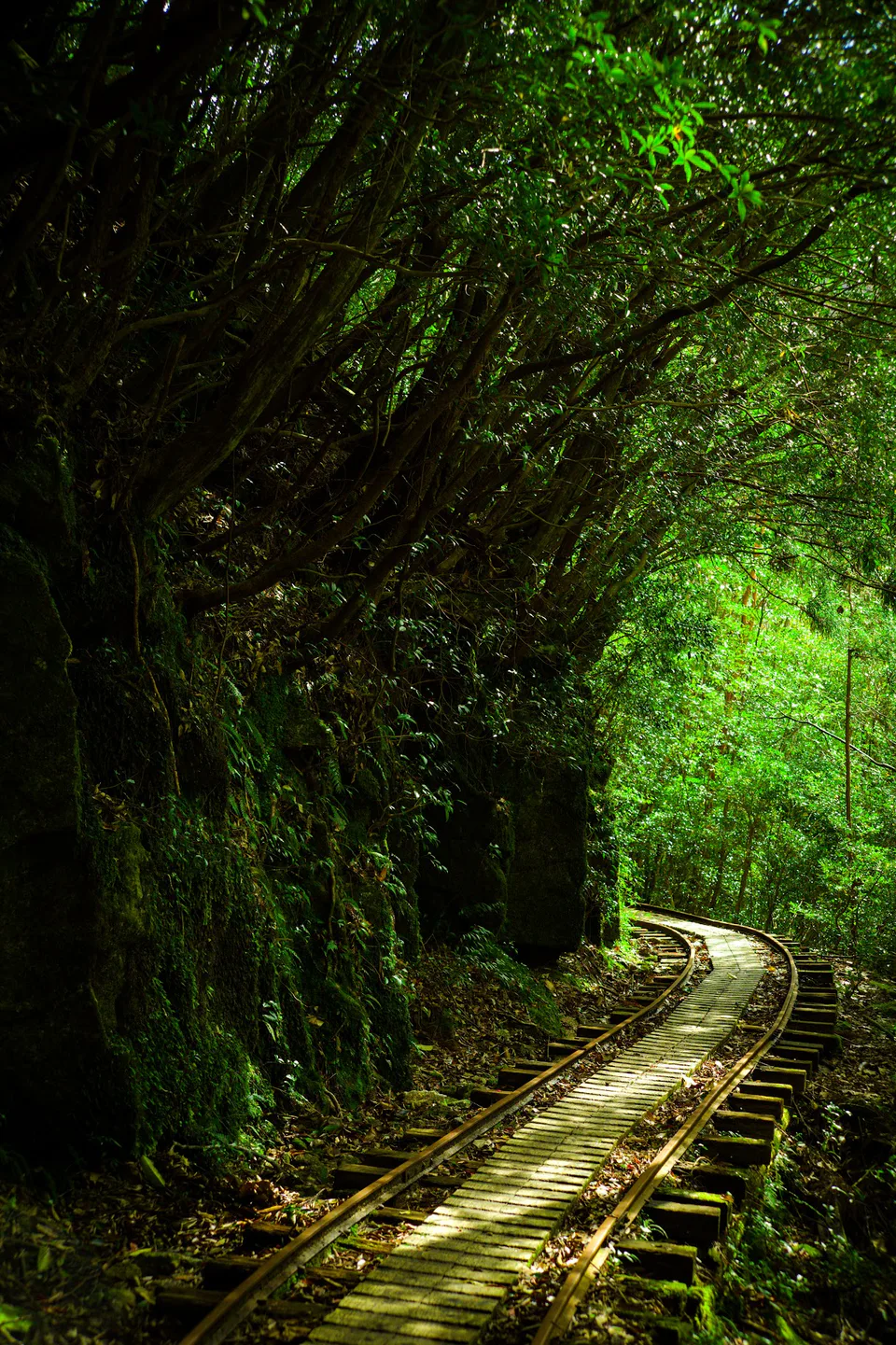
Yakushima Town currently lists Jomon Sugi at about 21.2–22 km round trip depending on the official page and planning convention, with about 10–12 hours required for the standard Arakawa round trip. The long trolley-rail section can make the beginning feel easy, but the day becomes progressively more demanding once the mountain trail, stairs and roots begin.
From March 1 to November 30, a normal rental car, motorbike or bicycle does not let you bypass the regulated access. You still use the Arakawa Mountain Bus from Yakusugi Museum unless you have an eligible chartered bus or taxi arrangement. A car can help with the pre-dawn hotel-to-museum leg, but it then sits parked for most of the day.
This is why I would not automatically rent a car for all five days just because “Yakushima is easier by car.” The car’s value is uneven:
Jomon day: useful for reaching the museum on your schedule, but it cannot drive to the Arakawa trailhead during the regulation period.
Shiratani day: more useful, especially from Anbo, because it removes dependence on a sparse bus timetable.
Coast day: highest flexibility value for waterfalls, beaches, Hirauchi and remote stops.
A partial one- or two-day rental can therefore be more rational than paying for a car throughout a trip dominated by two hiking days. Compare the actual rental price and pickup geometry before deciding; the point is that the car should have a job on each paid day.
Do not put Taiko Iwa on autopilot the day after Jomon Sugi
Shiratani Unsuikyo is shorter than Jomon Sugi, but it is not automatically a recovery walk. The current official course menu is unusually useful because it lets you match the forest to the body you have that morning:
Yayoisugi: about 2 km / one hour.
Bugyosugi: about 4 km / three hours.
Taiko Iwa: about 5.6 km / four hours.
If your legs are good and the mountain view has a realistic chance of adding value, Taiko Iwa can be the right Day 3. If the group is sore, the weather has removed the viewpoint payoff or you simply want a true lower-load day, choose the one- or three-hour route. The moss forest is not a consolation prize.
Bus users have another hard boundary. The current official timetable lists seven Miyanoura–Shiratani services a day and a final Shiratani departure at 16:10. “Stay until you are finished” is therefore not a bus itinerary. Check the live schedule and work backward from the last return you are willing to rely on.
If Jomon Sugi is too much, downgrade the route — not the whole island
A 22 km, 10–12 hour hike is not a mandatory admission test for Yakushima. If that duration is beyond the tested capacity of your party, forcing Jomon Sugi can consume the trip through fatigue even when the hike itself succeeds.
Yakusugi Land is the clearest adjustable alternative from the Anbo side. Yakushima Town currently lists five maintained courses of roughly 30, 50, 80, 150 and 210 minutes. It is about 16 km / 30 minutes by car from Anbo, and local bus service is limited.
For families, older travellers or anyone unsure about a full Jomon day, I would rather combine a shorter Yakusugi Land route with Shiratani than design a five-day trip around one hike that the group is already worried about completing. The trade-off is obvious: you give up Jomon Sugi itself, but you keep forest time, recovery margin and a much more resilient holiday.
Day 4: coast day, weather buffer and tide appointment
Day 4 should not be labelled “cycling day” unless cycling itself is one of your trip goals. Yakushima’s main road follows the island’s circumference and the town warns that there are no cross-island shortcuts. A long ride therefore commits you to real distance and terrain; it is not automatically the easy day after two forest hikes.
For most first-time visitors, I would use Day 4 in one of three ways:
Rental-car coast day: choose a coherent section rather than trying to prove you drove every kilometre of the island.
Short ride / e-bike day: cycle a section you actually want to experience, then keep enough energy for stops.
Rescheduled forest day: if Jomon or Shiratani lost its original slot to weather or access problems, Day 4 becomes the replacement.
Hirauchi Kaichu Onsen works particularly well as a tide appointment inside a coastal day. Yakushima Town’s current Japanese page says the baths are usable only around two hours before and after low tide, twice daily. It also states that swimsuits and underwear are not allowed, while a towel wrap or approved bathing garment can be used. The current Japanese page lists a suggested ¥300 contribution; the town’s English page still shows ¥200, so treat the on-site notice as the final authority.
This is another reason not to lock the five days months in advance. The tide chooses the practical Hirauchi window; the weather chooses the mountain window. Your itinerary should join those fixed constraints rather than fight them.
Day 5: protect the ferry or flight instead of spending the buffer twice
The last day should be the least ambitious day, especially when you are leaving by ferry or flight. Yakushima Town warns that transport can be cancelled or run conditionally during typhoons, heavy rain, flooding and high waves. It also notes that the arrival port for Toppy & Rocket jetfoil services can switch between Anbo and Miyanoura when weather deteriorates.
That makes a remote west-coast drive or another major hike a poor default for departure day. Keep bags ready, verify the operator notice and add only something close to your base or transport gateway after the exit plan is secure.
If Day 5 is an early departure and Day 1 is a late arrival, be honest about the calendar: you do not really have five sightseeing days. You have three complete flexible days between two transport days. In that version, choose Jomon Sugi + Shiratani + one coast/buffer slot. Do not add a hotel move merely because the trip is labelled “five days.”
A bus-only itinerary is possible, but the timetable becomes part of every attraction
Yakushima Town currently describes local bus service as limited and specifically advises travellers to know the location of stops and the last bus. Shiratani has seven Miyanoura services a day; Yakusugi Land has only two local-bus services a day. The Arakawa Mountain Bus is a separate system and is not covered by the ordinary Yakushima Kotsu free-pass ticket.
A no-car trip therefore works best when the hotel and attraction choice are designed around transport:
Miyanoura strengthens a bus-based Shiratani day.
Anbo strengthens the Jomon/Yakusugi Museum side and Yakusugi Land positioning.
A remote ryokan can erase the apparent convenience of either town if its pickup does not match your first or last bus.
Download the current timetables shortly before travel. A bus that exists on a route map but not at the hour you need is not useful transport.
What to cut when weather or fatigue removes a day
Use this deletion order rather than compressing every activity:
Cut the full-island cycling ambition first. Replace it with a short coast section or drive.
Shorten Shiratani before combining two major hikes in one day. The one- and three-hour official courses exist for exactly this kind of adjustment.
Keep Jomon only if the group still meets the physical and transport requirements. Do not protect the name of the attraction at the expense of the rest of the trip.
Protect departure day last. Do not “make up” a lost mountain day by placing a 10–12 hour hike before a ferry or flight.
This is the difference between having a weather buffer and merely having an empty box on Day 4. A real buffer has a deletion order.
Four days versus five: what does the fifth day actually buy?
If you have an early arrival, a late departure, stable conditions and only two priorities, four days can be enough for Jomon Sugi, Shiratani and a small amount of coast. The fifth day is not automatically needed for another attraction.
The fifth day mainly buys weather insurance, physical recovery and sequencing freedom. That is unusually valuable on Yakushima because the island combines long mountain days, sparse transport and weather-sensitive roads. If the extra night is expensive, judge it against the cost of losing the one forest day you crossed Japan to do, not against the number of new sights you can add.
For a wider Kyushu trip, this is also an opportunity-cost decision. Use the Kyushu 5–7 day itinerary to decide whether a fifth Yakushima day deserves the night more than another mainland stop.
Final verdict: build five days around two forests, one movable coast slot and two protected edges
My default first-trip plan is Day 1 arrival and preparation, Days 2–4 as three swappable slots for Jomon Sugi, Shiratani and the coast, then Day 5 as a protected departure. Put Jomon Sugi into the strongest realistic mountain window, not automatically Day 2. After Jomon, let your legs and visibility decide whether Shiratani means Taiko Iwa, the three-hour route or the one-hour route.
Stay in Anbo when Jomon Sugi is the hardest non-negotiable morning; stay in Miyanoura when Shiratani, Miyanoura Port and bus access dominate. Do not move hotels just to shave one transfer. Rent a car on the days when the car can actually change the itinerary, remembering that normal private vehicles cannot bypass the Arakawa access regulation during March–November.
The best five-day Yakushima itinerary is not the one that completes every box. It is the one that can lose one planned day to weather and still preserve the experiences you came for.
Osaka for Couples: A 7-Day Itinerary That Saves the Best Nights for Kyoto, Kobe and One Big View
7 Day Japan Autumn Leaves Itinerary: Hokkaido, Tohoku, Tokyo, Kyoto or Kyushu
Okinawa Itinerary: 5-Day Self-Drive Route from Naha to Churaumi
Ishigaki, Taketomi and Iriomote: A Flexible 4-Day Island Itinerary
References
Yakushima Town — Arakawa Mountain Bus and traffic regulation · Yakushima Town — Jomon Sugi hiking time and distance · Yakushima Town — Shiratani Unsuikyo courses and access · Yakushima Town — Shiratani and Yakusugi Land bus access · Yakushima Town — Yakusugi Land courses · Yakushima Town — Hirauchi Kaichu Onsen · Yakushima Town — weather, road and transport cautions. Checked August 25, 2026. Trail, road, bus, ferry and flight conditions can change; recheck the official notices for the exact travel date.