
Naniwa Yodogawa Fireworks 2026 has one planning rule that matters more than finding a secret viewing spot: do not build your night around the Umeda-side riverbank. The 38th event is confirmed for Saturday, October 17, from 19:00 to 20:00, and the organizer says the left bank on the Umeda side is closed to general spectators because of expressway construction. For a first visit, the real decision is whether to pay for a Juso-side sponsored seat or use a non-reserved public area on the right bank — then decide whether Juso or Tsukamoto gives you the cleaner exit.
That is a very different problem from simply asking where the fireworks look best. If you have never dealt with a huge urban river fireworks crowd, the useful comparison is Sumida River Fireworks 2026 and its exit strategy. In both cases, the quality of the night depends as much on access control and the trip home as it does on the view.
Naniwa Yodogawa Fireworks 2026: lock in October 17, 19:00, and the Umeda-side closure first
The official 2026 outline currently gives three hard facts: Saturday, October 17; fireworks from 19:00 to 20:00; and the riverbank venue between the Shin-Midosuji / Shin-Yodogawa Bridge area and National Route 2 / Yodogawa Bridge. The event goes ahead in rain unless conditions are judged unsafe, and there is no rain-date postponement.
The other hard fact is the one older guides can easily miss: the Umeda-side left bank is not a normal viewing option this year. The organizer explicitly states that the riverbank from around Nakatsu toward Noda is off-limits to the general public because of highway construction. Staying in Umeda can still be a smart transport choice; planning to walk from Umeda to a left-bank viewing area is not.
If your hotel is not fixed yet, use Where to Stay in Osaka for First-Time Visitors to choose the wider base first, then compare Namba vs Umeda based on what you need after 20:00. On fireworks night, the better hotel is often the one that removes a transfer from the trip home.
The 2026 change is not cosmetic: old Umeda-bank advice can break your whole plan
A bad viewing tip usually costs you a slightly weaker angle. This particular change can cost you the entire pre-fireworks schedule. If dinner, your hotel, your walking route and your meeting point all assume that you can drop onto the left bank from Umeda, you may reach the area and discover that the riverbank itself is not available to general spectators.
Treat Umeda as a transport and accommodation base, not as the default viewing bank. If you want a hotel that stays useful after the show, the north side of Osaka has a strong case because the return toward Osaka-Umeda is straightforward once you have cleared Juso. If you prefer Namba for the rest of the trip, that can still work; just budget the extra transfer and do not book a tight post-fireworks dinner. A Namba-specific hotel comparison such as Swissôtel Nankai Osaka vs Hotel Royal Classic Osaka is more useful here for station friction than for the view itself.
Paid seat or non-reserved public area? You are mainly paying for predictability
Official sponsored-seat sales opened on August 1, 2026 at 10:00. As examples of the current published pricing, the Juso-side Premium Seat is listed at ¥20,000 for adults and the Exciting Seat at ¥14,000. Those prices are not a promise of current availability; availability can change and needs a live check when you book.
The useful question is not whether free viewing is “good enough.” It is how much uncertainty you want to absorb. A sponsored seat gives you a defined venue, a clearer gate and a much more predictable viewing setup. A non-reserved public area can be perfectly reasonable if you are willing to arrive earlier, accept a less controlled position and adjust when staff redirect people.
The organizer prohibits place-holding outside the sponsored areas before noon on the day of the event. It also warns that entry to the riverbank may become impossible after 18:00. That combination makes “finish dinner at 18:30 and then hunt for a free spot” one of the weakest plans for a first-timer.
Juso or Tsukamoto? Choose the exit network before you choose the shortest walk
For the right-bank venue, Hankyu Juso and JR Tsukamoto are the two easiest stations to understand. Official ticket information describes both as roughly a 15-minute walk under normal conditions, but the FAQ tells sponsored-seat visitors to allow another 15 to 30 minutes for the station-to-riverbank crowd on event day.
Juso is the intuitive choice if your night ends in Umeda or if Hankyu is already part of your route. Tsukamoto makes more sense when JR fits your hotel or your next move. Neither is automatically less crowded. The stronger choice is the network you can navigate without improvising when thousands of people are leaving at once.
This is the same reason a festival itinerary should be built around the exit, not just the show. If you are also considering Kishiwada Danjiri October 2026 on the same trip, note the contrast: Kishiwada is a moving festival with long periods on foot, while Yodogawa compresses a huge crowd into the approach, one fixed 60-minute show, and a very concentrated departure.
A 19:00 start does not mean an 18:30 station arrival
The official FAQ is unusually clear here: sponsored-seat visitors should reach the nearest station no later than 17:30 and the riverbank by 18:00. The venue guide repeats the same concern, warning that arriving at the nearest station after 17:30 may mean you do not reach your seat before the fireworks begin.
For non-reserved viewing, the logic should be earlier, not later. You still need time to find an allowed area, use the toilet, buy water and absorb any last-minute crowd routing. The risk in a city fireworks event is rarely the scheduled one-hour program. It is the uncontrolled time before and after it.
If the day already includes USJ or Kyoto, do not keep stacking major stops until sunset. The trade-off is similar to the one in Osaka and Kyoto 4-Day Itinerary With USJ: once one day contains a high-friction anchor, adding another long-distance segment often makes the whole day worse rather than richer.
October fireworks need a different packing mindset from an August riverbank night
Yodogawa is still remembered by many travelers as a summer fireworks event, but the 2026 edition is firmly in mid-October. You still need water, comfortable shoes and a bag that is easy to manage in a crowd. The extra piece is a light outer layer for a cooler riverbank evening, plus compact rain protection.
The organizer specifically recommends rainwear rather than umbrellas in wet conditions because umbrellas become hazardous in a dense crowd. Keep the setup small. A large picnic load that sounds comfortable in theory becomes awkward when entrances narrow and the return flow starts moving.
If you are building a trip around several Japanese events, Japan Summer Festivals Compared is useful not because Yodogawa is a summer event in 2026, but because the same decision framework still applies: standing time, crowd compression, reservation needs and the exit are more important than which event looks most spectacular in photos.
The 2026 program is 60 minutes across five scenes — but the finale is not the end of your timetable
The organizer has published the 2026 program as five themed scenes across roughly 60 minutes. It is worth watching the full show, especially on a first visit. The mistake is treating 20:00 as the time you are free for the next reservation.
The official venue guide advises visitors to avoid moving immediately after the end and suggests waiting about an hour before leaving. The FAQ also explains that exit gates may be controlled for safety. Build that delay into the night rather than fighting it. A 20:30 restaurant reservation on the other side of Osaka is not a serious plan.
If you want another Osaka event where the exit shapes the experience, Kishiwada Danjiri Arrival Time: Morning, Midday or Lantern Night makes the same broader point from a different kind of festival: the advertised event hours are not the same thing as your usable travel hours.
A low-risk October 17 plan for a first visit
If you have a sponsored seat, keep the afternoon light. Be in the Juso or Tsukamoto area before the official 17:30 station guideline, complete riverbank entry before 18:00, then use the remaining time for toilets, food and finding the correct block. Watch the full 19:00–20:00 program and assume the trip back to the station will take substantially longer than a normal evening.
If you are using a non-reserved public area, make finding a legal viewing position the main task. Do not demand all four things at once: late arrival, closest possible view, low crowd density and fastest exit. Check the current venue map, respect the Umeda-side closure, and accept moving farther out if the central approach is already saturated.
For travelers staying farther south, it is usually better to protect the post-fireworks return than to force another attraction into the afternoon. If your overall Osaka plan is still flexible, Where to Stay for Kishiwada Danjiri: Kishiwada, Rinku or Namba is also useful for understanding when an event-specific overnight base is worth more than a universally convenient city-center hotel.
Three plans to avoid in 2026
First: following an old article to a free viewing spot on the Umeda-side riverbank. The 2026 official information says the left bank is closed to general spectators. Second: arriving at the nearest station around 18:30 and expecting to find a public spot. The organizer warns that riverbank entry may not be possible after 18:00. Third: treating the 20:00 finish as a 20:10 departure. Controlled exits and station queues are part of the event.
A fourth mistake is subtler: booking the cheapest hotel without considering the final transfer. Saving a small amount on the room can be poor value if it creates a cross-city connection when you are already leaving a controlled riverbank crowd.
Final check before you leave for Naniwa Yodogawa Fireworks 2026
Check four things again on October 17: the organizer’s cancellation or weather notice; the current 2026 venue map and your gate; the exact Umeda-side restricted area; and any temporary railway guidance for the return. If you hold a sponsored-seat ticket, also check the printed or digital entry instructions for your specific seat type.
Do not replace those checks with a screenshot from 2025. The event is familiar, but the access rules are not static — and the Umeda-side closure is exactly the kind of change that makes a perfectly good old guide dangerous when used as a current route plan.
Official sources
38th Naniwa Yodogawa Fireworks — 2026 event outline
2026 sponsored viewing seats and prices
2026 five-scene fireworks program
Official FAQ: access, 17:30 / 18:00 arrival guidance and controlled exits
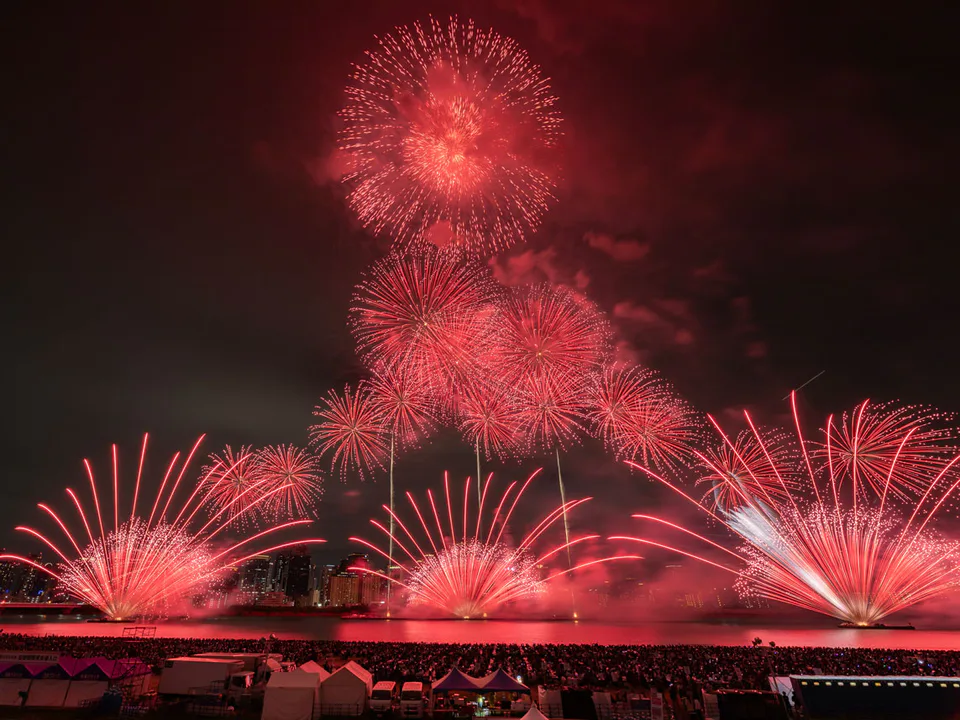
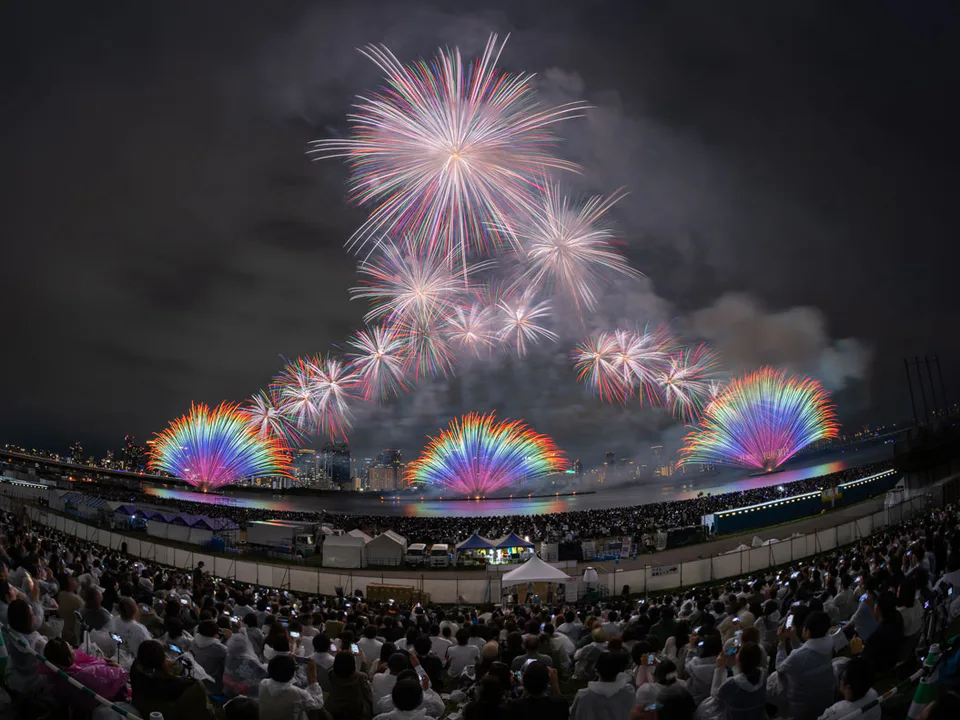
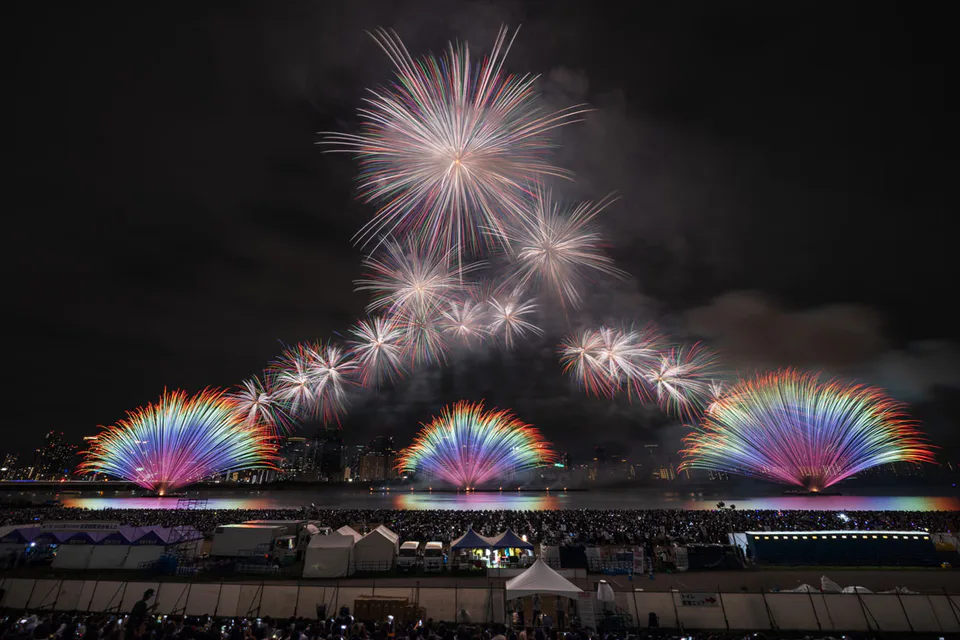
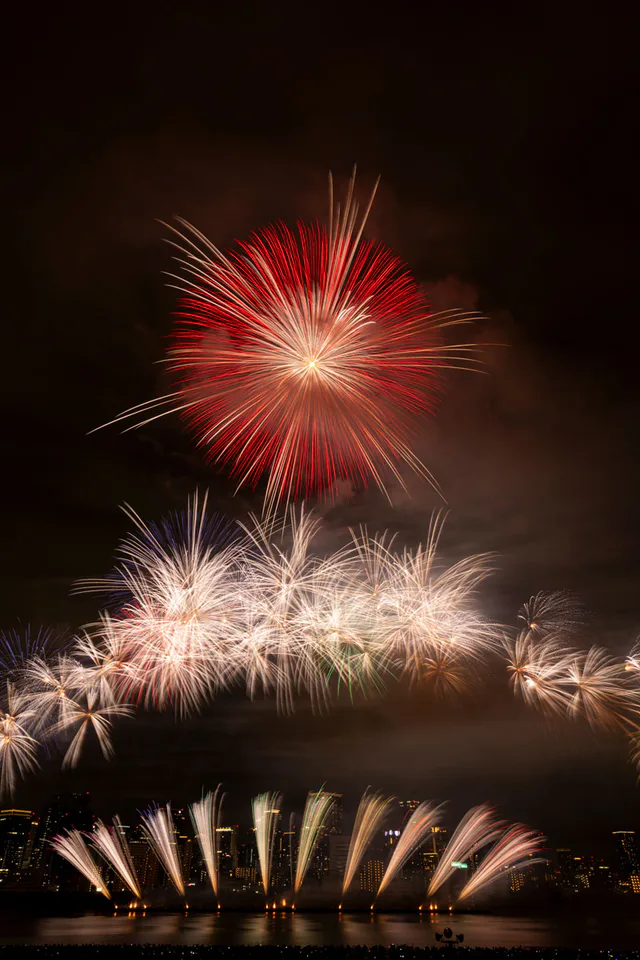
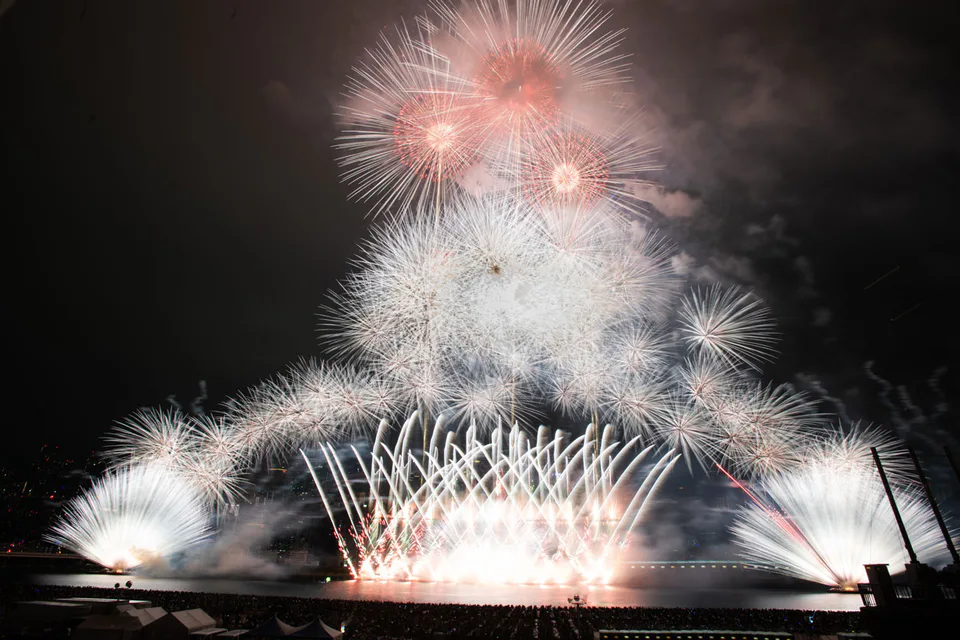
The five photographs in this article are from the organizer’s official 2025 Naniwa Yodogawa Fireworks gallery. They show the real event, but they are not presented as photographs of the October 17, 2026 edition.