
For a Tokyo family hotel, “sleeps four” is only the first filter. The better question is what four tired people can do at the same time after a long sightseeing day: sleep on acceptable surfaces, open luggage without blocking the room, use the toilet and sink without forming a queue, wash clothes when the stay is long, and get back to the hotel without another difficult transfer.
I would therefore pay a family-room premium only when it buys one of four things you will repeatedly use: better bed equality, bathroom concurrency, household functions, or a better base. Do not double-count the premium. A room that accommodates four legally may still use an extra bed and sofa bed; a larger room may still be on the wrong side of Tokyo; and a kitchenette is not valuable if nobody plans to use it.
Tokyo family hotels in 30 seconds: identify the friction before the hotel
↔ Scroll table left or right
Your real problem | Start with | Why | Main catch |
Four people want one room near Tokyo Station | karaksa hotel TOKYO STATION Family Quadruple | 29.2 m² plus separate shower, wash area and toilet make the room operationally efficient | The four sleeping surfaces are not equal: 2 regular beds + 1 extra bed + 1 sofa bed |
Four to six people prioritise bed count / separation | sequence MIYASHITA PARK bunk rooms or karaksa Japanese Family / connecting rooms | sequence gives 4 or 6 separate bunk beds; karaksa offers futon rooms up to 6 or connecting rooms with 2 bathrooms | sequence check-in starts at 17:00; karaksa Japanese Family uses futons rather than Western beds |
Four to five people staying several nights | Tokyu Stay Shinjuku Eastside Adjoining A / B | Two-room configurations add washer-dryers, microwaves and kitchenettes as well as much more usable space | Higashi-Shinjuku / Shinjuku-sanchome is not the same location as JR Shinjuku South Exit |
Three people need Shinjuku South Exit | JR Kyushu Hotel Blossom Shinjuku Deluxe Twin | The 30 m² Deluxe Twin explicitly accepts a third guest with a paid extra bed | The cheaper 25 m² Superior Twin is officially capacity 2 |
Bed count and bed equality are different decisions
Family-hotel searches often flatten all four-person rooms into the same category. That is exactly where booking mistakes begin.
karaksa hotel TOKYO STATION’s current Family Quadruple is 29.2 m² and accommodates four, but the official bed list is two 110 cm regular beds, one 100 cm extra bed and one 90 cm sofa bed. That is a perfectly valid four-person room; it is not four equal regular beds.
The room’s stronger family advantage is elsewhere. Its shower booth, wash area and toilet are separated and can be used at the same time. For a family getting ready at 07:00, that can save more useful time than another few square metres.
ValueNavi rule: if the children are young and bed hierarchy is easy to allocate, Family Quadruple can be a strong one-room solution. If four adults or older teenagers strongly prefer equal sleeping surfaces, reopen the comparison instead of assuming “Quadruple” has solved it.
For 4–6 people at karaksa, choose between one-room simplicity, futons and two bathrooms
karaksa’s Japanese Family Room is a different solution. The current official room page lists 32.9–43.1 m², capacity up to six and 90 cm futons on tatami. The bath, wash area and toilet are separated, and there is an additional washbasin. That gives a large family more parallel morning capacity, but everyone must genuinely be comfortable sleeping on futons.
Connecting rooms solve another problem again. karaksa describes adjacent rooms joined by an internal door, with the practical benefit of two bathrooms. For parents with older children, two adults sharing with another couple, or a family whose morning routine is the bottleneck, two connected rooms can outperform one large room even when the total floor area is not the only thing you care about.
Do not treat these three products as an upgrade ladder:
Family Quadruple: one-room simplicity + good bathroom concurrency, but unequal sleeping surfaces.
Japanese Family: more capacity + extra washbasin + one shared tatami/futon room.
Connecting rooms: more separation and two bathrooms; useful when privacy and parallel routines matter.
Pick the friction you want to remove rather than the room with the highest headline capacity.
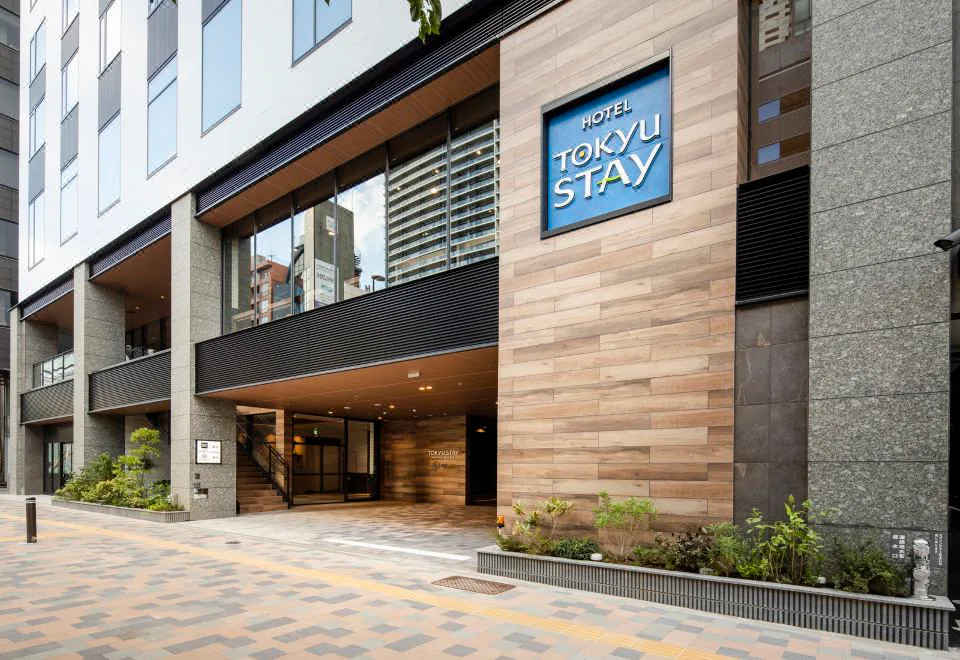
For four to seven nights, Tokyu Stay can turn household functions into packing space
Tokyu Stay Shinjuku Eastside becomes more interesting as the stay gets longer because the useful features can repeat. Its current official room list includes 18 m² Comfort Double rooms with washer-dryer and microwave, while the larger adjoining configurations combine multiple rooms with washer-dryers, kitchenettes and microwaves.
The current Adjoining Room A combines 18 m² + 25 m², accommodates four and lists two 110 cm beds plus one 160 cm bed. Adjoining Room B combines 20 m² + 41 m², accommodates five and lists two 120 cm beds, one 160 cm bed and a futon.
That is a very different product from squeezing four people into one “family room.” A multi-night family can separate sleep zones, wash clothes in the room and reduce how much clothing has to be packed in the first place.
The trade-off is location. This hotel works well around Higashi-Shinjuku and Shinjuku-sanchome, but it is not a JR Shinjuku doorstep hotel. If your trip repeatedly uses the South Exit, highway buses or westward rail, do not let the washer-dryer erase the daily station geometry.
ValueNavi test: count intended laundry uses. If the washer lets the family pack materially lighter and you expect to use it two or three times, it is doing real work. If the stay is two nights and nobody plans to wash clothes, the feature is mostly specification-sheet value.
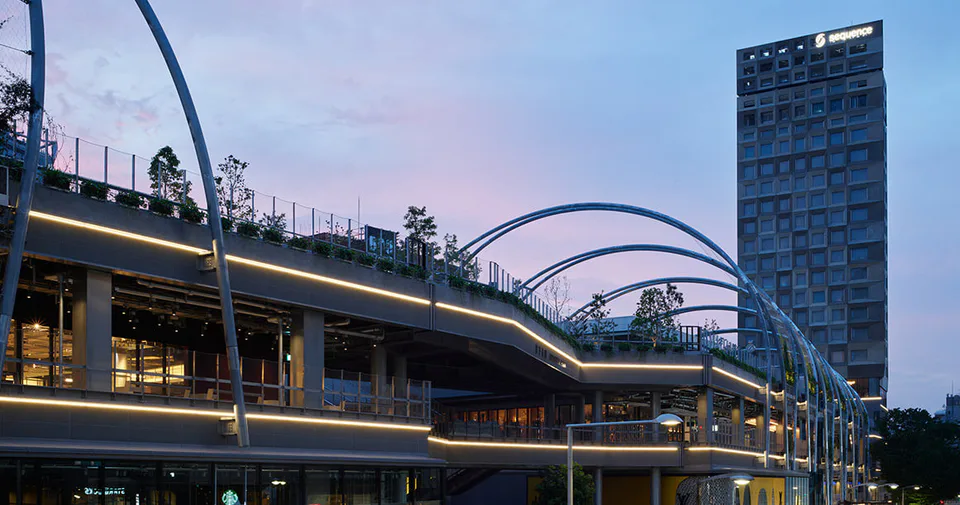
sequence MIYASHITA PARK gives you actual bed count — then charges you with a 17:00 check-in
sequence MIYASHITA PARK is useful when Shibuya / Harajuku is already the correct base and the group wants separate sleeping surfaces. The current official Bunk Bed 4 is 30.5 m² with four 97 cm beds for four guests; Bunk Bed 6 is 40.6 m² with six 97 cm beds for six guests.
That makes the bed-count question unusually clean. Nobody has to infer whether “sleeps six” means a hidden sofa bed.
The operational cost is equally clear: check-in begins at 17:00 and checkout is 14:00. For older children arriving in Tokyo around lunchtime, luggage storage can bridge the afternoon and the late checkout can be useful. For a toddler who needs a private nap or shower at 15:00 on arrival day, the same policy can be a serious mismatch.
This is why I would not call sequence “better for families” in general. It is better when Shibuya is already the right location + separate beds matter + 17:00 private-room access does not hurt the first day.
For three people in Shinjuku, “Twin” does not prove the room accepts three
JR Kyushu Hotel Blossom Shinjuku is a useful booking-screen lesson. Its current official Superior Twin is 25 m² with two 120 cm beds and capacity for two. The 30 m² Deluxe Twin is the category that accepts two to three guests, and a third guest requires a paid 90 × 190 cm extra bed.
So the family decision is not “Superior vs Deluxe because one is nicer.” For three people, the Superior Twin is not the same occupancy product at all.
The same logic applies throughout Tokyo: hotel search results often show a room name before they show the exact legal occupancy and sleeping surface. Always reach the final room configuration before comparing price.
Choose the Tokyo area before you optimise the family room
If the base is still undecided, step back to Where to Stay in Tokyo for First-Time Visitors. Then use Tokyo Station vs Shinjuku or Shinjuku vs Shibuya before comparing individual hotels.
A common family mistake is paying for one easy arrival day and creating four inconvenient sightseeing days afterward. Tokyo Station can be excellent with luggage and Shinkansen plans, but if four of five days repeatedly end around Shinjuku, Shibuya and Harajuku, that one-time arrival advantage may be smaller than the repeated cross-city cost.
The reverse is also true. A family with an early Shinkansen, several eastern-Tokyo days and luggage may rationally pay for Tokyo Station convenience even if the room itself is not the largest option.
Run the “most tired day” test, not the energetic first-day test
Picture the day when everyone is least cooperative: a stroller, two shopping bags, one child who wants food immediately, a full-size suitcase waiting at the hotel and a late return from sightseeing. Which part of the route or room fails first?
That test often exposes the real premium:
Bed equality: older children or adults resent the sofa bed.
Bathroom concurrency: four people cannot get ready without a queue.
Luggage circulation: open cases block the only path through the room.
Household functions: long stays generate laundry, breakfast and reheating work.
Location: the final station transfer is the hardest part of every evening.
Whichever problem repeats most often should receive the first hotel dollar.
A child who naps can reverse a hotel ranking
For a family that returns to the room at midday, check-in timing, room access and station-to-hotel friction become first-order criteria. That is why sequence MIYASHITA PARK’s 17:00 check-in can be almost irrelevant to one family and decisive for another.
A larger room also becomes more valuable when a child naps while everyone else is awake. If the whole family leaves after breakfast and returns only to sleep, the same space premium may have very little opportunity to repay itself.
Do not pay for “family-friendly” in the abstract. Pay for the family behaviour that actually repeats.
Which families do not need a special family hotel?
If you have one older child, no stroller, light luggage, no midday room use and everyone is out from breakfast until late evening, a conventional well-located Twin or Triple may be enough. Connecting rooms, kitchenettes and 40 m² floor plans can become expensive solutions to problems you do not have.
The same is true for laundry. If the trip is short enough that nobody needs to wash clothes, an in-room washer should not outrank a better station exit.
This is the deletion test for every family-hotel premium: remove the feature from the trip. What actually gets worse? If the answer is “almost nothing,” do not pay for it.
If Shinjuku is already fixed, compare the hotel-level trade-off next
Once the area decision is made, use Hotel Gracery Shinjuku vs JR Kyushu Blossom Shinjuku to compare Kabukicho late-night convenience with the South Exit / transport side of Shinjuku. Hotel-level comparisons become useful after the geography is fixed, not before.
Final verdict: buy one family advantage on purpose
For four people near Tokyo Station, karaksa Family Quadruple is strongest when bathroom concurrency and one-room simplicity matter more than equal beds. If bed equality or privacy matters more, compare its Japanese Family / connecting options or sequence’s true 4- and 6-bed bunk rooms. For four to five people staying several nights, Tokyu Stay Shinjuku Eastside becomes stronger when adjoining space, laundry and kitchenette use will repeat. For three people around Shinjuku South Exit, move straight to a room officially rated for three, such as JR Kyushu Hotel Blossom Shinjuku’s Deluxe Twin, rather than assuming any Twin can add a bed.
The broad rule survives all four examples: choose the Tokyo base first, then identify the repeated family friction, then pay for the room feature that removes it. “Sleeps four” is capacity. “Works for four” is an itinerary decision.
Next decision: choose your Tokyo base before choosing a hotel
References and verification date
karaksa hotel TOKYO STATION — Family Quadruple · Japanese Family Room · connecting-room information · Tokyu Stay Shinjuku Eastside — current room configurations · sequence MIYASHITA PARK — Bunk Bed rooms · JR Kyushu Hotel Blossom Shinjuku — current room capacities. Checked August 25, 2026. Room inventory, occupancy rules, child policies and rates can change; verify the exact room on the booking screen before payment.
Okinawa Honeymoon Hotels: Don’t Upgrade All Four Nights — Spend More on the Two You’ll Actually Use
Tokyo Family Attractions by Age: 0–3, 4–6, 7–12 — Plan Around Naps, Not Rankings
Fukuoka Food Trip Hotels: Choose Where Dinner Ends, Not Where the Most Restaurants Are
Sapporo Shopping Hotels: Stay Where You Can Drop Your Bags, Not Just Where the Shops Are