
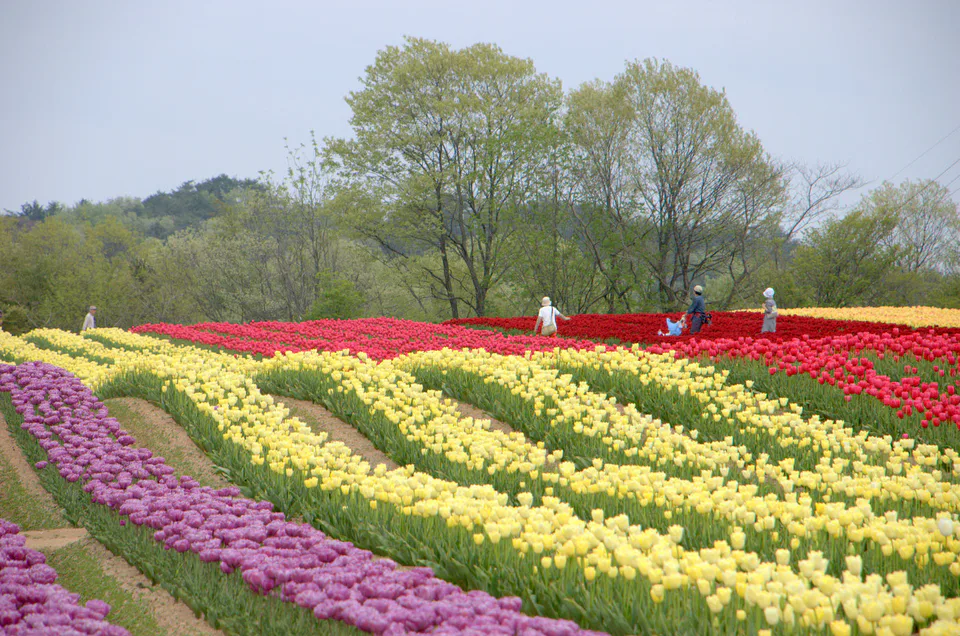
Choose Sera Kogen Farm when the current event there is the flower you actually came for; choose Flower Village Hanayume no Sato when its low, wide landscape is the stronger bloom. Do not choose between the two by park reputation alone. Sera Kogen Farm Co. operates four separate flower gardens around Sera, and the active venue changes with the season. Each event has its own admission, address and bloom curve. The useful decision is therefore flower + live bloom + transport, not “which farm is best?”
As of August 25, 2026, this distinction is especially important. Sera Kogen Farm’s sunflower season has been extended through August 30 after the flowers remained at good viewing condition, while Hanayume no Sato’s Kochia & Cosmos Hill opened August 22 and runs through October 18. Someone travelling this week is choosing sunflowers versus green kochia/cosmos, not spring moss phlox versus tulips. Recheck the live bloom page immediately before driving.
↔ Scroll table left or right
Your priority | Start with | Main boundary |
Tulips, sunflowers, dahlias and garden mums | Sera Kogen Farm | The exact display depends on the active seasonal event |
Moss phlox, nemophila, hydrangeas, kochia and cosmos | Hanayume no Sato / Flower Village | It is a separate garden about 25 minutes from Sera IC, not a walkable annex |
Only one flower stop from Hiroshima | Whichever has the stronger live bloom | Do not pay two admissions simply to complete both names |
Want to visit two gardens | Rental car + full rural day | Each venue has separate parking, admission and travel time |
No car | Use a dated Flower Tour Ticket only when the current schedule names your garden | No direct farm bus operates every day or every season |
Hiroshima + Miyajima only have two days | Skip Sera | A rural flower day should not consume the city/island core unless flowers are a top priority |
The first correction: “Sera flower farm” is a four-garden system
The operator’s current English site lists four separate gardens in the Sera Kogen area: Sera Kogen Farm, Flower Village Hanayume no Sato, Sera Kogen Hana no Mori and Sera Wisteria Garden. Different flowers and events belong to different venues.
This matters because search results, social posts and old travel blogs often collapse them into “Sera Kogen.” A photograph of moss phlox can send someone to the sunflower farm. A taxi driver given only an event name may need the exact venue. A family can arrive at the correct company but the wrong gate.
Before leaving Hiroshima, confirm three things:
the event name;
the garden name and address;
the live bloom status.
Those three checks are more useful than a generic “best Sera flower farm” ranking.
Sera Kogen Farm: choose it for the headline field that changes by season
Sera Kogen Farm itself is the venue associated with major displays such as tulips, sunflowers and the autumn dahlia/garden-mum event. The product changes dramatically across the year. A spring visitor and an August visitor are not visiting the same visual experience simply because the address is the same.
The current 2026 sunflower event is a useful example of why live information matters. The original summer window has been extended through August 30, 2026 because the flowers remained in good condition. The Sera Town bloom report published August 21 described the sunflowers as at their best and expected good viewing around the end of August.
That is good news for a traveller arriving this week, but it is not evidence that “late August is always peak.” Next year’s weather can move the curve. Use the live report, not this article’s date, as the final decision.
Hanayume no Sato: choose it when the landscape is the product
Flower Village Hanayume no Sato—shown on the operator’s current English site as Flower Village / Kamunonosato—is the stronger choice when low-growing colour across rolling ground is what you want. Its seasonal calendar includes the spring Moss Phlox & Nemophila Hill and the current late-summer/autumn Kochia & Cosmos Hill.
For 2026, the Kochia & Cosmos event runs August 22 to October 18, with maintenance closure September 28–30. Early in the season, the kochia is green; later it transitions toward orange and red while cosmos develops. That means “the event is open” does not answer “will it look like the red-kochia photograph I saved?”
This is the central Sera rule: event dates tell you access; bloom reports tell you visual value.
Do not compare spring photos with an autumn travel date
A surprising amount of bad flower planning comes from comparing parks rather than comparing the flowers available during the traveller’s actual week.
Use the season in this order:
Late March–May: compare spring events such as moss phlox/nemophila, tulips and wisteria according to the live calendar.
June–early July: hydrangea/hollyhock and early-summer rose events become more relevant.
Late July–August: sunflowers and other summer displays take over.
Late August–October: kochia/cosmos, dahlias, garden mums and autumn rose events compete.
Then compare which active garden has the strongest bloom. Do not choose Hanayume because you love its April nemophila photographs when you are travelling in September.
One farm is usually better than two
The two names in this article are separate rural attractions. Sera Kogen Farm is roughly 18 minutes by car from Sera IC according to its official access page, while Hanayume no Sato is roughly 25 minutes from Sera IC. They are not two entrances on the same walking route.
A two-garden day therefore contains four extra costs:
a second admission;
driving between venues;
parking and entrance time again;
less time at the stronger bloom.
I would visit both only when the live reports show two genuinely different displays worth seeing and the group already has a car for the full day. If one garden is clearly better, stay longer there, eat locally and keep the rural day simple.
Admission is bloom-linked, so “price” is also a condition signal
The operator’s current fee page says admission changes with flowering conditions, with the maximum charged during the best viewing period. It also states that each event requires separate admission.
That is a useful mental model. You are not buying a fixed museum product. You are paying for a living display whose quality changes across the season.
Do not interpret a lower admission price near the start or end of an event as a secret bargain on the same scene. It may reflect weaker bloom conditions. Conversely, maximum admission does not guarantee your preferred lighting, weather or crowd level.
Driving is the default because it keeps the bloom decision flexible
Sera Kogen Farm’s official access page estimates about 1 hour 20 minutes from central Hiroshima by car, depending on route and traffic. It also warns of congestion around peak bloom and major holidays.
Driving is valuable for more than speed. It lets you:
switch gardens if the morning bloom report changes the priority;
arrive early before the strongest crowd period;
carry water, rain gear and purchases without a bus constraint;
visit a second garden only if the first finishes earlier than expected.
The trade-off is obvious: someone must be a confident, sober rural driver, and peak flower weekends can create road and parking queues. A rental car does not turn Golden Week into an empty farm.
No-car travellers should treat the direct bus as a dated product, not a permanent route
The operator says the Sera Farm Flower Tour Ticket can provide a direct bus from Hiroshima Bus Center with admission on selected weekends and holidays during designated periods. Outside those periods and on weekdays, it explicitly says there is no direct bus to the farm; travellers must use a taxi or rental car from the nearest station or bus stop.
The operator’s English access pages still show some 2025 example periods, which is exactly why this article should not publish an evergreen claim that “the bus runs every weekend.” For a 2026 or later trip, open the live Flower Tour Ticket page and confirm:
your exact date;
which garden the bus serves;
whether admission is included;
arrival and departure times;
whether advance purchase is required.
If that chain is not published for your date, I would not build a Hiroshima day trip around a speculative direct bus.
When is Sera worth taking a day away from Hiroshima?
For a first two-day Hiroshima trip, I would protect Hiroshima city and Miyajima. Sera is inland, vehicle-dependent and seasonal. Adding it means deleting something meaningful, not filling an empty afternoon.
Sera becomes a strong third-day option when:
flowers are one of the main reasons for visiting Japan;
the live bloom report is genuinely strong;
you have a car or a confirmed direct tour product;
you are willing to give the rural day several hours instead of squeezing it between Peace Park and Miyajima.
If the wider Hiroshima plan is still open, compare Hiroshima + Miyajima in two days and whether Hiroshima belongs in the first trip before adding a seasonal farm.
Do not pair Sera with a full Miyajima day
Miyajima already contains ferry timing, walking, possible Mt. Misen time and an evening transport decision. Sera adds a long inland drive and a flower park that closes in the late afternoon.
The combination works only by shortening one side until both are weak. A better structure is:
Day 1: Hiroshima city.
Day 2: Miyajima.
Day 3: Sera if bloom conditions justify it.
If you only have two days, Sera should beat either Hiroshima city or Miyajima in your personal priority ranking before it enters the plan.
Photography: choose the field geometry before the camera gear
Hanayume no Sato is stronger when you want low flower carpets and broad layered backgrounds. Sera Kogen Farm can be stronger when the event uses taller flowers, rows or individual varieties such as dahlias.
That distinction matters more than bringing a second lens. Ask what the photograph needs:
portrait against continuous colour → low carpet-style fields;
strong flower rows and height → tulips/sunflowers;
individual botanical detail → dahlia/garden-mum season;
autumn colour transition → kochia/cosmos.
Then check the operator’s photography rules if you plan tripods, commercial shooting, cosplay or bridal photography. Ordinary visitor photography and facility-use photography are not always the same product.
Weather and heat can reverse a “best bloom” decision
A field can be at peak bloom and still be a poor 14:00 visit in strong August heat. Conversely, cloud can make portraits easier even when it removes the postcard-blue sky.
For summer, I would prioritise early arrival, water, sun protection and a shorter high-quality field session over staying until closing. In spring or autumn rain, grass and slopes can become muddy, so shoes matter more than the outfit designed for photographs.
If weather becomes poor enough that the farm is mainly a wet transit exercise, use the Japan rainy-day backup guide and protect the rest of the Hiroshima trip.
Current August 2026 decision
If you are travelling between August 25 and August 30, 2026: Sera Kogen Farm is the time-sensitive choice for sunflowers because the official bloom report extended the festival through August 30 and described them at best viewing around August 21–23.
If your trip is later in September or October: Hanayume no Sato becomes more interesting as its 2026 Kochia & Cosmos Hill develops, but the visual target changes over time. Green kochia in late August is not the same scene as red autumn kochia.
If you are reading this after 2026: ignore these dated bloom calls and use the same decision method with the new live calendar. The framework survives; the flowers do not keep our schedule.
Final verdict
Do not choose Sera Kogen Farm or Hanayume no Sato by name. Choose the live flower display that is strongest on your date, then decide whether its rural transport cost is worth a half or full day from Hiroshima.
Sera Kogen Farm is the stronger recurring default for tulips, sunflowers and dahlia/garden-mum displays. Hanayume no Sato is the stronger recurring default for moss phlox/nemophila and the kochia/cosmos landscape. Visit both only when two active blooms are genuinely different and you have a car. Without a car, use a direct Flower Tour Ticket only when the current schedule explicitly serves the garden and date you need.
Hokkaido Summer 5 Days: Sapporo & Otaru or Add Furano and Biei?
Mito or Oarai Without a Car: Where to Base an Ibaraki Overnight
References
Sera Kogen Farm — current four-garden overview and live bloom status · Sera Kogen Farm — current admission and opening-hour rules · Sera Kogen Farm — official access and direct-bus policy · Flower Village Hanayume no Sato — official access · 2026 Kochia & Cosmos Hill schedule · Sera Town Tourism Association — August 2026 sunflower bloom update and season extension. Checked August 25, 2026. Bloom status and event dates can change with weather.