
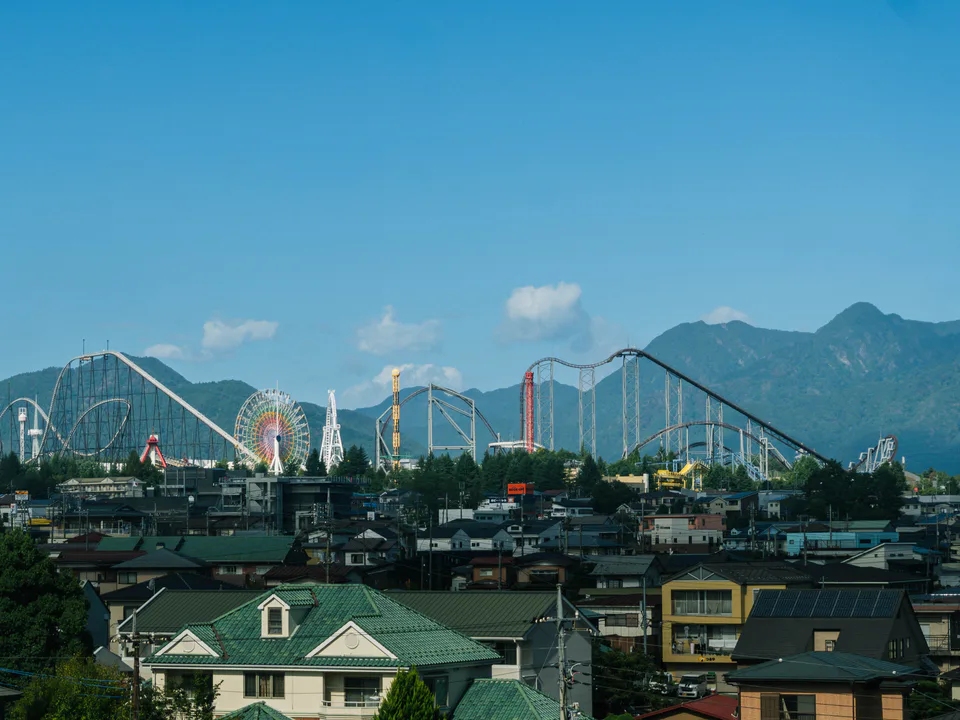
Free entry changes the entire Fuji-Q ticket decision
Fuji-Q Highland tickets are unusual because entering the park itself is free. That one fact changes the family maths completely. You do not need four identical passes just because four people want to walk through the same gate. If one parent loves roller coasters, another hates heights, one child clears the major ride restrictions and another does not, buying everyone the same One-Day Pass can be the most expensive option rather than the simplest one.
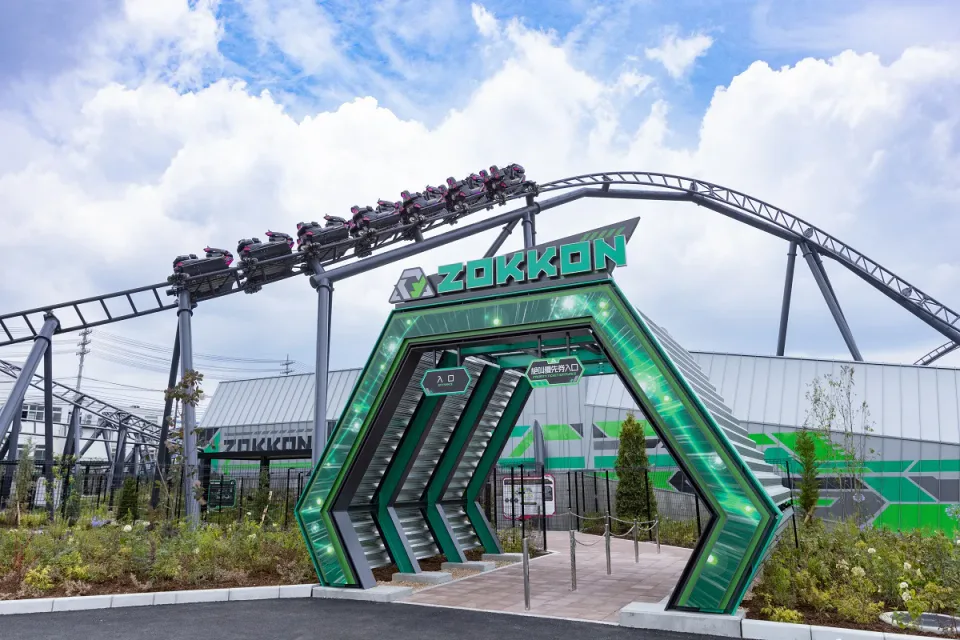
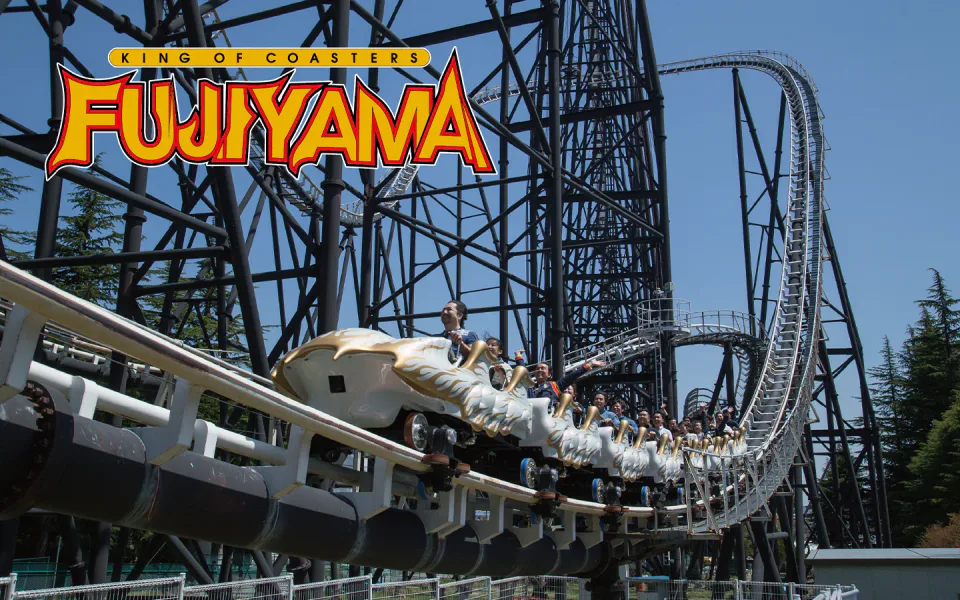
For 2026, the adult One-Day Pass currently varies by date from ¥6,000 to ¥7,900. Major rides such as FUJIYAMA and ZOKKON are ¥2,000 each. That means three ¥2,000 rides cost ¥6,000: exactly the same as the cheapest adult One-Day Pass, but ¥1,900 less than the highest-priced date. So “three rides means the pass pays for itself” is not a rule. The correct question is: how many paid attractions will each person actually ride, on your actual date, after height, age, queue and weather restrictions are taken into account?
If Fuji-Q is part of a wider Mount Fuji trip, transport timing can overturn the ticket answer. Before you choose a pass, compare Tokyo to Kawaguchiko by train, highway bus or tour. Arriving at 08:45 and arriving at 11:00 are not merely two hours apart: for someone targeting several headline coasters, the later arrival can remove one full ride from the day and change whether a pass ever breaks even.
↔ Scroll table left or right
Buying method | Usually makes sense when | The trap |
Free entry + single rides | You will ride 0–2 major attractions, or your group has non-riders | You add rides impulsively and end up spending more than a pass |
One-Day Pass | You arrive early and have several paid rides you genuinely want and can ride | A high-price date can reach ¥7,900 even if you only manage three ¥2,000 coasters |
Afternoon Pass | You will not start serious riding until after 13:00 and closing time is late enough | The cheaper ticket does not create more queueing time |
Thomas Land Pass | Your family day is concentrated on Thomas Land | Adults buy full-park passes even though they will barely use thrill rides |
Priority Ticket | One or two attractions are non-negotiable and queues would break your plan | It is a separate paid product, not included in the One-Day Pass |
Next decision → Compare Tokyo–Kawaguchiko train, bus and tour timing
Three ¥2,000 coasters do not automatically justify a ¥7,900 pass
Start with the simplest possible calculation. FUJIYAMA is currently ¥2,000 as a single ride. ZOKKON is also ¥2,000, and other headline coasters sit in the same ¥2,000 price band. If your personal must-do list is three of those rides, the single-ride total is ¥6,000. On a ¥6,000 One-Day Pass date, the two approaches are tied before you add any smaller attractions. On a ¥7,900 date, you need more riding before the pass becomes the cheaper choice.
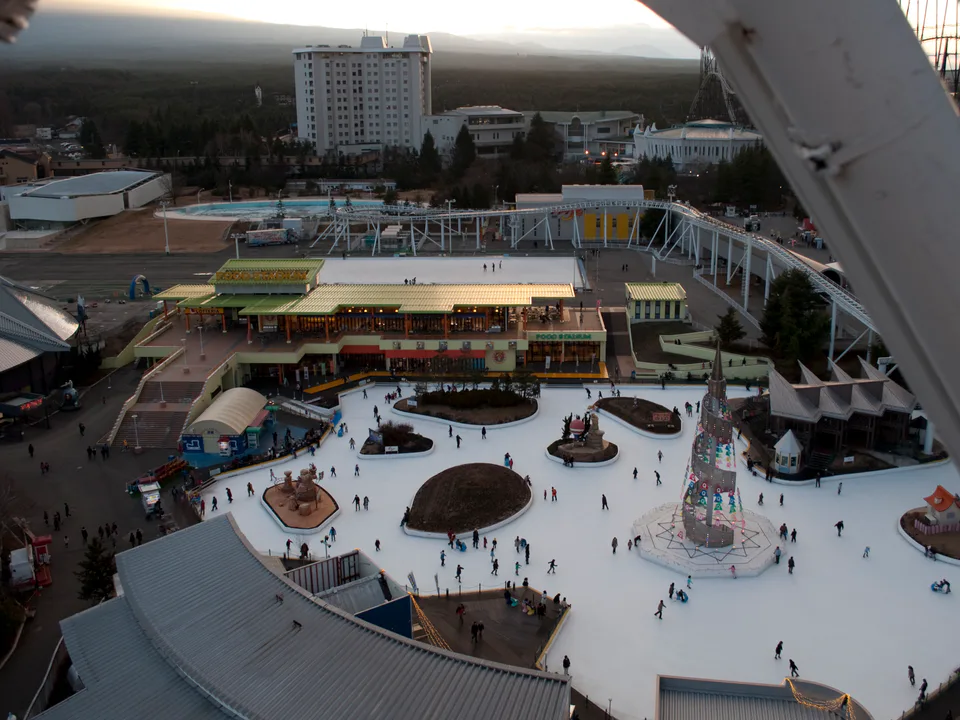
The pass becomes stronger when your plan contains a fourth major attraction, several mid-priced rides, or repeat rides. But the key word is plan. Staying inside the park for seven hours does not prove that you will make seven hours of paid use. You can spend a long day taking Mount Fuji photos, eating, waiting with children, watching others ride and exploring character areas while paying for only two attractions. Time inside the gate and money spent on rides are different variables.
This is why the safest way to buy is to create three lists for each person: “definitely ride”, “maybe ride”, and “definitely skip”. Price the first list first. Add only the “maybe” attractions that have a high chance of happening. If that realistic total crosses your date-specific pass price, the One-Day Pass starts to make sense. If it only crosses the lowest advertised pass price, it is not yet a decision.
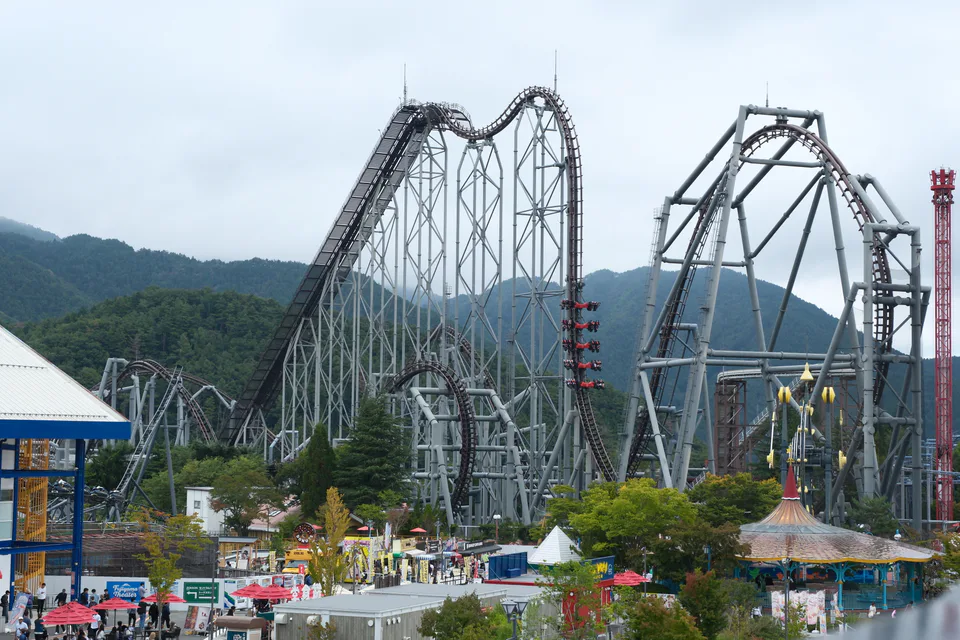
Split the family before you split the ticket budget
Fuji-Q is one of the few major theme parks where “we are entering together” does not force “we should buy the same ticket”. For families, that flexibility is often worth more than a small online discount. Imagine two adults and two children. One adult rides every major coaster with the older child; the other mainly stays with a younger child. Buying four full One-Day Passes treats four completely different users as if they will consume the same product.
Instead, price each person independently. The thrill-riding adult and older child may justify One-Day Passes. The supervising adult may need only free entry plus one or two single rides. The younger child may belong in Thomas Land rather than the full thrill-ride calculation. You still spend the day together, but you stop paying for hypothetical rides that one person is unlikely to use.
This also applies to adult groups. Someone who gets motion sickness, dislikes heights or mainly wants photos should not buy a full pass just to avoid feeling like the odd one out. Free admission is not a downgrade. It is the mechanism that lets a mixed group buy according to actual use instead of social pressure.
Height and age limits can erase a “must-do” ride before you pay
The ticket calculation should happen after, not before, the ride restrictions. FUJIYAMA currently requires a minimum height of 110 cm. Riders from 110 cm to under 130 cm need an eligible accompanying person, and the ride is limited to guests aged 64 or younger. ZOKKON has a different threshold: 120 cm to under 195 cm, also up to age 64. Other major rides have their own limits.
For a family with a child near the 110 cm or 120 cm line, those numbers can completely change the pass. A child may be excited by the “four big coasters” marketing logic yet be unable to ride several of them. If the accompanying adults also do not plan to take turns riding alone, the family’s total paid-ride count collapses quickly. Buy after checking the current restrictions for your must-do attractions, not after counting coaster names on a park map.
This is also why a family comparing things to do in Kawaguchiko should not treat Fuji-Q as one homogeneous attraction. If you are comparing it with lake viewpoints, ropeways or slower-paced sightseeing, this Kawaguchiko things-to-do guide helps separate “a theme-park day” from “a Mount Fuji sightseeing day” before you commit a large ticket budget.
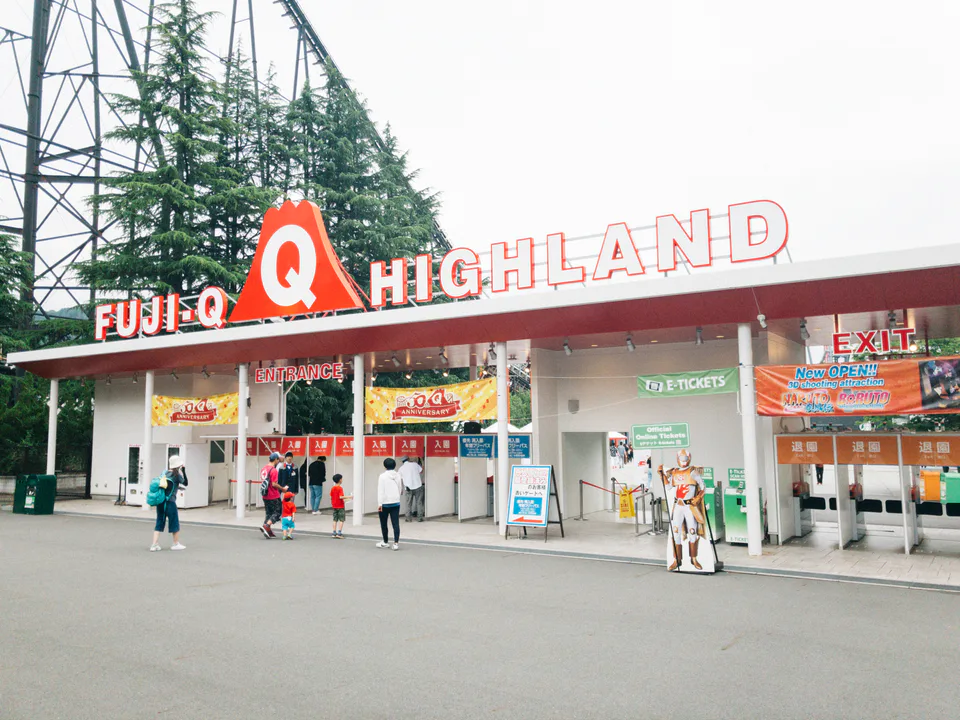
The Afternoon Pass saves money, not queueing time
The Afternoon Pass starts after 13:00 and currently costs adults roughly ¥4,100–6,000 depending on the date. It can be a very good product when you genuinely cannot arrive earlier or when the park is the secondary half of a day. What it does not do is compress queues, meal breaks, walking and temporary ride stoppages into a shorter afternoon.
If you arrive after 13:00 with four headline coasters on your list, the danger is not that the pass is expensive. The danger is buying a cheaper ticket that creates an unrealistic workload. A single long queue or ride interruption can consume a large share of your remaining operating hours. The later you arrive, the more important it becomes to choose fewer attractions rather than force the pass to “pay back”.
If Kawaguchiko scenery is the real priority and Fuji-Q is a late-day add-on, accept that hierarchy. Spend the morning on the lake and buy only the rides you still genuinely want. If Fuji-Q is the reason you travelled to the area, arrive early instead. Trying to make both the lake and four major coasters co-headliners is how an apparently efficient day becomes rushed in both places.
Priority Ticket is a separate purchase — a One-Day Pass is not an Express Pass
Another expensive misunderstanding is assuming the One-Day Pass includes priority access. It does not. Fuji-Q sells separate Priority Tickets for popular attractions, including major rides. Online sales currently begin at 18:00 three days before use and continue subject to availability and the designated use time. Pricing varies by attraction and slot.
The official use case is not “buy this for everything”. It is a tool for one bottleneck. Fuji-Q gives examples where a normal wait of around two hours may be reduced substantially, but also warns that even with Priority access you may still wait around 30 minutes depending on conditions. That makes it most useful when one attraction is truly non-negotiable and its normal queue would break your day.
Priority Tickets also come with less recovery room: they are tied to specific attractions and times and are not designed as a flexible park-wide pass. A good strategy for a first visit is often to use the normal ticket structure for the day, then target Priority only for the one ride you would most regret missing. That is more rational than prepaying every possible upgrade before you know the day’s weather and operations.
The priority-entry One-Day Pass only works if you know what you are doing first
Fuji-Q also sells an online-only One-Day Pass with priority entry before normal park opening. That sounds universally better, but the official rules narrow its value: during the priority-entry period, only the large coasters are available. If your first goal is FUJIYAMA, ZOKKON or another headline thrill ride, the early window has a clear purpose. If you are mainly taking a preschooler to Thomas Land, paying to enter early does not create the same benefit.
The best buyer can name the first attraction before paying. If you cannot, early entry mostly buys earlier access to a map you have not yet prioritised. This is the same logic as premium airport or event access: the advantage is real only when you already know how to use the first block of time.
Thomas Land families should reverse the calculation
For younger families, the Thomas Land Pass uses a completely different value equation. It currently includes unlimited rides on 12 Thomas Land attractions, with adult pricing around ¥3,000–3,500, elementary-school pricing around ¥2,500–2,800, and toddlers/seniors around ¥2,000–2,300 depending on the date. If your child is below the major coaster thresholds and the day is overwhelmingly about Thomas Land, this can be more aligned with actual use than a full-park One-Day Pass.
But “family” still does not mean everyone needs Thomas Land Passes. One adult may ride repeatedly with the child while another mostly walks, photographs and takes breaks. Because entry itself is free, you can still split the tickets. The correct product is the one attached to what that person will actually ride, not the one that makes the booking screen look symmetrical.
A late arrival from Tokyo can cost more than the ticket difference
For Tokyo day-trippers, transport is part of the ticket calculation. If your goal is several thrill rides, getting to the first queue at 09:00–10:00 and getting there at 11:00 are different products. The later arrival does not merely remove two hours. It can put you behind longer midday queues, making you lose an entire ¥2,000-class ride and weakening the economics of an expensive pass.
Klook’s current Fuji-Q product page illustrates the difference by selling separate formats: a normal One-Day Pass, an Afternoon Pass, an early-entry version, and a package combining three attractions with round-trip transport from Shinjuku. The current bus itinerary shown for that package is roughly 07:00 from Shinjuku, 08:45 arrival, 18:15 departure and around 20:00 back in Shinjuku. The point is not that this is automatically the best deal; it shows how a fixed transport frame can be the real thing you are buying.
If you are already considering a night in the Fuji area, compare a Mount Fuji day trip versus staying overnight. Once you remove the Tokyo round trip from the same day, you gain more room to choose tickets based on rides rather than panic about the return journey.
Next decision → Decide whether Fuji-Q should be a day trip or an overnight Mt Fuji stay
Free admission still has an entry procedure
“Free entry” does not mean you simply walk through the gate without a ticket process. Fuji-Q currently provides a zero-yen admission flow. If you decide by the day before, you can obtain the free admission ticket online and complete facial-photo registration by 20:00 the day before your visit. There is also a day-of QR admission route. Preschool-age children follow a different QR-based process with an accompanying adult, and guests who already have a One-Day Pass do not need a separate free-admission ticket.
This matters especially for non-riding companions. You do not need to buy a paid pass just because you are worried that a free-entry companion will be unable to enter. What you need is to complete the correct zero-yen admission procedure. That is the operational foundation that makes split ticketing practical for families and mixed groups.
Weather can break the break-even calculation even when your maths was perfect
Every ticket calculation above assumes the rides you counted are actually operating and that you have enough time to queue for them. Fuji-Q’s operating schedules and attraction status can change because of weather and other operational conditions. Strong wind, rain or a temporary closure can turn a four-ride plan into a two-ride day. A prepaid pass does not become cheaper just because your original ride count becomes impossible.
That is why an overnight Fuji-area trip has more recovery options. If you are deciding whether to keep one or two nights around the lake, the Kawaguchiko one-night versus two-night guide explains how weather flexibility changes the value of an extra night. With a flexible regional itinerary, Fuji-Q can be moved from “all-day mission” to “half-day if conditions cooperate”.
Accommodation location can matter too. Kawaguchiko station, the north shore and Fuji-Yoshida suit different trip structures. If Fuji-Q is your priority, staying closer to Fuji-Yoshida can make the park easier to start early; if lake views and ryokan time dominate, a different base may be better. The ticket should follow the trip structure, not force it.
Do not buy the full pass first in these four situations
First: only part of your group rides thrill attractions. Second: a child is close to, but has not cleared, the height restrictions for the rides driving your pass calculation. Third: you will arrive after 13:00 and the remaining operating hours are limited. Fourth: Kawaguchiko is the real main event and Fuji-Q is only a “maybe if we have time” stop. In all four cases, start with free entry plus single rides or a narrower pass and prove that the full One-Day Pass is actually better.
The opposite case is much clearer. If you can arrive around opening, have at least four paid attractions you genuinely want, meet the relevant height and age rules, and your group moves at roughly the same pace, the One-Day Pass becomes much easier to justify. If one attraction is absolutely essential, then look at Priority Ticket availability three days before rather than buying every premium layer upfront.
Before you pay, check these five things — in this order
1. Your actual date-specific One-Day and Afternoon Pass prices — not the lowest advertised price. 2. Each person’s “definitely ride” list, separately. 3. Height and age restrictions for those rides. 4. The operating hours and attraction status for your date. 5. Whether a Priority Ticket is needed for one genuine bottleneck, remembering that it is a separate paid, timed product.
Fuji-Q’s strongest feature is not a single powerful pass. It is the freedom not to buy one universal admission product for everyone. Free entry lets a family with different heights, stamina and thrill tolerance pay for different levels of use while still spending the day together. Split the people first, split the rides second, and only then compare the pass. That order is much harder to regret than starting from the biggest ticket on the page.
Tokyo Attractions Map: Which Areas Actually Belong on the Same Day?
Osaka Night Views: When Free Beats the Observation Deck — and When HARUKAS 300 Is Worth Paying For
Kanmon Strait Museum: When the ¥500 Ticket Is Worth It—and When the Free Areas Are Enough
Osaka Amazing Pass 1-Day vs 2-Day Itinerary: The Route That Avoids the Biggest Time Traps
JR Kyushu Rail Pass 2026: Is the Northern Kyushu Pass Worth It?
Sources
Fuji-Q Highland official ticket page
Fuji-Q Highland official free admission procedure
Fuji-Q Highland official attraction pricing
Fuji-Q Highland official Priority Ticket information
Fuji-Q Highland official FUJIYAMA restrictions
Fuji-Q Highland official ZOKKON restrictions
Klook Fuji-Q Highland Activity 95879
Prices, opening hours, Priority Ticket prices and ride operating status can change by date. Recheck the official calendar and the exact ticket conditions for your visit before payment. Facts in this guide were rechecked on August 19, 2026.