The Osaka Amazing Pass is easy to over-plan. The biggest mistake is not missing one included attraction; it is putting the least flexible attraction in the wrong part of the day. In 2026, the standard 1-day pass is ¥3,500 and the 2-day pass is ¥5,000. For a first trip, the safest route is usually Umeda → Osaka Castle → Shinsekai → Namba / Dotonbori, then cut stops when queues or energy change. The 2-day version only makes sense when both days were already meant to be Osaka days.
This guide is not another break-even article. It answers the next question: once you have decided to use the pass, how do you build the day without letting the pass run your trip? If you have not chosen a base yet, start with Namba vs Umeda. Where you sleep changes which end of this route is frictionless and which end costs an extra cross-city ride.
30-second decision: build a 1-day pass north to south; build a 2-day pass by district
↔ Scroll table left or right
Trip shape | Best fit | Route spine | Why it works |
First Osaka trip: Umeda, Osaka Castle, Shinsekai, Dotonbori | 1-day pass | Umeda → Osaka Castle → Shinsekai → Namba / Dotonbori | Handle the 15:00 Umeda cutoff first, then keep moving south with minimal backtracking |
Two consecutive full days inside Osaka | 2-day pass | Day 1 north + central; Day 2 south + bay area | Each attraction is generally usable once across the valid two-day period, so zoning matters more than repetition |
One day is USJ, Kyoto, Nara or Kobe; only one day is central Osaka | Usually 1-day pass | Concentrate paid Osaka sights into the city day | Do not distort an intercity day just to justify a 2-day pass |
Mostly Kuromon, Shinsaibashi, Dotonbori, cafes and shopping | Skip it for now | Keep the walking and food plan you actually want | Free neighborhoods dominate the day; chasing included attractions adds time cost |
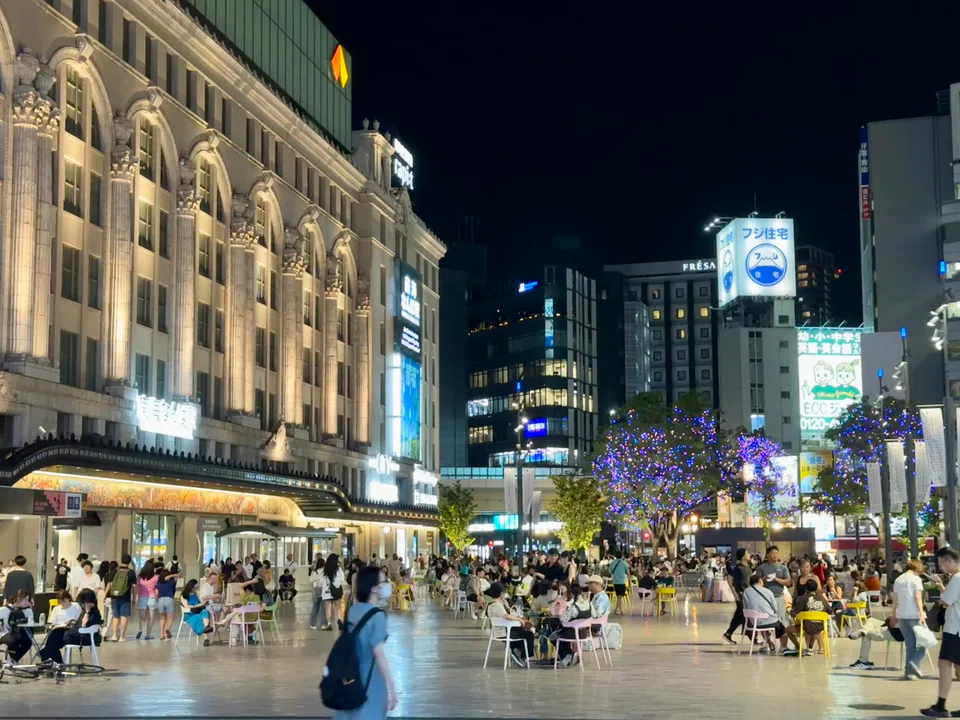
A reliable 1-day route starts in Umeda around 09:30 because 15:00 is the hard cutoff
Umeda Sky Building’s Kuchu Teien Observatory currently opens from 09:30 to 22:30, but Osaka Amazing Pass holders only get free admission until 15:00. After that, the pass gives a discount rather than the full included entry. That makes Umeda a morning problem, not an evening option. If this viewpoint is genuinely on your list, do it first because almost every other part of the day has more flexibility.
A practical rhythm is to arrive around opening time, spend roughly an hour, then move toward Osaka Castle. Do not schedule the observatory after dinner just because the building stays open late—that is a single-ticket mindset, not a pass itinerary. And if visibility is awful, do not travel across the city just because the nominal ticket price is ¥2,000. Drop Umeda and make the rest of the day tighter.
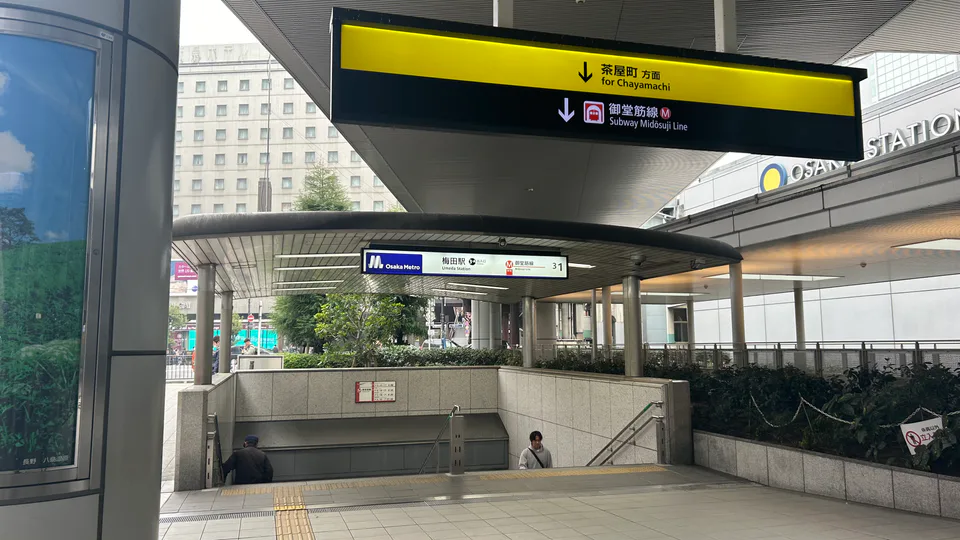
This is also where hotel location matters. If you stay near Umeda, the morning observatory stop costs almost nothing in extra movement. From Namba, it is a deliberate trip north. Before locking the route, compare the four main bases in Where to Stay in Osaka for First-Time Visitors.
11:30–14:30 at Osaka Castle: choose one main objective, not every included add-on
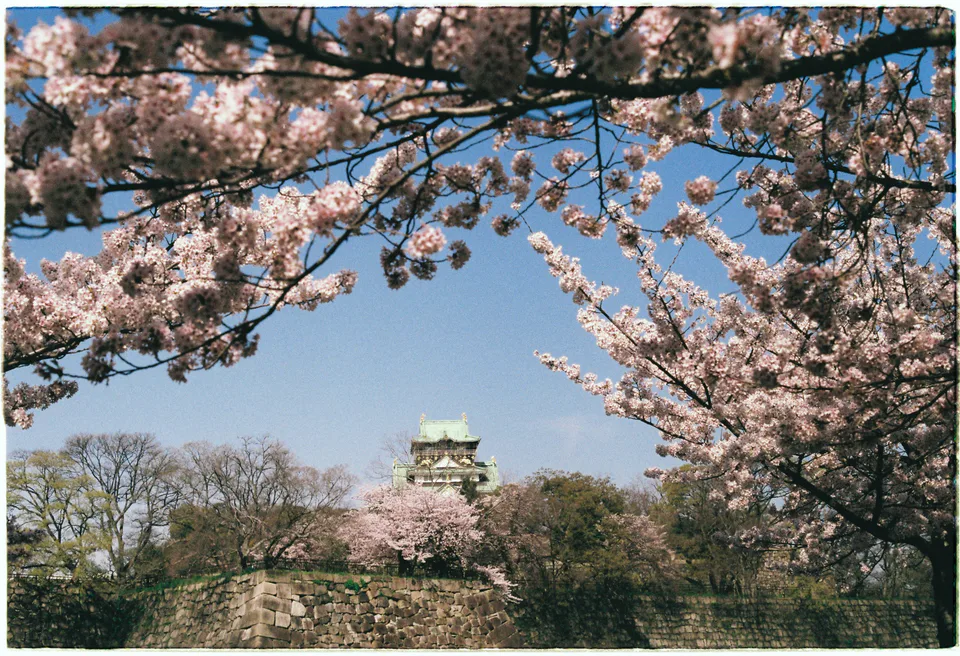
Osaka Castle Main Tower currently operates from 09:00 to 18:00, with last admission at 17:30, and the adult ticket is ¥1,200. Its hours are much more forgiving than the Umeda cutoff, which is why it works well as stop two. The real time trap is treating the tower, park walk, Gozabune boat and road train as “free, so we may as well do all of them.” The castle grounds are large; station-to-tower walking, queues, exhibits and photos can turn a planned two-hour stop into half a day.
For a first visit, make the Main Tower the anchor. Add the boat only if the available time slot fits naturally. The pass is valuable when it lowers the cost of things you already wanted to do, not when it creates a checklist. Leave Osaka Castle with enough margin that one queue does not erase the entire afternoon.
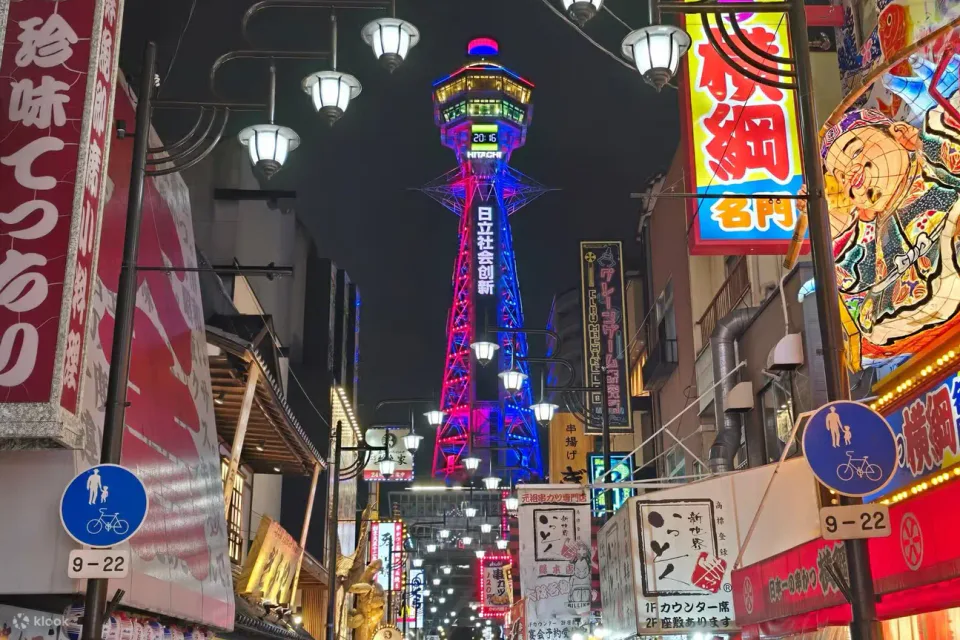
15:00–17:00 in Shinsekai: Tsutenkaku’s real cost is the entry time, not only the ¥1,500 ticket
Tsutenkaku’s general observatory is typically open from 09:00 to 21:45, with last admission at 21:15, and the standard adult ticket is ¥1,500. The important 2026 detail is the timed-entry system. Osaka Amazing Pass users should not assume the QR ticket means instant walk-in access; the visit still depends on an available entry time. Evening slots can fill.
When you reach Shinsekai, confirm the available Tsutenkaku entry time before settling into a long meal. If the only slot left creates a two-hour wait, delete the tower rather than sacrificing the rest of the evening for ¥1,500 of theoretical value. Ask the simplest question: would you still want to go up if it were not included? If not, it is optional.
Tsutenkaku works best when you already want kushikatsu, street photography and a wander around the neighborhood. In that case, one district serves both the attraction and dinner. The Osaka Shinsekai food guide is useful if you want the food stop to work with the route rather than against it.
After 17:00 in Namba and Dotonbori: secure a cruise time before dinner
The Dotonbori River Cruise currently has a reference adult fare of ¥2,000 and normally runs between 11:00 and 21:00 at half-hour intervals. The planning rule matters more than the fare: pass users need to obtain a same-day boarding time, and later departures can sell out earlier in the evening. Arriving at 19:00 does not mean a 19:30 or 20:00 boat will still be available.
Reverse the usual order. Go to Dotonbori first, check or secure a suitable cruise time, then eat, shop or walk around Shinsaibashi while you wait. If the boats are full, keep the evening for Dotonbori instead of sprinting to another included attraction just to repair a break-even calculation.
If food and shopping are the real purpose of your evening, use the Kuromon Market and south Osaka food guide to keep the route compact. A good pass day should loosen up after dinner, not become more frantic.
Two workable 1-day versions: higher-value route vs lower-stress route
Version A: first-time Osaka, high value without chasing five attractions
09:30 Umeda Sky Building → 11:30 Osaka Castle → around 15:30 Tsutenkaku / Shinsekai → around 17:30 Namba and Dotonbori to secure the cruise → dinner → assigned cruise. The advantage is directional simplicity: north to south, with no late return to Umeda. It suits travelers with normal walking stamina who genuinely want all four areas. The flexibility should remain at Osaka Castle add-ons and Tsutenkaku—neither needs to be treated as non-negotiable.
Version B: lower-stress day for travelers staying in Namba or Tennoji
Start at Osaka Castle, spend the afternoon in Shinsekai, then finish in Namba / Dotonbori. Deleting Umeda removes one cross-city move. The theoretical value is lower, but the day is more robust and leaves more time for food and shopping. Staying in Namba also lets you drop shopping bags before going out again; the useful hotel question becomes evening friction, not just station name. See the Namba hotel comparison if that is the trade-off you are making.
If you only have four days and one of them is already USJ or Kyoto, read Osaka and Kyoto 4-Day Itinerary With USJ. When only one complete day remains for central Osaka, the 1-day pass usually fits the trip better than forcing a second pass day.
Next decision: choose Namba or Umeda before you build the pass day
Do not use the 2-day pass to slow the same route down: split Osaka into different zones
The ¥5,000 2-day pass is only ¥1,500 more than the 1-day version, so “an extra day must be better value” is an easy trap. The official rules require consecutive use, and each participating attraction is generally usable once during the valid two-day period. You are not buying two resets of the same attraction list. The value comes from geography, not repetition.
A sensible split could be Umeda + Osaka Castle + Namba on day one, then the bay area, Tennoji or another cluster you already wanted on day two. Different directions, different attractions. If day two is actually Kyoto, Nara or Kobe, the logic collapses quickly because you are leaving the pass’s core Osaka use case.
If Nara is one of those outside days, compare Nara from Kyoto or Osaka. If you have not even decided how many nights belong in Osaka, the bigger decision is Kyoto vs Osaka for first-time visitors. Buying two consecutive Osaka days before settling that split is usually too early.
What should day two look like? The bay area only works when you wanted the bay area anyway
Tempozan and Nanko are an obvious second-day cluster because they do not overlap with Umeda, Osaka Castle or Shinsekai. But that does not make the bay area a compulsory Amazing Pass day. If your main reason for going is Osaka Aquarium Kaiyukan, remember that the Osaka Amazing Pass itself is not the aquarium admission ticket. The aquarium needs its own dated ticket; the pass can still help with city transport and selected nearby attractions.
The correct question is whether you already have two or three participating attractions in the same area that you would pay for anyway. If yes, day two starts to make sense. If not, do not invent a district just because the upgrade from one day costs only ¥1,500. The most expensive pass mistake is often behavioral: buying first, then searching for attractions to justify it.
Do not build these three “high-value” routes
First: Umeda → Osaka Castle → Tempozan → Shinsekai → Namba. Every transfer looks possible on a map, but the day becomes a sequence of station changes, queues and missed meals. Second: treating Osaka Castle Main Tower, Gozabune and the road train as mandatory, then expecting the afternoon to run exactly on time. One queue breaks the chain. Third: waiting until evening to secure a Dotonbori cruise and treating one specific boat as the final item needed to “make the pass pay.” All three failures come from ignoring uncontrollable waiting time.
A more durable rule is one non-negotiable goal per half day: Umeda before 15:00 in the morning, Osaka Castle around midday, Shinsekai or Tsutenkaku in the afternoon, Dotonbori in the evening. The cruise is “do it if the slot works,” not “the whole day fails without it.” Then one delay still leaves you with a good Osaka day.
Families and older travelers: stretch the timings before you copy an adult break-even route
The standard Osaka Amazing Pass does not have a cheaper child version, while many individual attractions do. That alone changes the math for families. More importantly, strollers, toilets, meals, naps and slower walking speeds make every district take longer. Four zones that look reasonable for two adults can be too much with a young child.
The same applies to older travelers. Unlimited transport is useful, but extra transfers are still tiring. If your group is not comfortable moving Umeda → Osaka Castle → Shinsekai in one day, concentrate the pass in two districts—or buy individual tickets. “We already paid for the pass” is not a good reason to turn the group into a completion team.
How much do you actually save? Delete every attraction you would not otherwise visit
For a 1-day pass at ¥3,500, a real itinerary such as Umeda Sky Building ¥2,000 + Osaka Castle Main Tower ¥1,200 + Tsutenkaku ¥1,500 already exceeds the pass price before local transport. But if your true plan was only Osaka Castle plus a Dotonbori walk, and everything else was added after you bought the pass, that is not a saving. Run one test: remove every attraction you would skip without the pass. Does the remaining itinerary still justify it?
Use the same test for the 2-day pass. Do not divide ¥5,000 by “around 40 included attractions.” Write down the paid things you already intended to do across two days, then cluster them. If day two contains one paid attraction and mostly shopping, cafes or neighborhoods, the ¥1,500 upgrade should not win by default.
When should you buy? Build the route before you activate the ticket
The official pass has a use window after purchase, the 2-day version must be used on consecutive days, and the electronic ticket is not a rolling 24- or 48-hour clock from the moment you tap start. The operating day is defined from 03:00 to 02:59 the following day. That is another reason not to buy before the trip structure is clear. Set your hotel base, pass date, four main targets and fallback plan first.
Klook currently lists 1-day and 2-day Osaka Amazing Pass options. Available dates, price and cancellation conditions can vary by the option and date you select. The right moment to compare checkout options is after you know which day is your Osaka pass day, whether you truly need two consecutive days, and whether Umeda belongs in the route.
Compare current 1-day and 2-day Osaka Amazing Pass options|Klook
Final verdict: the best Osaka Amazing Pass itinerary usually has one or two fewer attractions than the “maximum value” route
For a first-time 1-day pass, I would treat the Umeda 15:00 cutoff as the hard constraint, Osaka Castle as the midday anchor, Shinsekai as the afternoon district and Dotonbori as the evening finish. Tsutenkaku and the cruise stay removable. That route may not extract the highest theoretical yen value, but it resembles a real travel day: meals, walking, queues and room for a change of mind.
Upgrade to two days only when both days already belong to Osaka and can be split into different districts. If the second day is USJ, Kyoto, Nara, Kobe—or simply a slower shopping day—the small price gap should not steal the itinerary. Optimize the trip, not the utilization rate of the pass.
Sources and what to recheck before departure
Osaka Amazing Pass official: 1-day / 2-day pricing, validity and use rules
Osaka Amazing Pass official: included attractions and attraction-specific conditions
Osaka Amazing Pass official: sample itineraries
Osaka Castle Main Tower official: opening hours and admission
Tsutenkaku official: opening hours, prices and timed-entry information
Osaka Helicopter Tour 2026: Choose the Route, Not the Longest Flight
Best Day Trips from Osaka: Kyoto, Nara, Kobe or Himeji — When Does a Tour Actually Save Time?
Osaka Budget Itinerary: 7 Days With USJ, Kyoto, Nara and Kobe — Without Buying Every Pass
Munakata Shrine & Izu Honten Day Tour: I’d Pay for the Route, Not the Four Stops