
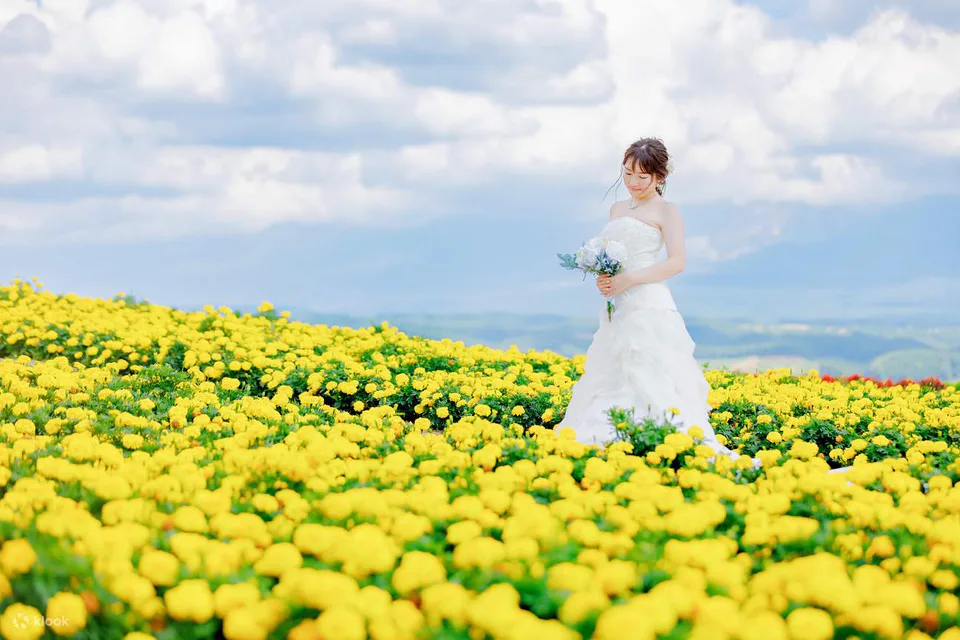
For a first Hokkaido wedding photo day, I would choose the route before choosing the number of outfits. The current Hokkaido product is built around roughly three compatible locations on one practical route — for example Sapporo + Otaru or Furano + Biei — rather than three famous pins anywhere on the island. That distinction matters more than the headline photo count.
The hidden budget is time. The current listing allows about 2.5 hours for makeup and dress fitting before the shoot, then the team still has to drive, park, handle outfit changes, work around permits and use the available daylight. A second look or a more distant location does not add hours to the day; it consumes the same hours differently.
If the wider trip is not settled yet, start with the Hokkaido region-planning guide. A wedding shoot should sit inside a route that already makes geographic sense, not force Sapporo, Otaru and Biei into one exhausting day.
The 30-second decision: pick the memory you want to protect
↔ Scroll table left or right
What matters most | Start with | Why | What can reverse the choice |
Lowest logistics risk | Sapporo-area route | Less road time leaves more of the day for styling and shooting | Your entire visual goal is countryside, snowfield or flower-field scenery |
Canal, stone streets and coastal mood | Sapporo + Otaru route | The two areas can form one coherent route instead of a cross-island transfer day | You also insist on Biei, which makes the route structurally different |
Blue Pond, rolling hills or flower fields | Furano + Biei route | The countryside itself becomes the reason for the full day | Weather or seasonal conditions make the signature landscape weak on your date |
Two very different outfits | Fewer, stronger locations | Hair, makeup and dressing changes consume usable daylight | The team confirms the second change can happen without cutting your priority location |
Shrine imagery | Ask about permission before building the route | The current product notes that shrine photography requires advance approval and is not guaranteed | A permitted non-shrine location gives the same visual role with less uncertainty |
“Up to 3 locations” is a routing rule, not a shopping allowance
The current product page is more specific than a generic “three locations in Hokkaido” promise. It says the final route is designed around season, weather, road conditions, permits and the best light, and that distant areas cannot always be combined in one day. That is the right constraint to use when planning.
Think in route families:
Sapporo / nearby city route: Nakajima Park, Moerenuma Park, Toyohira Shrine and other city-area locations can minimise transfer loss.
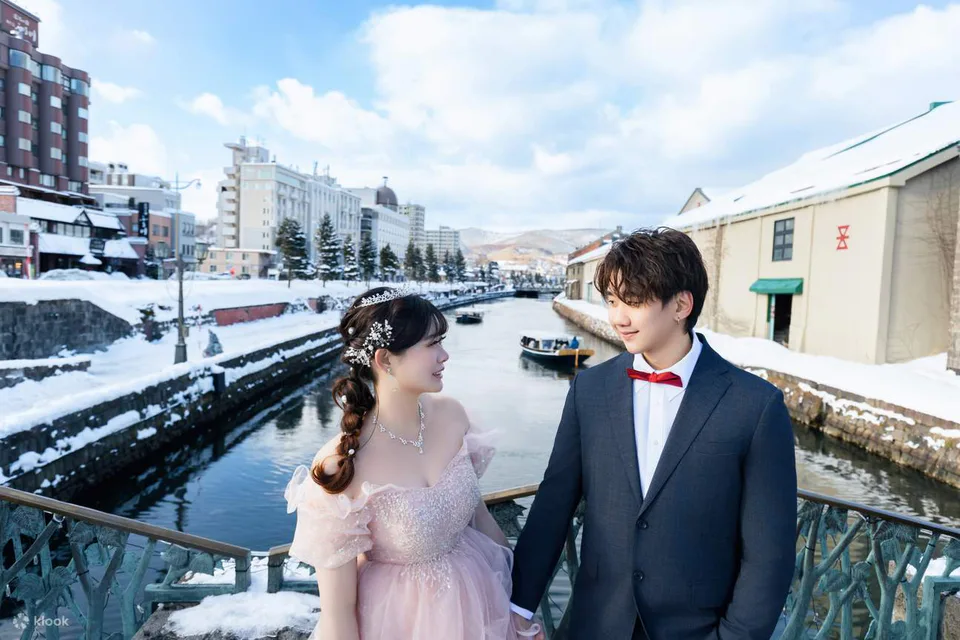
Sapporo + Otaru: Otaru Canal, Asari, Dream Beach and city locations can make one westbound story.
Furano + Biei: Blue Pond, seasonal flower fields, farms and scenic roads form a separate countryside day.
Seasonal Niseko: useful when snow or mountain scenery is the visual objective, but weather and road conditions become a larger part of the risk.
The failure mode is choosing one location from each family because each photograph looks good in isolation. A map can make three pins look manageable while formalwear, winter roads, parking, permits and light turn the day into a transport project.
The real time-cost model: the shoot starts before the first photograph
The listing currently allows about 2.5 hours for makeup and dress fitting at the hotel or studio before the photoshoot. That means a “full-day” booking already contains a large fixed preparation block before location work begins.
Use this ValueNavi planning model:
↔ Scroll table left or right
Time block | What consumes it | What travellers often forget |
Preparation | Hair, makeup, fitting, accessories | This can use roughly 2.5 hours before the first location |
Transfer | Driving, parking, walking from the vehicle | Formalwear makes a “10-minute walk” different from normal sightseeing |
Location setup | Touch-ups, bouquet, shoes, positioning | Every new location has a restart cost |
Outfit change | Dressing, hair adjustment, accessories | A second look replaces part of the shooting window; it does not create a second day |
Weather recovery | Waiting, rerouting, safer roads | Winter and outdoor scenery need buffer even with a private vehicle |
This is why two outfits at two excellent locations can be better than two outfits at three rushed locations. The product is not a quantity contest; it is a finite-day allocation problem.
ValueNavi Score: which Hokkaido route gives the strongest first-shoot trade-off?
Scores use 10 = better for the criterion. They are ValueNavi editorial scores derived from route geometry and the current product rules, not operator ratings.
Criterion | Sapporo | Sapporo + Otaru | Furano + Biei |
|---|---|---|---|
Time efficiency | |||
Route simplicity | |||
Weather resilience | |||
Visual distinctiveness | |||
Fit for two outfits | |||
First-time Hokkaido trip fit |
My default is Sapporo + Otaru when you want scenery to feel specifically Hokkaido without turning the entire day into a long-distance road schedule. Sapporo alone wins when schedule control is the priority. Furano + Biei wins only when those landscapes are the point of the shoot, not when they are being added because “three locations are included.”
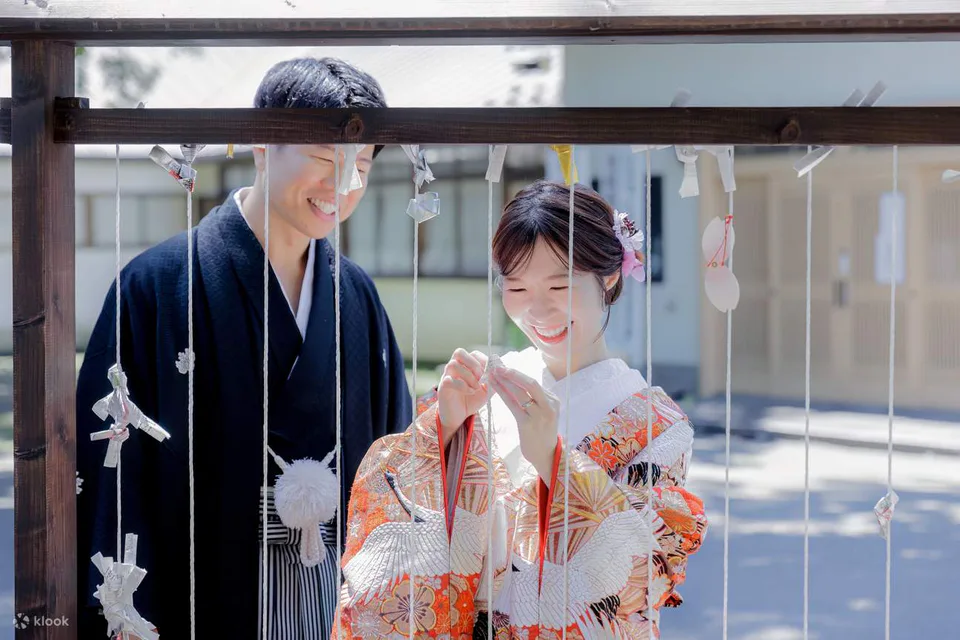
Location count is less useful than the time left after styling, transfers and outfit changes.
Dress vs kimono: the outfit changes the route, not just the photographs
A wedding dress generally gives the route more flexibility because movement and changeover can be simpler. Formal kimono can need more specialist dressing, more careful movement and additional styling attention. The exact workload depends on the package and outfit, so confirm the planned change sequence before assuming both looks can use every location.
If you want both, decide which look owns the best light. Do not spend sunset changing clothes simply because the package makes a second outfit available. A good planning question is: if weather removes 90 minutes from the day, which outfit and which location must survive? Tell the team that priority before the day begins.
For many couples, I would protect one hero look and one hero location first, then treat the rest as flexible. That is a more resilient plan than assigning equal importance to everything.
A shrine photograph is not automatically a Shinto wedding ceremony
This distinction matters. The current product page lists shrine locations such as Toyohira Shrine as possible photography options, but it also says shrine photography requires advance permission and approval is not guaranteed. A permitted shrine photoshoot is not the same product as booking a religious wedding ceremony.
If a Shinto ceremony is the real goal, confirm separately what ritual, officiant, attire, ceremony access and photography permissions are included before paying. Do not infer a ceremony from a scenic-location list.
If the visual background matters more than the ritual, keep a non-shrine backup. That makes a permit refusal a location change rather than a broken wedding plan.
Biei is worth the road time only when Biei is the photograph
Blue Pond, rolling hills and flower fields can create a look that central Sapporo cannot reproduce. But this is exactly why Biei should not be treated as “one more location.” It changes the whole day.
If Biei is your priority, first decide whether the wider trip also belongs there. The Biei day-trip vs overnight guide helps decide whether early light or a local start is worth changing hotels, while Furano and Biei without a car vs rental car shows why dispersed countryside stops are fundamentally different from city sightseeing.
For a wedding day, private transportation is not merely convenience. It carries formalwear, shoes, accessories and styling supplies while protecting the schedule between dispersed locations. That value rises in winter, but so does the weather risk.
Otaru is the middle ground between city efficiency and destination character
Otaru gives you a distinct visual language — canal, stone warehouses, coastal light and older streets — without requiring the same cross-Hokkaido commitment as Biei. This is why Sapporo + Otaru is my default “two-area” recommendation.
The trade-off is that Otaru still adds real transfer time. If your main images are around the canal, do not also force a long Sapporo park list into the same day. Let Otaru be the destination rather than a checkbox.
If you already plan to stay there, use Otaru day trip vs overnight first. Starting or ending locally can make more sense than returning to Sapporo merely because the package pickup defaults there.
Winter snow is a visual upgrade and an operational downgrade
Snow can create the most instantly recognisable Hokkaido wedding images, but it also changes footwear, fabric handling, road speed, waiting comfort and the probability that a planned location becomes impractical. The current listing explicitly says winter routes require flexibility for snow, road conditions and closures and that an alternative location or schedule may be proposed for safety.
That means a winter package should be judged by the quality of its backup plan, not only its snow gallery. Before paying, ask which two locations can replace your first choices without destroying the route.
If you are self-driving elsewhere in the trip, keep the wedding day separate from ordinary rental-car logic. Read the Hokkaido winter driving guide for the wider trip, but do not assume one partner should also drive the wedding route in formalwear to save money.
Flower-field shoots have a permit cost that should not surprise you
The current product page specifically warns that photography at Shikisai no Oka may require a permit of approximately ¥10,000 (about US$63), paid separately to the venue, and that fees or approval can change. Keep the yen figure because that is the local charge; the USD amount is only a late-August 2026 planning conversion and will move with exchange rates.
This is the type of hidden cost that matters more than a small difference in package price. Ask which locations need permits, admissions, parking or other venue fees before choosing the route. A location is not truly “included” in your budget merely because transportation to it is included.
Photo delivery: 300+ originals and 30 retouched images are two different products
The current listing says 300+ original files are delivered via Google Drive within two days, and you then select 30 images for professional retouching, delivered within seven days. That is much clearer than simply advertising “300 photos.”
Before paying, confirm what “original” means for resolution and file format, whether the 30 retouched images are chosen by you or the studio, what level of retouching is included, whether extra edited images can be purchased and how long the download link remains active.
If the photos are needed for a reception or announcement immediately after the trip, delivery timing has real value. If they are only personal travel keepsakes, I would prioritise route and light over a faster editing promise.
One couple per day buys flexibility, not unlimited hours
The current product says only one couple is accepted per day. That reduces the risk of your schedule colliding with another client’s slot, which is valuable when weather and road conditions can move the route.
But “one couple per day” should not be read as unlimited shooting time. Ask for the expected start, approximate finish, overtime policy, number of outfit changes, pickup point and the geographic boundary for the chosen route. The more fixed details you settle, the easier it is to see whether your wish list is realistic.
Adding kimono changes the time budget as well as the visual style.
Do not move hotels just to make the shoot look more ambitious
If the route is Sapporo or Sapporo + Otaru, staying in Sapporo is usually the lowest-friction base. It keeps the styling start, private-car pickup and post-shoot dinner simple. Use Sapporo Station vs Odori vs Susukino to choose the base around the whole trip, not only the shoot.
Move the hotel decision only when the countryside route genuinely benefits from it. If Biei or Furano is the hero location and early light matters, a local night can buy something real. If the only benefit is reducing one drive while creating a luggage move, it may be a false saving.
Eight questions to send before paying
Which three locations are geographically compatible on my date?
How much of the day is normally used for the 2.5-hour fitting and each outfit change?
Which location gets the best-light window if I choose two outfits?
Which permits, entrance fees, parking charges or special venue fees are excluded?
What are the two backup locations for rain, heavy snow or road closures?
Does a shrine request mean a photoshoot only, and is permission confirmed?
What resolution and file format are the 300+ originals, and what retouching is included in the 30 edited images?
What happens if weather forces a shorter route: fewer locations, rescheduling or another plan?
Final verdict: buy a coherent day, not the maximum number of inclusions
For most first-time couples, I would start with Sapporo or Sapporo + Otaru, one primary outfit and one optional second look. Those choices protect the part of the package you cannot recover later: usable shooting time in good light.
Choose Furano + Biei only when the landscape is the reason for the booking. Accept the road time and weather sensitivity as the price of that distinctiveness. Do not add Biei merely because “up to three locations” sounds like unused value.
The recommendation reverses if your dream image is specifically Blue Pond, flower fields or a snow-covered countryside route. In that case, the more distant day is rational — but the itinerary around it should become simpler, not busier.
Hokkaido Family Road Trip Hotel Bases: Move Nightly or Use 2–3 Bases?
Kobe Sake Brewery Tour: Nada Gogo, Hakutsuru and Kiku-Masamune
Best Day Trips from Osaka: Kyoto, Nara, Kobe or Himeji — When Does a Tour Actually Save Time?
Nagoya Osu Kannon Food Tour 2026: Is ¥19,119 / US$133 Worth It?
Lake Kawaguchiko Bass Fishing: DIY Boat, Local Guide or English Private Tour?
Sources
Klook — Hokkaido Pre-Wedding Photoshoot: current package description, route compatibility, preparation time, delivery, permits and winter-route conditions checked August 26, 2026. Package availability, prices, inclusions and venue fees can change; verify the live checkout terms for your date.