
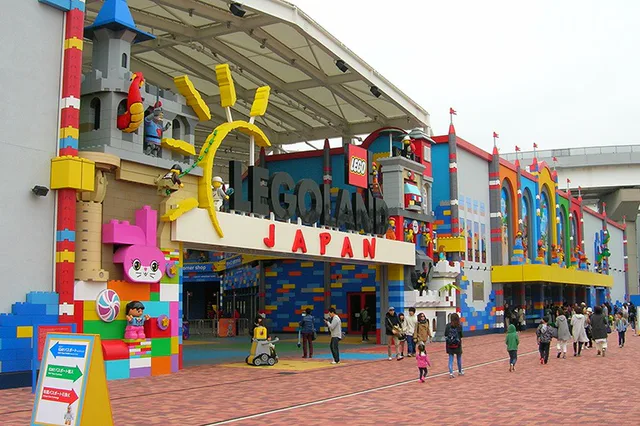
LEGOLAND Japan tickets in 30 seconds: buy the day first, then the extra attraction
For most first-time families, the safest LEGOLAND Japan ticket is the ordinary 1-Day Pass. The official 2026 online starting price is ¥4,900 for adults and ¥3,700 for ages 3–18. The LEGOLAND + SEA LIFE Combo starts at ¥5,700 and ¥4,500, so the upgrade is only ¥800 per person. That looks almost too cheap to refuse. It is not an automatic bargain.
The Combo forces both attractions into the same day. That means the scarce resource is not ¥800; it is your child’s last 60–90 minutes of energy, the park’s closing time, your dinner timing, and whether you are willing to leave rides unfinished. If this is a short Nagoya family trip, treat the park day as a full-day decision before you treat SEA LIFE as an add-on.
If Nagoya itself is still competing with Takayama for one of your limited full days, settle that larger itinerary question first in our 4-day Nagoya vs Takayama planning guide. A cheap ticket upgrade is not useful if the day itself is allocated to the wrong experience.
↔ Scroll table left or right
Ticket | Current official online starting price | Best fit / hidden condition |
LEGOLAND 1-Day | Adult ¥4,900 / age 3–18 ¥3,700 | Best default for a first visit; gives the park the full day |
LEGOLAND + SEA LIFE Combo | Adult ¥5,700 / age 3–18 ¥4,500 | Only ¥800 more, but both admissions must be used the same day |
SEA LIFE only | Adult ¥1,800 / age 3–18 ¥1,400 | Useful only if you are not entering LEGOLAND |
Hotel + 2-Day Combo plan | From ¥16,150 per person + tax | Only makes sense if day two will genuinely be used, not just because the hotel is next door |
Next decision | Decide whether LEGOLAND deserves one of your full Nagoya days
The ¥800 trap: you are not buying “one more attraction,” you are spending the same afternoon twice
Officially, the Combo is very simple: pay ¥800 more than the LEGOLAND-only online starting price and add SEA LIFE Nagoya. The condition that changes the decision is that both admissions must be used on the same date. You cannot enjoy LEGOLAND properly, save SEA LIFE for tomorrow, and still treat it as the same Combo value.
For a family of four, the visible upgrade cost is ¥3,200. In a Japan theme-park budget, that number can feel small. The hidden cost is what happens around 3:30 or 4:00 p.m. If your child has just found a favourite ride, Miniland is taking longer than expected, and you still want food and shopping, SEA LIFE starts competing with the part of LEGOLAND you already paid for.
This is why I would not ask, “Is SEA LIFE worth ¥800?” I would ask, “Would we voluntarily leave LEGOLAND with at least an hour of usable energy left?” If the answer is unclear, 1-Day is the better default. The upgrade price is small enough that families often overvalue it and under-budget the time.
There is one real Combo advantage: one same-day re-entry to LEGOLAND
A normal fixed-date 1-Day ticket does not allow re-entry after you leave LEGOLAND. The current official terms give Combo 1-Day holders one same-day re-entry to LEGOLAND. That creates a more useful strategy than simply “finish the park, then do the aquarium.”
If the afternoon is hot, rainy, or your child needs a lower-stimulation indoor break, you can move into SEA LIFE and still retain one route back into LEGOLAND later that day. That flexibility is valuable only if operating hours leave enough time to use it. It is not a promise that you can casually bounce between both attractions all day.
The same rule also explains why 1-Day families should not leave the park for a meal assuming they can return. Once you exit on an ordinary fixed-date ticket, your park day is effectively over. That is a more important pre-purchase detail than a small platform price difference.

Age is too broad a filter: measure your child before you compare ticket prices
LEGOLAND Japan is built around families with children, but “good for ages 3–12” does not mean every child can ride the same attractions. The current height rules are granular enough that two six-year-olds can have very different park days.
Flying NINJAGO requires riders to be at least 125 cm. The Dragon allows guests from 105 cm, with an accompanying responsible adult required from 105–120 cm. Beetle Bounce starts at 90 cm. The Splash Pad water slide requires 102 cm. Kai’s Sky Masters allows 90–125 cm guests with an accompanying adult. Coast Guard HQ requires an accompanying adult for guests under 125 cm.
↔ Scroll table left or right
Attraction | Current height rule | What it changes before you buy |
Flying NINJAGO | 125 cm minimum | If your child is under 125 cm, do not count this as a must-do attraction. |
The Dragon | 105–120 cm requires an accompanying adult; maximum 195 cm | 105 cm is a real threshold for whether this coaster belongs in your family plan. |
Kai's Sky Masters | 90–125 cm requires an accompanying adult | A smaller child can ride, but one eligible adult must be allocated to accompany them. |
City Airport | 80–100 cm requires an accompanying adult | Young children are not excluded, but the ride still consumes an adult companion slot. |
Splash Pad water slide | 102 cm minimum | In summer, 102 cm can matter more than whether you bought 1-Day or Combo. |
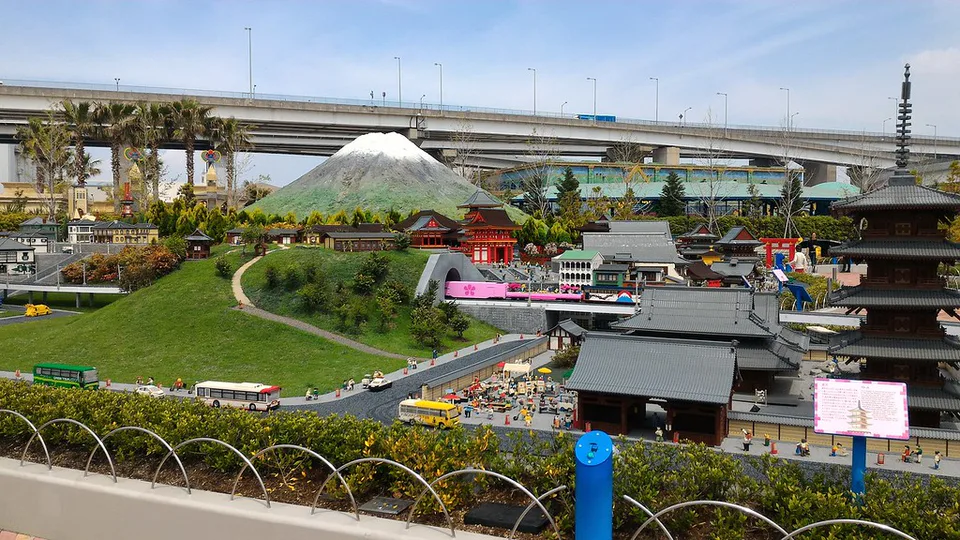
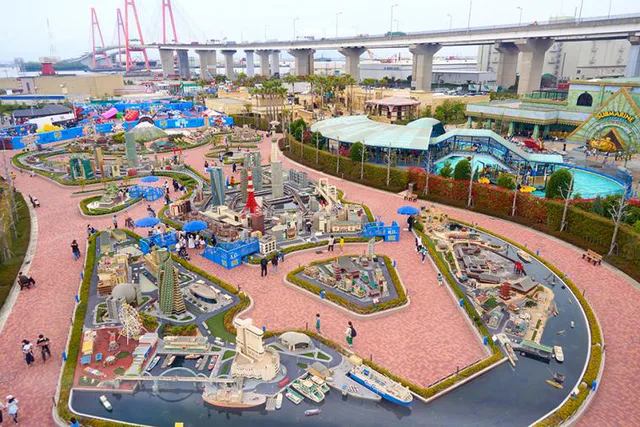
At the same time, Miniland, DUPLO Play, Build a Boat and several creative or play areas have no height restriction. So a small child is not automatically a poor fit. The question is how the ticket will “pay back” for your family: through rides, LEGO building, models and repeat play, or through thrill intensity.
Before paying, measure your child at home and check the five attractions they care about most against the official restriction list. This is one of the easiest ways to avoid buying the right ticket for the wrong expectation.
Ages 3–6 and 7–12 can both use the park well — but they use the same ticket very differently
For ages 3–6, value rarely comes from maximising attraction count. Toilet stops, snacks, stroller time, short naps, LEGO play and repeating the same ride can fill large parts of the day. That is not “wasting the ticket.” It is often exactly why a child-sized theme park works better than a park designed around bigger thrill rides.
For ages 7–12, it becomes easier to treat LEGOLAND as a full mission day. Older children can read the map, target rides, spend longer in Miniland and keep enough energy for a second attraction. Even then, Combo is not automatically better. A child who would rather repeat The Dragon or spend another hour building is giving you a clear signal that SEA LIFE is not the best use of the final block.
Ask one simple question before buying the Combo: “If we had two hours left, would you rather repeat your favourite LEGO area or go to an aquarium?” That answer is often more useful than reading another list of package inclusions.
Your first 90 minutes are worth more than your last 90 minutes
A one-day family plan works best when the opening block is reserved for two or three must-do attractions rather than the entrance shop, long photo sessions or aimless wandering. The whole family is fresher, queues are usually easier to manage than later in the day, and completing one priority ride early removes pressure from the rest of the schedule.
This is also why an itinerary that says “Nagoya Station to Kinjo-futo takes 24 minutes, so we can leave the hotel at 9:30” is too optimistic. The railway time is only the train segment. You still need the walk from the hotel, station navigation, waiting time, toilets, the walk from Kinjo-futo Station and park entry.
If you want an evening plan after returning to central Nagoya, keep it low-friction. A neighbourhood such as Osu works better as an evening food-and-walk block than another major attraction. Our Osu Kannon food tour decision guide is useful for deciding whether you want a structured food experience or simply to walk the street independently.
Do not buy Skip Pass first: identify the child’s real bottleneck first
Ticket platforms currently list Skip Pass options in addition to basic admission, including limited-ride and broader priority-access variants. These products can be useful on busy weekends and holiday periods, but they solve a very specific problem: waiting for included rides.
They do not speed up Miniland, LEGO building, meal breaks, character encounters, shopping or a child who wants to repeat only two favourite attractions. A family with a four-year-old can spend a large share of the day in places where a premium queue product has no effect. Paying for “faster” only makes sense if the included rides are actually the parts you plan to repeat or prioritise.
I would therefore check the date, expected crowd level and the current list of eligible attractions before adding Skip Pass. If your child’s top three are not covered, or your plan is mostly models and creative play, the upgrade solves the wrong problem.
SEA LIFE makes the most sense as a weather and energy buffer, not as a second headline attraction
The strongest use case for SEA LIFE is tactical. After several hours outdoors, an indoor aquarium can reset the pace on a hot summer day, during an afternoon shower, or when the adults need air-conditioning but the child is not ready to go back to the hotel.
That is different from saying SEA LIFE should replace a serious aquarium day. If marine life is one of the main interests of your trip, compare it with the Port of Nagoya Public Aquarium, which is substantial enough to justify its own half-day or longer. SEA LIFE works best because you are already at Kinjo-futo, not because it is automatically the city’s strongest aquarium experience.
If you are already planning Port of Nagoya Public Aquarium on another day, the Combo becomes easier to reject. Two aquatic attractions can be perfectly reasonable for a marine-life-focused family, but do not add the second one simply because ¥800 feels small.
Summer 2026 changes the pace: water play can consume the time you thought SEA LIFE would use
LEGOLAND’s 2026 summer programme runs from May 30 to September 27 and adds substantial water-play elements. DUPLO Play changes into a water-play area for ages 3–6, and other splash activities can leave children soaked and happy for far longer than a spreadsheet schedule expects.
Rainbow Design Studio is also unavailable as a normal guest workshop during the summer event period because it is used as a changing room. A section of The Wharf has a temporary closure from June 1 to September 18 for summer-event preparation and performances. These details matter because a summer park day does not behave like a dry-weather spring itinerary.
If your child loves water play, budget changing time and spare clothes. Do not assume “we will finish LEGOLAND at 3 p.m. and then use the Combo.” The most child-friendly parts of the day are often exactly the parts adults underestimate.
Nagoya Station to Kinjo-futo is easy — but the 24-minute train ride is not your door-to-ride time
The Aonami Line currently lists Nagoya to Kinjo-futo at ¥360 for adults, ¥180 for children and about 24 minutes on the ordinary service. That makes a central Nagoya hotel a perfectly workable base for a one-day LEGOLAND visit.
The park itself does not have a general dedicated parking lot; drivers are directed to Kinjo-futo Parking, and the official site recommends public transport when parking congestion is expected. For most visitors staying around Nagoya Station, the train is the simpler default because it removes parking entrance and exit traffic from an already long family day.
Do not convert “24 minutes” into “the park is 24 minutes from my hotel.” Add the walk to the Aonami Line platforms, waiting time, stroller or toilet stops, the walk from Kinjo-futo Station and security. If you want to be close to opening, put the travel buffer before the park day rather than stealing it from the late-afternoon block.
If your broader trip makes Nagoya Station a convenient base, Vessel Hotel Campana Nagoya is one example of the trade-off between a manageable station walk and hotel comfort. The useful question is not “Which hotel is closest to LEGOLAND?” but “Which base keeps the rest of the Nagoya trip easy as well?”
You usually do not need LEGOLAND Hotel for one park day
The official accommodation plan currently starts from ¥16,150 per person plus tax and includes breakfast with 2-Day Combo tickets. That sounds attractive because the hotel is next to the resort, but the second day has to be real for the package to create value.
If you plan to leave Nagoya the next morning, a two-day ticket can become a benefit you paid for but barely use. If the child is a serious LEGO fan, the opposite can be true: splitting favourite rides, Miniland and SEA LIFE over two days can remove the need to “get your money’s worth” every hour.
So I would not book the hotel simply to eliminate the train ride. Book it if you want a two-day LEGO-focused stay. Otherwise, central Nagoya usually gives you more flexibility for food, onward trains and other things to do in Nagoya.
Adults or thrill-seeking teens: compare the day itself before you compare the ticket
LEGOLAND Japan can admit adults without children, but a group of adults who mainly wants large thrill rides is not the park’s core use case. The strongest parts are LEGO IP, family-scale rides, models, building and interactive play. That is a different product from a thrill-heavy amusement park.
If your group cares more about speed, drops and bigger rides, compare the whole day with Nagashima Spa Land before spending time optimising LEGOLAND ticket tiers. A cheaper ticket to the wrong kind of park is not better value.
Likewise, if you only have two or three days in Nagoya and one day is already competing with Takayama, a major museum or another regional trip, do not let the ¥800 Combo question distract you from the more important choice: whether LEGOLAND deserves a full day at all.
A second aquarium is not always redundancy — but make it intentional
Some families genuinely enjoy both SEA LIFE and Port of Nagoya Public Aquarium. The mistake is not visiting two aquariums; it is assuming the smaller add-on has no opportunity cost because it is cheap. If your child studies fish, loves tunnels and needs an indoor reset, the Combo can be excellent. If they are indifferent to aquariums, the same ¥800 buys an obligation rather than a benefit.
The same logic applies to smaller visual attractions in the city. Art Aquarium Nagoya is an art-installation decision, not a substitute for a major aquarium. Keeping those categories separate prevents a family itinerary from becoming “three things with fish” that all solve different needs.
NO-GO for the Combo: four situations where I would stay with 1-Day
First: this is your child’s first full theme-park day and you do not yet know how many hours they can comfortably manage. Second: the operating day is shorter and the park itself already fills the available hours. Third: you have another major aquarium planned and marine life is not a special interest. Fourth: you need to be back at Nagoya Station by late afternoon for a train, dinner reservation or hotel move.
All four situations have the same pattern: SEA LIFE is likely to become a deadline. The 1-Day ticket removes that deadline and lets you use the final hour for a favourite ride, Miniland, food or simply a slower exit.
NO-GO for LEGOLAND itself: three groups should rethink the whole day
A thrill-only adult group, older children with little interest in LEGO, and a first-time Nagoya visitor with only two full days may all get more value elsewhere. That does not make LEGOLAND a weak attraction. It means the attraction has a clear target use case.
If one day in Nagoya is already being considered for a regional side trip, go back to the 4-day Nagoya/Takayama trade-off. Good ticket optimisation happens after the itinerary role is settled, not before.
Final decision: most first visits should start with 1-Day; upgrade only when the last two hours already have a purpose
Use this order: lock the date, check the operating hours, measure the child, identify five must-do attractions, and decide whether LEGOLAND is a full-day priority. Only then ask whether SEA LIFE has a specific job in the day. If it is your indoor weather buffer, your child actively wants an aquarium, or the one-time Combo re-entry improves your plan, the ¥800 upgrade can be very good value.
If the reason is simply “it is only ¥800 more,” stay with 1-Day. That is not buying less. It is protecting the part of the day that already has the highest probability of making your family happy.
Once your date and ticket type are fixed, compare the same admission product across sellers rather than chasing an advertised starting price. Trip.com currently has an exact LEGOLAND Japan Resort attraction listing, so the useful next click is to check your actual date, party size and available ticket type — not to assume the lowest search-result number applies to you.
Trip.com | Check LEGOLAND Japan ticket types and your actual date
Hakone Open-Air Museum 2026: 4:30 Is Last Entry, Not the Time You Should Arrive
Fukuoka Food Trip Hotels: Choose Where Dinner Ends, Not Where the Most Restaurants Are
Kyoto International Manga Museum 2026: The ¥1,200 Ticket Is Cheap — Is It Worth 2–4 Hours?
Hotel Intergate Osaka Umeda: Do the Lounge Hours Fit Your Osaka Itinerary?
Cup Noodles Museum Yokohama: The ¥500 Ticket Is the Easy Part — Secure Your Workshop First
Sources
LEGOLAND Japan Resort | 1-Day Pass and Combo pricing
LEGOLAND Japan Resort | Ticket FAQ and date-change rules
LEGOLAND Japan Resort | Online ticket terms and re-entry rules
LEGOLAND Japan Resort | Attraction height restrictions
LEGOLAND Japan Resort | 2026 summer programme
LEGOLAND Japan Resort | Access and parking
Aonami Line | Nagoya to Kinjo-futo fare and travel time
Klook | LEGOLAND Japan ticket product page, used only to verify current package availability